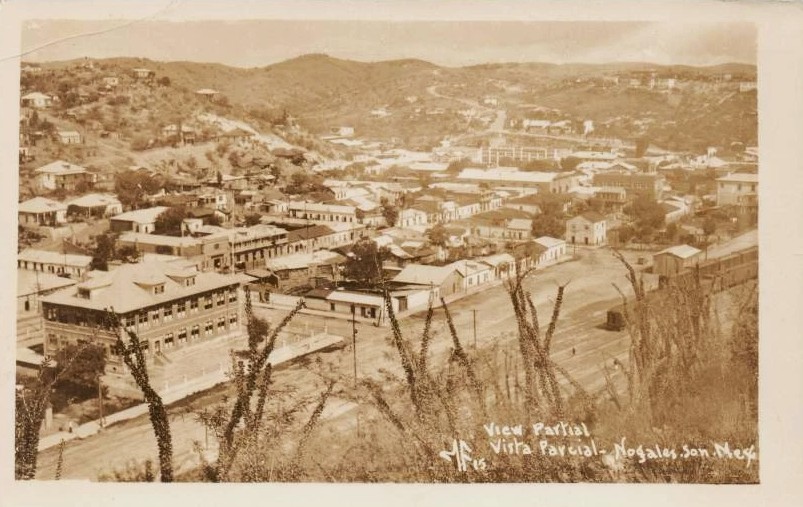
In my enjoyable journey through vintage postcards that somehow escaped musty-smelling dresser drawers and old trunks, I came across one from the 1950s sent from Nogales, Mexico, to Clyde, Kansas. I found these two locales to be most interesting, yet a town mentioned in the postcard composition had me searching for its whereabouts.
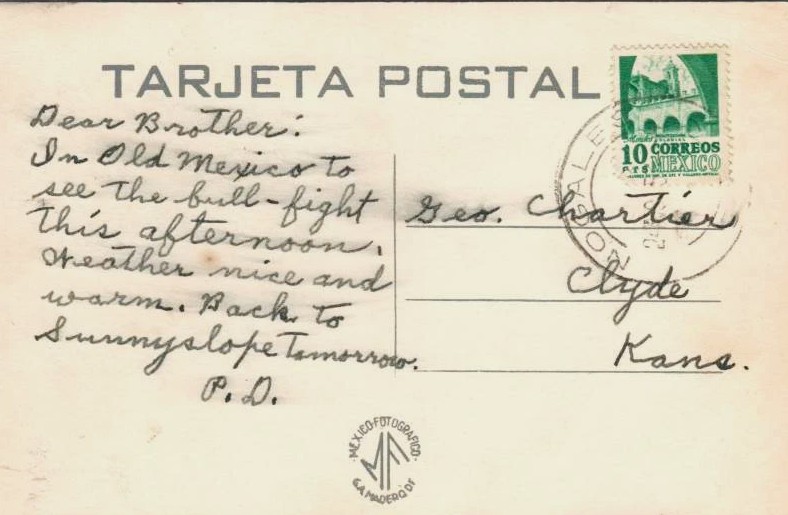
Before we venture in that direction, I’ll transcribe and share the simple message sent to Geo. Chartier in Kansas from his brother, P.D., mailed from Nogales.
“Dear Brother
In Mexico to see the bull fight this afternoon. Weather nice and warm. Back to Sunnyslope tomorrow.
P.D.
When I first saw the name Sunnyslope, I thought of Aspen and Vail, Colorado, or some other sun-drenched skiing locale. It didn’t take but a few minutes on the internet to discover there’s such a place in Arizona, and there still is.
Sunnyslope is a vibrant, historically rich neighborhood in north-central Phoenix, Arizona. Known for its scenic views, close-knit community, and distinctive character, Sunnyslope has evolved from a rural outpost to an integral part of the city of Phoenix.
The area now known as Sunnyslope was first settled in the early 1900s. Originally attracting homesteaders and settlers seeking a fresh start in the Arizona desert, the region’s dry climate was considered beneficial for individuals with respiratory ailments, such as tuberculosis. The abundance of sunshine and the picturesque backdrop of the Phoenix Mountains gave rise to the name “Sunnyslope.”
During the 1920s and 1930s, Sunnyslope began to attract more residents, many drawn by the hope of healing and the promise of affordable land. Small businesses and services began to appear, supporting the growing population. The area remained somewhat isolated from Phoenix proper, developing its own sense of community and independence.
After World War II, Sunnyslope experienced significant growth. The influx of returning veterans and their families spurred a building boom, with new homes, schools, and churches established throughout the area. As Phoenix expanded, Sunnyslope’s population increased and its infrastructure improved. The community continued to foster a spirit of resilience and self-sufficiency.
In 1959, Sunnyslope was officially annexed by the city of Phoenix. This integration brought new municipal services and investments, further spurring development. Despite its incorporation into Phoenix, Sunnyslope retained its unique identity, with local organizations, businesses, and residents working to preserve the neighborhood’s character and history.
Sunnyslope is home to several notable landmarks, including the Sunnyslope Mountain (also known as “S” Mountain), which overlooks the neighborhood and serves as a symbol of community pride. The area also hosts historic churches, schools, and annual events that celebrate its diverse heritage. Throughout the decades, Sunnyslope has been recognized for its grassroots activism, local art scene, and welcoming atmosphere.
Today, Sunnyslope stands as a testament to the enduring spirit of its residents. From its beginnings as a desert retreat for health seekers to its present-day role as a dynamic Phoenix neighborhood, Sunnyslope’s history is marked by resilience, community engagement, and a deep appreciation for its natural surroundings. Its story continues to evolve as new generations contribute to the landscape and culture of Sunnyslope, Arizona.
George Albert Chartier was born in Clyde, Kansas, on January 1, 1890, and spent his whole life there as a farmer. He was one of six children of parents, Charles and Cora. Only completing 8th grade, George was a hard worker and successful. He went on to marry Marjorie Quinnette, and they had two children. George died on January 26, 1969, at the age of 79. George and Marjorie are buried in Clyde.
Pearl Dunning Chartier led a more adventurous life. Born two years earlier than George, Pearl was drafted into the US Army and saw service in France during WWI. Records show that he went beyond the call of duty. The following short bio, taken from his obituary, sums things up best about his honorable military career.
“The President of the United States of America, authorized by Act of Congress, July 9, 1918, takes pleasure in presenting the Distinguished Service Cross to Private Pearl D. Chartier (ASN: 2176261), United States Army, for extraordinary heroism in action while serving with Company H, 140th Infantry Regiment, 35th Division, A.E.F., near Charpentry, France, 27 September 1918. Private Chartier voluntarily went forward in the face of intense artillery and machine-gun fire and cut gaps through wire entanglements, to facilitate the advance of his battalion.”
Pearl also received the Purple Heart during the war and was a disabled veteran. Despite his injuries, Pearl Chartier served as deputy sheriff in Cloud County, Kansas, for a short time. Pearl Dunning (P.D.) married Gladys Pacey on June 21, 1944. The couple had one child, Duane.
Their time spent in Sunnyslope, Arizona, was most likely an attempt to improve his damaged health. The abundant sunshine and vitamin C must’ve helped. Pearl died on July 23, 1970, at the age of 82, and is buried in Salt Lake City, Utah, along with his wife, Gladys.

 I like to write junk...