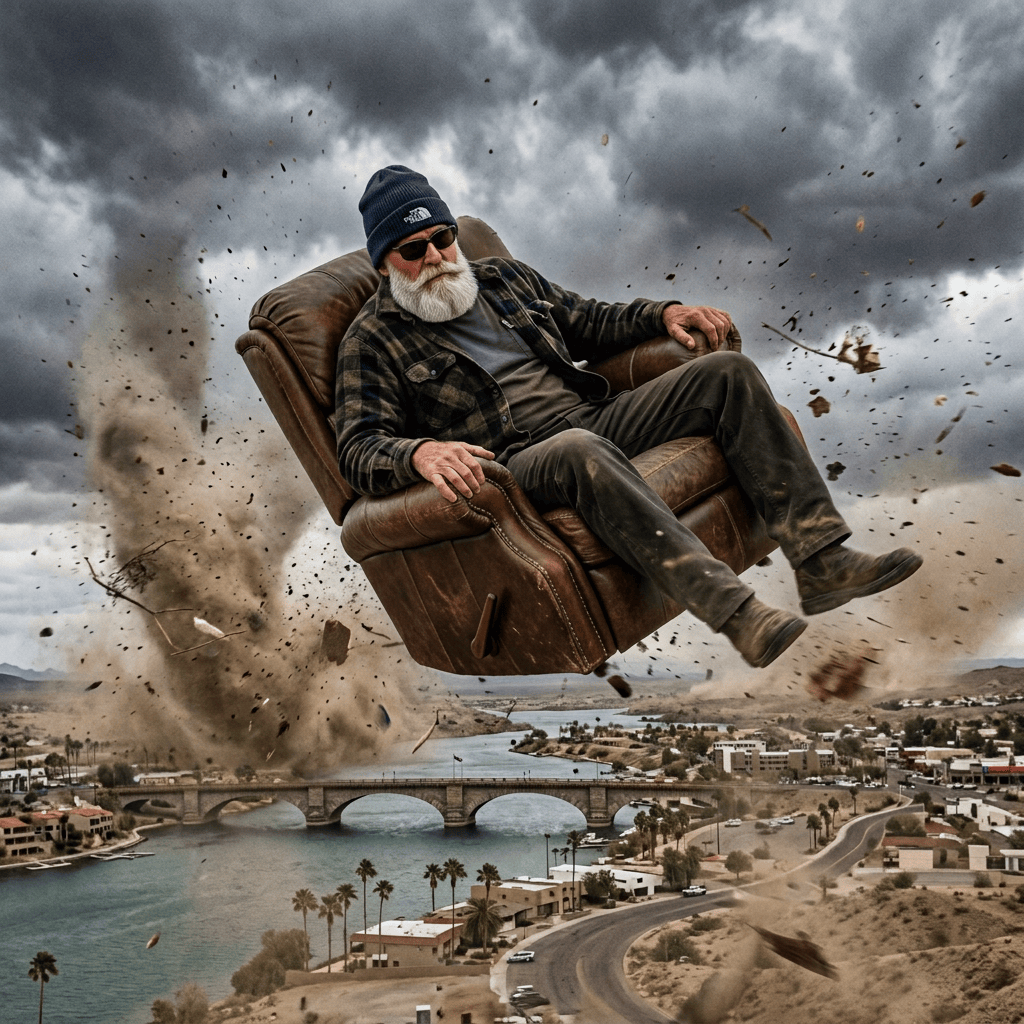
Watching television reports of Hurricane Isaias inflicting heavy damage in the South and tropical storm Rachel bringing high winds and torrential rains to the West, including Lake Havasu City, I sat back in my easy chair and listened to the ruckus outside. Chairs and tables flew around, smacking against our house.
The American flag I meant to take down snapped and popped with each gust. At this point, I decided to go outside and survey the damage. It was raining cats and dogs, and I could hear a river rushing down the nearby wash.
A 20-year-old Pygmy Palm tree, like a drunken sailor, was lying on its side for the umpteenth time. The wire support that held it up had broken. Securing the flag and deciding to let the palm tree sleep things off, I was glad to finally go back inside.
Easing into my chair, I found the noise had only gotten louder, with metal rattling from a house next door. Praying God would keep the damage to a minimum, I thought of my late Papa and Mama Haynes and their little farm in Vernon, Alabama. They had a storm shelter carved into a hill, with a wooden door.
I can remember spending one night in this cave when a hurricane hit off Alabama’s coast, sending tornadoes throughout the state. Mama Haynes had quilts inside along with candles, matches, and a kerosene lamp. I don’t recall a bed, since I don’t think the dwelling was big enough to hold one.
My brother and I explored this storm shelter many times, and it always smelled damp and earthy. Salamanders called it home, and I now wonder if snakes did, too. Mom told me that, as a little girl, her parents and four sisters used it many times. Mama Haynes was a praying dynamo, and I doubt she stopped praying until each storm ended.
That old storm shelter eventually collapsed. I’m sure everything is still inside, since my grandparents never excavated the fallen dirt. I wanted to, but by then the property was sold.
With no storm shelter here in Havasu, and only four walls and a roof to protect us, and no basement to hide in, Joleen and I can only ask God to fortify our structure whenever these rare storms come up.
Thankfully, I insisted on hurricane straps on the garage roof trusses, although the builder said they weren’t needed. Code required them, and our building supervisor, John Ballard, had to literally shove this paperwork in the guy’s face.
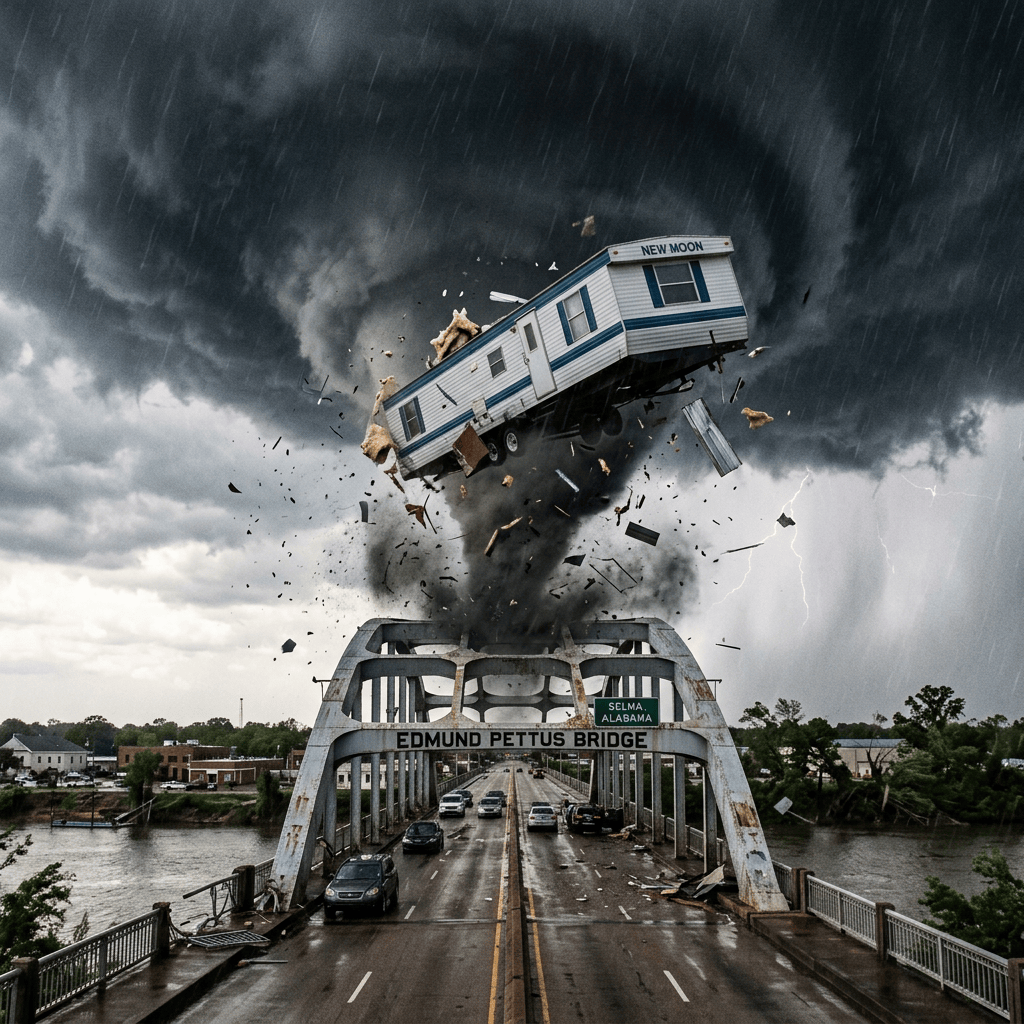
I feel much safer now in a storm than I did in a trailer. Only those who’ve lived in mobile homes during high winds will know what I mean. In Alabama and Texas, there were times when I thought ours would blow away like Dorothy and Toto’s house in Kansas.
Joleen and I might not have a storm cellar, but we have something better, and there are no salamanders. I’ll simply ask God to protect us, but if it’s my time to go during an Arizona storm, I’d sure like to bring that old easy chair along.