Another Thanksgiving has come and gone, although around our household, that doesn’t mean a reprieve from eating turkey. Christmas Day, as well as New Year’s Day, often sees a brown and succulent Butterball turkey sitting on our table. Leftovers such as cold turkey and dressing always grace the refrigerator afterwards.
I’m not sure why my wife buys a Butterball brand turkey, but I suppose it has something to do with her mom and my mother having been brainwashed that Butterball is better than the rest. I asked Miss Purdy, my AI (artificial intelligence) helpmate, what’s so great about Butterball, and she offered up the following:
“Butterball turkeys have become a staple in American households during the holiday season, known for their consistent quality and convenience. The brand was established in the 1950s, and its name was chosen to evoke the image of a plump, tender, and juicy turkey. Today, Butterball is recognized as one of the largest producers of turkeys in the United States, maintaining its reputation for excellence and reliability in holiday feasts.”
During my research on turkeys and where they come from, I found that five states in the US actually have Turkey in their name. Let me begin with the state in which we live.
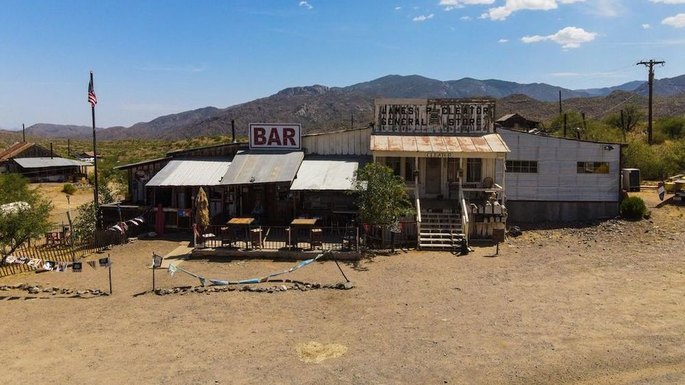
Turkey Creek, Arizona, is a small, unincorporated community named for the creek that flows through the area, which was once abundant with wild turkeys. This region in Yavapai County, 222 miles from Lake Havasu City, has its roots in the late 19th century, when settlers and prospectors were drawn to Arizona’s rugged landscapes in search of mining opportunities and ranch land.
Over time, Turkey Creek became known for its scenic beauty and played a modest role in the broader story of Arizona’s frontier development. The name was changed to Cleator in 1925 after the new town owner. Today, Turkey Creek, or Cleator, remains a quiet area, a ghost town, reflecting the pioneering spirit and natural heritage of the American Southwest.
Turkey, Texas, is a small city located in Hall County in the Texas Panhandle. The area was originally inhabited by Native American tribes, including the Comanche, before European-American settlers began arriving in the late 19th century. The town reportedly received its unique name from the abundance of wild turkeys along a nearby creek. “Gobble-gobble.”
Turkey, TX, was officially established in 1907, and its growth was closely tied to cattle ranching and farming, which remain important to the local economy. The arrival of the railroad in the 1920s spurred further development, connecting Turkey to larger markets and communities in the region.
Turkey Town, Alabama, was a historic Native American settlement located in northeastern Alabama, near the banks of the Coosa River. The town was named after Chief Little Turkey, a prominent leader of the Cherokee Nation. Established in the late 18th century, Turkey Town became one of the largest Cherokee towns in the region, serving as an important center for trade and diplomacy.
During the early 19th century, it played a significant role in the events leading up to and during the Creek War, ultimately declining after the forced removal of the Cherokee people along the Trail of Tears. Turkey Town, AL, is now considered a ghost town.
Turkey, Louisiana, is a lesser-known community with a history rooted in the state’s rural traditions. Located in East Feliciana Parish, Turkey emerged as a small settlement primarily centered around agriculture and local trade. Like many communities in the region, its development was shaped by the agricultural economy and the close-knit nature of rural Louisiana life.
While Turkey, LA, never grew into a large populace, it remains a testament to the enduring character of small Southern communities and their contributions to the cultural tapestry of the state.
Last but not least is the state of North Carolina. Turkey Creek, North Carolina, is an unincorporated community whose origins can be traced back to the early settlement period of the region. The area is named after the creek that meanders through the landscape, which, much like its counterparts in other states, was once home to abundant wild turkeys.
Over the years, Turkey Creek, NC, developed as a small rural community, shaped by agriculture and the traditions of its residents. While it never grew into a major town, it continues to reflect the quiet charm and enduring heritage of rural North Carolina.
I’ve never visited any of the above-mentioned Turkey towns, but I have been to Chicken, Alaska, for whatever that’s worth. A couple of drumsticks with some mashed potatoes and gravy, perhaps?


 I like to write junk...