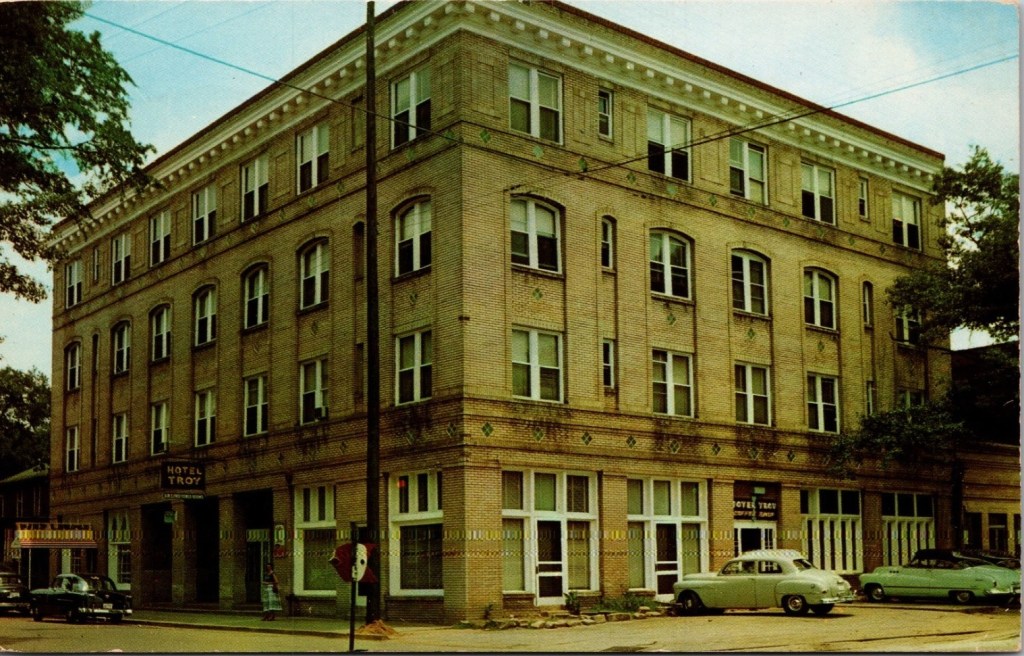
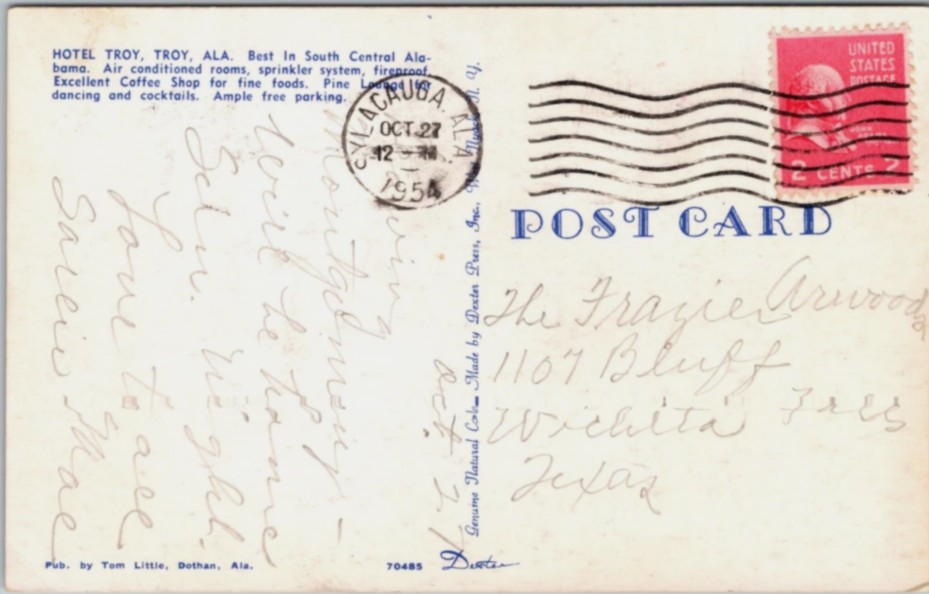
A picture postcard mailed from Sylacauga, Alabama, on October 27, 1954, to Wichita Falls, Texas, shows a photograph of the Hotel Troy in Troy, Alabama. The attached short message reads,
“Oct 27
I’m leaving Montgomery – will be home soon. We give love to all.
Sallie Mae”
The card was sent to “The Frazier Atwood” in Wichita Falls, Texas. In the context of the postcard, “the” is placed in front of Frazier Atwood—evidently as a form of emphasis or familiarity. This usage can imply that Frazier is well-known to the sender or within a certain group, suggesting a unique or notable identity.
In some regions and informal situations, adding “the” before a name can also indicate affection, distinction, or even a playful tone, setting the person apart from others with the same name. For whatever reason, adding the in front of Frazier Atwood’s name led me to a dead-end road.
Frazier Atwood was elusive. He was born in 1920, attended school in Wichita Falls, where he took part in musical events, such as being part of a quartet. After finding out that much, his trail went cold.
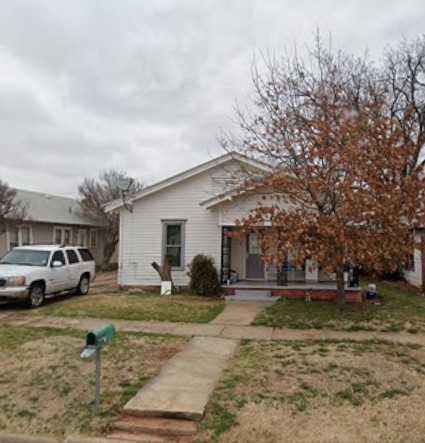
It’s possible that the man changed his name, as singers and actors often do, or moved out of the country. I did discover that the house he lived in at 1107 Bluff Street in Wichita Falls is still standing, for whatever that’s worth.
There were three Sallie Maes to choose from living in Sylacauga at that time: Sallie Mae Johnson, Sallie Mae Childers, and Sallie Mae West. I had no way to identify which one wrote the postcard so I left things at that; unfinished.
With that said, here’s the history of Troy, Alabama, and Hotel Troy, which is what I was more interested in to begin with. My father was named after the city.
Troy, Alabama, has a rich heritage that dates back to its founding in the early 19th century. Originally settled in the 1830s, Troy quickly established itself as a significant center for agriculture and trade in southeast Alabama.
The town benefited from its location along key transportation routes, including railroads, which helped it grow and prosper throughout the late 1800s and early 1900s.
As Troy developed, it became known for its vibrant downtown area, anchored by important institutions and businesses such as Hotel Troy. The presence of educational institutions, most notably Troy University, contributed to the city’s cultural and economic growth.
Over the years, Troy has weathered changes brought on by shifts in industry, natural disasters, and evolving community needs, but it has maintained a strong sense of local identity.
Today, Troy is recognized for its historical architecture, community spirit, and ongoing preservation efforts. The city’s blend of old and new reflects its journey from a rural settlement to a modern, thriving community, honoring its past while looking toward the future.
Hotel Troy was once a prominent hotel located in the heart of Troy, Alabama. Built in the early 20th century, it served as a hub of activity for visitors and locals alike, offering accommodations, dining, and a central gathering place for community events.
Like many historic hotels in small towns, Hotel Troy eventually faced challenges due to changing travel patterns, competition from newer accommodations, and shifts in the local economy. Over time, the hotel’s business declined, and it eventually ceased operations.
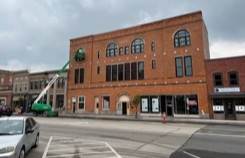
The original Hotel Troy building no longer operates as a hotel. The structure has been in limbo, waiting on redevelopment efforts or demolition. Tornadoes and storms did significant damage. Historical records and local accounts indicate that the building stood vacant for a good period before they hit.
The Troy Historic Preservation Alliance (THPA) purchased this building along with other vintage structures in the complex. My research shows that a good portion of it was updated, yet city government, namely the mayor, has slowed things down at least temporarily.
Hotel Troy remains a part of local history in Troy, Alabama, remembered for its role in the town’s early 20th-century social and economic life. Former residents and historians still recall stories and photographs of the hotel, with new memories yet to be made.
“The Frazier Atwood” might’ve disappeared into obscurity, but it appears that “The Hotel Troy” will be around for years to come.

 I like to write junk...