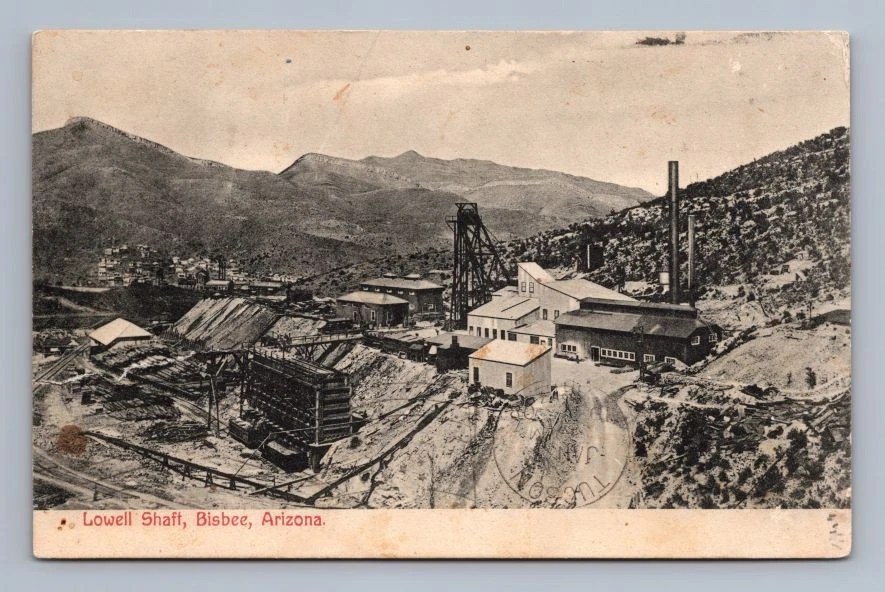
I’ve never been to Bisbee, Arizona, with it still on my bucket list. A picture postcard from 1908 shows the Lowell Shaft in Bisbee, with the photo revealing a huge mining operation, much larger than many I’ve seen, other than perhaps Kennicott near McCarthy, Alaska. I researched the history of Lowell Shaft first, and then the sender and receiver of my vintage postcard.
The Lowell Shaft is a significant landmark in the mining history of Bisbee, Arizona. Known for its deep ties to the copper industry, Bisbee has long been recognized as one of the most productive mining districts in the United States. The Lowell Shaft stands as a testament to the engineering prowess and industrial ambition that shaped the town and the broader region.
This shaft or mine was developed in the early 20th century, during a period of rapid expansion for the copper mining industry in Bisbee. The town itself was founded in the 1880s, following the discovery of rich copper deposits in the Mule Mountains.
As mining operations grew, so did the need for deeper shafts to access increasingly valuable ore bodies. The Lowell Shaft, named after the nearby community of Lowell, was constructed to meet these demands, enabling miners to reach ore deposits that were previously inaccessible.
During its operational peak, the Lowell Shaft played a central role in supporting the output of the Copper Queen Mine and other major mining enterprises in Bisbee.
Its depth and strategic location made it an essential part of the underground network that fueled the town’s economic growth. The shaft facilitated the extraction of copper, silver, and other minerals, contributing to Bisbee’s reputation as the “Queen of the Copper Camps.”
The construction and operation of the Lowell Shaft reflected ongoing technological advancements in mining. Powerful hoisting equipment, ventilation systems, and safety measures were implemented to accommodate deeper mining activities. These innovations not only improved productivity but also helped safeguard the lives of the miners working below ground.
The Lowell Shaft was more than just an industrial structure—it was part of the daily lives of Bisbee’s residents. The influx of workers and their families promoted the growth of the Lowell neighborhood, which became a vibrant part of the local community.
The presence of the shaft and associated mining operations shaped Bisbee’s social fabric, with local businesses, schools, and infrastructure evolving to support the mining workforce.
As the copper markets shifted and ore bodies were depleted, the Lowell Shaft, like many others in Bisbee, saw a decline in activity by the mid-20th century. However, its legacy endures.
Today, the shaft and its surroundings serve as historical reminders of Bisbee’s mining heritage. The area attracts visitors interested in industrial history, and preservation efforts aim to maintain the site as a tribute to the miners and engineers who contributed to Bisbee’s development.
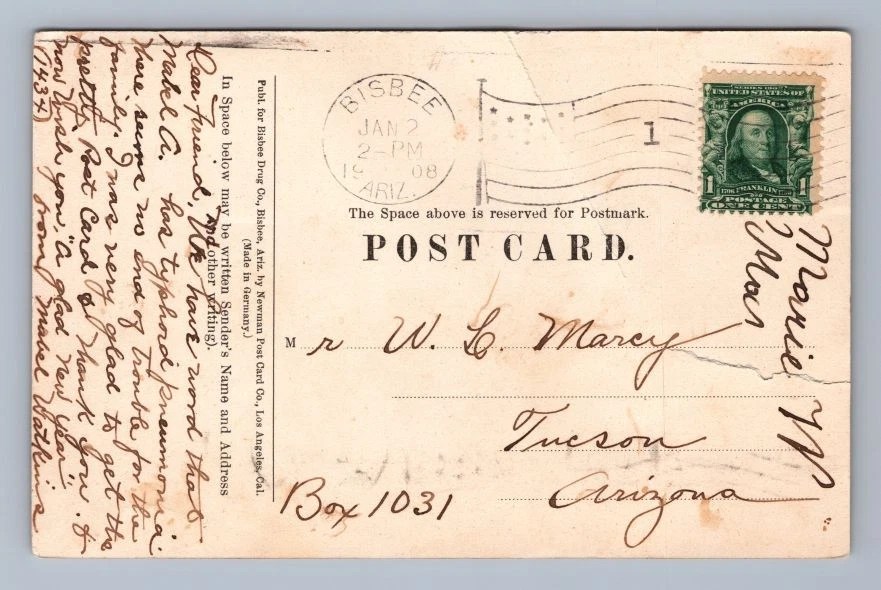
The Bisbee postcard I purchased off eBay was sent to W.L. Marcy in Tucson, on January 2, 1908, by Mabel Watkins in Bisbee. Mabel’s short message reads as follows:
“Dear friend, we have word that Mabel A. has typhoid pneumonia. There seems no end of trouble for the family. I was very glad to get the pretty postcard & thank you. I now wish you a “glad New Year” (1434) from Mabel Watkins”
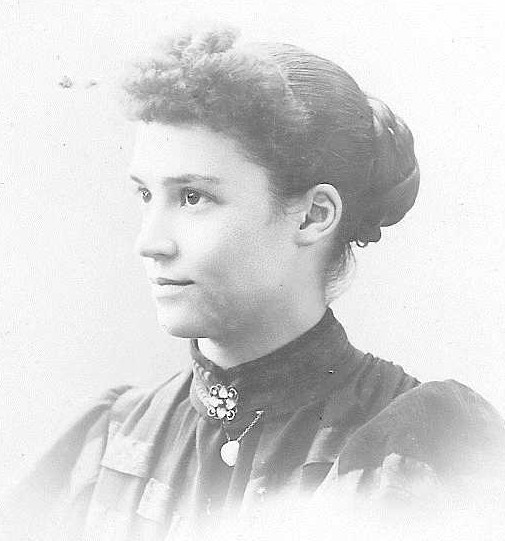
Mabel Esther Snyder was born on December 10, 1872, in Wisconsin. She married Bassett Treham Watkins on January 8, 1896. The couple had a son and a daughter, Lucile Esther and Vertice Orvill. A photograph of Mabel shows her to be a beautiful lady.
Mabel’s husband worked as a fireman in a copper mine, and in later life, at the age of 79, he was an assistant mortician. Mabel Snyder-Watkins died on February 24, 1941, at the age of 69. She’s buried in the town of Brooklyn, Wisconsin.
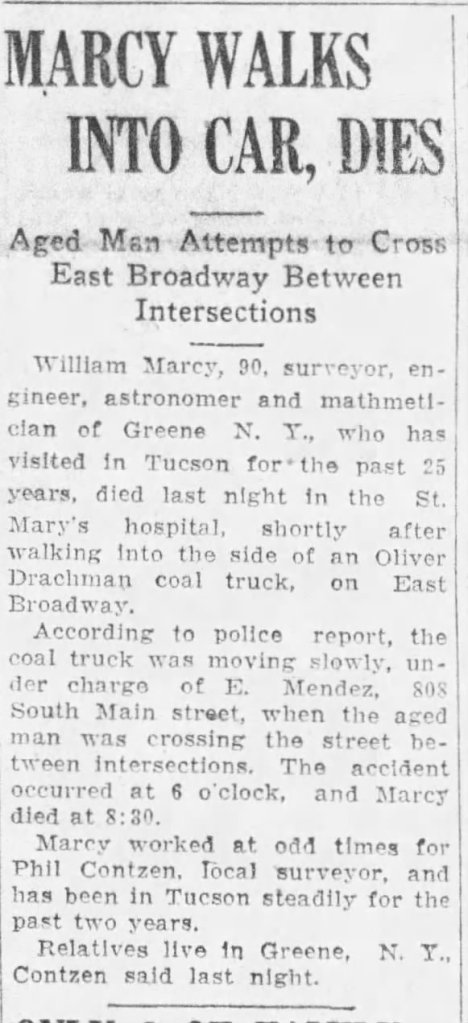
Mabel’s friend, William L. Darcy, was born in 1831. He lived an interesting life, being a mathematician, astronomer, engineer, and land surveyor. The aged man died on February 21, 1929, after being hit by a coal truck while crossing a street. Mr. Darcy was 90 and is buried in Tucson.

 I like to write junk...