
I have a mechanic friend who often says, “Up the Ying Yang with no paddle.” I’ve never known what Ying Yang means, falsely believing for some time that it was a river in China. I use the phrase randomly myself, generally to describe a major problem.
Deciding to look things up—it appears our meaning of Ying Yang is a contorted version of the real thing. Even the spelling of it is wrong. Turns out that Ying Yang is not a body of water after all, but something entirely different.
The term “yin yang” refers to a concept in Chinese philosophy that describes how seemingly opposite or contrary forces are actually interconnected and interdependent in the natural world.
Yin represents qualities such as darkness, femininity, and passivity, while yang embodies brightness, masculinity, and activity. Together, yin and yang illustrate the balance and harmony of dualities within the universe, for whatever that’s worth.
“Skosh” is another word that I’ve picked up, undoubtedly gleaned while I was working in automotive shops. A skosh to me is just a tad bit more. Women should know what a skosh is. In cooking circles, a skosh is akin to a pinch or a dash.
“Retard” is offensive when used to describe people, yet in automotive circles, the word’s used quite extensively, without apology, to describe a decrease in distributor ignition timing. “Zerk” is another commonly used shop term, while it has nothing to do with a mechanic’s first name.
“Jerk” is often heard in towing circles, and I don’t mean the tow truck driver impounding your car. A jerk is often needed when a vehicle becomes stuck in mud or snow to get things rolling. I watched on one occasion, when a too-hard jerk by a novice ripped a car’s front bumper off.
“Short block” confused me as a teen until an old mechanic told me it means absolutely nothing about the size of an engine. “Cam followers” is another strange term that you’ll have to look up, as it’s much too hard for me to explain here. Oddly enough, each time I hear this phrase, which is rare, I visualize baby ducks following their mama.
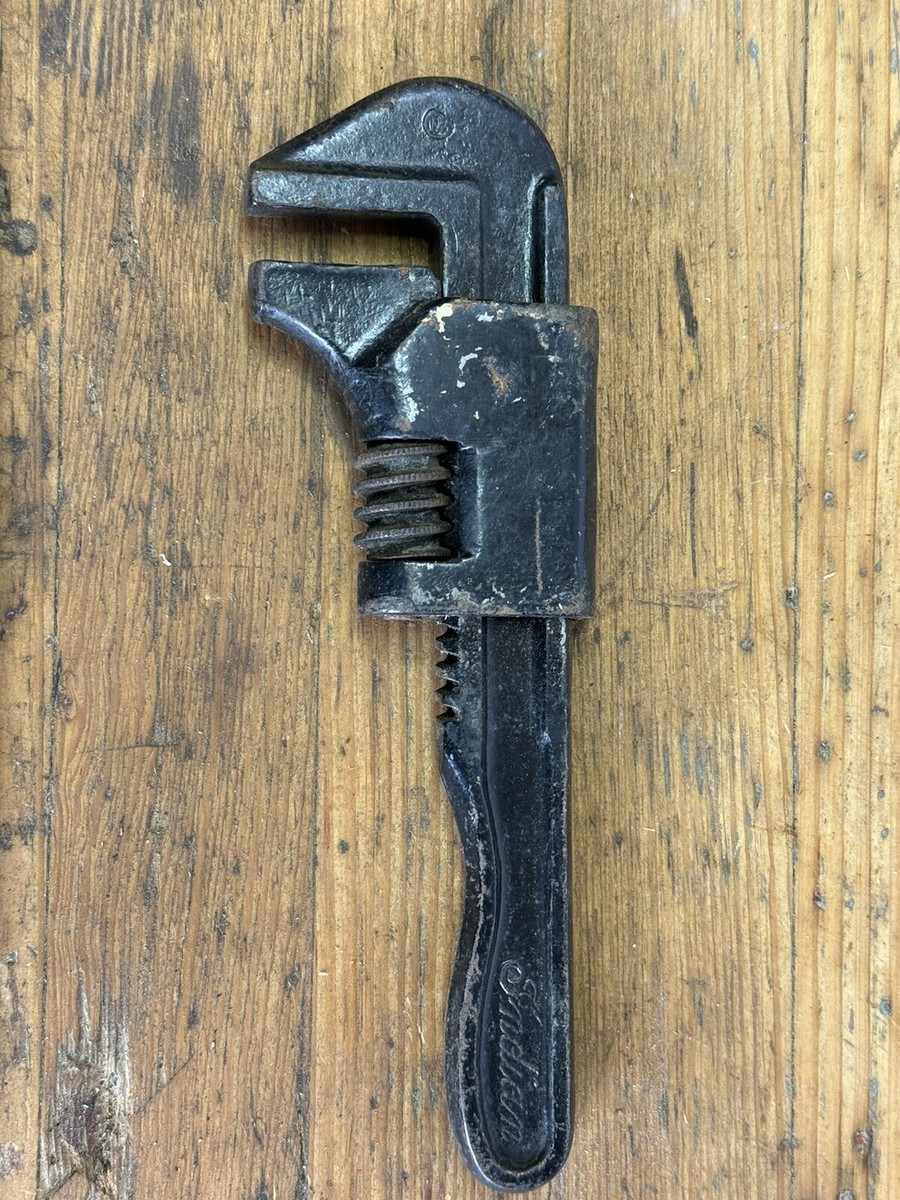
One term that is seldom heard these days is “monkey wrench.” A monkey wrench is an adjustable hand tool with smooth jaws, used for gripping and turning pipes or other objects. Its jaws can be widened or narrowed by turning a screw mechanism, making it versatile for different sizes of fasteners or fittings.
This tool was once common in mechanical and plumbing work, though it has largely been replaced by more modern adjustable wrenches. An adjustable Crescent wrench is not a monkey wrench, although it looks like a laughing monkey when the jaws are open.
“Jerry can” is a term I first heard while working in a gas station, having no clue how it was named until now. The Jerry can is a robust, rectangular fuel container originally designed by the Germans before World War II. The name comes from “Jerry,” a slang term used by Allied soldiers to refer to Germans.
American soldiers admired the sturdy design and began using captured cans, leading to the nickname. Today, the Jerry can remains a popular container for transporting fuel and water, recognized for its durability and practicality.
“Jerry rig” refers to making a temporary fix or improvised repair, usually with materials that are readily available, rather than using proper tools or parts. The term is often used to describe solutions that are clever but not necessarily permanent or up to standard. I was an expert at jerry-rigging things, and still am, or is that are?
The origin of “jerry rig” is believed to be a blend of “jury rig,” a nautical term for makeshift repairs, and “Jerry,” which was slang for Germans during World War II. Over time, the phrase evolved in American English to mean any improvised repair, regardless of its connection to the original slang or its naval roots.
On my resume, I list “pump jockey,” which is slang for a service station attendant. A pump jockey was someone who pumped gas, checked oil, and provided other customer services at a gas station. Pump jockeys went the way of dinosaurs when self-serve fueling stations and convenience stores came along.
Last but not least on my list of obsolete shop terms is “shade tree mechanic.” This is supposedly a derogatory term, but I’ve never seen it that way. A shade tree mechanic works on vehicles or machinery outside of formal repair shops, often in their own backyard or driveway—literally under the shade of a tree.
These individuals typically rely on resourcefulness, practical knowledge, and basic tools rather than professional training or certifications. The term can be used in a derogatory way to imply amateurism, but many view it as a mark of ingenuity and hands-on experience.
These days, with the newer computerized vehicles requiring specialized diagnostic tools to work on them, jerry rigging is next to impossible, and a jerk isn’t going to help if they’re not stuck. Whenever a car or truck breaks down on a desolate stretch of road, the driver is basically up the Ying Yang with no paddle.
It happens thousands of times daily. In most cases, a skosh more fuel in the tank would’ve gotten them to the next station. If only they’d brought along a jerry can!

 I like to write junk...