DAY TRIP

“I have to assume this guy had a bad night.”

Kingman, Arizona

There’s plenty to see and do in Lake Havasu City, even during the summer months. The lake of course is a catalyst for many, but even if a person doesn’t have a watercraft, there are other activities to escape the heat. I like to cruise through town looking at how some folks landscaped their yards. There are many highly creative people in Havasu.

I’ve seen metal dinosaurs, humongous stone turtles, and one of my favorites, an authentic-looking gold mine complete with oar car and rails. Some day I’d like to replicate that one. Our place pales in comparison, with a phony steel saguaro, barrel cactus, ‘California Gold’ gravel, some river rock, and last time I checked, a plastic Snapple bottle blown in during the last wind. I keep saying I’ll pick it up but…

Quite often, Joleen and I drive out of town for “day trips” as we call them. We generally either head to Needles or Kingman. I’ve been told for several years now, that a well-kept secret in Kingman, is the Airport Café. Our city has plenty of good eateries, and we patronize them quite often.

Every once in a while it’s good to escape Dodge for a change of scenery. The person telling me about this particular café in Kingman says there’s nothing like it in Havasu. Regardless, they also said that on occasion, they journey to our city or Las Vegas just to eat. Variety is good!

Driving through wind and dust on Tuesday, we stopped by Kingman Regional Cancer Center first to drop off a dozen donuts for the chemo lab. We try to do that whenever we head that direction. Others that we’ve met there do the same. After leaving the large box of pastries behind, it was time for a good hot breakfast.

Airport Café is located inside the rustic Kingman Airport terminal. There are photos everywhere on the walls and on a display counter, showing what it was like during WWII, when this location was an Army Air Corp training base. The old control tower still remains, and I’d pay a few bucks just to climb up there. I didn’t see any signs indicating that doing so was possible. Perhaps, some day that’ll happen as a money raiser for the Kingman aviation foundation. I’m into history, so viewing these relics from 80 years ago was an added treat to the meal.

Just outside the restaurant window sat a huge Sikorsky, now called Erickson, S64E Skycrane helicopter, used in hauling heavy loads or fighting forest fires. While dining on a scrumptious ‘Sausage Scrambler’ breakfast, I watched as mechanics methodically went over the huge bird. Joleen observed the same while enjoying her ‘Waist Gunner’ Omelet. Most all of the café menu items are identified with Army Air Corp terminology, while mine wasn’t. Our coffee mugs were huge with the attentive server keeping them filled.

After eating, I walked outside to take some up-close photos of that copter, bumping into the pilot at the same time. An interesting fellow, he told me that the biggest problem in fighting fires in the Kingman area was finding large water sources close by. With two, 4500 horsepower turbine engines burning 528 gallons of Jet-A fuel an hour, the helicopter can carry 25,000 pounds, or 2,650 gallons of water or fire retardant.

I’ve seen that insect looking machine flying over Havasu, so I’d imagine it was here to suck up lake water with a giant straw. Asking this gentleman if he’d be taking off soon, with the man glancing towards the Hualapai mountains right afterwards, he replied, “Only if there’s a fire.”

Kingman Regional Airport is also an airliner boneyard. There are hundreds of huge jets parked throughout the tarmac from all different airlines. Many are mothballed to be used again, while others are strictly there for parts. After WWII, the airport became home to thousands of useless Army Air Corp bombers and fighters. Sadly, B-17s, B-24s, P-38s, and other noteworthy warbirds were eventually chopped up and sold for scrap. Black & white photos of these idle aircraft are inside the cafe. With a few sold to civilians, not many flying examples still remain.

Getting back to our breakfast, I have to say it’s one of the best I’ve ever had. Joleen echoes the same. The place was quite busy, and of course, one has to be patient under these circumstances, yet there’s enough to see while sitting, that it was an enjoyable wait. The quality of food along with proportions was well worth the time!

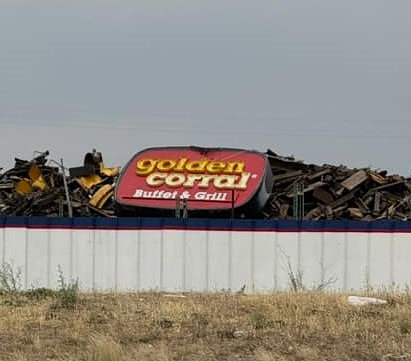
As we slowly drove back to the main highway leading us in to Kingman Airport, on old Route 66, a still colorful Golden Corral sign was spotted by my wife sitting in a pile at a metal scrapyard. Quickly turning round, I parked next to the recycling facility in a dirt parking lot for a quick photo. As things tend to always go, at least for me they do, an employee watching me do such screamed out, “You’re blocking traffic!”

Glancing around and seeing no other moving cars or trucks anywhere in sight, I could only smile and wave, yelling back to him that I’d only be a minute.  No more than 60 seconds passed before we were once again on the road. I have to assume this guy had a bad night.

It’s sad to see Golden Corral in Kingman close. People lost jobs and that’s always a hard pill to swallow. I hear the reason they shut down was an increase in building lease. That happens quite often whenever a new building owner comes along.  Airport Café has been in business for a long time, and that tells me they’re doing something right.

Somewhere in the near future, when we deem it time to take another day trip to Kingman, we’ll be stopping by for lunch this time. A Philly cheesesteak sandwich sounds good. Perhaps, after sitting down at the table, we’ll get to see that helicopter fly. Then again, maybe that’s not a good thing after all!
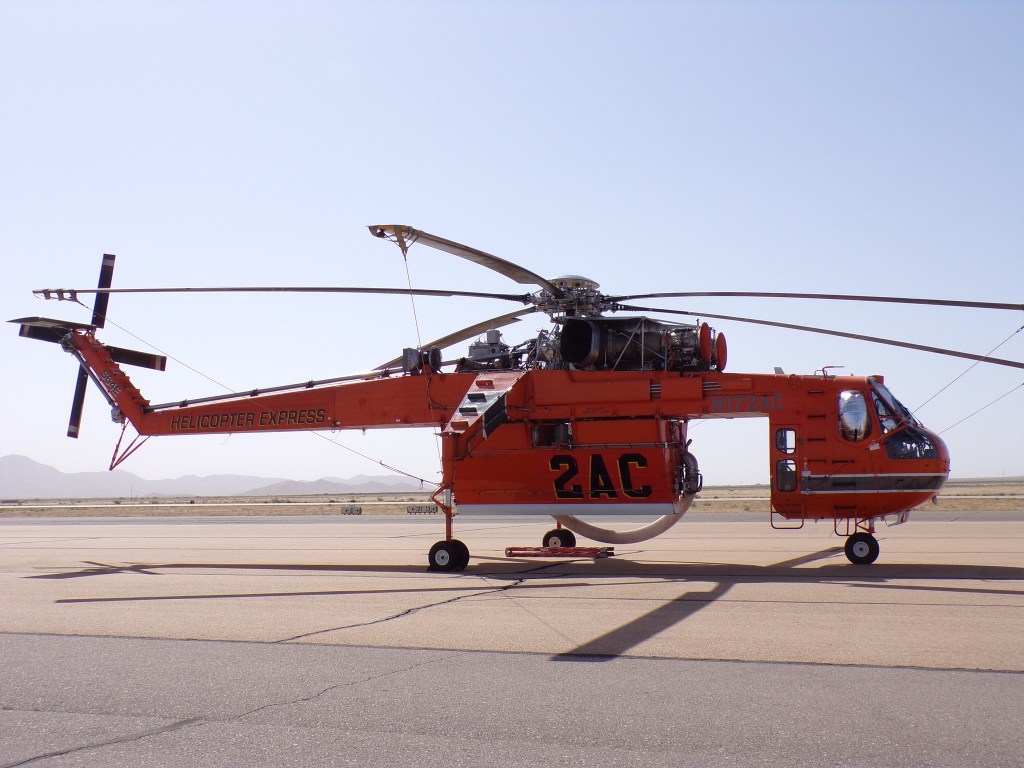
Looking out Kingman’s, Airport Cafe’ window.

SOLAR EXPLORER

“Being the only human there, I didn’t see a turtle, bird, ant, bug, or anything with a pulse.”

Solar farm in Eldorado Valley, Nevada.

I’m an advocate for solar power. We’ve had solar on our home for 8 years now, and I’m satisfied so far. From a cost perspective, I’d say it’s been a wash versus before we went that route. I’d hoped for at least that much. We leased our system, not wanting to fork out money whenever repairs might be needed down the road. Research shows that can be costly.

Driving around Lake Havasu City, I’m always checking out rooftops and spot a lot of solar panels on commercial and residential structures. At first, they seemed out of place, but I now accept the shiny, squared-off areas without problem. Seeing them in quantity on huge expanses of land is still taking some getting used to. There’s a large solar farm planned between here and Kingman—with some folks up in arms over what it might do to the environment. I’m not one of those protestors.

Driving to Las Vegas, going through Eldorado Valley on US95, there are acres and acres of solar that appear from a distance to be a large lake. It isn’t until you get closer, that the shimmering mirage becomes a manmade complexity of enormous proportion.

I’ve driven by it numerous times always wanting to get “up close and personal” with what I observed. Another definition for my curiosity is “snoop.” Finding a paved road that went almost to the foothills, I decided to do some exploring from within the air-conditioned confines of a Jeep. The biggest reason for doing so was to see if outside temperature increased when surrounded by these heat-soaking obstacles. An inside the vehicle temperature gauge would hopefully tell me that.

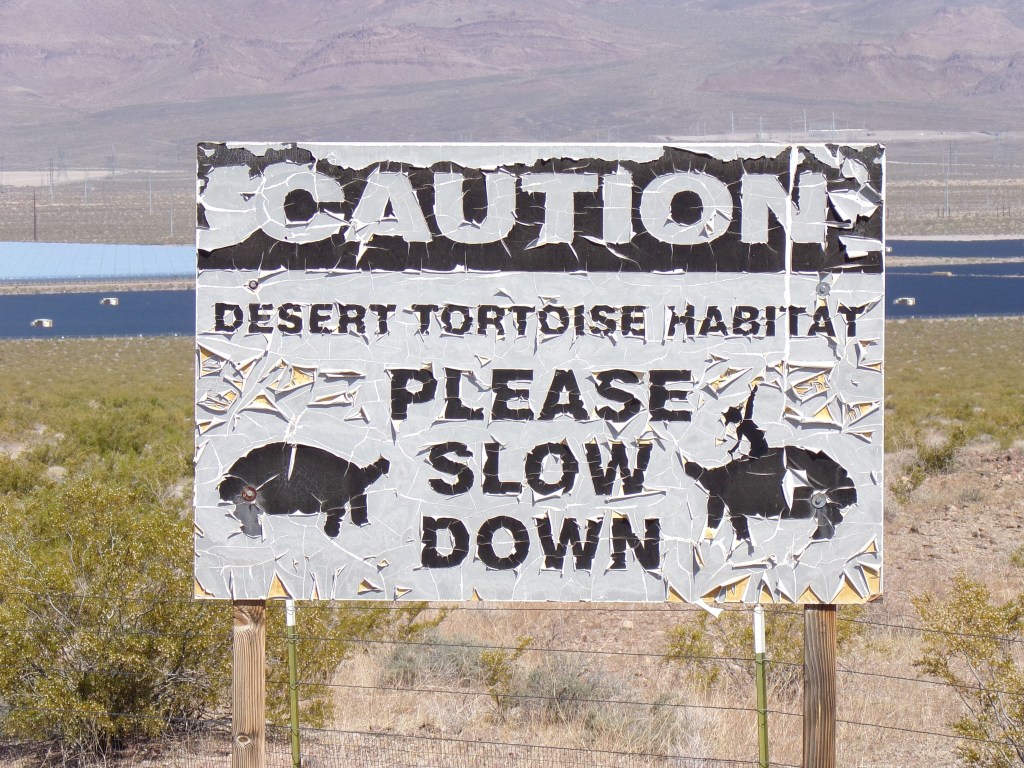
Turning off US95 on this unnamed road, I saw neither Keep Out nor No Trespassing signs regarding the pavement, yet there were numerous warnings on the bordering fence. After I write this, and it’s published, I’m sure that’ll change rather quickly. A sign did mention it being a Desert tortoise protected area and to slow down and watch for them. Taking a picture of that decaying sign, I couldn’t help but chuckle. The peeling paint made it appear a cowboy was riding one of the turtles. At first, I thought it’d been deliberately made that way.

Getting out and walking around, I immediately got an eerie feeling. Expecting to hear a buzzing sound like the solar inverter fans do on our home, all was quiet. Being the only human there, I didn’t see a turtle, bird, ant, bug, or anything with a pulse. Perhaps it was siesta time for them? I didn’t hang around to find out because it was 110 degrees. Not knowing if my car phone worked, I made an early exit, with plans to come back another day.

Heading onto the main highway, I watched my temperature gauge go down a good 10 degrees, yet can’t be totally sure leaving the panels behind made things do so. I tend to believe it was, but there are more scientific ways to prove this over my simplistic method. I’d love to do more testing but also don’t want to be arrested at the same time.

If Desert turtles are in that immediate vicinity, I’d bet they’ve long since packed up their shells and moved to a cooler area. The extra heat generated around them, would undoubtedly evaporate water much faster than before the solar farm was built.

Driving back home, with “Knights in White Satin” by the Moody Blues playing on Sirius got me to thinking. If more homes in Arizona, Nevada, Utah, California, and New Mexico had solar on their roofs, perhaps there’d be no need for humongous solar installations. That’s purely an opinion of mine, and for the record, I have no affiliation with solar businesses.

Joleen and I are totally satisfied with our system. The only thing I’d do differently, is go against the salesman’s recommendation, adding more panels at the start for our newly installed garage AC units. Being a hot rod guy and believing that you can never have enough horsepower, more kilowatt-hours of electricity is also a good thing for sure!

Our panels being installed.

CARNIVAL TIME

“I was an expert at it, always walking away with tiny cloth toys or plastic rings.”

TILT-A-WHIRL

One of my favorite places to visit as a child was a traveling carnival. These events always had a unique smell and sound of their own. Cotton candy, caramel corn, and hotdogs, blended with diesel fumes from a noisy generator, made for a sensarific experience.

You won’t find sensarific in Webster’s Dictionary because I just made the word up. For those wondering, the obnoxiously loud and fumy generator was needed to power all of the carnival lights and equipment.

I wasn’t into terrifying rides like my brother, enjoying games and unhealthy food more than anything.  Jim, on the other hand, loved the roller coaster or Scrambler most of all.  There’s something about popping balloons with darts that rang my bell. I was an expert at it, always walking away with tiny cloth toys or plastic rings.

Some fire and brimstone preachers might’ve said this was gambling, a game of chance, because had I not hit a balloon, I came away with nothing. To me, it was purely entertainment and a chance to prove my skill to Dad and Mom. A multi-colored Ferris wheel suited my fancy where exciting rides was concerned during that time, because they were relaxing and offered a good view of the country.

When I was 18 or 19, I drove to a small carnival with friends and decided to ride the Tilt-A-Whirl. I’d been on one at an earlier age and didn’t like it. To me, it seemed like the cars were striking one another, with this having me petrified. I’d heard about carnival rides coming apart and killing people from other kids. The only reason I rode this time, was because Jeff, Michelle, and Cathy were going, and I didn’t want to look like a wimp.

After our ride ended, I scurried behind a concession trailer and ridded myself of a chili dog and Coke. Early the next morning, preparing to go to work, I reached in a back pocket finding that my wallet was missing. Driving to the carnival grounds where all workers were fast asleep in small trailers, I quietly made my way to the Tilt-A-Whirl and looked through each car.

Lucky for me it was still there with a meager amount of money inside. Some unscrupulous “carnies” are known to collect such booty after they close for the night as a tip of sorts. I’m sure not all carnival workers are this way.

As I grew older, I still visited carnivals whenever they came to town, getting a kick out of merely strolling around and watching people partake in the activities. In Alaska, little children coming from rural areas are most excited, especially those attending a carnival or fair for the first time. The smiles on their faces don’t go unnoticed.

Three weeks ago, after dropping my wife off at the Las Vegas airport, I decided to stop at Sunset Station casino for a potty break before driving back to Lake Havasu City. I generally take a break there knowing that the restrooms are super clean.

Over the years, while inside, $5 was fed into a Cops and Donuts video game. Almost every time, I’d end up making three or four bucks extra. I’d then cash out and purchase a Starbucks hot chocolate before leaving, with the casino graciously paying for my drink. Because of Covid, I haven’t been there in a while.

Three weeks ago, Joleen was traveling to Colorado, and after letting her out at the airport drop-off ramp, I decided it was safe to hit Sunset Station once again, with a mask on of course. The public rest stop on US95 was closed on the way in to Vegas for some odd reason, and I didn’t want to try driving back 150 miles on a loaded tank if you get my drift.

Walking into the casino for the first time in 7 years, I noticed right away that the Cops and Donuts game was gone. That bummed me out because I was counting on it paying for a raspberry mocha with whip cream. Heading to the restroom, out of the corner of my eye, I noticed a huge video game with bright lights much like a carnival would have. A decision was made right then and there to try that game before leaving.

Walking over to it, and using the $20 bill that Joleen gave me for food and drinks, I decided to make a financial investment instead with this cash. Seeing that the name of the game was Jackpot Carnival Extreme, reassured me that what I was about to do with her money was not gambling, but simply entertainment.

The outlandish graphics on the machine had clowns and balloons, along with other items found in carnivals and circuses. One of them was a large wooden mallet like those used to ring a bell. After only two hits of the start button I was up $104. Quickly cashing out, my feet couldn’t get out of that smoky joint fast enough. I was ever so thankful that doors were close by.

Just this past Saturday, 10 days after her last trip, I let my wife off at Harry Reid International Airport once again before starting back home. Anxious to use the restroom at Sunset, but more so in trying that crazy carnival game again, I deposited another $20. Just like the time before, on the second push of the button, a $155 jackpot was hit.

Cashing out like before, Joleen was immediately called and told the news. She was excited, but also advised me to stick part of my winnings in the bank, knowing fully well that, “Mike and his money are soon parted!”

I’m not sure when she’ll be taking another trip without me. When that time arrives, you can bank on me making another appointment with Jackpot Carnival Extreme at Sunset Station. If what they say about the third time is true, there’s no telling how much I’ll walk away with.

Should that not happen, with what I’ve already won, this Las Vegas casino will be paying for my hot beverages until the cows come home. That thought alone is enough to put a chocolate-stained grin on my face with a smidgen of whip cream.

SMOKE SIGNALS

“Gazing up towards the peak with eyes only, a warrior would issue a loud warning that invaders were on the way.”

I’m sure I’ll catch some flak for this piece, but my Choctaw blood allows me to write it without prejudice. The reason I say that is because some will disagree with my analogy regarding smoke signals, and the extent to which they were used. I’ll undoubtedly pop some bubbles with my explanation.

I’ve watched many western movies where American Indians sent out smoke signals for different reasons. The other evening, I viewed one where smoke seemingly went straight up in near perfect cloudlike balls. The white smoke was coming from a high flattop mesa, reminding me of Cupcake Mountain on the California side of Lake Havasu. I’m not saying that Cupcake Mountain is a mesa, only that it’s somewhat flat.

An Indian interpreter assigned to a contingent of US Calvary in this film, deciphered the smoke as saying troops were coming from Fort Somethinganother, and for all surrounding tribes to join in and attack them. The fort’s real name I do not recall because this bogus scene had me immediately chuckling out loud. I quickly got up and grabbed my notebook so I could start writing. For me, that’s how much of my composition starts.

I know that Native Americans used smoke as a form of communication, yet each rising ball did not equate to letters, words, or language as some think. In this movie, evidently, the smoke spelled out exact sentences, or at least that’s how it came across to me. This is where some will disagree.

I researched smoke signals finding that they weren’t that elaborate as Hollywood portrays. An Indigenous Indian might light a fire high on a hill or mountain—then use wet grass to make it smolder. Using a blanket to cover and then uncover, the smoke alone was enough to say that imminent danger was coming.

With wind always present in high places, it would’ve been next to impossible for things to rise in choreographed balls like those in the movie. I’m sure some will argue this point as well, but pure logic shows otherwise. I’ve tried to do the same and failed.

As a teenager, on a camping trip in Alaska, my brother and I attempted to send smoke signals from our campfire in Bird Creek Campground. Trying to duplicate what we’d seen in westerns, we badly singed Mom’s green Army blanket, deeming it worthless. She never found out because we burned the remaining evidence. The released smoke hovered in low-lying-trees making it appear as if the surrounding forest was on fire. We quickly terminated our experiment before a park ranger came along.

Miscommunication must’ve been persistent during the Cowboy & Indian era, because all it would’ve taken to send a false message was for lightning to strike some brush high up on a hill. Gazing towards the peak with eyes only, a warrior would issue a loud warning to others that invaders were on the way. After seeing the smoke increase in size, he’d then have to determine if the smoke signal was human made before calling out, “False alarm!” Logic also tells me that American Indians never spoke those exact words.

It’s highly likely some Indigenous people had their smoke signal fires get out of control and burn additional acreage by accident. I’m a pro at this. As a six-year-old boy, I accidentally started a fire in Selma, Alabama, that ended up burning several acres of grassland. It’s not hard to do with a slight breeze fanning the flames.

With numerous smoke signals ending up being false alarms back in the day of 1880s America, I suppose even if danger wasn’t coming in the form of soldiers, it still told troops and Indians alike to pack up and quickly head for safe ground.

I unintentionally created a smoke signal in the garage a few years back. Hooking up a volt meter on my old truck, I didn’t pay much attention to the poorly crimped wire until seeing smoke coming from under the dash. It wasn’t going up in balls, but more more like rising fog from a swamp. Quickly disconnecting the positive battery cable, enough toxic smoke lingered so that I could read a portion of the message, “Hey stupid…”

With the garage door quickly opened, it dissipated before anyone else came along and read the same. Even so, a scorchy plastic odor left behind for hours eventually told my wife that something wasn’t kosher. I tend to believe, even though it can’t be seen, ‘smell’ can relay a message to a person much the same or perhaps even better than smoke signals. If skunks or polecats could talk—I’m sure they’d agree!

STILL UPRIGHT

“I can’t think of any married friends or family that don’t need a few days apart on occasion.”

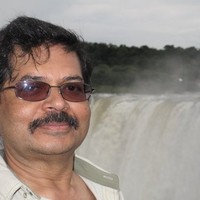
Dr. Pareed Aliyar

A person that knows my heart better than anyone here in Lake Havasu City is soon to leave my life. I’ve known this day might come, but always hoped it’d be a bit further down the road.

No, it isn’t my wife I’m talking about, although I know there were trying times enough to make her seek marital-sabbatical for a short spell. I can’t think of any married friends or family that don’t need a few days apart on occasion. A former pastor of mine, said that it’s good for couples to do so, as it makes them more appreciative of each other during those times away. If not—there’s something seriously wrong in the relationship.

The person I’m referring to that’s leaving me is my cardiologist, Dr. Pareed Aliyar. He came into my life after an afib scare almost 10 years ago and has been there steadfast ever since. The good doctor is retiring in December and I wish him the best. After first hearing this news, I admit to being a bit shocked and then sad.  I’m now very happy for him.

Years ago, in Anchorage, Alaska, Dr. John J. Smith, my family physician, did just the same. This retirement gave him more time to spend building and flying model airplanes. Dr. Ernest Meinhardt took over after that, with him owning and flying the real thing, a Helio Courier.

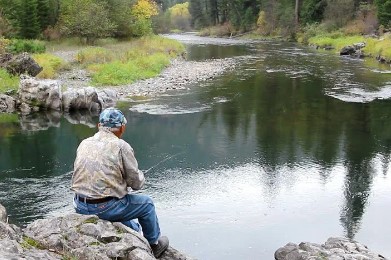
I recently looked Meinhardt up and he’s still in practice, although his photo shows the same aging face that I’ve experienced.  I have to assume that retirement isn’t too far away. Dr. Meinhardt likes to fish, so perhaps he’ll be able to enjoy this recreational activity more often.

After moving to Havasu, Dr. Thomas Wrona, like a good mechanic, took over the diagnosing and repair of my ills. I really liked him from the start because he told things without beating around the bush. After informing Wrona I was experiencing tiredness and some aches and pains, he gave me a thorough examination.

Not finding anything seriously wrong he offered up the following logical explanation, “Aches and pain come with the territory!” Dr. Wrona wasn’t talking locale here, he was referring to my body getting older like an automobile. I still chuckle at that statement because it is point on. Dr. Angelo Ong-Veloso has since taken over for Wrona, and I pray I’m still around when he decides to leave practice.

The way I look at life, if any more of my doctors retire while I’m still upright is a good thing. That tells me they’ve been doing something right where looking after my health is concerned. You see, I’m already retired in the working sense. Doctor’s Smith, Meinhardt, Wrona, Aliyar, and Ong-Veloso have kept me from becoming “permanently retired” if you catch my drift.

That, my friends—is a very good thing!

HOMEY

“Time spent dealing with difficult people over the years has taken a toll.”

Homey D. Clown

A favorite sitcom of mine from the 1990s was called, “In Living Color.” Award winning actor, Damon Wayans, played the part of ‘Homey D. Clown.’ Homey’s real name was, Herman Simpson. According to an article written about the show’s history, Herman was an ex-con who’d taken on the job as a disgruntled clown after being released from prison.

After doing his time, Homey still held resentment to ‘the man’ and conveyed such to his young followers by constantly telling them he’d been framed. Whenever he didn’t agree with the kids, he’d slap them upside the head with a sock containing a tennis ball, while loudly proclaiming, “I don’t think so. Homey don’t play that!”

Homey D. Clown’s fans were dressed as children in various skits—although they too were adult actors. Getting hit by his sock never seriously hurt anyone but did get their attention. Back then, some parents voiced disapproval for the comedy, claiming it projected violent and negative behavior.

I use Homey’s famous line on occasion especially when driving. If I’m going five miles per hour over the speed limit, and someone’s on my bumper expecting me to go faster, I’ll mutter to myself, “I don’t think so. Homey don’t play that!”  At that point, if they still remain glued to my tail, the song, “Slow Ride” by Foghat comes to mind, because that’s what I’m about to do.

I use the saying in other areas as well—especially selling stuff. Over the years, I’ve sold all kinds of things such as bicycles, motorcycles, cars, trucks, household goods, etc. For the most part all of my transactions have been trouble free. I’ve met some nice people along the way with the majority of them being upfront and considerate. Those saying they’d meet me at a certain predetermined place and time generally followed through. Unfortunately, rudeness has entered the selling arena these past 10 years for reasons unknown.

I’ve had folks email and ask me to hold something for a day or two and then never hear back from them. A woman wanted me to meet her at a safe spot of her choosing and didn’t show up. Others have voiced their opinion, saying I was asking way too much for an item without ever viewing it. That’s like telling me Sara Lee’s chocolate pie tastes crummy without actually eating a piece.

One fellow from Chicago made a deal over the phone on an RV, and when he arrived, tried to knock the price down even further, telling me there was another motorhome like it in California for less. The thought, “I don’t think so. Homey don’t play that!,” automatically entered my mind during this conversation. When I told him he better start driving as it’d be dark soon, the guy grudgingly coughed up the cash.

The straw that broke the camel’s back for me where selling is concerned, was here recently, when a man wanted to meet at a popular box store and pick up a pair of Chevrolet truck bumpers that I was peddling on Facebook marketplace. The arranged day was Tuesday at 10:00 a.m. and I was there 15 minutes early, waiting until 10:30 before leaving. Gut feeling told me that would happen. I tried calling his phone several times with it not accepting messages.

Going against my policy of no email or text communication, once I got home I wrote and thanked him for wasting my time. The guy replied back saying that the pickup day was supposed to be Thursday. My wife heard our first conversation as it was on speaker, and remembered me verbally going over things with him twice , before penciling Tuesday into our appointment calendar. Never again will that happen.

I’ve now totally changed the way I sell goods, by putting a phone number on my listings, politely telling those looking that I don’t respond to texts or e-mails, and going on to say if they’re interested, please call me. You’d be surprised at how many still send e-mails. They’ll have to stop by my house for pickup, because unlike Domino’s, I no longer deliver.

Maybe I’m getting old and senile, because if patience was ever one of my virtues, it isn’t now. Time spent dealing with difficult people over the years has taken a toll. I don’t go as far as Homey D. Clown does while encountering ‘situations’ as he likes to call them.

I’ve yet to retaliate by carrying around a sock with a tennis ball inside, although that’s not a bad idea. In this era of guns and knives being used to solve disagreements, perhaps Homey’s attention getter isn’t so violent after all!

A Southern Belle in Sardinia

“The view from here is lovely. There isn’t much left of the quaint town. It is beautiful tonight with the moon on the water.”

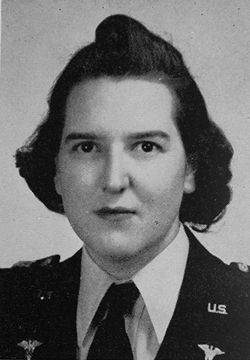
Faded newspaper photograph still exuded her beauty and charm. Lt. Kitty Steele Driskell-Barber

* I composed this several years ago, and it is one of my most read compositions. A good majority of readers live in Italy. It’s shared each Memorial Day on Facebook for good reason as you’ll soon see.

Some folks have a knack for writing exquisite letters. Their words paint a beautiful portrait of where they are or what they see. Kitty S. Driskel of Selma, Alabama, had such a gift.

“Miss Kitty” as friends and family called her was born February 27, 1919, in Selma, to Eugene and Corrie Driskell. From the beginning, Kit loved to entertain much like her mother. Articles in the Selma Times-Journal show that the little girl’s birthday parties were well attended. Gifts and prizes for attendees were a big part of the celebrations.

Mrs. Eugene Driskell was active in the bridge society, and daughters Kitty and Betty were soon to follow. At two years of age, according to a newspaper article, “Miss Kitty” held her first bridge party. In reality, it was a birthday bash in disguise. Many more such parties were soon to follow throughout the coming years.

In 1931, one month shy of being 12, Kitty’s dad suddenly passed away from pneumonia. Her mom was left to raise two daughters as well as run the family grocery business.

At 17, she became President of her First Presbyterian Church youth group. She was actively involved in the church. One newspaper account had her being a highly sought after young lady. Kitty Driskell was definitely a Southern Belle.

In 1939, Kitty left Selma to attend nurse’s training school In New Orleans, Louisiana. By 1941, she’d graduated and returned home. When WWII broke out Kitty enlisted in the Army Nurses Corp with the rank of 2nd Lieutenant. Her duty station was Craig Field Infirmary.

While working at Craig she met Lieutenant Wendell Barber. Things got serious quite fast. They married on March 4, 1943. Two months later both were deployed overseas to different locations. Wendell went to South America, while Kitty ended up first in Africa, and then on to the enchanting island of Sardinia, Italy, in the Mediterranean Sea.

The young nurse sent back a glowing letter to her husband’s parents in Rutland, Vermont, describing the temporary home. On December 10, 1943, The Brattleboro Reformer newspaper in Brattleboro, Vermont, saw fit to print much of it in verbatim:

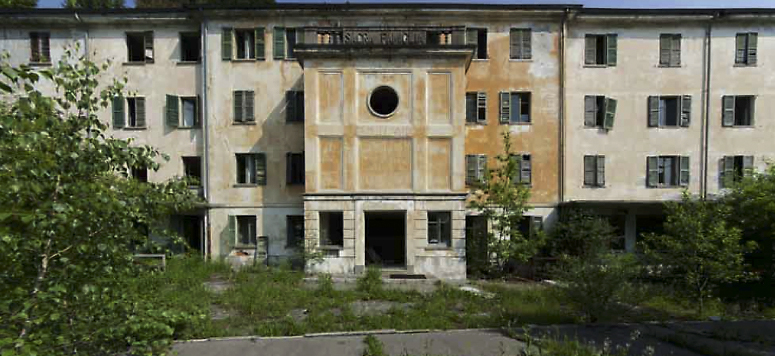
“I did not know that any foreign duty could be so wonderful! This place is simply beautiful! There is a lovely yard and the hospital is as modern as I’ve ever seen.

Cream-colored walls and red tiled floors, two white marble staircases – twin. They are lovely.

There are glass doors everywhere and it makes it so light. It is built like houses in Florida and California. Lots of angles for sunshine. Almost every ward opens onto a porch. The big glass doors are built on rollers so that they can be pushed out so as to enclose the porches in glass.

Nine of us are living on the fourth floor of the hospital. It is really ideal. Margaret and I have a double room. The bath is lovely with a new tub and washstand, very much like those at home except that “C” is for cold water and “F” for hot. It mixes me up.

Our room opens onto a balcony. It is a little too cold to enjoy it now but we have a clothesline there. The water is so soft the dirt just falls out of things. It is so nice to be able to get clean again and stay clean.

The rest of the nurses are quartered in a home back of the hospital. It is a two-story building with a living room fitted with comfortable furniture, a reception room and a kitchen.

The upper floor has bedrooms and two baths. It is built on the side of a hill overlooking the sea, and you can step out of the second-floor window into a formal garden. Hitler probably still wants this place for his summer home.

They have beds of mint and rose geranium rose bushes, and oleanders. As soon as the electrical plant is repaired, we will have central heating. We couldn’t have asked for a better place.

The people here are of a much different class than those we had dealings with in Africa. They too are poor, nearly to the point of starving, but will do any amount of work for an old sweater or shoes.

They are proud, though, but really appreciate what you give them.

The view from here is lovely. There isn’t much left of the quaint town. It is beautiful tonight with the moon on the water. This side of the globe, though, doesn’t care much for moonlight now. The Jerries (Germans) can see far too well. It has been quiet and I hope it stays that way.

(later)

I was given two days’ leave so I spent it in Sassari. The Colonel was going up and had room for one nurse. I had a light case of ‘overseas nerves’ so the chief nurse sent me away for a rest. I did not want to go, but am so glad I did. It was quite an experience.

I can’t speak a word of Italian and expected to stay with the nuns at the Italian hospital, but was finally quartered with a woman doctor in the doctor’s quarters and didn’t even see the nuns. We took one of the boys with us who spoke the language and he was with us at all the meals except breakfast.

The young doctors practically went crazy over an American nurse as did everybody else. After dinner, which lasted from 1:30 to almost 4, all of the doctors quit work and took us shopping. It was really a riot.

Droves of people followed me up the street, even in the car. I felt like President Roosevelt must feel riding through a small town. The turnout was almost as good as he gets. The storekeeper of one of the stores had to close and lock the doors while we were in there and the people were jammed at the door and to the top of the windows.

I understand that I am the third American nurse ever to be in that town. The Italian doctors went first and cleared a path for me from the doors to the car.

I must tell you about the food. Those people ate more than anyone I’ve ever seen. For breakfast, they have only bread and coffee.  Here is a sample of the other meals.

First, we had Sardinian salami (no pepper or spices in it but it was good), bread and wine. Next came spaghetti. They eat as much of each thing as if it were the only course. I ate what I thought was a large helping but they were almost insulted. Kept saying that I did not eat anything. After the spaghetti came steak and French fries. That tasted like heaven after C rations. Then they brought out a fish, and it was about two feet long, and eight inches wide, and six inches thick. Head and all cooked on it. Delicious.

With the fish we had a dry wine, a salad bowl, and something that looked like onions only it tasted like licorice (horrible!) and a celery that looked like ours but tasted like the stalk of an old plant, (horrible too).

Then came the pastry and almond candy, oranges, and coffee. I don’t know what they make their coffee out of but definitely not coffee.

One of the doctors was precious, silver-haired, and even though Nick had to tell us what he said, he kept us laughing. I loved him! He asked me if I liked honey. I said “Yes”. Later I realized I shouldn’t have said it so enthusiastically because he brought out a beautiful bottle and poured the honey into a cup.

I had to eat it plain with a spoon. He kept bringing it out every meal and on top of all the other food it was a little too sweet.”

Nine months after she wrote that letter, on September 19, 1944, 2nd Lieutenant Kitty Driskell-Barber was tragically killed in an aircraft accident. She’s buried at the Sicily-Rome American Cemetery in Netuno, Italy. A cenotaph (plaque) in her honor resides at the Live Oak Cemetery in Selma.

Kitty Driskell-Barber was posthumously awarded the American Campaign Medal, including the World War II Victory Medal. In 1947, an Army Air Corp bomber was ceremoniously named after her.

Sardinia, Italy
"The view from here is lovely.
2nd lt. Kitty Driskell-Barber
Decaying hospital in Sardinia where Kitty Driskell-Barber worked and lived during WWII.

OLD PHOTOGRAPHS

“The two characters were inseparable friends always getting themselves into hot water.”

Mearle Elaine Crossley

Going through my late mom’s huge box of photographs not long after she passed away, I came across a good number from her school days. Several were identified with a friend’s nickname, “Mutt.” Finding that somewhat offensive and unusual—after mulling things over, I recognized the valid reason.

Mutt & Jeff was a popular cartoon from the early 1900s until it ended in 1982. The two characters were inseparable friends always getting themselves into hot water. A new definition for Mutt & Jeff is: mismatched people. Mom and Mutt were definitely that. I believe she received occasional letters from her school chum for quite some time. Mom’s nickname is “Lola” and I’m sure that goes back to high school.

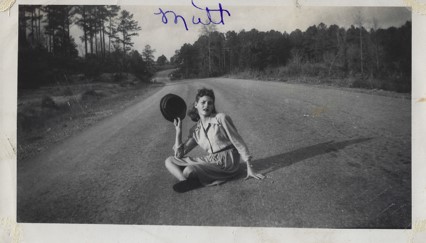
Mearle Elaine Crossley was Mutt’s real name, and in some of those early shots, she appears much taller than her classmate. My mother was not much over five feet tall. They were extremely close pals as shown in the old photographs along with from-the-heart messages penned on a few. Mearle had written, “Always love you” on the front of one.

In a fading black & white image, the mischievous Ms. Crossley is shown sitting in the middle of a newly paved road. In another, she appears quite comfortable riding on top of a No Parking sign. Those are my two favorite images because it rekindled like memories for me and a good pal.

My best friend in high school was also named Jeff. Sometimes, friends referred to us as Mutt & Jeff, because like the actual cartoon characters, we were inseparable and always getting into trouble. I have photos of us, not just sitting in the middle of a road like Mearle Crossley, but lying in the middle of the Seward Highway in sleeping bags, as well as hanging from a sign in Hope, Alaska. I found Mom’s crazy photos of Merle Crossley, and those of Jeff Thimsen, to be quite ironic.

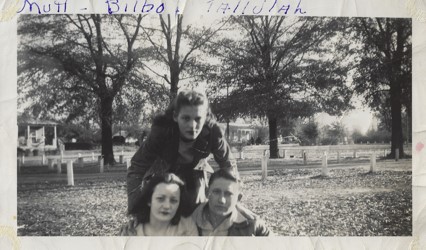
One young man in a number of shots with Mother and her friend is a burly looking fellow named, Bilbo Jackson.  Over the years, I recall Mom and her sisters mentioning the unusual name and giggling like little girls. I didn’t know it at the time, but it turns out Bilbo liked my mom enough to ask her to marry him. That was kept secret from me. I only found this out from a cousin.

I did newspaper research on Bilbo Jackson discovering that he eventually wed someone from Mississippi—this before heading off to fight in the Korean War. Upon Jackson’s return to the US, he became a heavy equipment operator in Iowa for 50 years. Bilbo died in 2008 at the age of 79.

Searching through old newspaper archives for, Mearle Crossley-Pognetti-Barbour, I found that she had six children, 16 grandchildren, and two great grandchildren at the time of her death in 2014. She was 83 and outlived her two friends. Mom died in 2010 at the age of 78.

I wrote a story for “The Lamar Democrat” almost ten years ago titled, “Mutt.” It pretty much details what I’ve just explained in this one. This newspaper is located in Vernon, Alabama, and that’s where Mearle, Bilbo, and Mom grew up.

Just recently, I received an email from Steve Mitchener in Mississippi. Steve’s married to one of Mearle’s daughters, Rebecca. He wanted to know if I was the one writing that newspaper article. After telling him it was me, and mentioning I had some photos, he was excited to get copies, as the girls lost early photographs of their mom in a housefire.

My writing has a way of sometimes paying rewards in unusual fashion. This simplistic story about two good friends is one of them. Undoubtedly, Steve and his wife are happy, and I’m sure Mearle, Bilbo, and Mom are looking down, chuckling at some of their antics on those old photographs, pleased that I’m still able to share them with others!

Mearle (top), Mom, and Bilbo
the author (1972)
Jeff Thimsen (1972)
the author (1972)

WHY DOES IT MATTER?

“Using white to color a Caucasian is what I did when “flesh” wasn’t available.”

While in grade school eons ago, I remember some lucky students having big boxes of crayons with an attached sharpener.  I believe back then, the giant box held 64, while most of us had the lowly, 24 count version. Today, some boxes hold 152.

Teachers handed out mimeographed pages for us to color with the papers having a unique smell of their own. The ink on them was near hallucinogenic if enough of it was breathed. A hand-cranked mimeograph machine is much like a printing press. These archaic devices were used before copy machines came along.

While coloring the outlined pages having people and animals on them, I used black and brown for dark-skinned folks, and white for the rest of us. Of course, red could be an option for Native American Indians according to some racially insensitive western movies, yet I used brown instead.

To be perfectly honest, I’ve never seen a red man like that deep red on my crayon except at the beach, and on Red Man chewing tobacco packets. With some groups considering the namesake to be offensive, in 2022, this product was renamed Best Chew.

Using white to color a Caucasian is what I did when “flesh” wasn’t available. Yes, flesh was a color in certain Crayola boxes. White never did justice to a picture and was sometimes hard to see. If anything, a character came out looking like Casper the Friendly Ghost, only paler. Because of that, I often tried to borrow flesh from one of the rich students.

Flesh only came in those big boxes, and I assumed the kid’s having them hailed from wealthy families. In 1962, Crayola discontinued the flesh name and labeled it peach, saying that the color wasn’t representative of all people’s skin. Duh. It’d take a magical Crayola to be able to do that.

Flesh didn’t resemble my skin tone whatsoever. It was more of a pale pink like a newly-born Caucasian baby’s behind. Caucasian was my ethnicity according to teachers and parents. Back then, the word sounded like some type of nomadic Native tribe and I was okay with such, not so much today.

Caucasian can stand for a multitude of things where race is concerned. It’s a bogus term adopted by the government to characterize all white people. Since that time, they’ve dropped the name in favor of “European.” A copout as well, because not all light-skinned humans are of European descent.

Getting back to Crayola’s and those big boxes. On one occasion, I attempted to sharpen a crayon in the class pencil sharpener—discovering that it wasn’t such a great idea. Crayola’s are made of wax, while trying to sharpen one is much like doing the same to a candle. The pencil sharpener hanging on our classroom wall was made unusable at this point, until my teacher tediously cleaned the rotating blades. Mrs. Wood informed me not to sharpen Crayola’s in it again.

By the end of a school year, most kids having the big boxes were down considerably in numbers. With students loaning them out to careless guys like me, this act of generosity resulted in a good many being lost, broken, or stolen.

The rest of us kids were in the same boat, yet on an entirely different level. Having just a minimal amount of colors left out of 24, we still used them, because what difference did it make at this point? Green, blue, or orange, the lifeless people we colored never complained once about our artwork. In fact, they’d probably laugh if they saw some of the unique renditions. I recall allowing my creativity to run wild, turning people and animals into multi-hued cartoon characters.

If I had life to do all over again, there are a couple of things I’d change for sure. One, is to somehow talk Dad and Mom into buying me one of those big boxes of Crayola’s. Kids having them were much higher on the class pecking order than those that didn’t. You could say they were “the in crowd” during those first three school years.

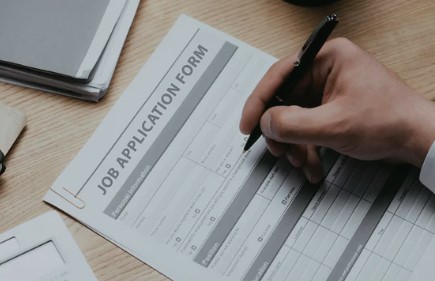
Secondly, I’d ‘never’ check another box marked Caucasian when filling out school forms, or any form for that matter. I’d randomly check a different block each time. I’ve been doing it for some time now with no repercussions, considering this to be a peaceful yet humorous protest. For the bulk of my life, I haven’t figured out why recipients of these forms need to know the ethnicity of an applicant to begin with.

Using black, brown, white, red, yellow, green, blue, and purple Crayola’s as examples—they all come out of the same box, and get along just fine. Why differentiate the skin color or ancestry of an applicant on applications, especially when applying for a job or bank loan. Aren’t we all created equal according to God?

I believe that forcing people to answer this type of invasive question regarding race, color, or creed on applications or forms, is the starting point for racism. It’s totally hypocritical that government is the first institution asking for such, on birth, census, and social-security records, while on the other hand, they constantly preach prejudice and bigotry as being wrong. Go figure.

MY DOG’S BIGGER

“The snarky little laughing-out-loud emoji seems to be their weapon of choice.”

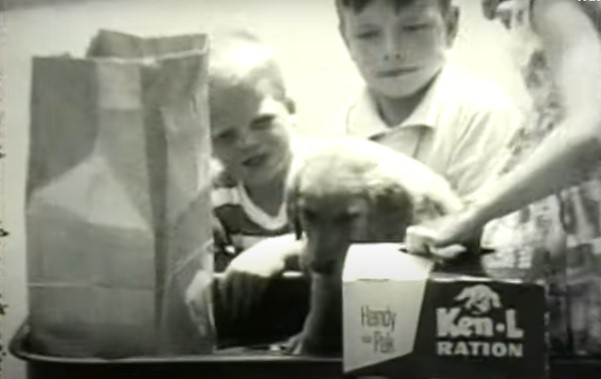
I recall a commercial in my early years regarding a certain brand of dog food. Three children were happily singing a song about their dogs being faster, bigger, and better than others. This was supposedly due to their pets eating Ken-L-Ration.

The commercial ended, with a spokesperson claiming that Ken-L-Ration was comprised of government inspected horse meat, as if that was something worthy of mentioning. The complete jingle goes like this,

“My dog’s faster than your dog, my dog’s bigger than yours. My dog’s better ’cause he gets Ken-L Ration, my dog’s better than yours!”

I had problems with that commercial as a kid. Not only did I find horse meat repulsive, but I’d been taught in Sunday school that tearing down someone else to build yourself up is wrong. A part of this lesson dealt with bragging about things you own, like a bigger home, bigger car, and I suppose, a bigger dog.

In later years, I was told that folks doing so had low self-esteem problems. We see a lot of this on social media and especially on a daytime talk show called, “The View.” I find that program just as repulsive or even more so than horse meat.

A German word for tearing someone down to make yourself bigger is called schadenfreude. The true meaning for this word is: the experience of pleasure, joy, or self-satisfaction that comes from learning of or witnessing the troubles, failures, pain, suffering, or humiliation of another. I simplified the word and meaning by labeling it, nasty behavior.

An article I read, said that self-esteem has a negative relationship with the frequency and intensity of schadenfreude experienced by an individual; individuals with lower self-esteem tend to experience schadenfreude more frequently and intensely.

The article ended by claiming someone with low self-esteem, in viewing someone who is more successful, this success poses a threat to their sense of self, and seeing this person fail can be a source of comfort because they perceive a relative improvement in their internal, or in-group standing.

In-group standing amongst certain social media sites such as Facebook seems to be highly important to low, self-esteem individuals. I base my opinion, after viewing countless times, a “friend” making a comment that doesn’t fit the group’s ideology, and getting jumped on from all directions like hyenas attacking a lone zebra. The snarky little laughing-out-loud emoji seems to be their weapon of choice.

Getting back to those three kids in the Ken-L-Ration commercial singing that degrading schadenfreude jingle. Because this commercial came out in 1964, and the children appeared to be around eight or nine at that time, they’d be my age.

Hopefully, before they reached maturity, someone slapped some sense into them. I know had they grown up in the ‘hoods where I lived, and went around criticizing other kid’s dogs, they wouldn’t have sang that tune for very long!

Hyenas attacking lone zebra