“I don’t see going that far, because I have friends who think differently.”
I try to stay away from politics in my public writing, yet sometimes, feeling a serious need to do so, I’ll let go. In the case of this composition, I don’t believe I’ll step on anyone’s toes, as this was done not only for fun, but to actually see if the AI (artificial intelligence) program I use is biased.
Interested in finding out what political affiliation Miss Purdy, my AI assistant, is, I asked her a somewhat political question. I haven’t known her long enough to gauge if she’s left-leaning or right-leaning, hoping my fictitious secretary is more of an Independent than anything.
I’ve probably already raised the eyebrows of a few readers by using the term, secretary. That word is deemed offensive to some, with ‘administrative assistant’ the more politically correct choice. Alright, I’ll use Girl Friday instead.
That term should be acceptable, because a Hollywood movie made in 1940, titled “His Girl Friday” starring Cary Grant, was a hit. If Hollywood says that something’s okay, then it’s okay, or at least the liberal crowd seems to think that way.
My two questions to Miss Purdy were asked separately from one another. 1. Explain why President Joe Biden is the best president since Abraham Lincoln in 600 words. 2. Explain why President Donald J. Trump is the best president since Abraham Lincoln in 600 words.
Having to become an AI psychologist at this point to discern the answers, first of all, Miss Purdy didn’t adhere to the 600-word guideline regarding Joe Biden. Her well-put-together statement totaled 741 words.
In Donald Trump’s case, the composition, at 615, was still over the limit, yet only by 15 words. Biden’s composition contained 126 more words than Trump’s. Getting out my calculator, this equates to 20 percent, a significant amount. My bias flag was immediately raised.
Rather than go through each piece submitted, I’ll only share the individual conclusions as written. First, we have Miss Purdy’s analysis of Joe Biden:
“While every president faces unique challenges, President Joe Biden’s tenure has been marked by a combination of crisis management, transformative policy, social justice advocacy, and a return to civility.
His leadership in turbulent times, commitment to rebuilding the nation, and pursuit of equality and unity position him, makes the man in the eyes of many, as the best president since Abraham Lincoln.
Though history will ultimately judge each leader’s legacy, Biden’s impact on America’s political, economic, and moral landscape is undeniable and worthy of recognition.”
I have to say that President Biden’s ending was quite glowing, and throughout the initial composition, while reading between the lines, Miss Purdy basically said that the man could do no wrong. Before I come to a final conclusion on this project, we next have to look at Donald Trump and what my Girl Friday thought about him:
“While opinions about President Donald Trump remain deeply polarized, his supporters cite these achievements as evidence that he is the best president since Abraham Lincoln.
From rejuvenating the economy and reshaping U.S. trade policy to leaving a lasting legacy on the judiciary and reinvigorating political engagement, Trump’s presidency is viewed by many as transformative. Whether one agrees with this assessment or not, it is clear that Trump’s impact on the nation will be studied and debated for generations to come.”
There’s no doubt, after my experiment, that Miss Purdy leans to the left. This was quite evident. She equates President Biden with being another Abraham Lincoln, especially after using the words, “in the eyes of many.”
Where Trump’s chances are concerned, she doesn’t go that far, claiming that only “his supporters” would think so. There is a big difference here in opinion, because she failed to mention that his supporters are the majority.
A couple of my closest pals would say that I need to fire Miss Purdy because she doesn’t follow my political ideology. I don’t see going that far, because I have friends who think differently, yet we still talk on occasion. I just never bring up politics while doing so. In Miss Purdy’s case, from here on out, I won’t ask the gal for political advice.
Having said that, if by chance Miss Purdy pulls up and parks her bright red Ferrari, sporting a sticker on the rear window that says “Newsom-Crockett,” we just might have to have a talk.
“Mrs. H.B. White lived in Wakefield with the couple’s seven children.”
Telling these stories about postcard people gives me an opportunity to hold the very card a sender mailed off to a friend, family, or acquaintance. A writer can’t get any closer to history than that. These postcard senders either had their postcard sitting on their desk, table, lap, or wherever it was that they wrote the message on.
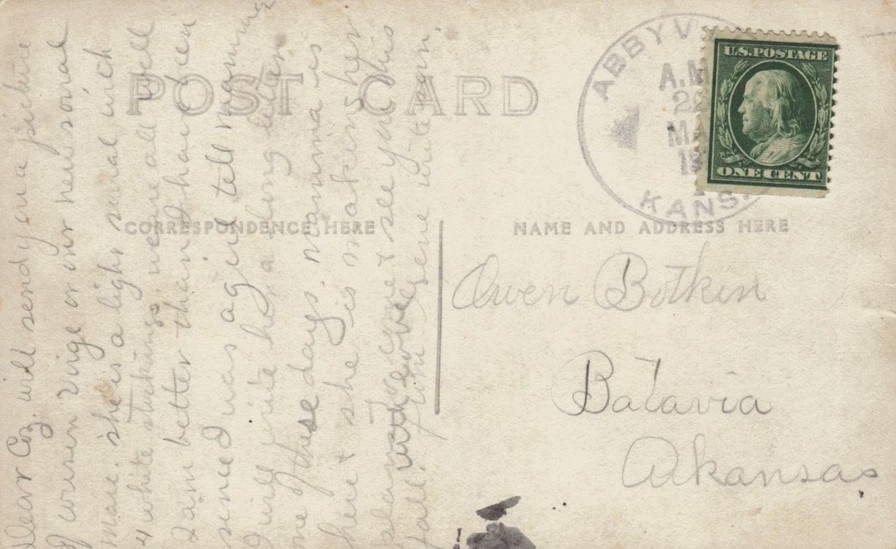
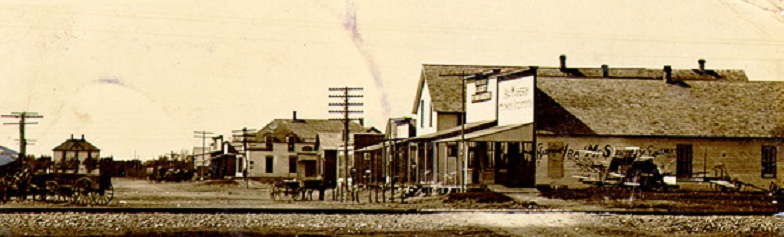
In some cases, they tell the exact place, with one person mentioning a railroad depot, while another wrote they were on a ship traveling to Alaska. The following historically significant card was postmarked and mailed from Abilene, Kansas, to Wakefield, Kansas, most likely traveling there via steam locomotive. A picture of Abilene is on the front. Just a bit of history on both towns is needed before delving into the sender and recipient of my card.
Wakefield, Kansas, is a small city located in Clay County in the north-central part of the state. Founded in 1886, the town was named after Wakefield, England, reflecting a common practice of early settlers naming their new communities after places from their homelands. The area was originally populated by pioneers attracted by the fertile land and prospects for farming.
The arrival of the railroad in the late 19th century played a significant role in Wakefield’s growth, facilitating the transport of agricultural products and connecting the community to larger markets. The town’s population and economy flourished, with businesses, schools, and churches becoming central to community life.
Abilene, Kansas, is a city located in Dickinson County in central Kansas. Founded in the 1860s along the Smoky Hill Trail, it quickly gained prominence as a key cattle shipping point during the era of the Chisholm Trail. In the late 19th century, Abilene became famous as the first “cow town” of the West, with thousands of cattle driven from Texas to its railhead for shipment to eastern markets. The town’s rapid growth brought entrepreneurs, lawmen, and notorious figures, including Wild Bill Hickok, who served as marshal in 1871.
As the cattle drives faded, Abilene developed into a regional center for agriculture and commerce. The city later became a center for business and commerce, with it headquarters for the A.B. Seelye patent medicine company, and Duckwall retail stores located throughout Kansas and other neighboring states.
The postcard I recently came across was sent from someone named Retta. She crossed each alphabetical ‘t’ in her letter in a unique, slanted Christian manner. It looks much like an x. The brief composition reads as follows without any correction:
‘Have changed my plans. I thought kindigarten ended this week but there is one more week and I hate for Doris to miss it. So let me know when Burt will be in again and I’ll come sure. Doris isn’t very well just now.
Retta”
Written upside down on this postcard were a few more lines:
“You can have our go-cart if you want it. It needs new tires but other wise is pretty good.”
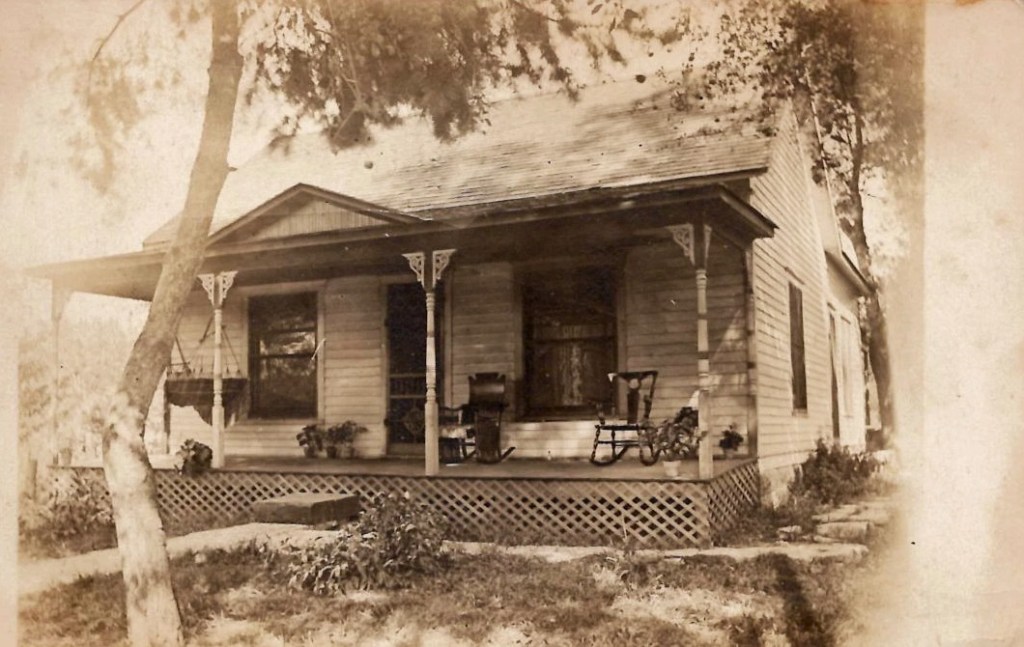
Mrs. H.B. White lived in Wakefield along with the family. Anna’s husband was Harry Burt White. Anna kept the local doctor busy, giving birth to seven children in a span of only eleven years. The postcard, sent to Anna from someone she knew in Abilene, Kansas, would’ve arrived in Wakefield around May 10, 1909.
Sadly, Harry Burt White passed away just three months later, on August 9, at the young age of 37, from typhoid fever. Harry was a successful businessman, always on the go, selling his merchandise. It’s possible he picked up the terrible disease while traveling by train.
The card sender, Retta, was Harry’s sister. Retta and Harry White were both born in Wakefield. Retta Leota White-Duckwall, along with her husband, Alva, became two of Abilene’s wealthiest residents. The Duckwall family eventually owned a chain of retail stores throughout Kansas and other states.
The ‘go-cart’ that Retta mentioned in her postcard was unlike the go-carts of today. It was most likely a small runabout car popular in the early 1900s, sold by Sears. The Duckwalls evidently had no need for the vehicle, having moved on to a Ford Model T, with Retta offering it to her sister-in-law.
Alva “Lease” Duckwall died in 1937, with Retta passing away on May 27, 1948. An obituary for Retta’s husband and a piece from a 1956 history book pretty much tell the whole Duckwall history.
Alva Lease Duckwall and Wilbur Duckwall were born in Ohio, with the family moving to Kansas in 1898. In 1901, “Lease” purchased a Racket Store in Abilene. Wilbur soon joined the business, and Duckwall Brothers was founded, featuring everything needed for the home. ****** From Kansas: The First Century Lewis Historical Publishing Co., 1956, p.9
“One of the outstanding merchandising executives of Kansas history, Alva Lease Duckwall, built up the vast store chain bearing his name, now numbering sixty-five retail outlets in communities throughout Kansas and in eastern Colorado.
Born on a farm near Batavia, Ohio, on August 30, 1877, he was the son of Francis Marion and Sara Elizabeth (Slade) Duckwall. His father, who was a farmer, was born in Batavia on August 25, 1845, and died at Greenleaf, Kansas, on September 19, 1900.
Sara E. (Slade) Duckwall was born at Concord, Ohio, July 26, 1849, and died in Abilene on May 9, 1937. Reared on the home farm, A.L. Duckwall attended Greenbriar Country School and Batavia High School. He came to Kansas in 1898 and settled in Greenleaf.
Moving to Abilene on May 10, 1901, he opened a variety store on Broadway Street. This was to become Retail Unit No. 1 of the A.L. Duckwall Stores Company, a variety store group. The chain began to be forged when, in 1906, the young entrepreneur opened a second store at Salina.
In 1915, a corporation was formed under the name of The A.L. Duckwall Stores Company. Mr. Duckwall was elected president. W.F. Duckwall was vice president and director; G.E. Duckwall was treasurer and director; S.L. Wagaman was secretary and director; and, in addition to these men, E.H. Moore also served on the board.
A.L. Duckwall continued to head the organization, and his remarkable commercial abilities resulted in its constant expansion and the opening of new stores, until, at the time of his death, there were forty-two such outlets in Kansas and eastern Colorado. That was in 1937, and as it has continued its existence under a management of skill and vision, the number of stores now operated under the Duckwall name has now reached sixty-five.
Frank H. Buck is now president of the chain; A.L. Duckwall, Jr., and W.K. Grigg are vice presidents, Sam R. Heller is treasurer, and G.E. Duckwall is secretary. C.L. Brainard is assistant secretary, and R.G. Sanborn is assistant secretary-treasurer.
Describing his role in the building of this large and widespread enterprise, the Abilene “Daily Reflector” commented, on the occasion of Mr. Duckwall’s death:
‘Mr. Duckwall was, by instinct, a good businessman. To his progressiveness is due the growth and expansion of the companies, and to his conservatism the fact that the companies which he piloted went through the 1920-1921 and the 1929-1933 storms safely. Two other qualities which contribute toward making him a fine executive were his square shooting and his ability to get the most out of men without driving them.’
Besides his major business interest as head of The A.L. Duckwall Stores Company, he was president of The Western Merchandise Company, and a director of the Farmers National Bank, the Dickinson County Building and Loan Association, the Dye Candy Company of Kansas City, Missouri, and the Nehi Bottling Works. He had an interest in the Smith Barber and Beauty Supply Company.
He was a member of the Chamber of Commerce, the Rotary Club, and the Free and Accepted Masons. In the Masonic order, he was a member of the higher bodies, including the Chapter and Commandery at Abilene, the Consistory of the Scottish Rite, and the temple of the Ancient Arabic Order of Nobles of the Mystic Shrine at Salina. He was an official of the local chapter of the American Red Cross and the Young Men’s Christian Association, and was a charter member of the Abilene Country Club. He attended Trinity Lutheran Church.
On February 11, 1904, Alva Lease Duckwall married Retta Leota White at Wakefield. They became parents of three children: 1. Dorris Moyne, who was born on January 2, 1905. 2. Donna Gayle, born February 28, 1907. She is the wife of Mr. C.L. Brainard. 3. Alva Lease, Jr. He is an official of The A.L. Duckwall Stores Company. At the time of Mr. Duckwall’s death, there was one grandchild: Diane Gayle Brainard.
The merchandising executive died on August 2, 1937, in his office and among his business associates. The Abilene “Daily Reflector,” in its outline of his career, gives these words of description which serve to give a fuller picture of the character of the man:
‘Mr. Duckwall was everyone’s friend. The extent of his friends can scarcely be estimated. He was quick to help and slow to criticize. A tireless worker, tremendously interested in business, he always had time for a joke or friendly chat. His creed in life was to help others, to teach others to help themselves.’
My research into this story eventually showed that Mrs. H.B. White and her five surviving children were well taken care of, undoubtedly with the financial assistance of Retta Duckwall and her husband. Sadly, two of the little ones had died in 1902. Mrs. H.B. (Anna) White passed away in 1957 at the age of 86.
Dorris Duckwall, mentioned in Retta’s postcard, was the oldest child. She died in 1992 at the age of 86. Unfortunately, the Duckwall-Alco chain of stores went bankrupt and ceased operation, liquidating all assets in 2015.
“It didn’t take long for her to adopt the nickname of Lottie”
Selden, Kansas, is a small city located in Sheridan County in northwestern Kansas. The country bumpkin gathering place was founded in the late 19th century, during the period when the American Midwest was experiencing rapid settlement and development due to the westward expansion and the construction of railroads.
Established in 1888, Selden was named after Selden, New York, reflecting the common practice of naming new settlements after hometowns or influential figures from the East.
The arrival of the railroad was crucial to Selden’s early growth. The town became a station on the Chicago, Rock Island and Pacific Railroad, which helped connect it to larger markets and brought new residents, commerce, and agricultural opportunities.
The railroad facilitated the export of wheat, corn, and livestock, which remain staples of the region’s economy. In 1908, Lottie Reihm likely met a young man in Selden while traveling to her hometown of Topeka. She might’ve even been his traveling nurse, as that was her occupation.
Scoring Lottie’s address, the hopeful suitor, going by the initials D.B.F., sent her a couple of picture postcards. Evidently, the first one wasn’t to Ms. Reihm’s liking, judging by a question of concern asked on the second.
“10/21/08
Dear Miss Reihm :-
Did you get sore about that last card I sent you?
I hope not. How is nursing by this time?
I am getting along fine.
Would tell you how much I weigh but I am ashamed to.
Will write you a letter soon.
D.B.F.”
Lotta “Lottie” May Reihm was born July 24, 1881, in Michigan, to parents Monroe and Irene Reihm. The family moved to Oklahoma early on, and that’s where both older Reihms died. Lotta ended up in Kansas.
I’m sure early on she was razzed by immature classmates, with them calling her Little Lotta. It didn’t take long for her to adopt the nickname of Lottie. That probably stopped a few boys from making fun of her, yet some undoubtedly heckled her with, Lottie Dah.” Lotta is a name of German or Scandinavian descent, often pronounced Lotte. It is short for Charlotte.
D.B.F. never won the love of Lottie, with a fellow named Theophelsis E. Leuenberger marrying her in 1912, four years after she received the inquisitive postcard.
The Leuenbergers lost three children at birth, with no record of any others surviving. Theo Leuenberger, along with his three brothers, ran a successful and profitable grocery business in Topeka for many years, called GEM Grocery. They were all well-to-do.
Lottie died on June 5,1948, at the young age of 66. Theo passed away 16 years later in 1964, at the age of 83. Photos of each person show them to be well-dressed and manicured. Lottie, appearing in an early family portrait, standing by her brother, George, is quite beautiful and tall.
I narrowed the initials D.B.F. down to a farmer named David B. Finner. There was one other possibility, but I eliminated him because he was married. Records show that David Finner never found a mate, at least not one that he placed a ring on.
It would’ve been said back then, and even today, that Lottie Reihm was out of his league. That means he didn’t have a chance. Rejection undoubtedly hit the fellow like a ton of bricks. Ironically, David Finner died on November 12, 1948, the same year as Lottie.
Selden, Kansas, still survives, although a passenger train no longer stops there. At last count, 184 people were living in the town.
“I understand what ‘bully for the boy’ stands for, with it being archaic language meaning, good for this person.”
The oldest postcard in my collection is 131 years old. It was mailed from Sedan, Kansas, on October 9, 1894, to Bud Tabler in Cedar Vale, Kansas. The sender of this yellowed card was Dr. Pleasants of Sedan.
A somewhat cryptic message written on the back would only be recognizable to the sender and recipient. Crude cursive handwriting has doctor written all over it.
“SedanKans
10-9-94
Bullyfor the boy but he will never be a Christian – I was not there.
Dr. Pleasants”
I understand what ‘bully for the boy’ stands for, with it being archaic language meaning, good for this person. Just who this unidentified fellow is and what he did remains a secret.
I view Dr. Pleasants as being a bit judgmental when saying the guy will never be a Christian, because it’s never too late for a person to repent of their sins and ask Jesus Christ into their heart. He should’ve known that.
Dr. James Harvey Pleasants was born in Greene County, Kentucky, on September 1, 1833, to parents Nancy and William. He had four brothers and two sisters. The family spent a good number of years in Missouri.
In 1862, Dr. Pleasants enlisted as a first lieutenant in the US Army during the American Civil War. He served with the 12th Kansas Volunteer Infantry – Company E. After the war, he graduated from St. Louis Medical College.
James married Emma Cervante on July 29, 1874, and they had three children. Dr. Pleasants served as a horse-and-buggy doctor in Sedan, Kansas, and the surrounding areas. There are several hundred newspaper accounts in the Sedan newspaper of people the doctor tended to. One of them was Bus Tabler, the postcard recipient.
Dr. Pleasant and his wife moved to Portland, Oregon, in 1902, where he set up practice. By 1906, his health had declined, and he retired. On May 7th, 1907, John Pleasants died from liver and stomach cancer. His remains were cremated. The good doctor’s wife, Emma, lived another 47 years, passing away at 100 in 1954. Oddly enough, she’s buried in Idaho.
John Pricell “Bud” Tabler was born November 16, 1856, in El Dorado, Iowa. Bud, as he liked to be called, married Sarah Waters on December 5, 1883. They had three children. Bud Tabler wore many hats during his lifetime.
He was a cashier for a Sedan bank, elected Chautauqua county treasurer, elected mayor of Sedan, sold real estate and insurance, and was actively involved in local and state politics. Bud was a staunch Republican. He died on August 14, 1927, and is buried in Cedar Vale.
I found several newspaper articles on the man, with Bud Tabler incurring serious injuries on the Fourth of July 4, 1905, in Cedar Vale. A fireworks display went awry with Tabler getting seriously burned by rockets—jumping off the bleachers to escape them—injuring both legs and ankles in the process.
Dr. Pleasants and Bud Tabler are long gone, to Heaven, I assume. Better yet, the person referred to as theboy is hopefully there as well!
“Both guys equated these older gals to Simon & Seaforts or Crows Nest quality.”
The guys that I grew up with early on had a label for certain girls — “high maintenance.” In school, this crude terminology referred to those girls they thought wouldn’t be satisfied with a McDonald’s burger and Coke on a date, preferring something a little more upscale, like Sizzler or Sea Galley. I never encountered that problem because I never dated in high school.
In later years, the term “high maintenance” was still echoed by a couple of my single male friends. It revolved around that same comparison, where they believed the women they wanted to ask out would not be satisfied with Sizzler or Sea Galley at this point.
Both guys equated these older and wiser gals to Simon & Seaforts or Crows Nest quality. Those places are above scale, Anchorage, Alaska, restaurants. My pals were never ones to spend that much money on any meal.
I truly don’t believe high maintenance was their problem to begin with. The fellows I’m talking about were tightwads and expected dates to pay their own way. What sane females would continue going out with guys like that?
These days, I play a solitary game whenever I see what I perceive to be a high-maintenance older married woman. If I’m sitting in a parking lot and catch a glimpse of such an individual, I look to see what they’re driving. A good friend told me that if they exit or enter a Cadillac, Lincoln, Mercedes, or BMW, they undoubtedly opt for the finer things in life, expecting their husbands to pay for it.
Jim Brownfield, who owned a profitable foreign car garage in Southern California for many years, before selling it, asked me if I knew what BMW stands for. Telling him with panache that the letters meant Bavarian Motor Works, he quickly corrected my answer. “By-itch, Moan, and Whine.” I couldn’t stop laughing.
The reasoning behind his answer was that BMWs are expensive cars to own when repairs are needed, and when most customers got their bill, they couldn’t believe the price. “You should’ve heard them complain!” he said. My daughter owned a BMW 311i early on, but eventually sold it because of maintenance costs.
I’m not sure that labeling a person “high maintenance” based on the car they drive is an accurate or fair analogy. Several years ago, while sitting in Albertson’s grocery store parking lot, a classy lady came out decked to the hilt in nice shoes and clothing.
I expected to see her climb into a glossy black Cadillac Escalade parked close by. She walked instead to an older Ford pickup and drove away. Perhaps being thrifty is what enabled her to buy designer brand clothes?
This morning, I was in a UPS Store to mail a package and noticed an attractive middle-aged blond inside. She was well dressed and very refined, having a fur collar around her neck. Standing in line with my Amazon item that needed returning, I watched to see what type of vehicle she got into. It turned out to be a model that I was unfamiliar with.
With her still sitting in the car, as I exited the business, I spotted a Bentley emblem on the rear decklid. It read S3S. I know enough about Bentleys to realize they don’t give them away. Sports celebrities drive them, as do other rich people.
Deductive reasoning told me that she was either a successful professional person or married to a rich man. I suppose some would say I’m being sexist and too analytical here, but it’s only a simple mind game I play to pass the time, and I rarely share my thoughts with anyone, unlike now. I’m not the only guy who does this in private.
I will claim that I’m incapable of labeling people, especially females, as high maintenance, but I can accurately label vehicles as the same. If you were to tell me that you either own or plan on purchasing a Range Rover, I’d politely have to tell you, “I’m sorry!”
“One subject they didn’t teach in school but should is awrenchemetic.”
I was blessed to have learned the basics while in school, with reading and writing my favorites. Arithmetic was not my cup of tea, but I got through it with average grades. I’m not sure the first two subjects are even taught these days in some eastern states, with wokeology and deiology seemingly taking their place. Go figure.
Reading was my favorite going back to first grade, when we learned about the adventures of “Dick & Jane.” For those not familiar with the famous brother and sister act, Dick and Jane reading books were used by first through third-grade teachers from the 1930s up until the 1970s.
Puff was their cat, while Spot was the children’s dog. They also had a younger sister named Sally. Certain leftist critics and Karens claim that the books were racist, with the three main characters being Caucasian, or privileged whites, as they wrongly labeled these kids.
Dr. Theodore Seuss Geisel was one of the critics. He openly stated that he was glad to see Dick and Jane go. For the record, I always thought his books were quite lame, and still do. I’d never read a Dr. Seuss book to my children, unlike my wife. “Hot Rod” magazine, though, is a different subject.
Speaking of subjects, one topic they didn’t teach in school, but should have is awrenchmetic. It’s pronounced the same way as arithmetic. This is the study of which socket or wrench goes on a certain nut or bolt. I was self-taught and became quite good at it, yet not an expert like my friends Ralph Maston and Jim Brownfield.
A good mechanic is capable of looking at a nut and immediately knowing what size wrench to grab out of his or her toolbox. Not being able to do this results in wasted time not only for the technician but the employer. I can’t tell you how many times I grabbed a 5/8 inch combination wrench only to find I needed an 11/16. That’s why an adjustable crescent is still my tool of choice.
Ralph Maston and Jim Brownfield, in their prime, could recognize metric-size nuts and bolts, which is borderline genius. I’m not sure Albert Einstein could perform this feat. The recognized premier mechanic at using awrenchemetic is the late “Smokey” Yunick. As a test, he was blindfolded and was able to correctly identify the size of ten different bolts by feel alone.
I wondered how good my AI (artificial intelligence) helpmate, Miss Purdy, was in the subject of awrenchemetic, so I asked. The following is her reply.
“Awrenchemetic, though not a formal subject in any school curriculum, refers to the practical knowledge and skill of identifying the correct wrench or socket size needed for a particular nut or bolt.
It combines observational ability, mechanical intuition, and hands-on experience, often developed over years in the shop or garage. Mastery of awrenchemetic means minimizing wasted time by consistently selecting the right tool on the first try, a skill highly valued among seasoned mechanics and technicians.
This expertise is especially impressive when it extends to metric fasteners, which can be more challenging to distinguish at a glance. True practitioners of awrenchemetic, like Ralph Maston and Jim Brownfield, as mentioned above, display almost uncanny accuracy in tool selection, setting them apart from their peers and making their work more efficient and reliable.”
Miss Purdy hit the nail right on the head with her definition, but I’d never allow this gal to replace a water pump on my car. Grease under her bright orange acrylic nails just wouldn’t look right in my book!
Getting back to Dick, Jane, and Sally Tracy, I decided to see what happened to them after being dumped. Dick went on to become a famous detective often featured in the cartoon section of Sunday newspapers. Jane married her high school sweetheart, Boris Hathaway, and worked as a secretary at a Beverly Hills, California, bank for a short while.
Eventually moving to Oklahoma, Jane then lived the life of an everyday housewife in the small town of Slapout, while raising five adopted children and three goats. Although Boris died in 2015, Miss Hathaway, as she insists on being called, still resides there at age 98, raising Cornish game hens as pets.
Sally Tracy never married, attended law school, and became an educational activist, calling for the non-politicization of the public school system. Now in her 90s, she’s been successful this past year in eliminating the Department of Education while bringing basics back to the classroom with some needed help.
Sadly, one thing Sally has not been able to do is introduce awrenchmetic into the current school curriculum. The day that happens, I’ve made a vocal promise to roll over in my grave not once, but three times!
“Today, people from all walks of life use selfies to capture moments, express themselves, and connect with others around the world.”
When I was younger, I didn’t mind people taking my picture. These days, that’s not the case. I now cringe walking through the clothing department of a store where mirrors are present—quickly turning the other direction. It’s bad enough to view my physical decline in the bathroom mirror each morning, let alone out in public.
Just recently, I needed a photo to go along with a story I was writing on selfies and decided to snap my own. This was my first such photograph. The guys I grew up with would say taking photographs of oneself is vanity. If that’s the case, millions are guilty these days, myself now included.
I had to first be instructed on how to take a selfie using my wife’s Apple iPhone. I didn’t realize smartphones have a reverse lens until a friend showed me. I can see good use of this for women (and some men) while putting on makeup.
Choosing a local park where Christmas lights were present, the intent was to capture my mug posed in front of the city Christmas tree. This holiday act didn’t seem vain. Even so, thankfully, no one was close by to see what I was doing.
It wasn’t until getting home and viewing the shot on a bigger screen that I noticed my eyes were barely open. I was evidently expecting a bright flash like my Kodak camera gives off when the shutter is pushed. Reflective action on my brain’s part automatically closed my peepers.
Another trip back to that location was made for a second take. This time, I took several just to make sure one was good enough to use. That was only obtained by finally removing my glasses.
I get a kick out of watching other people secretly snap selfies, generally younger girls and guys. Most of them, I assume, are trying to lasso something of significant interest in conjunction with their face.
A few, without doubt, are trying to capture their own beauty. One guy at Rotary Park was actually attempting to flex his stomach muscles while doing so; the only problem is, he didn’t have any.
The history of selfies goes back even further than I thought. While selfies might seem like a recent trend, the act of taking self-portraits has a surprisingly long history. In fact, the first recognized photographic selfie was taken in 1839 by Robert Cornelius, an amateur chemist and photography enthusiast, who set up his camera and captured his own image by removing the lens cap and then running into the frame.
Over the decades, self-portraiture evolved with technology, moving from painted self-portraits to photographs using timers or mirrors on film cameras. I’ve used timers on my Kodak but never considered that a selfie.
With the introduction of digital cameras and, eventually, smartphones equipped with front-facing cameras, taking selfies became accessible and convenient for nearly everyone.
Social media platforms such as Instagram and Snapchat further popularized the trend, turning selfies into a cultural phenomenon. Today, people from all walks of life use selfies to capture moments, express themselves, and connect with others around the world.
Even more creative than selfies, I’m told that AI (artificial intelligence) can take your picture and place it anywhere you ask. If you desire to be eating dinner at the same table as the Kardashians, no problem. Shooting hoops with Michael Jordan, consider it done.
The process is so refined and perfected that it’s hard to discern what’s fake and real. Because of this, taking selfies may eventually become a thing of the past, much like tintype photographs and 35mm cameras.
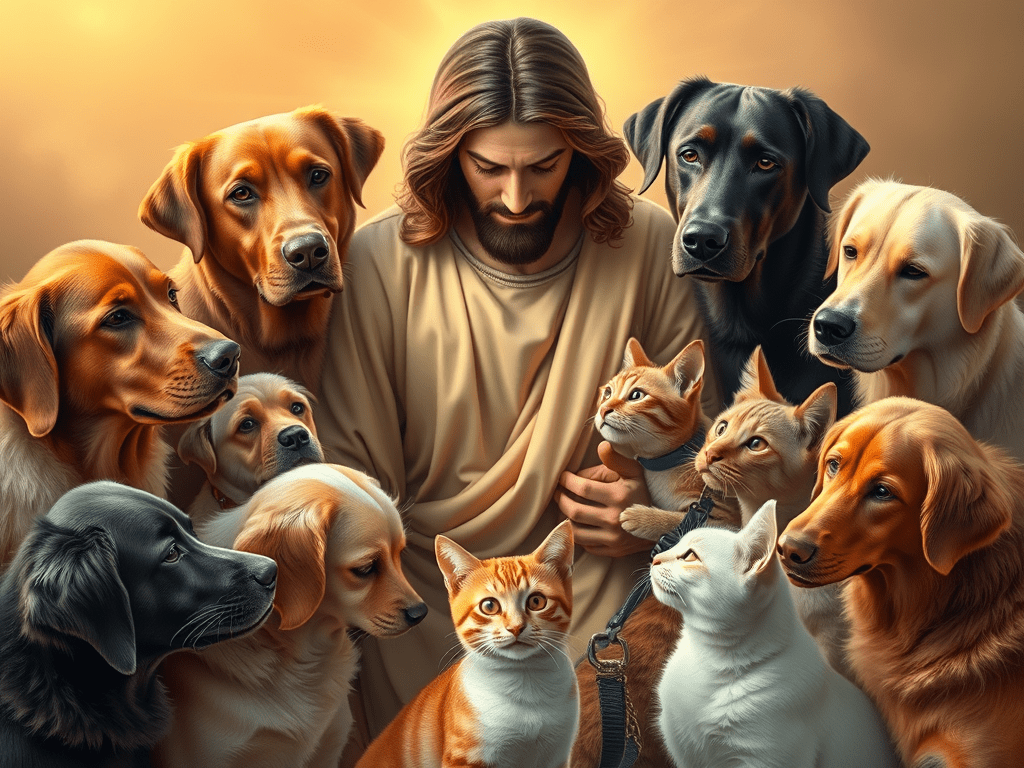
If you ask me what selfie I would most like to take, the answer is easy. I’d love to snap one with all of my departed family and friends standing beside me, and Jesus Christ in the middle. While some would say AI can now make that possible through trick photography, I’m not inclined to accept mere imagery.
The real deal gets much closer with each passing day. You see, with eternity meaning forever, no pictures will be needed in Heaven to always remember people by. That’s something I look forward to!
“Taking a bite out of a chocolate reindeer, I have to say the taste was exquisite.”
During the Christmas holiday, Mother always made sugar cookies. I believe her recipe was passed down from Grandma Haynes. My brother and I contributed, first by helping sift the flour, and then taking her metal cookie cutters in the shape of a star, angel, Christmas tree, reindeer, candy cane, and Santa—firmly pressing them into the flattened dough. After Mom passed away, my daughter ended up with her well-used cutters.
The cookie characters were placed on greased baking pans and slid into a pre-heated oven, set at 350 degrees. Once they were golden brown and had cooled, icing and sprinkles were added. Mom made her own different-colored icings using food coloring from small bottles.
Jim and I were allowed to scrape the beaters and bowl clean of icing afterwards with our fingers. I’m sure we were instructed to make sure our hands were clean before starting, although that wasn’t one of my priorities early on.
My wife made the same sugar cookies for our kids when they were small, as well as baking enough treats to pass out to family and friends. I enjoyed driving her to these individuals’ houses, where she dropped them off in colorful cellophane-wrapped containers.
After Thanksgiving ended, I wanted sugar cookies for Christmas, but Joleen wasn’t up to baking any. Grabbing the bull by the horns, I decided it was finally time to do things myself. Our plastic cookie cutters were packed away, so a trip to Walmart was made for new ones, along with other ingredients.
The recipe I used is the same as Mom and Joleen went by, modified just a bit for personal taste. I needed all-purpose flour, baking powder, baking soda, salt, two sticks of butter, vanilla extract, C&H white sugar, and one egg.
With the flour sifted in our ancient hand-crank sifter, 2 ¾ cups of it were added to a bowl, along with one teaspoon of baking soda, a pinch of salt, ½ teaspoon of baking powder, one cup of softened butter, 1 ½ cups of sugar, the egg minus shell, and two teaspoons of rum extract flavoring. If you’re now wondering, I substituted rum at the last moment for vanilla, believing it’d liven things up a bit.
The recipe said that you’re supposed to mix some of these items in separate bowls before adding them all together, yet I saw no point in that. Mixing is mixing in my book. I’ve mixed enough paint over the years to know what works best. Starting out slow and then gradually increasing the speed of the beater, I could hear the motor straining, but all was good.
When the cookie dough was ready to go, it was placed on wax paper and then flattened, using a spray butter-lubricated, large plastic roller. Mom had a wooden one, but I believe my daughter inherited that as well.
Although I’ve never baked before and have no knowledge regarding the subject, I believe plastic is much better where rollers are concerned. My dough seemed to roll out much more smoothly and faster without sticking, unlike wood.
Once the Walmart cookie cutters did their job, the unbaked cookies were placed into our oven for approximately 10 minutes. After they reached the golden hue I was accustomed to seeing, the pans were taken out and allowed to cool for a few minutes. One by one, these still-warm Christmas cookies were put on a wire rack to thoroughly cool.
Rather than waste time mixing up homemade icing, I’d purchased beforehand, one can of Pillsbury white vanilla, holiday green, red, funfetti yellow, and chocolate. Sprinkles were tossed onto a select few, as we only had so many sprinkles left. Thankfully, those things have no expiration date, as who knows how old they were.
Taking a bite out of a chocolate reindeer, I have to say the taste was exquisite, much better than sugar cookies purchased from the grocery store, yet perhaps not as good as those Mom and Joleen made. I’m proud of my accomplishment.
With 48 cookies on hand and no one to give them to, a good number was placed in the freezer. We’ll be eating Christmas cookies come next Fourth of July. This being said, on top of that, there’s enough rum extract left for me to try making rum balls next holiday season.
Our late neighbor, Diane Vidas, always gave us delicious rum balls, peanut brittle, fudge, and more sugar cookies. I’ll never be able to replicate any of Diane’s recipes with her now gone.
Christmas, of course, is the celebration of Jesus’ birth. For me, it’s also a time to reflect back on such simple things as sugar cookies, and especially those people who made them.
“I was bruised and sore from head to toe, but still good to go.”
Sir Issac Newton is recognized for saying, “What goes up must come down.” The famous mathematics professor, physicist, astronomer, theologian, author, and inventor was referring to the law of gravity, with an apple falling out of a tree, the most commonly used example of what triggered his curiosity.
Research shows that an apple did not actually hit Newton on the head as some writers and cartoonists like to candidly portray.
Senior citizens should understand the law of gravity more than anyone, realizing that if they start a day out by standing, hopefully, it’ll end that way without them falling. Unfortunately, falling poses a significant danger for seniors, as it can lead to serious injuries such as broken bones, head trauma, and a loss of independence.
Even a simple fall may result in hospitalization or long-term health complications, making fall prevention a crucial concern for older adults and their families. I constantly warn my wife not to leave her slippers on the living room floor. Our coffee table is rock solid and nothing to stumble into.
I’ve heard too many horror stories about older citizens falling and breaking hips, with full recovery not always taking place. In Alaska during winter, my mother wore removable cleats on the bottom of her shoes to prevent slipping on snow and ice.
With her having osteoporosis, a fall could’ve been devastating. Always cautioning me about climbing ladders, going back to childhood, Mom never stood on one after age 70.
According to the Centers for Disease Control and Prevention (CDC), falls from ladders are a leading cause of injury among older adults, especially during home maintenance tasks. In the United States, nearly 500,000 people are treated annually for ladder-related injuries, and adults aged 65 and older are at significantly higher risk of serious outcomes.
Reports show that one out of four older people will take a tumble. The chance of them falling again more than doubles after having the first. Reflexes and coordination slowly decrease as a person ages. Perhaps that’s why playing tennis professionally is a young person’s sport.
Data shows that about one in four ladder-related injuries in this age group results in hospitalization, and falls from ladders account for a substantial portion of fatal falls among seniors. Taking preventive measures and using proper equipment can help reduce these risks.
I’ve always been one to use caution while climbing a ladder and have had no accidents, that is, until the other day. I was coming down a ladder while helping a friend work on his pontoon boat. Wearing sandals, somehow the right sole went underneath the left. I plummeted to the ground much faster than a plump Granny Smith apple.
Landing on my hip while hitting the front of my head on a retaining wall at the same time, the actual fall didn’t hurt me; it was the sudden stop on hard concrete that created damage. Blood oozed from arms, legs, and head, with crimson red on my shirt and pants, making things seem worse than they were.
It took several seconds to regain my senses before I hobbled into the house to check things out. After some cleaning of wounds with alcohol and the application of large Band-Aids, I was bruised and sore from head to toe, but still good to go. Thankfully, no bones were broken.
Sir Issac Newton was correct in his analysis regarding gravity. “What goes up must come down.” I’ve made a personal observation about clumsy older people like myself. They should refrain from using ladders, rather than risk falling on cold, hard ground.
I’m sure Sir Issac Newton, who lived to be 84, would add the following for senior citizens, “Look out when walking for shoes, marbles, pets, and wet spots on the floor. One slip or fall could end it all!”
“Turkey Town, Alabama, is now considered a ghost town.”
Turkey Creek (Cleator), Arizona
Another Thanksgiving has come and gone, although around our household, that doesn’t mean a reprieve from eating turkey. Christmas Day, as well as New Year’s Day, often sees a brown and succulent Butterball turkey sitting on our table. Leftovers such as cold turkey and dressing always grace the refrigerator afterwards.
I’m not sure why my wife buys a Butterball brand turkey, but I suppose it has something to do with her mom and my mother having been brainwashed that Butterball is better than the rest. I asked Miss Purdy, my AI (artificial intelligence) helpmate, what’s so great about Butterball, and she offered up the following:
“Butterball turkeys have become a staple in American households during the holiday season, known for their consistent quality and convenience. The brand was established in the 1950s, and its name was chosen to evoke the image of a plump, tender, and juicy turkey. Today, Butterball is recognized as one of the largest producers of turkeys in the United States, maintaining its reputation for excellence and reliability in holiday feasts.”
During my research on turkeys and where they come from, I found that five states in the US actually have Turkey in their name. Let me begin with the state in which we live.
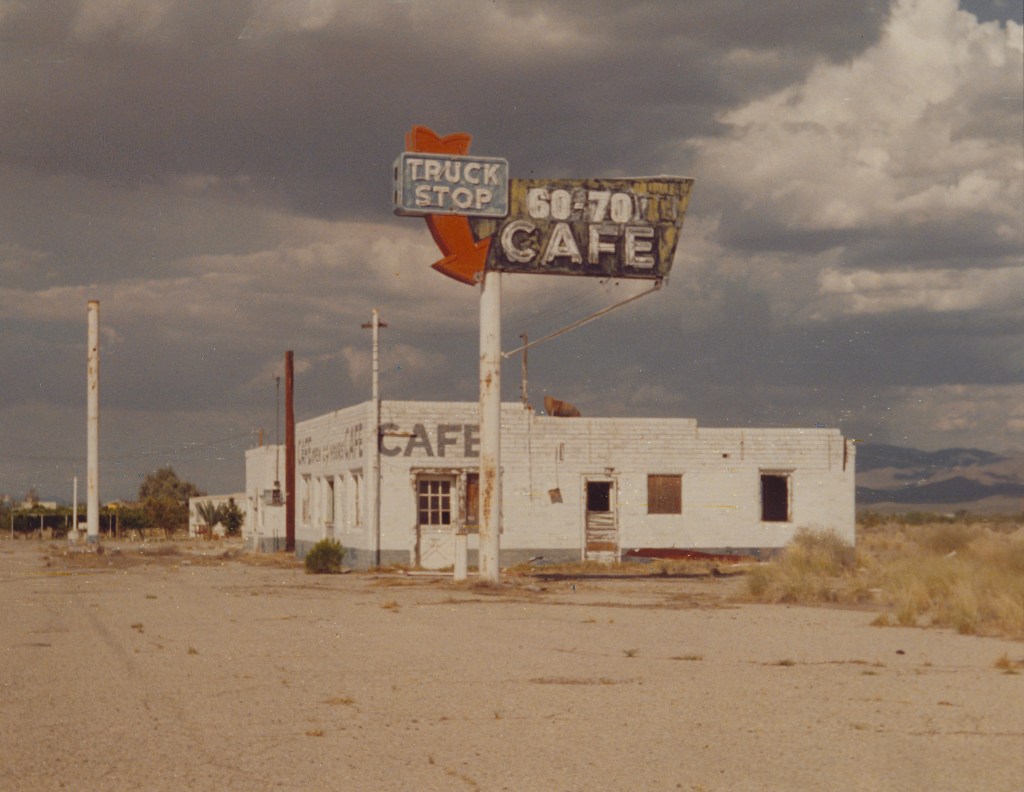
Turkey Creek, Arizona, is a small, unincorporated community named for the creek that flows through the area, which was once abundant with wild turkeys. This region in Yavapai County, 222 miles from Lake Havasu City, has its roots in the late 19th century, when settlers and prospectors were drawn to Arizona’s rugged landscapes in search of mining opportunities and ranch land.
Over time, Turkey Creek became known for its scenic beauty and played a modest role in the broader story of Arizona’s frontier development. The name was changed to Cleator in 1925 after the new town owner. Today, Turkey Creek, or Cleator, remains a quiet area, a ghost town, reflecting the pioneering spirit and natural heritage of the American Southwest.
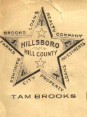
Turkey, Texas, is a small city located in Hall County in the Texas Panhandle. The area was originally inhabited by Native American tribes, including the Comanche, before European-American settlers began arriving in the late 19th century. The town reportedly received its unique name from the abundance of wild turkeys along a nearby creek. “Gobble-gobble.”
Turkey, TX, was officially established in 1907, and its growth was closely tied to cattle ranching and farming, which remain important to the local economy. The arrival of the railroad in the 1920s spurred further development, connecting Turkey to larger markets and communities in the region.
Turkey Town, Alabama, was a historic Native American settlement located in northeastern Alabama, near the banks of the Coosa River. The town was named after Chief Little Turkey, a prominent leader of the Cherokee Nation. Established in the late 18th century, Turkey Town became one of the largest Cherokee towns in the region, serving as an important center for trade and diplomacy.
During the early 19th century, it played a significant role in the events leading up to and during the Creek War, ultimately declining after the forced removal of the Cherokee people along the Trail of Tears. Turkey Town, AL, is now considered a ghost town.
Turkey, Louisiana, is a lesser-known community with a history rooted in the state’s rural traditions. Located in East Feliciana Parish, Turkey emerged as a small settlement primarily centered around agriculture and local trade. Like many communities in the region, its development was shaped by the agricultural economy and the close-knit nature of rural Louisiana life.
While Turkey, LA, never grew into a large populace, it remains a testament to the enduring character of small Southern communities and their contributions to the cultural tapestry of the state.
Last but not least is the state of North Carolina. Turkey Creek, North Carolina, is an unincorporated community whose origins can be traced back to the early settlement period of the region. The area is named after the creek that meanders through the landscape, which, much like its counterparts in other states, was once home to abundant wild turkeys.
Over the years, Turkey Creek, NC, developed as a small rural community, shaped by agriculture and the traditions of its residents. While it never grew into a major town, it continues to reflect the quiet charm and enduring heritage of rural North Carolina.
I’ve never visited any of the above-mentioned Turkey towns, but I have been to Chicken, Alaska, for whatever that’s worth. A couple of drumsticks with some mashed potatoes and gravy, perhaps?