WHAT A LIFE

“We didn’t find out until later that the pesticide they used was DDT.”

My family lived near Lubbock, Texas, from 1963 to 1967. Dad was a sergeant in the Air Force—owning a Gulf service station at the same time. A young officer by the name of, Lieutenant Snyder, played a key role in this unusual, off-base endeavor. I no longer remember the lieutenant’s first name nor does my brother.

Snyder was a silent partner so to speak. The tall, redheaded lieutenant was single, and during holidays, invited by my parents to eat at our small trailer home, located on Reese A.F.B., next to the flight line. He was like a big brother to Jim and me. I still have an 8mm movie of him tossing a ball in the yard to “Brutus & Ringo,” our little Dachshund and Chihuahua dogs. During summer months, Mr. Snyder took us boys swimming at the base pool.

Monday through Friday, after Dad’s military duty ended at 4:30, my father drove to the gas station and remained there until closing at 10:00. Jim and I sometimes stayed up late waiting for him, and then sorted through his well-worn bank bag looking for old coins. On occasion, a customer was desperate enough to use an actual Morgan or Peace style silver dollar for gas. I still recall that rectangular zipper-bag smelling of fuel and oil.

Lieutenant Snyder was Dad’s immediate supervisor, as well as being a close friend. I’ve never been in the service myself, yet I’m fairly certain officers fraternizing with enlisted men goes against military regulations. It’s surprising to me that some Karen didn’t snitch and turn them both in to the base commander. In later years, Mom told me that Lieutenant Snyder’s parents were wealthy, and they helped bankroll Dad’s operation.

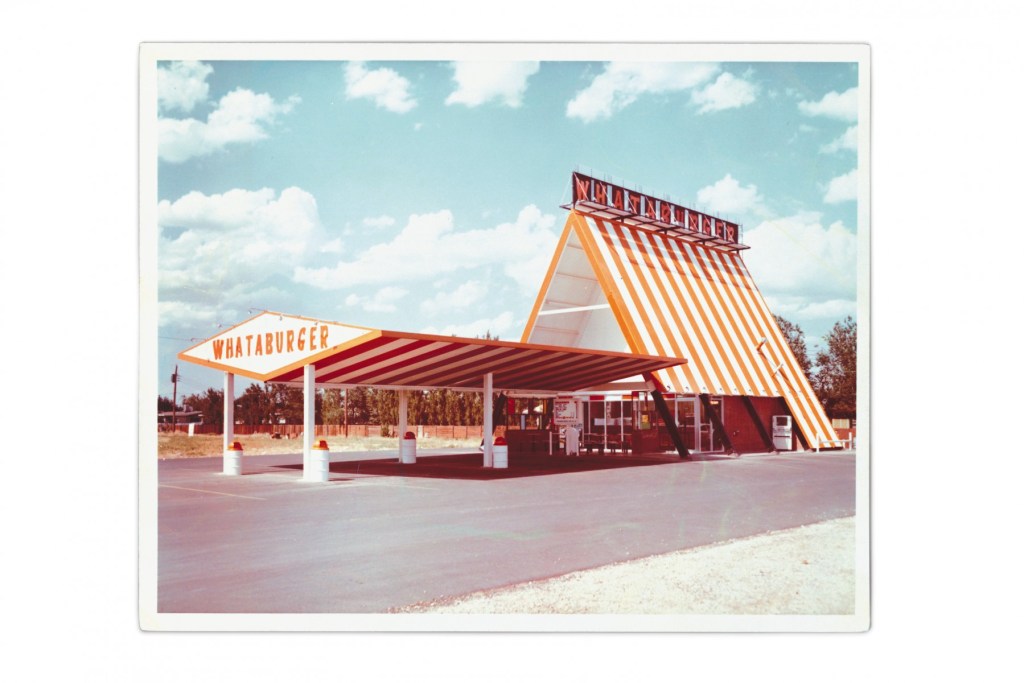
About once a month, Mom, Jim, and I loaded in the car on a Saturday, and stopped by Whataburger on our way to the garage. The hamburgers there were so large that my brother and I split one. Dad was always happy to get his burger, fries, and Coke, considering them a real treat. He was basically working 12-hour-days during those three years in Lubbock.

Whataburger’s were a real treat to us as well. Unlike today, when restaurant food replaces meal-fixing, perhaps two or three times a week, we ate out at the most once a month back then, if even that much. With some food establishments around town starting to rob folks by charging extra credit card fees, Joleen and I may be forced to limit our dining out to once a month, much like my folks did in the 1960s. I’ve heard other seniors echo the same.

Mosquitoes were bad during Lubbock summers, with Air Force personnel using a fogging truck to spray insecticide throughout the base. Parents were told beforehand to keep their children indoors, yet sometimes that warning went unheeded. We didn’t find out until later that the pesticide they used was DDT. This chemical was deemed detrimental to birds and wildlife, but my brother and I seemed to escape breathing it without any genetic or physical disorders. Friends might disagree.

Near the Reese flight line was a large field, home to a prairie dog town. We played baseball there and quite often the ball rolled into a burrow. That was always the scary part—reaching in a hole to retrieve it.

One thing that living in Lubbock has in common with Lake Havasu City, is the wind and dust. Red dust covered furniture after a windstorm and it was us boy’s job to wipe it off. Amble mounts of Pledge helped glue the residue to a cleaning rag. Nothing has changed here for me.

After leaving Lubbock, I’m not sure what happened to the good lieutenant. I remember Dad and Mom getting a few Christmas cards from him. Eventually, all correspondence stopped. Undoubtedly, he married and had children of his own, hopefully, rising above the rank of lieutenant before retiring. Our old friend would be in his early 80s at this point.

I often think back to Lubbock, Lieutenant Snyder, DDT, Whataburger, and “what a life” my family experienced living on a now shuttered Air Force base, near a dusty, Texas, town, dodging baseball-sized-hail, lightning storms, and sudden tornadoes quite regularly. Without question, that exact experience for me or anyone else will never be duplicated.


GROUND ZERO

“This year, more numbers seem to be ascending while they should’ve been climbing, while others were higher when they should’ve been lower.

If numbers aren’t important—God wouldn’t have created them. There are some folks out there who’ll argue this point. Atheists aren’t known to have a rock solid basis for their reasoning here, so I let them have their say without verbal challenge. Trying to engage closedminded people in a serious debate is next to impossible.

Numbers take on special significance about the time we hit grade school. Up until then, each increasing number for age generally signifies presents, ice cream, and cake—nothing else—at least for me it did. Birthday years still don’t get tons of hoopla until a kid turns 13. Teenager is the magic word at this point in time.

I’ve always been a numbers guy, more so interested in the age of material things over that of people. A coin collector from early on, I was most intrigued by any coin starting with 18. My first 1800s coin was an 1890 silver dollar given to me by Papa Haynes. It took a couple of decades to take possession of one beginning with 17. I’ve never owned a coin starting with the number 0 for obvious reason.

Numbers are highly important in all work areas, from the clerk at a fast food restaurant, to the CEO of a large company. For mechanics, numbers are most essential. The low compression numbers of cylinders on an internal combustion engine gives an indication on what’s causing a loss of power.

Each year, my doctor orders a slew of blood tests. Much like a diagnostic test on a Chevrolet engine, the return numbers associated with these medical tests gives him an indication on how my body’s faring. This year, more numbers seem to be ascending while they should’ve been climbing, while others were higher when they should’ve been lower.

Doc will have me doing a regimen of things I’m sure to get them in the acceptable range. It seems the older a person gets the harder it is to correct these abnormalities. High or low numbers in a blood test can mean a variety of ailments, some of them serious, with new pills seemingly the most called for cure.

Prayer is at the forefront of my plan of attack, with everything else following suit. I’ll try to keep the hour meter running for as long as I can using this method. The second my numbers hit 0 is the point of no return. That doesn’t mean my existence totally ends. Far from it. Things are merely reset to 0 at that juncture for eternity sake.

In 1983, a song by rock group, The Fixx, came out. Initially, I liked the beat more than anything. To this day, one particular line in “Saved by Zero” remains firmly implanted in my brain.

“Holding onto words that teach me.”

I’m not sure what the intended meaning of this song is, but those six words have real significance, as I can relate them to a special Bible verse,

Matthew 28:20. “And remember, I am with you always, to the end of the age.”

An important thing to remember here, is that there’s no number representing the end of the age in that verse, because eternity never stops. Zero is simply the reset point when this new life begins!

PICCADILLY LILY

“A chocolate malt from this establishment was my drink of choice on hot Havasu days.”

2000

For many years, each time my family visited Lake Havasu City, we always made sure to take in not only the London Bridge, but the English Village underneath it. Our kids loved going there because there were activities they could take part in, such as a vintage merry-go-round, paddle boats, shooting gallery, including several shops offering tee-shirts and unusual collectibles for youngsters.

They seemed to like feeding fish and birds best of all, as a sidewalk vending machine offered a handful of fish food for a quarter. My favorite stop was what I called, “Piccadilly Lily.” A chocolate malt from this establishment was my drink of choice on hot Havasu days.

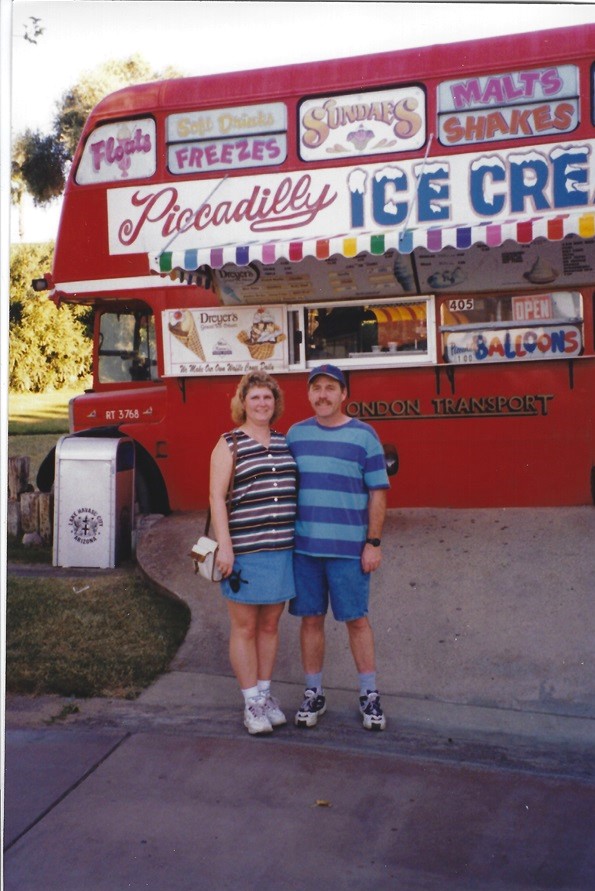
The former London, England, double-decker bus, Piccadilly Lily had been turned into a sort of Café on wheels. It actually didn’t move and was safely grounded. We could get an array of cold treats there including perhaps the best milkshakes and malts in town. They also offered burgers and hotdogs.

There came a time when we visited and the business was not open. Thinking perhaps it was a temporary thing, the next year we returned finding the same. Asking around, I was told the establishment would most likely never reopen. Sadly, the merry-go-round had met the same fate a few years earlier, and was sold to an out of state buyer. That carnival like attraction was a memorable part of Lake Havasu City, especially for our kids.

I’m not sure where Piccadilly Lily is now, but it’s not to be confused with another double-decker formerly owned by Gary Baumkirshner of McCulloch Realty. This one is similar, but I believe in not as good a shape back then. I recall seeing it parked in front of the real estate office.

An article published by “RiverScene Magazine” in 2019, mentioned that the McCulloch Realty bus had been purchased by Scott Stocking, owner of Mudshark Brewery. The magazine mentioned that Mr. Stocking was having it restored by a good friend of his, Richard Perkins. I haven’t caught glimpse of it on the road so perhaps restoration is still underway. Scott Stocking lives close by, so perhaps someday I’ll have the opportunity to ask him.

As far as Piccadilly Lily goes, hopefully it too met a similar fate as the Baumkirshner bus and wasn’t relegated to the scrap pile. Although these two double-decker buses aren’t true artifacts where age is concerned, they are significant antiques in their own right. I always think of how much fun it must’ve been driving them here.

I came across a photo of my wife and I standing in front of Piccadilly Lily taken around 2000. I believe this is the last time we found it open for business. The photo isn’t date stamped so it could’ve been much later.

Joleen found a 17-year-old newspaper article, showing that Piccadilly Lily was hauled out of the English Village in 2007 by Steve’s Towing and possibly taken to the Yucca area, and then was to be towed to Bremerton, Washington, for restoration.

According to this archived story printed in “Today’s News-Herald,” and written by reporter David Bell, the bus’s new owner, Christopher Massey of Yucca, indicated that restoration plans might be put on hold soon after he took possession of it.

Further research was done on our part, with a drive to Yucca just completed. If Piccadilly Lily is lurking amongst the shadows in that sleepy desert oasis, as tall as she is, I didn’t spot the old gal. I’m sure someone out there knows the rest of this story, and hopefully it has a happy ending.

2007 photo: “Today’s News-Herald”

SAVE THE PLANET

“A former California Highway Patrol officer told me that place was a real haven for criminals back in the day.”

Photo by Michael Hankins

It was either 1985 or 1986, that I was driving my family to Lake Havasu City, from Wickenburg, Arizona, on a much-needed vacation. We’d left Phoenix late in the afternoon, and then spent the night in Wickenburg after a giant thunderstorm hit. I didn’t want to take any chances with flooded roads in the area. Never in my life had I seen or heard so much fury from a storm—not even in Kansas.

Driving through Salome the next morning, I noticed a sign painted on side of a building saying, “Salome, Where She Danced.” Not having a clue what that meant, and not knowing who “she” referred to, I too was at the point of dancing after consuming several cups of coffee.

Researching the town of Salome, when we returned home to Alaska, I found the historical information quite interesting. It was a gas and watering stop for travelers back in the day. Another name for this place was Drinkmens Wells. That fictitious namesake came from a 1945 movie titled, “Salome, Where She Danced,” starring Yvonne DeCarlo.

Salome was factually named after one of the founder’s wives, Grace Salome Pratt. Supposedly, she danced after trying to walk across hot sand in bare feet. I know that feeling as well from a popular beach in Florida.

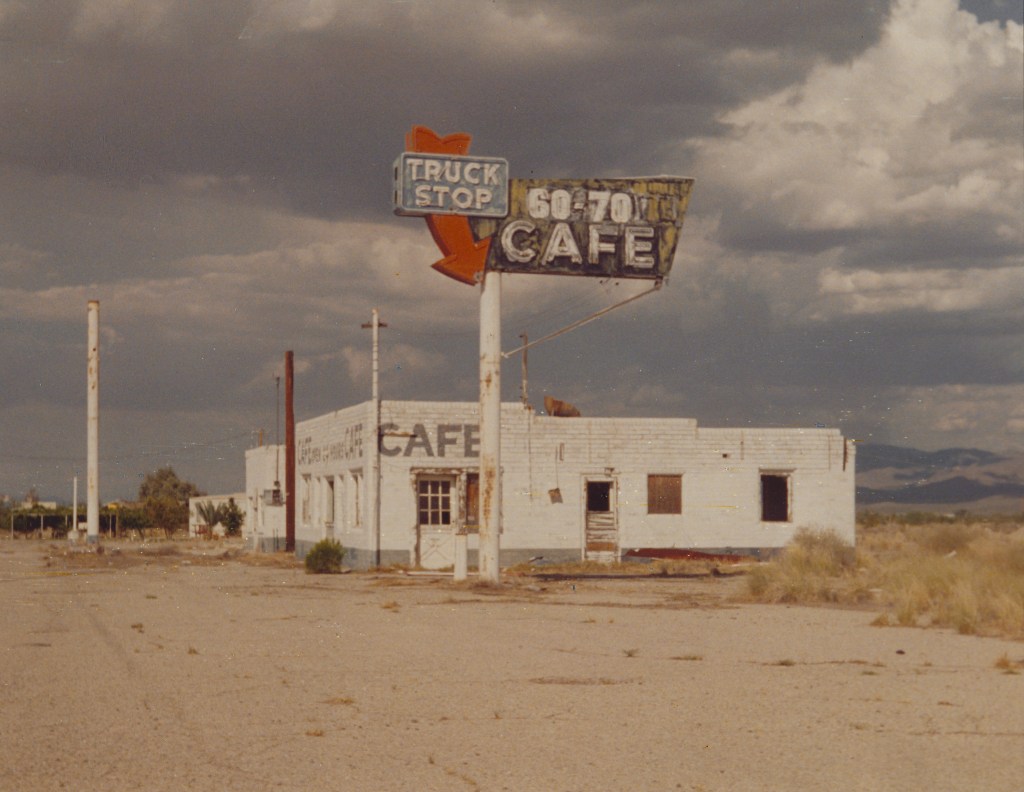
Just a few miles west of Salome, we came to the US 60-70 Café and Truckstop. Stopping to take some photos of the now boarded up place, a door was unlocked. I cautiously walked in with camera in hand. The exterior and interior hadn’t been graffitied up like so many other abandoned dwellings in and around Phoenix. Not considering it to be trespassing, although I was, my intent was to simply document things for posterity’s sake. I’m glad I did.

Slowly taking in the surroundings while on the lookout for snakes and other creepy crawlers, I noticed the counter was totally intact along with some tables still being useable. One of them was turned upside down, and I could see small blobs of ABC gum still dotting the underside of it. ABC gum for those not knowing is: already been chewed gum.

As a child, Mom used to scold me whenever I stuck my hands underneath a restaurant table, knowing better than me what lurked on the dark side of things. I believe this constant lecture on her part all started, when I removed a blob of hardened gum and brought it topside for show-n-tell.

The inside of this café was pretty much intact, and with a good amount of elbow grease and dollars, it could’ve easily been saved. I wrote a poem about the mysterious place and still have it tucked away in a filing cabinet.

Looking the business name up on http://www.newspapers.com, several “help wanted” ads were found as well as a slew of advertisements listing the property for sale. Thirty acres of vacant land went with the building. For a person wanting to work there, one of the ads showed that an apartment was provided.

A 1961 edition of, “The Yuma Daily Sun” newspaper article told a sad story regarding one of the workers. The article started out like this, “Waitress Dies At Salome Café – Eva Edith Momsen, age 58, employee of US 60-70 Café in Salome, died of an apparent heart attack while on the job.”

The following year when we drove back through, with me hoping to snap even more shots, there was nothing left of the place other than concrete where gas and diesel pumps once stood. We actually rolled right on past that morning, and it wasn’t until backtracking that I rediscovered the location.

There’ve been several other buildings I took photos of over the years that are no longer standing. The Riverboat Saloon on the California side of the Colorado is one such establishment. It was loaded with graffiti in the 1990s, and I got the chills just stopping there for a few minutes to take a few pictures.

A former California Highway Patrol officer told me that place was a real haven for criminals back in the day. Judging by location and how this decaying building looked when I last saw it, I understand why.

Quickly darting in this decrepit tavern, I glanced under the shattered remnants of a bar, spotting hardened blobs of gum attached to it like in the US 60-70 Café. Not forgetting any of this, and needing slightly more material for this composition, just recently I decided to research chewing gum as the finishing touch.

In a nutshell, this is what I discovered in an article written from a totally “green” perspective. The information came from an Aspiration newsletter. Aspiration is a climate-change-based, online financial investment company. I didn’t even know there was such an institution until now.

Chewing gum is basically non-biodegradable. A piece of discarded gum can last anywhere from 5 – 1000 years. Most chewing gum products are made from inorganic polyisobutylene, or polyvinyl acetate rubber bases, which are both resistant to biological breakdown processes.

These are the same materials used to make adhesives and tire tubes. They’re designed to be long-lasting for heavy-duty use. That’s why so much chewing gum exists on our sidewalks, benches, and lampposts for months, even years, with very little change in form. In Denmark, a piece of gum chewed some 5700 years ago was discovered during an archaeological dig. The article came to the conclusion that we shouldn’t be chewing gum for health and ecological reasons.

That explains to me why ABC gum in these two businesses remained there years after they’d closed down. According to the same article, 250,000 tons of discarded chewing gum lie in our landfills.

So, what does this all mean to me? I’ve been chewing gum for ages and don’t plan to stop. I chewed gum in school going back to the day when some teachers forbid it. Now, with other more violent things taxing a teacher’s state of mind these days, we don’t hear about gum chewing being condemned anymore.

Offer me some and I’ll take a stick—just make sure it isn’t ABC. I learned not to accept that flavor going back to first grade, perhaps earlier. There are several places to responsibly dispose of chewed gum. Under a restaurant table or on the sidewalk isn’t one of them.

Once all flavor is gone, I generally swallow the remnants. There’s no telling where it will end up after this takes place (pun intended). Getting rid of it this way is more environmentally friendly than sending spent gum to a landfill. Can you see I’m trying to save the planet here?

I didn’t think so!

GOALS?

“Unfortunately, none of them can be taken to McDonald’s and exchanged for a cup of coffee.”

This blog marks number 400. It’s taken me 15 years to obtain the goal if you can even call it that. I had no particular number in mind when starting, hoping to at least reach 100. The total amount of words of all 400 compositions is 343,021.

In comparison, the exact number of words in the KJV Holy Bible is 783,137. I’m not even halfway to that point. It took several people a period of some 1500 years to complete things for that book. Taking this into consideration, I’m not typing as slow as I think I am.

People in 88 countries have looked at my blog, with over 34,948 reader’s total. That’s hard to imagine and one of the main reasons I’m careful on what I write about.

On the average, it takes me three hours to compose a decent piece. That time includes numerous proofreads and corrections. Taking 400 and multiplying by 3, of course, comes out to 1200 hours total. That in itself equates to 50 days of writing over 15 years if I sat at the keyboard nonstop—24 hours a day. Being that I can’t do it, three-hour days at the computer comes to 400 days, or a little over a year.

From a mechanic’s perspective, normally, it takes me around 3 hours to do a full brake job on American vehicles, that is if I have the parts on hand. Using that number as a guideline and taking the 1200 hours of writing and dividing by 3, I could’ve theoretically performed 400 brake jobs over the past 15 years.

The last brake job, I charged a person $100.  Taking that amount and multiplying by 400 equals $40,000.00. Of course, had I done brake jobs over a decade and a half instead of writing, all of that money in my hands would most likely be gone. I’m thinking if I had that cash now, a Can-Am Maverick X3 RC SXS would be nice, decked out of course.

What I have instead, are 400 different stories. Unfortunately, none of them can be taken to McDonald’s and traded for a cup of coffee.

If I want to reach the number of words in the Bible, I still need to write an additional 440,116. At the rate I plodded along to reach 343,021, it’ll take me another 17 years to reach that goal. I’ll be 89 if I make it. Being that I’m not doing brake jobs anymore, writing seems like the venue to best spend my time. Some seniors paint, do puzzles, beadwork, crochet, or watch TV, but that’s not for me.

If writing keeps me upright—then it’ll be well worth continuing. Perhaps by the time I decide to hang it up, I’ll get one right where spelling and punctuation are concerned!

NOW & THEN

“You should’ve heard me scream when hot coffee hit my jeans.”

I did my fair share of “cruising” as a young person. I’m not sure kids even do this anymore. My friends and I would drive around in circles going nowhere in particular until it was time to go home. Sometimes, late at night or early in the morning, an impromptu drag race took place.

For several years this was cheap entertainment. Gas wasn’t as expensive back then—so the cost for an evening out was a couple of bucks or pocket change, depending on how long we cruised.

Eventually, marriage, kids, responsibility, and other such things came into play. Cruising was limited to taking the family to McDonald’s or Taco Bell. Now that the children are all grown, taking a drive to nowhere in particular has once again become fun.

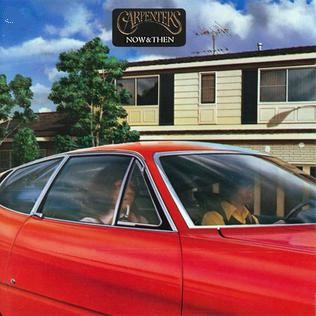
Music listened to in the 70s while tooling around town amounted to whatever 8-track tapes we happened to have on hand. A favorite of mine was an album by Richard & Karen Carpenter, titled Now & Then. My friend, Jeff Thimsen, owned the tape, and we listened to it enough times that I could follow the words verbatim.

Sometimes we did obnoxiously sing out loud yet changed the lyrics on certain songs for humorous purposes. One of these songs was, “Dead Man’s Curve.” The correct lyrics go like this:

“The street was deserted late Friday night.

We were buggin’ each other while we sat out the light.

We both popped the clutch when the light turned green.

You should’ve heard the whine from my screamin’ machine.”

After listening to this tune countless times, it didn’t take long for Jeff to revise things.

“The street was deserted late Friday night.

We were buggin’ each other while we sat out the light.

We both popped the clutch when the light turned green.

You should’ve heard me scream when hot coffee hit my jeans.”

Another tape listened to was, The Beach Boy’s – Greatest Hits. Our favorite song on it was “Get Around.” The most easily remembered lyrics in this song are,

“I’m gettin’ bugged driving up and down the same old strip.

I gotta find a new place where the kids are hip.

My buddies and me are gettin’ real well known.

Yea, the bad guys know us, and they leave us alone.”

Jeff’s modified lyrics went something like this.

“We’re gettin’ bugged driving up and down the same old strip.

We gotta find a new place where the kids aren’t dips.

My buddies and I are gettin’ real well known.

The cops know our cars and they follow us home.”

Just recently, I found a Now & Then CD by the Carpenters on eBay. I plan on playing it the next time my wife and I take a long drive. Something tells me it won’t take long for the lyrics to rekindle a few forgotten memories.

Sometimes—music listened to back then can do that for a person over anything else!

THE THRILL IS GONE

“I’m not so sure I would’ve even known what it looked like had I saw it.”

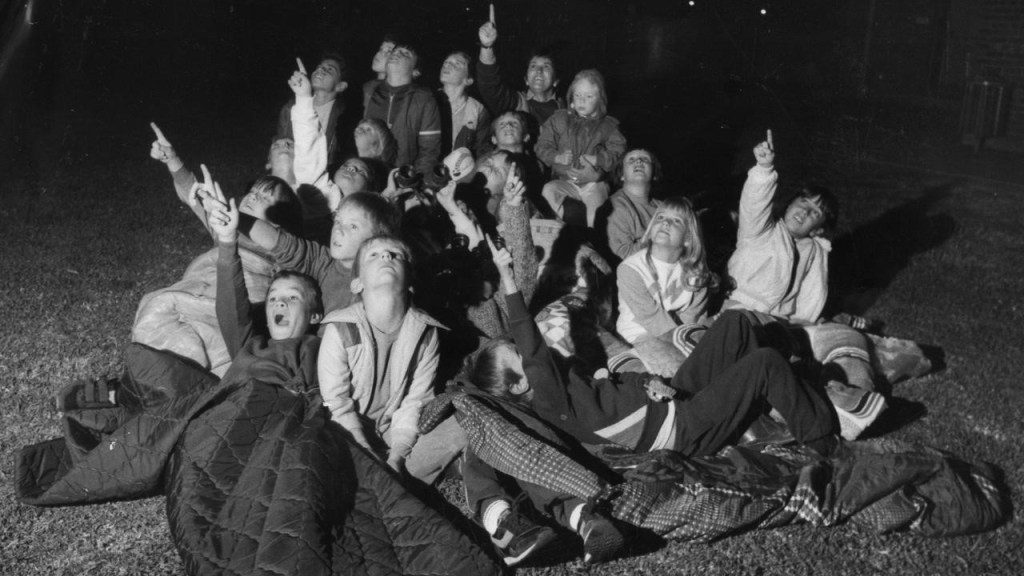
Someone asked me today if I saw the solar eclipse on April 8. Technically, I was outside looking skyward, yet clouds obscured anything remotely resembling a sun or moon. How was I to answer that question other than, “I tried.”

I’m not one to get excited about such rare celestial occurrences anyway. Researching how many partial and full, lunar and solar eclipses that have taken place since my birth, there’ve been 312, or 4.457 for every year of my life.

A song sung by Roy Hawkins in 1951, titled, “The Thrill is gone.,” immediately comes to mind.  The late blues musician B.B. King sings it best. Lyrics go like this,

“The thrill is gone

It’s gone for good

All the thrill is gone

Baby, it’s gone for good.”

I’m not positive this song meaning relates to watching too many eclipses, but it does for me. Whenever I hear that another eclipse is on the way, it generally goes in one ear and out the other. There’s one exception to this star gazing, and that’s to see Halley’s Comet when it once again passes over earth.

The last time that happened was in 1986, and I was in Alaska. With the skies there being cloudy a good portion of time, I can’t remember if I saw it or not, but it’s highly likely I was outside looking up. I’m not so sure I would’ve even known what it looked like had I saw it. According to NASA, there are over 3,800 comets in our solar system.

Halley’s Comet is set to appear over our planet once again in 2061. Hopefully, I’ll be prepared this time and there’ll be no clouds to hinder observation. Telling my wife this, she said that if I do catch a glimpse, it’ll be from a totally different perspective. That comment took a couple of seconds for me to comprehend.

Yes, she’s right—unless I make it to 107. If not, I’ll be looking down at things instead of up. Fortunately, a person won’t end up with a kinked neck while doing so.

STILL KICKIN’

“Still makin’ memories.”

This is the day I turn 70, or the “Platinum Jubilee” as it’s referred to by Grey Poupon users. A big deal to me because of so many things, especially knowing various friends and family didn’t make it this far. No birthday bash or party extravaganza planned. The day will be spent with Joleen and me taking a short hike in the desert and then lunch at Red Robin, only because I have a free burger coming from them. I thank God for so many blessings along the way, especially a loving wife, supportive family, and faithful friends.

STILL KICKIN’

That boy’s still kickin’.

But, not quite as high.

Gait’s a bit slower.

Help needed for eyes.

***

Loved ones departed.

Pets did just the same.

He just keeps walking,

In fear of goin’ lame.

***

Still makin’ memories.

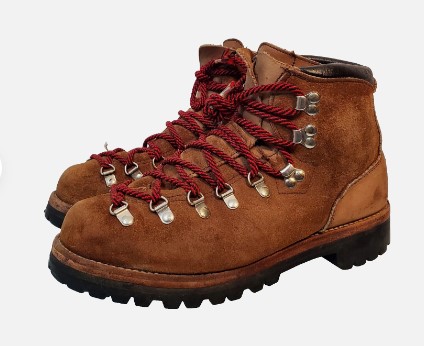
Dexter boots in the sand.

Out hiking vast desert.

With crimson suntan.

***

It’s better to be pokey,

As long as you can.

Than starin’ out windows.

Unable to stand.

***

Happy Birthday, Michael.

Some folks will soon say.

Yet, each waking morning,

Is reason to celebrate.

***

That boy’s still kickin’.

More sunsets to watch.

Keep movin’ forward.

You ancient, Sasquatch!”

Ecclesiastes 9:11

MESQUITOS

“Sounds reason enough for government to begin select extermination, much like the State of Arizona did with feral pigs, and the State of Alaska initiated on wolves.”

Prosopis glandulosa

It’s that time of year in Lake Havasu City, when allergens seemingly rise out of the ground, ready to wreak havoc on allergy sufferers. I’m one of those people. Like so many newcomers—I came here blindly thinking that the desert is a great place to escape pollens. Arizona isn’t the only state in which allergies rule the land.

In Alaska, cottonwood trees bloom every few years, sending cotton fluff, seeds, and spores floating throughout the air. Many times, it’s so thick that they totally blanket driveways and parking lots. Trying to mow dry grass with this stuff clinging to it generally leaves me teary eyed and hacking. Kleenex tissues were generally kept wadded up in both pants pockets.

In 1982, we had a tall cottonwood tree in our front yard until a strong Chinook wind took it down, directly on top of two vehicles. The ‘good hands people’ expeditiously took care of that problem. A local oil company was giving away chokecherry tree saplings at this time, and I believed I did the right thing by planting one where the cottonwood once stood.

The chokecherry is now considered an invasive plant in Alaska, and the city of Anchorage went so far as to ban the selling of them within city limits. Ours lasted a good twenty years before another Chinook windstorm along with heavy snow split it in half, this while we were vacationing in Arizona. Today, that part of the yard is void of a tree, which is okay with me, because we no longer own the place.

Getting back to the problem at hand: mesquite trees, or Prosopis glandulosa as they’re botanically called. I wouldn’t lose sleep if our city leaders banned the selling of them. Problem is, I don’t know anyone having purchased a mesquite, since these allergen producers are free for the plucking. Like the Palo Verde, they can inconveniently sprout up on their own.

It’s hard to imagine anyone planting “mesquitos” on purpose. I sometimes use the word mesquitos to describe this pesty species for obvious reason. Mosquitos and mesquitos are things I believe humans can live without.

Mesquite trees grow wildly to the south of our house, and in conjunction with a neighbor’s unkept yard, we have every type of weed imaginable in close proximity to my nose. Because of this—each waking day is spent going through a medicinal regimen to keep allergies at bay.

Quail have taken to these trees as home, and being a lover of birds and wildlife, those now flowering trees can stay for this reason alone. If it wasn’t for this, the mesquites near my place would be eliminated through an act of nature, namely an axe.

Of course, some will emphatically tell me that honeybees need those trees as well, and they were here long before I was. Having a sarcastic and off-the-wall response for these folks, I’d quickly reply back with the title of an old Beatle’s song, “Let It Be!” That’d have them scratching their heads for several seconds until figuring out what I truly meant was, “Bug off!”

On the internet, a person can find something positive or negative on most every subject. If I was searching for something positive on smoking tobacco, I could locate such. Mesquite trees have lovers and haters. The lovers say that they’re good for the environment, while haters say they consume too much water and choke out other plant life. For this article, I looked strictly for the negative.

An agricultural writer named, Travis Urban, wrote a piece saying this about the foliage, “Mesquite trees are some of the worst invasive species on the planet, and are known as the devil with roots.” He went on to explain why.

“Native to arid and semi-arid regions, this tree is capable of thriving in most conditions. Mesquite has the ability to grow a tap root 200 feet down, and roots that spread and search for water up to 50 feet outside the tree canopy. These features not only enable Mesquite to survive in areas other trees will not, but also choke out surrounding vegetation.

Mesquites are heavy water consumers. A single tree can consume nearly 21 gallons of water per day. Mesquites absorb groundwater and lower the water table effectively causing surrounding vegetation to die off, making it able to thrive and spread.”

Sounds reason enough for government to begin select extermination, much like the State of Arizona did with feral pigs, and the State of Alaska initiated on wolves.

I don’t think this will happen for several reasons, namely, those precious birds and bees desperately need the trees for survival. Having to accept things as they are because of not being that high on the Arizona pecking order, I’ll continue to fight allergies by keeping plenty of Tylenol, Aller-Tec, Fluticasone Propionate, Qvar, azithromycin, amoxicillin, codeine-laced cough syrup, and excellent doctors within close proximity.

Arizona cowboys wore bandanas over their mouths back in the day, undoubtedly, because of having to endure the dreaded mesquite pollen and dust. Learning from them, perhaps I should start doing the same. It must’ve worked, because how many cowboys or cowgirls have you seen with a box of Kleenex strapped to the back of their saddle!

SMOKE ON THE WATER

“Perhaps Tod Stiles loved Lake Havasu City so much back then, that he never left town!”

Nautilus

Last Friday night, on YouTube for free, I watched a 1962 episode of the television series, “Route 66” filmed in Lake Havasu City. To be honest, things have changed so much around town that I didn’t recognize a lot of the landscape, especially buildings. I would’ve been 8 years old at this point.

The storyline centers on an upcoming endurance outboard race on the Colorado River, a distant and unaffectionate father, and his love-lost daughter. It also has a philosophical ending that my simple mind still can’t grasp.

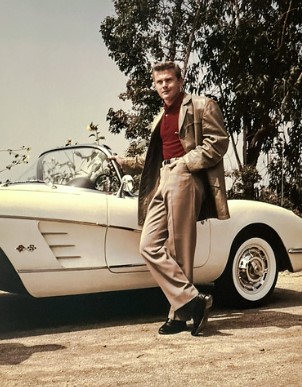
I suppose some old-timers will remember when Martin Milner and his movie crew came to visit. Milner played the part of Tod Stiles in “Route 66” — going on to “Adam-12” fame as Los Angeles, police officer, Pete Malloy.

Dad was an avid “Route 66” fan and tuned in regularly. My father was seriously injured near Victorville, California, on Route 66 in 1957, when a Corvette he was a passenger in left the road on a curve and crashed. That might be why this show meant so much to him? I recall nothing of the series except for the cool ‘vette and theme music. My ears perk up whenever I hear it playing.

The episode filmed in our city is titled, “Go Read the River.” An opening scene shows Tod Stiles boarding a vintage Beechcraft 18 airplane in Los Angeles bound for Havasu. Quickly jotting down the FAA identification number on this plane, N44N, and after checking things out, I discovered it once belonged to the McCulloch Corporation.

That was no surprise since the plot involves testing of a McCulloch outboard-powered race boat. The episode was an excellent, hour-long subliminal pitch for Robert McCulloch Sr.’s outboard motors.

It was during this time, 1962, that I saw another movie connected with water— more like underneath it. Walt Disney’s, “20,000 Leagues Under The Sea” was playing at the Sel-Mont Drive In Theatre in Selma, Alabama. My family loaded in the car one evening and headed for the giant screen located on Highway 80.

Undoubtedly, Mom brought along sufficient food and drink for us, because snack bar items were deemed too costly by my folks. The re-released movie, starring actor Kirk Douglas, first came out in 1954, this being the year I was born.

I remember more about “20,000 Leagues Under The Sea” than any movie during my childhood, except perhaps, “Bambi.” The book written by, Frenchman, Jules Verne, is about a mysterious submarine named the Nautilus, along with a vengeful man in command of it, Captain Nemo.

Three men on a voyage to look for a monster fish, accidentally end up on the Nautilus as prisoners after their ship is attacked and sunk. In 1869, Jules Verne put all of his creative juices to work when he put pen to paper for this captivating science-fiction tale.

In the beginning, Ned Lamb (Kirk Douglas), sings a very unusual song about being a sailor and having to date strange women. Over 63 years, I still remember several of the lines.

“Got a whale of a tale to tell ya, lads.
A whale of a tale or two.
‘Bout the flapping fish and girls I’ve loved.
On nights like this with the moon above.
A whale of a tale and it’s all true,
I swear by my tattoo.

There was Mermaid Minnie, met her down in Madagascar.
She would kiss me, any time that I would ask her.
Then one evening her flame of love blew out.
Blow me down and pick me up!
She swapped me for a trout.”

One of the most memorable scenes has Ned and the other two survivors having dinner with Captain Nemo. Food prepared for them by Nemo’s chef never escaped my brain. Filet of sea snake. Biscuit of blowfish with sea squid dressing basted in barnacles. Fruit preserves were made from sea cucumbers grown in an underwater garden. Succulent pudding composed of Sautéed unborn octopus was served for dessert. And to top things off, milk or cream from giant sperm whales. How could a young guy forget such delicacies?

At the end of this meal, one of the prisoners, Professor Aronnax, accepts a large cigar handed to him by Captain Nemo. This act of generosity takes place within the tight confines of a submarine. What I remember most about this, was that Captain Nemo said the cigars weren’t made of tobacco but consisted of nicotine-laced seaweed.

If all of the sailors took part in this vice, without question, when the Nautilus surfaced and a hatch was opened, more smoke rolled out of it than Willie Nelson’s bus.

In the “Route 66” episode I just recently viewed, there’s one thing that hasn’t changed in Lake Havasu City, and that involves cars. Although it might’ve been unusual to see a 1962 Corvette driving around town in the early 60s, it isn’t today.

At the end of the story, Tod Stiles’s partner, Buz Murdock, played by actor George Maharis, drives their infamous ‘vette to Havasu from LA to watch his friend race. Of course, Buz brought along a couple of beautiful girls for company. There were always gorgeous women in “Route 66.”

I spotted a ’61 or ’62 Corvette just the other morning cruising down McCulloch Boulevard. An older gentleman sat behind the wheel with a nice-looking lady perched beside him. Stretching things just a bit here by using Jules Verne’s wild imagination, perhaps Tod Stiles loved Lake Havasu City so much back then, that he never left town!

Tod Stiles