“I’m not so sure I would’ve even known what it looked like had I saw it.”
Someone asked me today if I saw the solar eclipse on April 8. Technically, I was outside looking skyward, yet clouds obscured anything remotely resembling a sun or moon. How was I to answer that question other than, “I tried.”
I’m not one to get excited about such rare celestial occurrences anyway. Researching how many partial and full, lunar and solar eclipses that have taken place since my birth, there’ve been 312, or 4.457 for every year of my life.
A song sung by Roy Hawkins in 1951, titled, “The Thrill is gone.,” immediately comes to mind. The late blues musician B.B. King sings it best. Lyrics go like this,
“The thrill is gone
It’s gone for good
All the thrill is gone
Baby, it’s gone for good.”
I’m not positive this song meaning relates to watching too many eclipses, but it does for me. Whenever I hear that another eclipse is on the way, it generally goes in one ear and out the other. There’s one exception to this star gazing, and that’s to see Halley’s Comet when it once again passes over earth.
The last time that happened was in 1986, and I was in Alaska. With the skies there being cloudy a good portion of time, I can’t remember if I saw it or not, but it’s highly likely I was outside looking up. I’m not so sure I would’ve even known what it looked like had I saw it. According to NASA, there are over 3,800 comets in our solar system.
Halley’s Comet is set to appear over our planet once again in 2061. Hopefully, I’ll be prepared this time and there’ll be no clouds to hinder observation. Telling my wife this, she said that if I do catch a glimpse, it’ll be from a totally different perspective. That comment took a couple of seconds for me to comprehend.
Yes, she’s right—unless I make it to 107. If not, I’ll be looking down at things instead of up. Fortunately, a person won’t end up with a kinked neck while doing so.
This is the day I turn 70, or the “Platinum Jubilee” as it’s referred to by Grey Poupon users. A big deal to me because of so many things, especially knowing various friends and family didn’t make it this far. No birthday bash or party extravaganza planned. The day will be spent with Joleen and me taking a short hike in the desert and then lunch at Red Robin, only because I have a free burger coming from them. I thank God for so many blessings along the way, especially a loving wife, supportive family, and faithful friends.
“Sounds reason enough for government to begin select extermination, much like the State of Arizona did with feral pigs, and the State of Alaska initiated on wolves.”
Prosopis glandulosa
It’s that time of year in Lake Havasu City, when allergens seemingly rise out of the ground, ready to wreak havoc on allergy sufferers. I’m one of those people. Like so many newcomers—I came here blindly thinking that the desert is a great place to escape pollens. Arizona isn’t the only state in which allergies rule the land.
In Alaska, cottonwood trees bloom every few years, sending cotton fluff, seeds, and spores floating throughout the air. Many times, it’s so thick that they totally blanket driveways and parking lots. Trying to mow dry grass with this stuff clinging to it generally leaves me teary eyed and hacking. Kleenex tissues were generally kept wadded up in both pants pockets.
In 1982, we had a tall cottonwood tree in our front yard until a strong Chinook wind took it down, directly on top of two vehicles. The ‘good hands people’ expeditiously took care of that problem. A local oil company was giving away chokecherry tree saplings at this time, and I believed I did the right thing by planting one where the cottonwood once stood.
The chokecherry is now considered an invasive plant in Alaska, and the city of Anchorage went so far as to ban the selling of them within city limits. Ours lasted a good twenty years before another Chinook windstorm along with heavy snow split it in half, this while we were vacationing in Arizona. Today, that part of the yard is void of a tree, which is okay with me, because we no longer own the place.
Getting back to the problem at hand: mesquite trees, or Prosopis glandulosa as they’re botanically called. I wouldn’t lose sleep if our city leaders banned the selling of them. Problem is, I don’t know anyone having purchased a mesquite, since these allergen producers are free for the plucking. Like the Palo Verde, they can inconveniently sprout up on their own.
It’s hard to imagine anyone planting “mesquitos” on purpose. I sometimes use the word mesquitos to describe this pesty species for obvious reason. Mosquitos and mesquitos are things I believe humans can live without.
Mesquite trees grow wildly to the south of our house, and in conjunction with a neighbor’s unkept yard, we have every type of weed imaginable in close proximity to my nose. Because of this—each waking day is spent going through a medicinal regimen to keep allergies at bay.
Quail have taken to these trees as home, and being a lover of birds and wildlife, those now flowering trees can stay for this reason alone. If it wasn’t for this, the mesquites near my place would be eliminated through an act of nature, namely an axe.
Of course, some will emphatically tell me that honeybees need those trees as well, and they were here long before I was. Having a sarcastic and off-the-wall response for these folks, I’d quickly reply back with the title of an old Beatle’s song, “Let It Be!” That’d have them scratching their heads for several seconds until figuring out what I truly meant was, “Bug off!”
On the internet, a person can find something positive or negative on most every subject. If I was searching for something positive on smoking tobacco, I could locate such. Mesquite trees have lovers and haters. The lovers say that they’re good for the environment, while haters say they consume too much water and choke out other plant life. For this article, I looked strictly for the negative.
An agricultural writer named, Travis Urban, wrote a piece saying this about the foliage, “Mesquite trees are some of the worst invasive species on the planet, and are known as the devil with roots.” He went on to explain why.
“Native to arid and semi-arid regions, this tree is capable of thriving in most conditions. Mesquite has the ability to grow a tap root 200 feet down, and roots that spread and search for water up to 50 feet outside the tree canopy. These features not only enable Mesquite to survive in areas other trees will not, but also choke out surrounding vegetation.
Mesquites are heavy water consumers. A single tree can consume nearly 21 gallons of water per day. Mesquites absorb groundwater and lower the water table effectively causing surrounding vegetation to die off, making it able to thrive and spread.”
Sounds reason enough for government to begin select extermination, much like the State of Arizona did with feral pigs, and the State of Alaska initiated on wolves.
I don’t think this will happen for several reasons, namely, those precious birds and bees desperately need the trees for survival. Having to accept things as they are because of not being that high on the Arizona pecking order, I’ll continue to fight allergies by keeping plenty of Tylenol, Aller-Tec, Fluticasone Propionate, Qvar, azithromycin, amoxicillin, codeine-laced cough syrup, and excellent doctors within close proximity.
Arizona cowboys wore bandanas over their mouths back in the day, undoubtedly, because of having to endure the dreaded mesquite pollen and dust. Learning from them, perhaps I should start doing the same. It must’ve worked, because how many cowboys or cowgirls have you seen with a box of Kleenex strapped to the back of their saddle!
“Perhaps Tod Stiles loved Lake Havasu City so much back then, that he never left town!”
Nautilus
Last Friday night, on YouTube for free, I watched a 1962 episode of the television series, “Route 66” filmed in Lake Havasu City. To be honest, things have changed so much around town that I didn’t recognize a lot of the landscape, especially buildings. I would’ve been 8 years old at this point.
The storyline centers on an upcoming endurance outboard race on the Colorado River, a distant and unaffectionate father, and his love-lost daughter. It also has a philosophical ending that my simple mind still can’t grasp.
I suppose some old-timers will remember when Martin Milner and his movie crew came to visit. Milner played the part of Tod Stiles in “Route 66” — going on to “Adam-12” fame as Los Angeles, police officer, Pete Malloy.
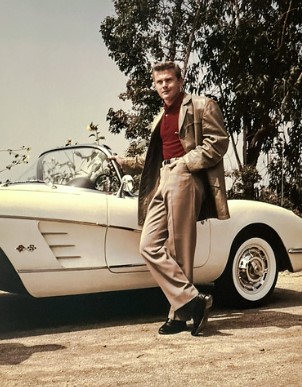
Dad was an avid “Route 66” fan and tuned in regularly. My father was seriously injured near Victorville, California, on Route 66 in 1957, when a Corvette he was a passenger in left the road on a curve and crashed. That might be why this show meant so much to him? I recall nothing of the series except for the cool ‘vette and theme music. My ears perk up whenever I hear it playing.
The episode filmed in our city is titled, “Go Read the River.” An opening scene shows Tod Stiles boarding a vintage Beechcraft 18 airplane in Los Angeles bound for Havasu. Quickly jotting down the FAA identification number on this plane, N44N, and after checking things out, I discovered it once belonged to the McCulloch Corporation.
That was no surprise since the plot involves testing of a McCulloch outboard-powered race boat. The episode was an excellent, hour-long subliminal pitch for Robert McCulloch Sr.’s outboard motors.
It was during this time, 1962, that I saw another movie connected with water— more like underneath it. Walt Disney’s, “20,000 Leagues Under The Sea” was playing at the Sel-Mont Drive In Theatre in Selma, Alabama. My family loaded in the car one evening and headed for the giant screen located on Highway 80.
Undoubtedly, Mom brought along sufficient food and drink for us, because snack bar items were deemed too costly by my folks. The re-released movie, starring actor Kirk Douglas, first came out in 1954, this being the year I was born.
I remember more about “20,000 Leagues Under The Sea” than any movie during my childhood, except perhaps, “Bambi.” The book written by, Frenchman, Jules Verne, is about a mysterious submarine named the Nautilus, along with a vengeful man in command of it, Captain Nemo.
Three men on a voyage to look for a monster fish, accidentally end up on the Nautilus as prisoners after their ship is attacked and sunk. In 1869, Jules Verne put all of his creative juices to work when he put pen to paper for this captivating science-fiction tale.
In the beginning, Ned Lamb (Kirk Douglas), sings a very unusual song about being a sailor and having to date strange women. Over 63 years, I still remember several of the lines.
“Got a whale of a tale to tell ya, lads. A whale of a tale or two. ‘Bout the flapping fish and girls I’ve loved. On nights like this with the moon above. A whale of a tale and it’s all true, I swear by my tattoo.
There was Mermaid Minnie, met her down in Madagascar. She would kiss me, any time that I would ask her. Then one evening her flame of love blew out. Blow me down and pick me up! She swapped me for a trout.”
One of the most memorable scenes has Ned and the other two survivors having dinner with Captain Nemo. Food prepared for them by Nemo’s chef never escaped my brain. Filet of sea snake. Biscuit of blowfish with sea squid dressing basted in barnacles. Fruit preserves were made from sea cucumbers grown in an underwater garden. Succulent pudding composed of Sautéed unborn octopus was served for dessert. And to top things off, milk or cream from giant sperm whales. How could a young guy forget such delicacies?
At the end of this meal, one of the prisoners, Professor Aronnax, accepts a large cigar handed to him by Captain Nemo. This act of generosity takes place within the tight confines of a submarine. What I remember most about this, was that Captain Nemo said the cigars weren’t made of tobacco but consisted of nicotine-laced seaweed.
If all of the sailors took part in this vice, without question, when the Nautilus surfaced and a hatch was opened, more smoke rolled out of it than Willie Nelson’s bus.
In the “Route 66” episode I just recently viewed, there’s one thing that hasn’t changed in Lake Havasu City, and that involves cars. Although it might’ve been unusual to see a 1962 Corvette driving around town in the early 60s, it isn’t today.
At the end of the story, Tod Stiles’s partner, Buz Murdock, played by actor George Maharis, drives their infamous ‘vette to Havasu from LA to watch his friend race. Of course, Buz brought along a couple of beautiful girls for company. There were always gorgeous women in “Route 66.”
I spotted a ’61 or ’62 Corvette just the other morning cruising down McCulloch Boulevard. An older gentleman sat behind the wheel with a nice-looking lady perched beside him. Stretching things just a bit here by using Jules Verne’s wild imagination, perhaps Tod Stiles loved Lake Havasu City so much back then, that he never left town!
It’s rare that I hear anyone say these days, “I’m just trying to make a living.” My parent’s generation used this term quite frequently along with my grandparents. It basically means: earning enough money to place a roof over your head, food to eat, and clothes to wear.
After my father was honorably discharged from the Air Force, he entered the business world owning a gas station and automotive parts stores. Dad was of the frame of mind, that merely working for a W2 form for the rest of his life went against the grain, in being able to ‘adequately provide’ for his family and have anything left. By entering the business world, foremost, he became a provider of jobs to others.
Early on, he believed that the government was taxing people to death as a means of preventing them from getting ahead. With the recent 1.2 trillion-dollar spending budget just passed, hang on to your wallet or purse because they’re coming for more.
The San Francisco rock group, Huey Lewis and the News, recorded a song that exemplifies how my father felt regarding W2s. “Working for a Living” is the song title, and these now dated lyrics, fit his ideology perfectly back then.
“Hey, I’m not complaining ‘cause I really need the work.
Hitting up my buddies got me feelin’ like a jerk.
Hundred-dollar car note, two hundred rent.
I get a check on Friday, but it’s already spent.
I’m takin’ what they’re giving ‘cause I’m workin’ for a livin’.”
Early on, I know my parents lived from paycheck to paycheck, with Dad sometimes moonlighting at a parttime job while still in the military. Mom worked at a hospital as a nurse’s assistant, including taking in ironing for other people. My folks knew the meaning of working hard to try and get ahead.
I tried to instill the same in my children, believing that if you want something bad enough, you have to earn it. It seems that philosophy went flying out the window where this entitled generation is concerned. Now, it seems, more and more young people and newcomers to this country, believe things should just be handed to them. It’s easy to see the decay in America because of this socialistic downturn.
Driving through our city, I see “NOW HIRING” signs in many business windows. Businesses seemingly can’t find enough people willing to work. In some cases, the ones they do hire are expecting a paycheck for merely showing up.
Trying to keep my ears open whenever possible, I heard a young employee in a restaurant tell a customer, “If they want me to stay here, they need to pay more.” Basically, she was either looking to quit, or was priming the pump for a bigger tip. I didn’t see a ball and chain attached to her ankle, so the gal was free to leave.
Free cell phones, free college tuition, free food, free cable, free internet, free lodging, free medical and dental, and the list goes on and on, was never a part of my parent’s generation. Government, along with a good number of followers, seem to have turned on those hard working and business savvy people providing jobs.
A good friend of mine uses the term, ‘the haves and the have nots.’ In his definition of the term, it doesn’t refer to just rich and poor. The haves are folks that worked hard and fulfilled their dream, whatever that might be. A nice home, car, boat, airplane, home on the lake, etc.
The have nots in his mind are those people that criticize the haves, jealous of them, saying that they’re the reason for them being in the have not position to begin with. We’re seeing this flawed ideology in our country right now, with certain government leaders, politicians, and even educators mostly to blame for stirring the pot.
It’s akin to what happened prior to WWII in Germany. Adolf Hitler turned a good percentage of the German people against Jews, saying they were responsible for the hard economic times being incurred in that country. Jewish students were taught early on the basics of financial discipline, and they prospered because of it. Many still do.
They were the ones providing jobs back then, with a good number of Jewish citizens being business owners. Tragically, we’re seeing history repeat itself—not with just Jewish people being singled out—but the haves as well.
Those song lyrics mentioned by Huey Lewis and the News, could now be changed to reflect things a bit differently these days.
“Hey, I’m complaining ’cause I really don’t wanna work.
All those rich people I see, I’m being brainwashed into believin’ they’re selfish jerks.
Five-hundred-dollar car lease, thousand dollar rent.
I’m not worried, you see, Uncle Sam covers this for me.
I’m takin’ what the government’s giving, ‘cause I don’t wanna work for a livin’!”
How will this end up? Only time will tell. Hopefully, voters will see through the charade before it’s too late to avoid where this twisted path of destruction is taking us.
I’ve been hearing the term “dysfunctional family” here lately and don’t know entirely what it means. There are many different interpretations found on the internet for dysfunctional.
The following is a partial list of these reasons: perfectionism, addiction, abusiveness, depression, communication, emotional neglect, jealousy, guilt, lack of empathy, lack of boundaries, controlling, insecurity, extramarital affair, lack of intimacy, and finance. Thankfully, I don’t meet any of these definitions.
I’m not sure who decides if a family is dysfunctional or not, as the judgment behind such a decision seems to be subjective. I asked a friend to name a family that he considered dysfunctional, and he immediately answered, “The Royal Family.”
I suppose that’s a valid answer going by the above list of credentials, yet who wouldn’t be maladjusted having mega photographers and tabloid reporters watching your every move, 24/7/365.
Being a former mechanic, dysfunctional to me means windshield wipers not working or blinkers doing the same. Where unusual habits of people like the Windsor family of Great Britain are concerned, I generally chalk it up to quirkiness and not dysfunctionality.
Most every family has a quirky member or two. The Windsor’s seem to be blessed with a significant number of such people. As Mom often said, “It takes all kinds to make the world go ‘round!”
Judging by the mechanical definition of dysfunction, most of my senior friends, if not all, are part of a large dysfunctional contingent. I won’t mention names, but there’s bad knees, hips, eyes, ears, legs, arms, hearts, and even fingers and toes within this group.
Some time ago, I saw an unusual decal on the back window of a car in our city. Each stick family member pictured had a problem. The husband holds a bottle of booze, while his wife is angry and abused. An older son grasps a cannabis joint between two fingers while the youngest boy wields a knife. Little sister of all things is a pole dancer. The dog is even featured—with it apparently having an identity crisis. A fancy ruffled collar was wrapped around its neck.
I’m not sure how a perfect family would be characterized these days, as society and Hollywood have seemingly destroyed what’s known as the nuclear family. A nuclear family is one having a father, mother, including children. Some early television sitcoms such as, “All in the Family” and “Married with Children,” intentionally made nuclear families out to be dysfunctional. “The Simpsons” animated series is perhaps the worst.
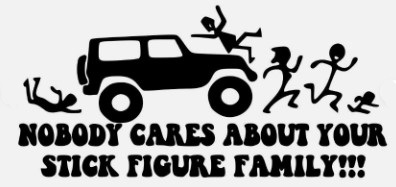
It appears there’s an attempt to totally wipe out the definition of ‘family’ from what it once meant. Nothing proves this more than a decal recently observed on the back of a Toyota pickup window. In it, a Jeep is attempting to chase a stick family down. At the bottom of the decal are these words: “Nobody cares about your stick figure family!!!”
After seeing that, I had to wonder about the person driving this Toyota, and what was his reasoning behind displaying such. It didn’t take long for my brain to come up with a logical, armchair-psychologist answer.
“The driver is probably overweight and has a dislike for thin people, along with having a warped sense of humor!”
Getting a much better view of him at the next light, my hunch was right. The seemingly large guy met one of the dysfunction criteria, that of being addicted to food. This decal was his way of getting back at society.
For those about to lecture me that the young man could’ve had a medical problem, please stand down. For crying out loud, he was eating what appeared to be a pastry of some kind. I added those first four words for unnecessary emphasis and nothing more.
Eons ago, I had a boss that used the phrase quite often. One day, I faked as if I was crying out loud to see what he’d do. The former Army sergeant was none too pleased with my sarcastic humor. Anyway, getting back on track here.
Where this young man’s vinyl message was concerned, I wasn’t offended and got a hoot out of it. What I didn’t like is that it wasn’t perfectly aligned on the glass. Having been an employee that installed decals on Alaska State Trooper cars for several years, I notice trivial stuff like that. These days, I especially watch for misaligned business signs and placards on cars and trucks.
Realtors seem to be the worst offenders. How can these people sleep at night knowing that their decals aren’t square to the rest of the vehicle? I know I couldn’t until things were corrected.
It’s like walking into someone’s home and seeing a painting or picture hanging off-kilter on the wall. I don’t know about you, but I want to walk over and immediately straighten it. In some cases, I have.
“I’ve never been in a fighter jet, but can imagine the thrill, having ridden a carnival ride or two.”
M/T
Every so often I spot someone around town standing beside their vehicle with a gas can in hand. I can’t remember the last time a car or truck of mine ran out of fuel. I’m thinking it was in my teenage years, and even back then, perhaps only once or twice. I’ve seemingly run on fumes a few times since, but always managed to make it to a service station.
There’ve been several occasions where I helped push stalled cars to gas pumps after they quit running. The drivers were headed that direction but didn’t quite make it. Pushing 4,000 pounds by hand up a slight incline is only for the young at heart.
My dad almost ran out of fuel late one night in Lubbock, Texas, this after our family went to a drive-in movie. The 1957 Ford barely made it to a closed station, where the old man (he was around 29 at the time), showed my brother and me a trick. I believe he’d learned it from a teenage friend when they rode motorcycles.
Before computers controlled the gas pumps like they do now, hoses sometimes still held a small amount of residual fuel after being hung back up. Dad went around and collected enough to fill a pop bottle, in hopes of at least driving us to a still open facility. Turns out he didn’t need to, because a policeman quickly came along with lights flashing. After finding out what was going on, the officer gave my father a gallon from a can in his trunk.
Having worked at a Texaco station while still in school, I helped out many folks that suffered this classic mistake. Some of them brought their own gas can, but a good number needed to borrow the shop’s. I learned early on to get something from them as collateral, so that they’d be inclined to return the container.
One time a guy stole our can after I filled it, with me being lectured soon after to never make that mistake again. A driver’s license worked best as collateral, but in some cases the drivers didn’t have one on them. At that point, a watch or enough cash to cover the cost of the can was asked for. If this person didn’t have anything of value, I sent them away emptyhanded.
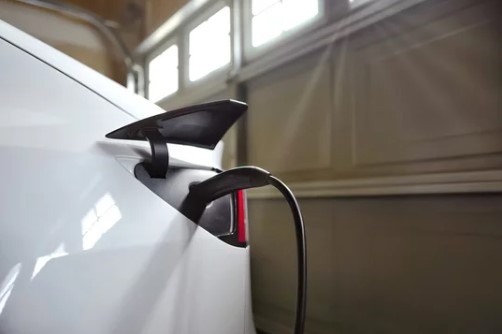
Here lately, I’ve been noticing more and more battery powered vehicles on Lake Havasu City streets. If I’m sitting beside one at a stoplight, my window generally goes down so that I can hear how quiet they are. The only sound made when the light turns green is warm rubber tires rolling on freshly laid asphalt.
My wife and I currently don’t own an electric car or truck, with me not being one of those guys saying I won’t purchase one. During the horse and buggy days, some of those folks claimed they’d never have a horseless carriage. Automobiles were called that back then. The majority of those complainers eventually had to eat their words.
What I like most about EV (electric vehicles) is that they’re much quicker in a straight line than gas-powered rigs. I’ve read where the acceleration of some models is like an airplane taking off. All-wheel drive, with absolutely no tire spin, will set you back in the seat like a fighter jet. I’ve never been in a fighter jet, but can imagine the thrill, having ridden a carnival ride or two. Don’t believe me? Check out the Pininfarina Battista EV.
What I don’t like about EV is wondering where I’d recharge on busy weekends. I’ve seen photos of recharge stations with a long line of cars and trucks waiting to plug in. This was generally during holidays and bad weather. Potential power outages seem to be their weakest link besides random fires. For the record, gasoline and diesel fueled vehicles have been self-igniting for years. I recently observed one such inferno on I-40 when a fuel line evidently came loose.
I’m constantly having to remind myself to recharge my electric razor along with various power tools like cordless drills. Over the years, I’ve often found them almost out of juice or totally dead. It seems I might run into the same problem where owning an electric vehicle is concerned. I know they have a gauge telling the charge level of batteries much like a fuel gauge, yet mistakes can still happen.
Unfortunate working stiffs still having to punch-in each morning, will have another lame excuse for being late to work because of EV vehicle ownership. “Hello, Mr. Bruce, my car ran out of juice, again.”
On occasion, my wife asks me, “Does the car need gas?” I try to make sure the tanks always topped off in summer, just in case the power goes out and local gas pumps don’t work. A few extra gallons are kept in a safe place, with me wanting to have enough to make it to the Hualapai’s and back.
For those not knowing what the Hualapai’s are, they’re mountains directly east of Kingman, approximately 70 miles from here. It’s generally 20 degrees cooler at the summit than here in Havasu. If you’ve never been there—a drive up the mountain is well worth it to escape summer heat.
I just read where it can take anywhere from 30 minutes to 12 hours to charge an electric car depending on how low the batteries are. According to another article, when the charge is complete, a loud beep is heard. It’s almost as if they do this for us older people with hearing problems.
If and when we invest in an EV rig, Joleen might have to remind me on occasion to keep things plugged in. Should we find our batteries low, the amount of time needed to recharge them will be of no major concern. Having to wait appears to be another senior trait that we’ve become experts at.
EV is here to stay regardless of what the Hot Rod crowd (which includes me), or others have to say. Some classic cars, muscle cars, and even ’32 Fords are already being converted to electric power by several shops throughout the country. Most likely these cars are now faster than they were before the motor swap.
Glade Air Fresheners coined a jingle several years back that went like this, “Plug it in, plug it in.” Like it or not, more and more vehicle owners will be singing that tune as time marches on. Comedian and automobile aficionado, Jay Leno, is an EV advocate going way back. I feel like I’m in good company seeing his expert stamp of approval on things.
EV will help take a good many gas and diesel vehicles off the road but not all. Hopefully, when the infamous ‘flux capacitor’ is finally bug free, that form of energy will make gas and electric vehicles a thing of the past. It’s doubtful I’ll see this happen in my lifetime!
“In looking for a person that fits all the character traits of being humble, Mother Teresa stands tall.”
Porsche 911 Turbo GT3
It’s not often that I listen to country western music. On occasion, as I’m channel surfing on Sirius, I come across a song that begs listening to. The other morning on my way to Kingman, Willie Nelson was singing about trying to be humble.
I turned up the volume finding it was humorous along with being an enlightening tune. The name of the song is, “It’s Hard to Be Humble.” The starting lyrics go like this,
“Oh Lord, it’s hard to be humble
When you’re perfect in every way
I can’t wait to look in the mirror
‘Cause I get better looking each day.”
Being humble is Biblical, and seems subjective to interpretation. The Webster’s Dictionary explanation for humble reads as follows. 1. Not proud or haughty. 2. Not arrogant or assertive. 3. Reflecting, expressing, or offered in a spirit of deference or submission.
The old saying, “Flaunt it if you have it!” is definitely not being humble.
An online definition I found for this term is: 1. Tell someone not to hide their beauty. 2. Display your wealth. 3. Over emphasize abilities. Bragging of course is another word for flaunt.
Willie Nelson’s song got me to wondering if being humble was ever a problem for me. That’s a hard question to answer on my own, so friends and family would be a better judge of such.
Asking Joleen this question, she believes I could’ve been a bit unhumble at times in my compositions. She thinks perhaps my assertiveness and opinions on certain subjects, sometimes come through like a bull in a curio cabinet. Joleen did say that I’m getting better with age instead of worse.
Where that number one trait on the list of flaunting is concerned, I suppose beauty is intended for females only, because I’ve never seen a beautiful guy. Handsome perhaps, but not beautiful. When a woman is beautiful and a man handsome, there’s really no need to flaunt it. We can see this without folks having to dress scantily, or bare it all to prove a point.
When I think of flaunting wealth, I flash back to seeing a Turbo Porsche 911 GT3 here in town with personalized license plate: CHMPCHG. It took me a while to figure out the meaning, Chump Change. I believe this particular automobile cost more than 300K, so that was definitely not chump change to me.
You could look at that as not being humble, but then again, the plate I saw on an expensive sportscar saying REPOED wasn’t any humbler. I did chuckle at both in the same way I did Willie’s song.
A few years ago, I belonged to the London Bridge Lion’s Club. Within this club, I met a guy from the L.A. area who was a retired movie set worker. This guy helped build various buildings and props needed in the motion picture industry. I asked him how many movie stars he met and he said, “Many.”
The fellow told me a story of a now, well-known comic actor, who at that time was just starting out. The actor was down to earth at the beginning, mingling with the construction crew, even calling a few of them friends. As time went on, and he became famous, the comedian’s head began to swell and he distanced himself from the lowly workers.
One day, out of the blue, he walked over to show some of the crew his contract. The amount on it was more than what these blue collar workers made in their lifetimes. He evidently only did this to rub things in, thinking it was funny, yet didn’t impress anyone in the process.
I’ve never forgotten that actor’s name, and over time I’ve watched him go through two divorces, with his career appearing to finally be over because of anger and a bad attitude. The guy made a ton of cash in the movie industry, along with a bunch of enemies as well. Without doubt, trying to be humble after becoming successful wasn’t in the big picture. Several lyrics in Willie Nelson’s song fit this person perfectly,
“Some folks say that I’m egotistical
I don’t even know what that means
I guess it has something to do with
The way I fill out my skintight blue jeans.”
I suppose a few readers are trying to figure out who this person is. Out of respect to him, I’ll not mention the name. He definitely needs prayer, because sooner or later, he’ll find that money can never replace the friends ditched along the way in making it.
In looking for a person that fits all the character traits of being humble, Mother Teresa stands tall. She gave her whole life to helping others, doing without along the way. She was neither haughty nor arrogant. Mother Teresa set the bar sky-high for others to follow.
Drifting back to Willie Nelson’s song, I’ll end this piece with these final lyrics that I changed just a tad. I believe they apply to me, and to most of us for that matter.
“Tiger Pride is now a reference to the Auburn Tigers. We see how well that turned out.”
I decided to research the word “pride” remembering what I’d been taught early on in Sunday School class. Proverbs 16:18 says – “Pride goes before destruction, and a haughty spirit before a fall.”
When I turned to left-leaning Google to get an interpretation of pride, many things immediately popped up, some that only a few years ago, wouldn’t be considered prideful. I won’t go into those, yet will give my own interpretation on the meaning of pride.
To begin with, the first time I recall coming across the word was a reference to Presto Pride pots and pans. Mom had a set of the copper bottom cookware, and I remember having to use copper cleaner each time while washing dishes to keep them coppery, if that’s even a word.
My mother always expected her pots and pans to look brand new after my brother and I finished cleaning them. We did our best—with her still owning and using them right up until the end.
Deciding to find out what happened to Presto Pride, I discovered the cookware is no longer manufactured. Seeing that, no tears were shed. Those things were labor intensive while Jim and I lived at home.
Going way back, Alabama Crimson Tide used the words Bama Pride to describe their football team. It appears someone quickly saw a problem with that, most likely a minister, and Bama Fever was substituted instead.
Tiger Pride is now a reference to the Auburn Tigers. We see how well that turned out. The Tide have rolled most every year going back to Coach “Bear” Bryant, while The Pride constantly come up playing second fiddle.
Romans were full of pride, not only the elite, but common people living there as well. Over many years, pride is what helped destroy the civilization. It seems to be happening right now in this country. At the rate things are currently spiraling downhill, it shouldn’t be much longer ‘til we join the ranks of the proud Roman Empire where history is concerned.
The Webster’s 1828 Dictionary says this about pride: 1. Inordinate self-esteem; an unreasonable conceit of one’s own superiority in talents, beauty, wealth, accomplishments, rank in elevation in office, which manifests itself in lofty airs, distance, reserve, and often in contempt of others.”
The synonyms of pride are: conceit, arrogance, haughtiness, and narcissism. Pride is the act of giving ourselves credit for something God has done. I sometimes use the word proud, such as being proud of my children or grandchildren for things they’ve done.
Taking precedence over this type of good pride, blessed is the word. My pride for children or grandchildren having accomplished things, was only possible because they were blessed. Blessings are directly associated with, and come from, God.
Some examples that Google sees fit to call prideful don’t fit under the blessed definition. I believe in due time, much like Presto Pride pots and pans, including ancient Rome, these Google patronized and celebrated entities will fail as well.
James 4:6 says – “God resists the proud, but gives grace to the humble.”











 I like to write junk...