“I kept my share in the refrigerator for years, until Joleen tired of seeing them.”
GOT BEER?
I’ve never been a beer drinker other than root beer. On average, I consume two cans a day of the delicious beverage, sometimes adding it to ice cream. I’m always intrigued whenever I go to a restaurant having a microbrewery and watching their canning process.
The canning machine used at College Street Brewery here in Lake Havasu City is a complex-looking monster, something that appears to need finetuning quite regularly. I suppose it’s the same with all of these mechanical devices.
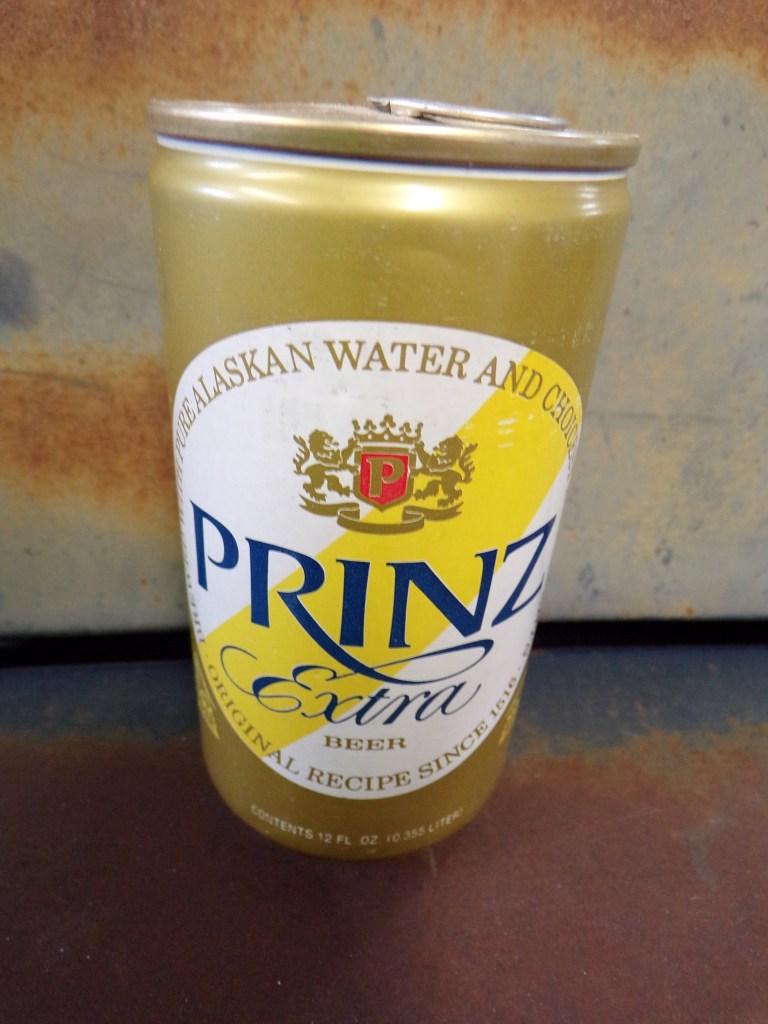
My first encounter with a local brewery was in Anchorage, Alaska. This was in 1976. A German company, for whatever reason, decided that building a brewery in the All-America City was a wise financial decision. Reports say that 11.7 million dollars were invested to produce Prinz Bräu beer.
Fancy sounding as it was, most Alaska working stiffs couldn’t even pronounce the name. That was an early indicator that things wouldn’t go well. My friends called it Prince Roy just because it was much easier to say.
Prinz Bräu was described as tasting like mud when it first hit the market, with brew meister, Heinritz Reich, slowly perfecting the quality and taste. Unfortunately, by 1979, this brewery was bankrupt, with the equipment sold and the building leased.
My brother and I saw the potential for collectibles here, hitting nearly every liquor store in town, buying whatever stock of Prinz Bräu they had left. We ended up with perhaps three six-packs and only a few glass bottles.
I kept my share in the refrigerator for years, until Joleen tired of seeing them. At that point, I sold or gave them away, still having one unopened can. With it now 45 years old, that aluminum container looks as if it could explode at any moment. I keep it next to a Midnight Sun Beer – Pioneer Brewing Company bottle in my office that dates to the 1920s.
There are now several breweries in Alaska, with Alaskan Brewing Company in Juneau perhaps the most successful. They sell their beer in 25 states. A nonalcoholic beverage called Skagway Root Beer is also made by them.
I show three microbreweries located in Lake Havasu City. Barley Brothers Brewing Company, Mudshark Brewing Company, and of course, College Street Brewing Company. I believe two out of three sell their products outside of the city. I’ve seen them in several grocery stores throughout the state.
My wife’s grandparents, Karl and Josephine Schweitzer, made their own homebrew, with Joleen saying that she got to sample it as a teen. With her Grandpa and Grandma coming from German parents, of course, their beer would reflect such. She said it was dark brown and quite strong. I believe this was more along the lines of an ale.
Mom washed her hair in beer, saying that it helped keep things shiny and soft. Up until she passed away her hair was still thick and colorful. I’m not sure the beer helped but then again it could’ve.
One of these days, I’ll drill a hole in my prized Prinz Bräu can and drain the contents. It seems a waste to dump it down the sink. I’m not for drinking the stuff, yet pouring a small amount on my head shouldn’t hurt as the damage has already been done.
Had German investors used local people to manage their company in Alaska, instead of relying upon a management team in Germany, and been a bit more diplomatic in dealing with people, I believe that Prinz Bräu Brewery would still be in business.
The large and powerful family that owned Prinz Bräu, the Oetker Group, could’ve learned a lot from the hands-on entrepreneurs starting Mudshark, College Street, and Barley Brothers, here in Havasu.
A good name plays a big part in new products, with these arrogant Germans in 1976 picking a real winner.
“Oddly enough, not once while we were eating did anyone mention the shooting.”
Certain current events, or hearing a specific old song, sometimes trigger a special or tragic memory in my head. The popular song, “A Whiter Shade of Pale,” by Procol Harum, released in 1967, always conjures up good times I had camping with friends in Alaska.
That tune seemed to always play as my brother drove the Seward Highway to Bird Creek, McHugh Creek, or Hope. Jim was the designated driver because I didn’t have a driver’s license or a car.
An event that just unfolded on July 13, 2024, rekindled two similar horrific occurrences, with me able to remember months, days, and years, although the exact minutes had to be looked up. If you asked me what I was doing at 12:30 p.m. on November 25, 1963, I can tell you without hesitation.
I’d just returned from the Reese Elementary cafeteria along with the rest of my classmates. Within a few minutes, my fourth-grade teacher, Mrs. Hagen, wheeled a black & white television into our classroom, with her telling us that President John F. Kennedy had been shot. Within an hour—the whole school was dismissed because the president was dead.
On March 31, 1981, at 2:27 p.m., Washington D.C. time, I was playing golf with my wife and her brother in Manhattan, Kansas. Because of a time-zone change, it was one hour earlier in The Sunflower State, making it 1:27 p.m.
Lightning and thunder exploded all around us with heavy rain coming down in buckets. Being the only customers at Putt-Putt Miniature Golf that day, we had the course to ourselves. Soft rock music was playing on the outside speakers, with a newscaster suddenly interrupting things with a report about President Ronald Reagan being shot.
The owner of the golf course, sitting in a small building, yelled out the window asking if we’d heard the news and we told him, “Yes.”
With it continuing to crackle and pop overhead, the gentleman informed us he was shutting down for the day, handing out free game cards to compensate for not finishing. Unfortunately, those cards could never be used because the course was dismantled the following year. This valuable property was then turned into a retail shopping complex.
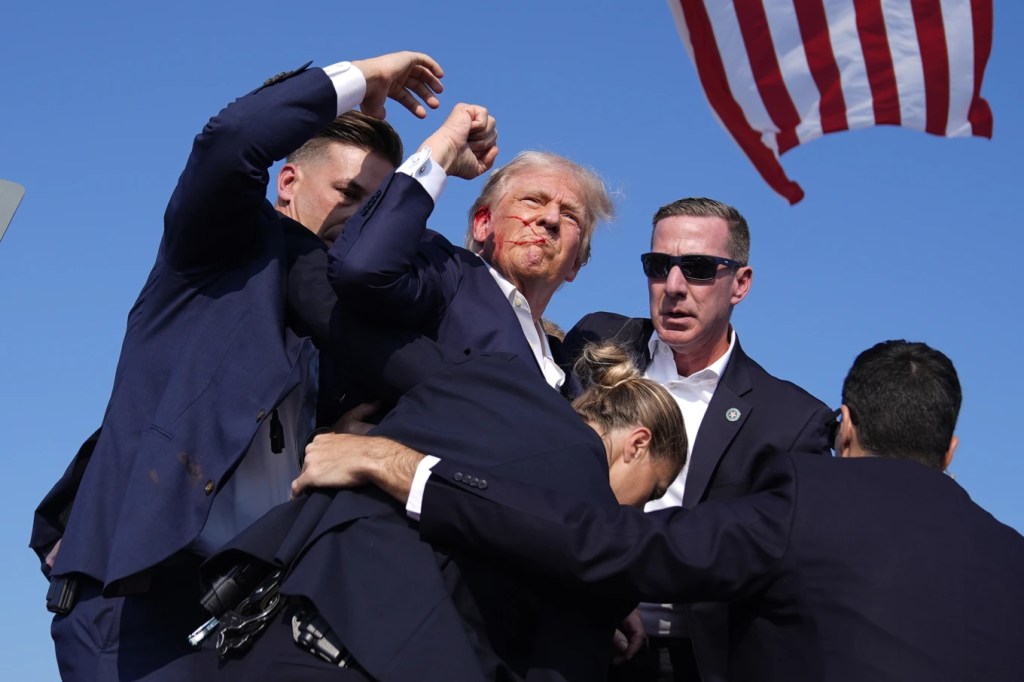
The event triggering those older memories is eerily similar to the last two incidents mentioned. At 6:11 p.m., Pennsylvania time, former President Donald Trump was shot by a sniper as he gave a speech at a political rally in Butler. He was struck in the ear, with three rally attendees also hit, one dying. I knew to the second where I was at this time, and what I was doing, yet didn’t know anything about the assassination attempt taking place.
Joleen and I were sitting in Westside Lilos in historic Seligman, Arizona, eating lunch. Westside Lilos is located on old Route 66 and the place was crowded with customers, many of them tourists from France, Germany, and Sweden.
After eating and then paying the bill, which my receipt shows to be 3:23 p.m., Arizona time, we left and headed for Havasu. Oddly enough, not once while we were eating did anyone mention the shooting, with many patrons looking at their electronic devices.
After driving for almost an hour, Joleen heard a multitude of loud dings and instantly glanced down at her cell phone. She saw text after text from our grown children and good friends, Jim and Pat Brownfield in Prescott. They were all asking if we had heard about Trump.
We’d just left Jim and Pat’s house that afternoon after spending the night, with Donald Trump’s name coming up quite often. Jim and I both thought that someone might try shooting the former president to keep him out of the race. I think a lot of people believed the same.
Listening to news reports the rest of the way and then seeing video clips after getting back home, I started thinking back to those other two shootings so many years ago. Technology has come a long way since then, yet somehow, as we drove on I-40 with cellphone towers visible every few miles, we were in the dark ages for nearly an hour.
I had Sirius satellite radio tuned to channel 16, The Blend, and as we listened to soft rock music, exactly as we’d done in Manhattan, Kansas, 43 years previous while playing golf, not once did an announcer break in with the disturbing news. What’s with that?
It makes me wonder that if a nuclear missile was streaking towards the US from China, intended to totally destroy our country, would Sirius continue to play, “Don’t Worry, Be Happy,” without interruption.
Not intending to end things on such a negative note, the main reason we stopped at Westside Lilos in Seligman that Saturday, was to sample a piece of their world-famous carrot cake. With Joleen and I both connoisseurs of carrot cake, Westside Lilos’ dessert is to die for. On second thought, perhaps a person shouldn’t go that far!
“The pay was good yet working conditions were horrible.”
Hanging by a rope
Whenever I see workers standing on the roofs of homes or commercial buildings, in blistering heat, I can’t help but wonder, “How do they do it?”
A seasoned roofer and veteran HVAC repairman whom I met in Havasu, told me summers here are brutal to work in. Gallons of water are consumed in the course of a day, and remarkably, they seldom need to use the restroom. Hot bodies mostly sweat it all out in order to stay cool. Straw hats or other types of head coverings, including bandannas, are pretty much mandatory while toiling in the baking sun.
My neighbor is a residential house builder, hitting his job site running before the sun rises each summer day. The guy’s usually back home a little after noon, having put in 8 hours. He’s not the only Lake Havasu City construction worker out there doing this.
A convenience store by my place is often filled with guys and sometimes gals in neon yellow and safety orange work shirts, or company monogrammed apparel, this before 5:00 a.m. An early riser myself, I see them at the coffee machine and loading up on breakfast or lunch sandwiches to go with their brew.
Tow truck operators in town have crazy jobs in summer. When the outside air is 120 Fahrenheit, black asphalt is easily 160 – 200 degrees. I saw one of these guys lying in a paved parking lot trying to attach a chain to a low-strung sports car. He was basically a human steak on a frying pan at this point.
I’ve performed a few crazy jobs in my life, yet nothing in 125-degree heat. Working as a mechanic at the DOT equipment shop in Anchorage, I had to perform certain tasks outside, in -20 weather, such as working on cars, trucks, or heavy equipment.
Long-john underwear underneath my insulated Carhart coveralls, with facemask and gloves on, including clumsy military-style, white “bunny boots” helped keep soft flesh from freezing, but not always.
Working on a runway sweeper in Bethel, Alaska, the wind was blowing 20 miles per hour, with it being 15 below zero. This made for a minus 40-degree wind chill factor. The sweeper was too long to fit in the small shop because I tried several times and failed. It had to be repaired outside.
Having all of the necessary clothing and boots on, I stayed safe by working a few minutes and then ducking back inside to get warm. A large metal panel covered a drive chain on the sweeper, and it was held on by small countersunk bolts. The only way to get the bolts started was by removing gloves and using exposed fingers.
Not having them off for perhaps a few minutes—both thumbs started burning like they were on fire. Recognizing the effects of frostbite, I immediately ran back inside the building and placed my hands under warm water. By then it was too late.
That took place 40 years ago, and to this day, both thumbs are still extremely sensitive to cold and heat. The nerve damage is severed and permanent.
The craziest job I ever performed was traveling to the North Slope for a geophysical exploration company. My job title was “Juggy,” a no-brain task that consisted of walking for miles picking up seismic monitoring cable. The pay was good yet working conditions were horrible.
Towards the end of one season, with most workers packed and headed home, the outfit employing me received a last-minute assignment. My co-worker and I were driven to a remote area in a track vehicle and dropped off each morning. This driver came back in the afternoon and picked us up.
There were no communication devices given to us. Should something bad have happened, we were on our own until that driver returned. This was in February or March, with sunlight only lasting a few hours each day. Because of the constantly blowing wind, the chill factor was significant, with whiteouts occuring without warning.
For miles in all directions, when the sun was shining, all we could see even with sunglasses on to prevent snow blindness, was huge chunks of ice jutting up in various places. Everything else was windblown untouched snow.
Finding out one morning before heading out that we were a few miles offshore, on the Beaufort Sea, this information didn’t make my partner and me too happy. We’d seen water puddling up in places and wondered why.
Our camp consisted of a series of trailers on skis pulled by a large D-8 Caterpillar. This is where we ate and slept. Eventually, we were told by those working in the kitchen on our “cat train,” that there were polar bears in the vicinity.
After learning this, those large ice chunks in the fading light began to resemble enormous white meat eaters. With my co-worker deciding to suddenly quit, and me about to be out there all alone, I promptly joined him. It took a couple of days before a plane could fly us back to Anchorage.
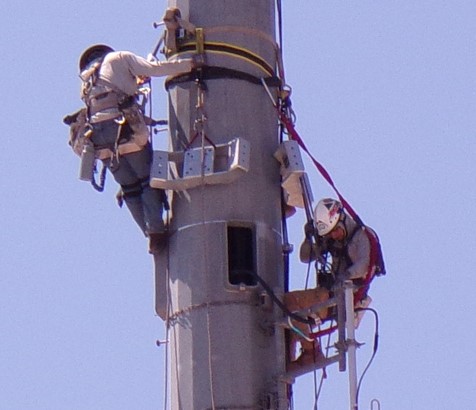
Having to be out in the extreme cold and heat to perform a job is crazy, yet someone has to do it. This afternoon I witnessed something that goes far beyond crazy. Driving back from Bullhead City, and slowly rolling through Golden Shores, three men were working in 125-degree heat, at least 200 feet up a tall metal pole.
They were installing microwave antennas and dishes for communication devices, namely cell phones. The wind was blowing making their job even tougher. One man stood on the platform of a hydraulic lifting device while the other two men had climbed a ladder, approximately 20 feet above him. They were secured to the pole by safety harnesses.
I stopped long enough to hop out of my vehicle and take several photos. Sweltering in the heat myself while trying to get that perfect shot, I couldn’t help but think. “The job these guys are doing isn’t crazy, it’s borderline insanity.”
As my wife sat in the car watching, I told her to think of those brave workers each time she made or received a call. If it wasn’t for folks like them, smartphones, iPhones, and the like would be worthless. I hope those men received lawyer’s wages or better for this task.
I remember years ago while applying for life insurance, the agent said that if I flew airplanes, rode motorcycles, or was a deep sea diver, his company wouldn’t cover me. Strangely enough, there was never any mention of climbing tall poles for a living!
“For the most part, my generation consists of workers, unlike what seems to be a new generation of folks born with the palms of their hands turned up.”
Uncle Jesse Duke
It’s not uncommon in Havasu to hear the word redneck. For the most part, it’s not about a personality trait but rather about sunburned skin. I spot rednecks all the time, including red backs, legs, and arms.
Several years ago, a family member called me a redneck, and it had nothing to do with dermatology. The remark wasn’t said to my face or I would’ve laughed at them. It was mentioned behind my back instead. I still chuckle thinking about this.
I only got wind of it after this person was sadly gone. I don’t know if it was said in a demeaning manner, or if the remark was for praise. I suppose there are good and there are bad rednecks. Hopefully, they were identifying me as a good one.
Not sure of what redneck exactly means, with images of Uncle Duke on “The Dukes of Hazzard” television series coming to mind, I initiated a bit of research on the subject. For those readers too young to remember, in “Dukes of Hazzard,” Denver Pyle played the part of Uncle Jesse, an amicable father figure seemingly liked by all, other than perhaps Boss Hogg, the cantankerous sheriff.
In true redneck fashion, Uncle Jesse and the Duke family made moonshine on the side, with the boys eventually busted for hauling it. That to me is the ultimate stereotype for being labeled a redneck, yet is now considered archaic. I doubt many folks are making white-lightning these days in copper stills.
Looking up the word, online dictionaries offered two entirely different definitions: The first one is quite tame. “A working-class white person, especially a politically reactionary from a rural area.”
Example number two is perhaps a bit more offensive. “One living in the countryside in the southern US, who is believed to have prejudiced ideas and beliefs.”
I’m not sure which definition my relative went by. Deciding to bisect each one, word by word, I found several things to be true of me, while others weren’t. Working class definitely fits my persona and I’m proud of it. For the most part, my generation consists of workers, unlike what seems to be a new generation of folks born with the palms of their hands turned up.
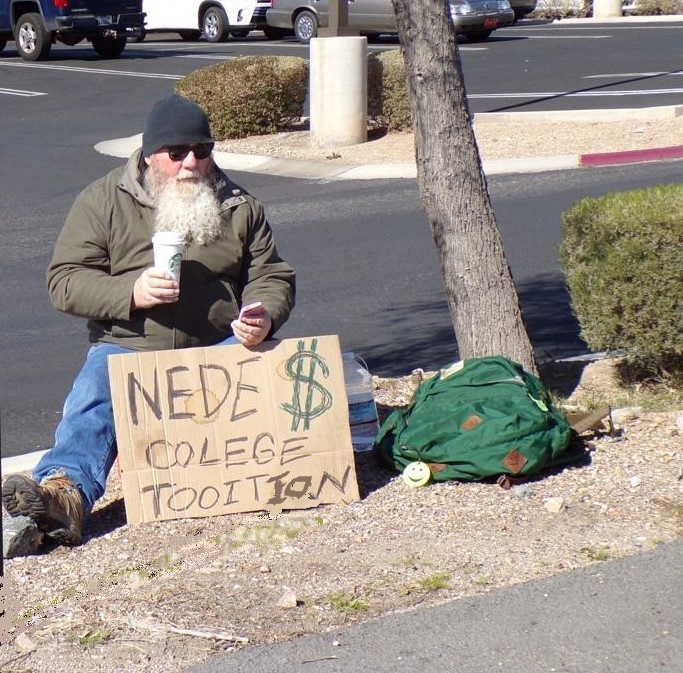
Not all of them are this way but a good number fit the mold. I see these younger folks each evening on the 6:00 news, advocating for free this and free that; free college tuition, free housing, and free iPhones appear to be the latest. My generation generally believes that nothing is free—someone has to pay for it.
Going back to that list defining what a redneck is. White person. I take offense to this one because I look nothing like the Pillsbury Dough Boy, other than the chubby little guy wears a hat. My preference is to be called a citizen, with no defining color attached.
Politically reactionary is one of the descriptions of a redneck. If they’re talking about voting, then that’s me. I try to vote in every election along with contributing financially to candidates of my choice. One thing I don’t do is protest in the streets, loot businesses, nor do I set things on fire to make a point. Again, these are things I see on the 6:00 news.
Prejudiced idea and beliefs is another definition of redneck. This is subjective to the person interpreting anyone’s thoughts on such. For many on the left, should I disagree with them, I’m automatically labeled a prejudiced individual. It can work both ways though. I always try to keep an open mind, yet nothing will change my opinion if it isn’t Biblically acceptable. I don’t compromise there.
The last definition of a redneck still has me chuckling. According to each online dictionary example, a redneck can only come from a rural area, for the most part, the South. I’ve lived in rural parts of the southern United States. Most residents there love God, family, and country in that order. This alone makes them rednecks to many individuals, especially those out bashing the US.
After proofreading what I just composed, it was incomprehensible why anyone would call me the R-word, especially a close relative. Perhaps she thought I manufactured moonshine like Uncle Jesse? I made a batch of homemade gunpowder once, but that’s a different story.
Asking my wife to please read my composition, and tell me what she thought, Joleen pondered for a few seconds before replying, “Yes, you’re definitely a redneck, but a good one!”
“Looking back on this, I encountered rougher skirmishes as a kid on playgrounds in elementary school.
As far as I know, there are no skeletons hiding in my closet. My wife, children, and friends know my strengths and shortcomings. I’ve told them most everything there is to know about my early life including the following.
It was a beautiful, sunny day in Anchorage, Alaska. To be exact, it was 1:00 in the afternoon, on June 9, 1979. I was shopping with my wife, Joleen, and young son, Gunnar. As we started to exit the Montgomery Ward parking lot, a fellow in a red convertible MG Midget pulled right up to my front bumper, blocking our path. With no arrows painted on the asphalt, it turned out that I was accidentally going the wrong direction. Even so, there was plenty of room for two cars to get by.
This man and his blond female accomplice sat there, both pointing to a sign at the entrance saying – One Way. The driver then flipped me the middle finger while yelling obscenities. I quickly backed up and drove around them. A bit incensed at this jerk, and wanting to give him a tongue lashing of my own, Joleen pleaded with me not to, but my mind was set.
Reentering the Ward’s parking lot from Northern Lights Boulevard, I hopped out and confronted the fellow, who was now parked and sitting alone. He mouthed a few more profanities at me, along with claiming that I needed to learn how to drive, this while puffing on a thin Cigarillo cigar.
Blowing thick tobacco smoke, or second-hand carcinogens in my face, I instinctively slapped the cigar from his mouth. At that point, Steven Anonymous jumped from his topless car, brandishing a small aluminum baseball bat. Running for about fifteen feet, I turned, and then grabbed the bat as he swung, the bat hitting my leg, causing nothing more than a sting.
No more than five seconds passed before I had this mouthy individual pinned to the ground. No punches were thrown before or after he went down. Looking back on this, I encountered rougher skirmishes as a kid on playgrounds in elementary school.
Out of sight to me, the fellow’s female accomplice came up from behind—smacking my head repeatedly with a heavy purse. Joleen quickly got out of our Chevrolet Vega and grabbed her hands. The woman yelled curse words back at her and me.
A Montgomery Ward security officer came out of a door to see what was going on. With both of us wrestlers getting up, dusting off pants and shirts, at that point, I figured the fracas was over. For those watching this melee, undoubtedly, more violent things are seen each Sunday, on the sidelines of an NFL football game.
Believing that was the end of it, Joleen, Gunnar, and I left. Two days later, at work, two Anchorage Police Department officers showed up with a female in tow, walked into my store, with the petite blond quickly sandwiching herself between both uniformed men.
This gal, who I recognized from two days earlier, pointed me out as the person having broken her husband’s glasses. With one of the officers asking if I’d been in an altercation on Saturday, and me replying, “Yes, but the other guy started it!,” he promptly wrote a citation for misdemeanor assault & battery. Just like that, the policeman took her word against mine.
The ticket had a mandatory court date on it, just as some traffic offenses do. I didn’t take it very seriously until friends said that I should. It appeared to be nothing more than another traffic ticket, of which I had many.
With some folks saying that I needed a lawyer, East Anchorage High School grad, and newbie attorney, Ty Settles, was hired. The two of us went to court, where I found out, Mr. Anonymous’s wife worked at Montgomery Ward. She knew the security person, with him testifying against me, even though the man hadn’t observed a thing. In other words, he lied for the prosecution.
The jury having clear instructions in hand, it simply came down to who made the first move. Being that I slapped a Cigarillo from the fellow’s mouth, that was considered initial provocation. Case closed.
Found guilty of a misdemeanor, I spent 24 hours in jail, and had to pay $36.85 for Mr. Anonymous’s broken sunglasses, plus a $150 fine. My attorney told me that had I not been so honest, and not mentioned to the cops that I made the first move, it would’ve ended up a hung jury. I’ve always been taught to tell the truth and did just that.
Asking myself afterwards, what should I have done differently, the logical answer to that question is: listened to my wife, and never went back and confronted the guy to begin with. Two valuable lessons were learned from this. Number one, I now try to walk away from troublemakers, or turn the other cheek as the Bible dictates. It’s not always easy. I’ll mention lesson number two in just a second.
Not the end of this story, 28 years later, I drove to Walmart to purchase a gun and was turned down. This had never happened before. Wanting to know why, a background check erroneously showed that I was a felon. After 9/11 occurred, the FBI ordered states and cities, to go through their court files and “flag” felons.
Whoever reviewed my misdemeanor case, inaccurately marked it as a felony. My name and social security number were instantly tagged with such. Some events in life have unfair, long-lasting repercussions, and this turned out to be one of them.
First consulting the Alaska State Troopers, and telling them this was a big mistake, Lieutenant Craig Macdonald eventually got in touch with NCIS (National Criminal Investigative Service), with them instructing him on what should be done. Had it not been for Lt. Macdonald, I’m not sure what would’ve happened.
I discovered early on, that it’s an impossible maze to get through, in trying to right things where judicial screwups are concerned. One trooper that I initially talked to, already had me “guilty as charged,” not wanting to move a finger. I still remember this fellow’s name, yet won’t disclose it. He never climbed very high in the Trooper organization, and was finally asked to leave.
It took additional research and footwork on my part, besides what Lt. Macdonald did, because I had to maneuver through the court system protocol, digging through blurred and misarranged files, before ordering copies. That cost for copies alone was well over $100, not counting my time. I don’t know how many letters were sent off to different agencies, but there were many over a period of two years.
When a copy of the misdemeanor assault and battery ticket was eventually found, that alone should’ve immediately cleared my name. The reason it took so long there, was because it was misfiled in a place where it wasn’t supposed to be. How many times have you come across the same yourself?
With time slowly passing like mud through an hourglass, the truth did eventually set me free, yet with a unique twist of its own. Even though this felony screwup was the Municipality of Anchorage’s doing, with one of their under-paid clerks ordered by the FBI to go back through old court records after terrorists took down the World Trade Center, and erringly marking me as a felon on NCIC (National Crime Information Center) records, I still had to be issued a special number by NCIS to continue on with a normal life.
Now, whenever I purchase a firearm, this number is presented to the dealer or the sale won’t go through. Interestingly enough, the special number is called: unique personal identification number, or UPIN. I sometimes chuckle, thinking back to all of the hassle that I went through, although Joleen doesn’t.
Much more serious than what I initially took things to be, that blunder on the clerk’s part could’ve cost me my job, as well as wrongly sent me to prison. All of this for being a ‘supposed felon’ in possession of firearms. It’s still hard for me to fathom, why a harmless slap of a cigar led to all of this. How many people are wrongfully in jail or prison right now because of similar circumstances?
I’ve purchased several guns since being cleared, by using my special UPIN number, with those working in the gun stores saying, “You must be special—because we’ve never seen or heard of anything like this!”
As far as Mr. Anonymous and his wife go, I believe the only reason the officers cited me to begin with, was because Mrs. Anonymous was a highly attractive and beautiful woman. The two young officers were trying to impress her; two knights in shining armor. I eventually bumped into the woman’s husband at a car club meeting. She wasn’t there. We made eye contact, but nothing was said.
Eventually hearing local gossip through the Anchorage grapevine, I was told that the couple divorced under hostile conditions. Hopefully that isn’t true. I hold no resentment to either, as our disagreement is now water under the bridge.
Lesson number two is a good one. Never believe for a moment that government has your back, doesn’t mess up, and they’ll easily admit to such when they do. I learned this isn’t the case – the hard way. I often think back to what Ronald Reagan once said in a speech, “The nine most frightening words in the dictionary are, I’m with the government and I’m here to help!”
On a side note. If this case was tried today, the outcome would be totally different. The following is a legal perspective on whether deliberately blowing harmful tobacco smoke into someone’s face is considered assault and battery.
“Yes, blowing cigar or cigarette smoke in someone’s face can be considered assault and battery. Smoke is considered physical contact, and intentionally blowing it in someone’s face to bother, anger, or harm them can be considered an attack. The harmful nature of the contact doesn’t need to be intentional, but the contact itself must be.”
Because Mr. Anonymous made the first move here, he’d hopefully be the one going to the pokey instead of me. Laws have definitely changed for the better regarding the hazards of second-hand carcinogens. Too bad they weren’t in place 45 years ago!
I carry a copy of this in my glovebox just in case…
“I look at these warnings as nothing more than those tags or labels they used to put on mattresses, cautioning not to remove them.”
On a table in my office sits an East Anchorage High School yearbook dated 1972. Why I never put it back in the safe after looking someone up I’ll never know. Laziness has definitely crept in this past year.
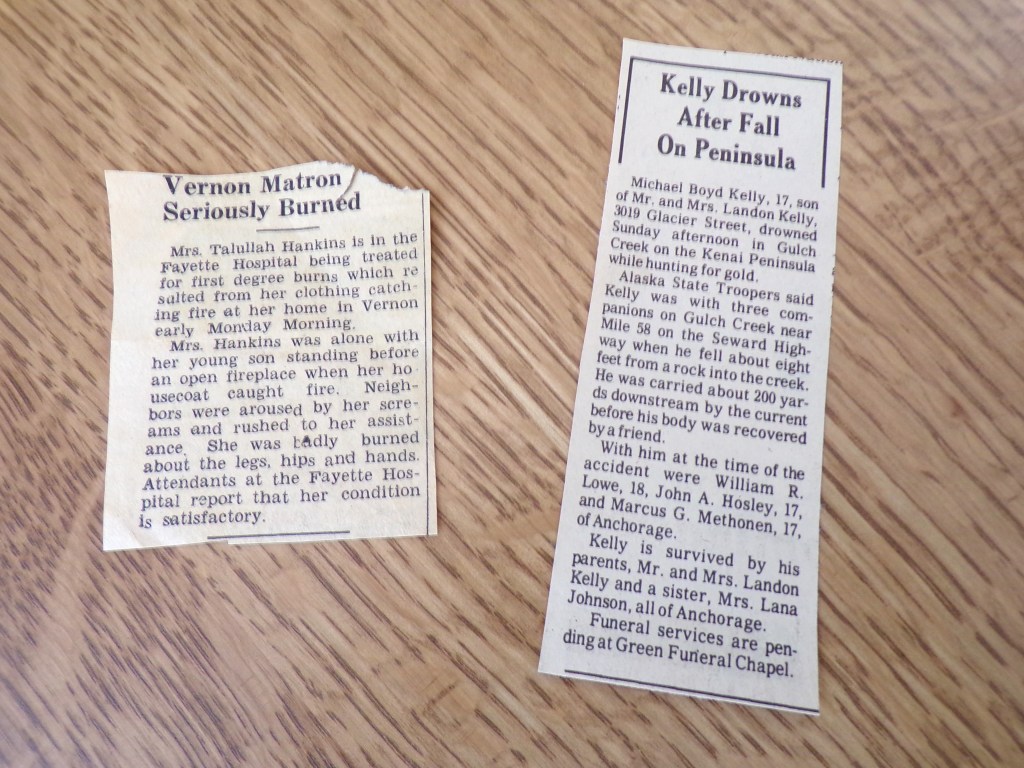
Within the first few pages, is a yellowed, “Anchorage Times,” newspaper clipping about the death of a friend of mine, Michael Kelly. Michael Boyd “Mike” Kelly died on August 20, 1972, while goldmining with friends in Hope, Alaska. I was there with a pal when it happened, but didn’t know what the ambulance and state trooper cars were on scene for. Mike Kelly had graduated two months earlier like me.
That clipping will always remain in the yearbook, until that time when I’m no longer around. What’ll happen to it after that lies in my children and grandchildren’s hands. So many yearbooks end up on eBay, and quite sadly, I’ve already witnessed several from my graduating class.
I came across a small newspaper article that Mom snipped, with it being an article from 1950 when she was badly burned in a fire. I supposed this is one memory Mom would’ve just as soon forgot, yet thankfully, kept it so that her grandchildren and great grandchildren would know of the tragedy.
My mother kept a lot of clippings going way back to the 1940s. Some consisted of birth announcements, death announcements, and unusual stuff like, “so and so visited so and so over the weekend.” Small town newspapers back in the day would print just about anything.
I found our names on some clippings, saying that we’d driven over from Selma, Alabama, and visited our grandparents in Vernon for the weekend. I believe Grandma Hankins gave the “Lamar Democrat” this personal information to share.
With newspapers going digital more and more, and hardcopy papers becoming a thing of the past, the days of clipping articles is also coming to a halt. In another 20 years, no longer will families go through their departed loved-ones mementoes, finding clippings like I did, or even photos for that matter.
Hardcopy photos are also becoming extinct. I don’t see this as a good because family history will be lost for future generations. There’s something to be done here to make sure that doesn’t happen in both articles and photographs.
Several years ago, my son showed me how to clip pictures and articles from online newspapers and magazines. I’ve done my share since then, even snipping some that warned against doing such. I look at these warnings as nothing more than those tags or labels they used to put on mattresses, cautioning not to remove them. Only my generation will remember these.
Printing off the snipped digital articles on our copier, I’ve placed the more significant ones in a safe. That’s where I keep the older family memorabilia as well.
Some will say this about snipping digitized online articles, over that of clipping the real thing. They’ll never turn yellow or fade with time. Premium grade copy paper is not supposed to do such. To me though, yellow is an honorable patina, dictating that the article itself was worthy of keeping. I’d much rather use real scissors and clip the real thing, over that of snipping a digitized image!
There’s plenty to see and do in Lake Havasu City, even during the summer months. The lake of course is a catalyst for many, but even if a person doesn’t have a watercraft, there are other activities to escape the heat. I like to cruise through town looking at how some folks landscaped their yards. There are many highly creative people in Havasu.
I’ve seen metal dinosaurs, humongous stone turtles, and one of my favorites, an authentic-looking gold mine complete with oar car and rails. Some day I’d like to replicate that one. Our place pales in comparison, with a phony steel saguaro, barrel cactus, ‘California Gold’ gravel, some river rock, and last time I checked, a plastic Snapple bottle blown in during the last wind. I keep saying I’ll pick it up but…
Quite often, Joleen and I drive out of town for “day trips” as we call them. We generally either head to Needles or Kingman. I’ve been told for several years now, that a well-kept secret in Kingman, is the Airport Café. Our city has plenty of good eateries, and we patronize them quite often.
Every once in a while it’s good to escape Dodge for a change of scenery. The person telling me about this particular café in Kingman says there’s nothing like it in Havasu. Regardless, they also said that on occasion, they journey to our city or Las Vegas just to eat. Variety is good!
Driving through wind and dust on Tuesday, we stopped by Kingman Regional Cancer Center first to drop off a dozen donuts for the chemo lab. We try to do that whenever we head that direction. Others that we’ve met there do the same. After leaving the large box of pastries behind, it was time for a good hot breakfast.
Airport Café is located inside the rustic Kingman Airport terminal. There are photos everywhere on the walls and on a display counter, showing what it was like during WWII, when this location was an Army Air Corp training base. The old control tower still remains, and I’d pay a few bucks just to climb up there. I didn’t see any signs indicating that doing so was possible. Perhaps, some day that’ll happen as a money raiser for the Kingman aviation foundation. I’m into history, so viewing these relics from 80 years ago was an added treat to the meal.
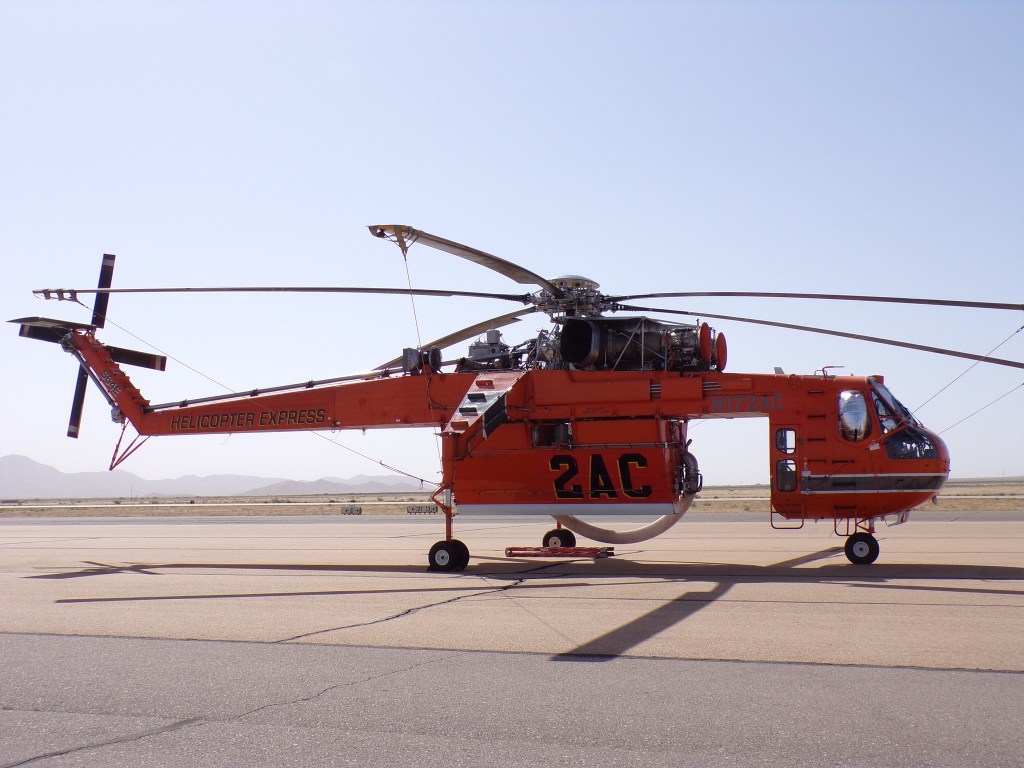
Just outside the restaurant window sat a huge Sikorsky, now called Erickson, S64E Skycrane helicopter, used in hauling heavy loads or fighting forest fires. While dining on a scrumptious ‘Sausage Scrambler’ breakfast, I watched as mechanics methodically went over the huge bird. Joleen observed the same while enjoying her ‘Waist Gunner’ Omelet. Most all of the café menu items are identified with Army Air Corp terminology, while mine wasn’t. Our coffee mugs were huge with the attentive server keeping them filled.
After eating, I walked outside to take some up-close photos of that copter, bumping into the pilot at the same time. An interesting fellow, he told me that the biggest problem in fighting fires in the Kingman area was finding large water sources close by. With two, 4500 horsepower turbine engines burning 528 gallons of Jet-A fuel an hour, the helicopter can carry 25,000 pounds, or 2,650 gallons of water or fire retardant.
I’ve seen that insect looking machine flying over Havasu, so I’d imagine it was here to suck up lake water with a giant straw. Asking this gentleman if he’d be taking off soon, with the man glancing towards the Hualapai mountains right afterwards, he replied, “Only if there’s a fire.”
Kingman Regional Airport is also an airliner boneyard. There are hundreds of huge jets parked throughout the tarmac from all different airlines. Many are mothballed to be used again, while others are strictly there for parts. After WWII, the airport became home to thousands of useless Army Air Corp bombers and fighters. Sadly, B-17s, B-24s, P-38s, and other noteworthy warbirds were eventually chopped up and sold for scrap. Black & white photos of these idle aircraft are inside the cafe. With a few sold to civilians, not many flying examples still remain.
Getting back to our breakfast, I have to say it’s one of the best I’ve ever had. Joleen echoes the same. The place was quite busy, and of course, one has to be patient under these circumstances, yet there’s enough to see while sitting, that it was an enjoyable wait. The quality of food along with proportions was well worth the time!
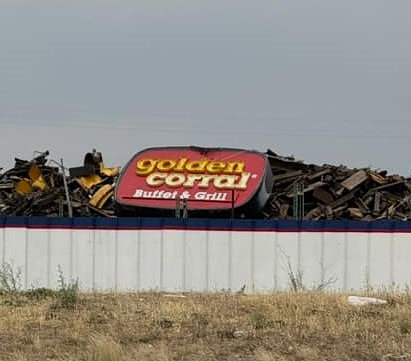
As we slowly drove back to the main highway leading us in to Kingman Airport, on old Route 66, a still colorful Golden Corral sign was spotted by my wife sitting in a pile at a metal scrapyard. Quickly turning round, I parked next to the recycling facility in a dirt parking lot for a quick photo. As things tend to always go, at least for me they do, an employee watching me do such screamed out, “You’re blocking traffic!”
Glancing around and seeing no other moving cars or trucks anywhere in sight, I could only smile and wave, yelling back to him that I’d only be a minute. No more than 60 seconds passed before we were once again on the road. I have to assume this guy had a bad night.
It’s sad to see Golden Corral in Kingman close. People lost jobs and that’s always a hard pill to swallow. I hear the reason they shut down was an increase in building lease. That happens quite often whenever a new building owner comes along. Airport Café has been in business for a long time, and that tells me they’re doing something right.
Somewhere in the near future, when we deem it time to take another day trip to Kingman, we’ll be stopping by for lunch this time. A Philly cheesesteak sandwich sounds good. Perhaps, after sitting down at the table, we’ll get to see that helicopter fly. Then again, maybe that’s not a good thing after all!
“Being the only human there, I didn’t see a turtle, bird, ant, bug, or anything with a pulse.”
Solar farm in Eldorado Valley, Nevada.
I’m an advocate for solar power. We’ve had solar on our home for 8 years now, and I’m satisfied so far. From a cost perspective, I’d say it’s been a wash versus before we went that route. I’d hoped for at least that much. We leased our system, not wanting to fork out money whenever repairs might be needed down the road. Research shows that can be costly.
Driving around Lake Havasu City, I’m always checking out rooftops and spot a lot of solar panels on commercial and residential structures. At first, they seemed out of place, but I now accept the shiny, squared-off areas without problem. Seeing them in quantity on huge expanses of land is still taking some getting used to. There’s a large solar farm planned between here and Kingman—with some folks up in arms over what it might do to the environment. I’m not one of those protestors.
Driving to Las Vegas, going through Eldorado Valley on US95, there are acres and acres of solar that appear from a distance to be a large lake. It isn’t until you get closer, that the shimmering mirage becomes a manmade complexity of enormous proportion.
I’ve driven by it numerous times always wanting to get “up close and personal” with what I observed. Another definition for my curiosity is “snoop.” Finding a paved road that went almost to the foothills, I decided to do some exploring from within the air-conditioned confines of a Jeep. The biggest reason for doing so was to see if outside temperature increased when surrounded by these heat-soaking obstacles. An inside the vehicle temperature gauge would hopefully tell me that.
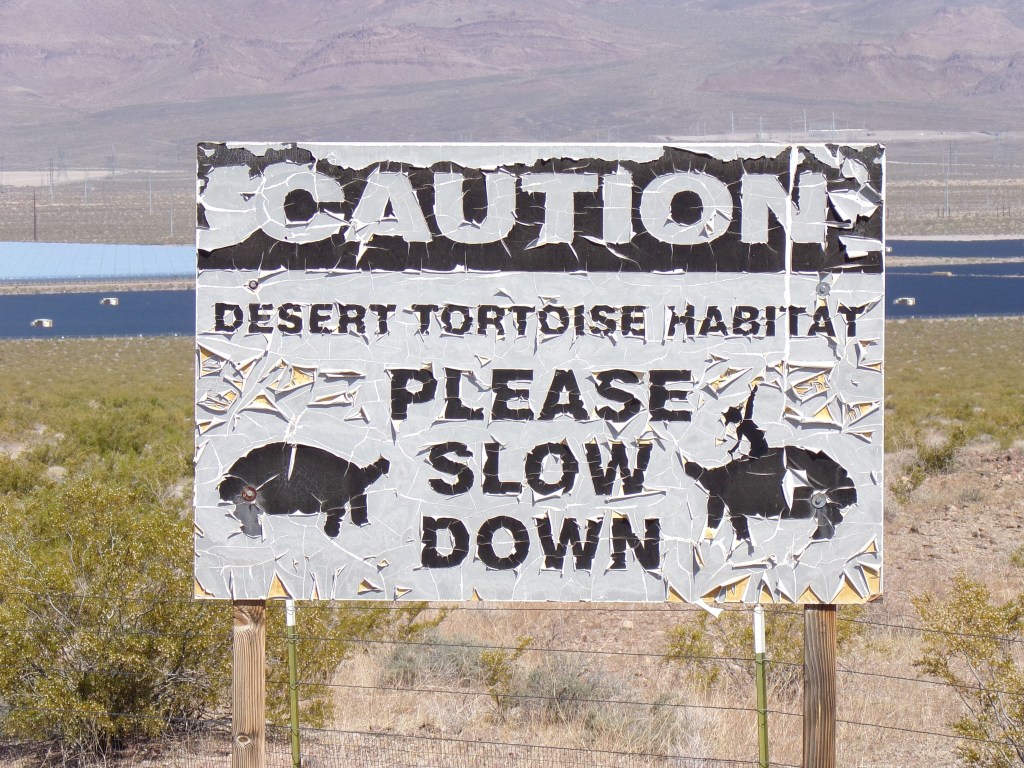
Turning off US95 on this unnamed road, I saw neither Keep Out nor No Trespassing signs regarding the pavement, yet there were numerous warnings on the bordering fence. After I write this, and it’s published, I’m sure that’ll change rather quickly. A sign did mention it being a Desert tortoise protected area and to slow down and watch for them. Taking a picture of that decaying sign, I couldn’t help but chuckle. The peeling paint made it appear a cowboy was riding one of the turtles. At first, I thought it’d been deliberately made that way.
Getting out and walking around, I immediately got an eerie feeling. Expecting to hear a buzzing sound like the solar inverter fans do on our home, all was quiet. Being the only human there, I didn’t see a turtle, bird, ant, bug, or anything with a pulse. Perhaps it was siesta time for them? I didn’t hang around to find out because it was 110 degrees. Not knowing if my car phone worked, I made an early exit, with plans to come back another day.
Heading onto the main highway, I watched my temperature gauge go down a good 10 degrees, yet can’t be totally sure leaving the panels behind made things do so. I tend to believe it was, but there are more scientific ways to prove this over my simplistic method. I’d love to do more testing but also don’t want to be arrested at the same time.
If Desert turtles are in that immediate vicinity, I’d bet they’ve long since packed up their shells and moved to a cooler area. The extra heat generated around them, would undoubtedly evaporate water much faster than before the solar farm was built.
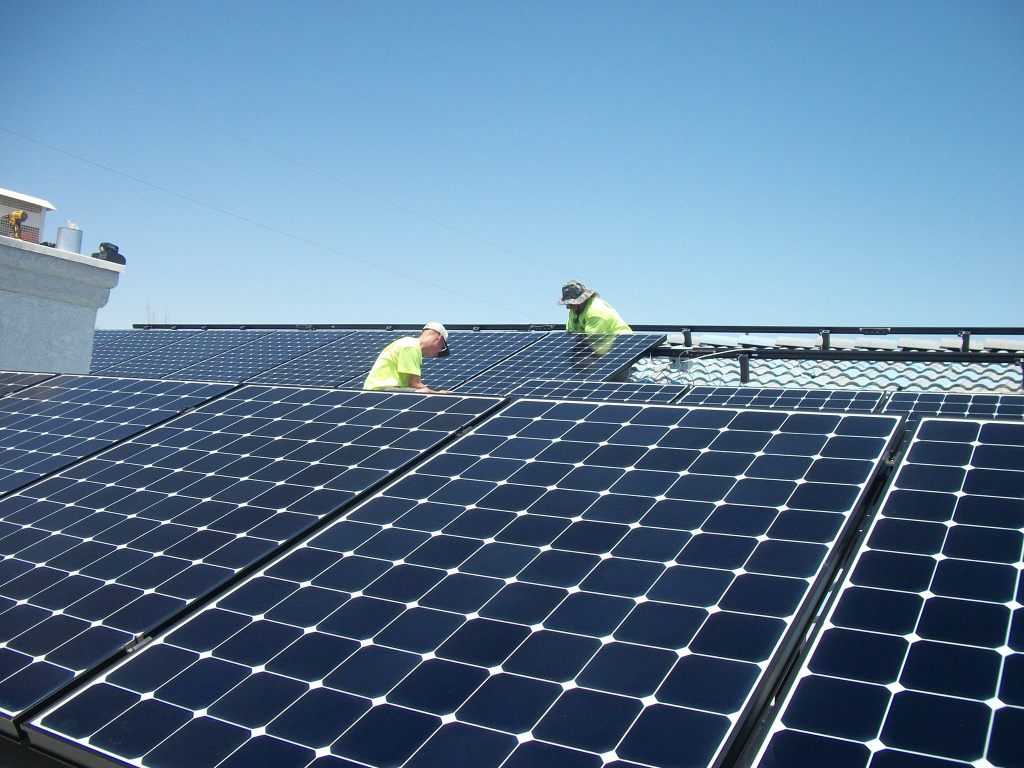
Driving back home, with “Knights in White Satin” by the Moody Blues playing on Sirius got me to thinking. If more homes in Arizona, Nevada, Utah, California, and New Mexico had solar on their roofs, perhaps there’d be no need for humongous solar installations. That’s purely an opinion of mine, and for the record, I have no affiliation with solar businesses.
Joleen and I are totally satisfied with our system. The only thing I’d do differently, is go against the salesman’s recommendation, adding more panels at the start for our newly installed garage AC units. Being a hot rod guy and believing that you can never have enough horsepower, more kilowatt-hours of electricity is also a good thing for sure!
“I was an expert at it, always walking away with tiny cloth toys or plastic rings.”
TILT-A-WHIRL
One of my favorite places to visit as a child was a traveling carnival. These events always had a unique smell and sound of their own. Cotton candy, caramel corn, and hotdogs, blended with diesel fumes from a noisy generator, made for a sensarific experience.
You won’t find sensarific in Webster’s Dictionary because I just made the word up. For those wondering, the obnoxiously loud and fumy generator was needed to power all of the carnival lights and equipment.
I wasn’t into terrifying rides like my brother, enjoying games and unhealthy food more than anything. Jim, on the other hand, loved the roller coaster or Scrambler most of all. There’s something about popping balloons with darts that rang my bell. I was an expert at it, always walking away with tiny cloth toys or plastic rings.
Some fire and brimstone preachers might’ve said this was gambling, a game of chance, because had I not hit a balloon, I came away with nothing. To me, it was purely entertainment and a chance to prove my skill to Dad and Mom. A multi-colored Ferris wheel suited my fancy where exciting rides was concerned during that time, because they were relaxing and offered a good view of the country.
When I was 18 or 19, I drove to a small carnival with friends and decided to ride the Tilt-A-Whirl. I’d been on one at an earlier age and didn’t like it. To me, it seemed like the cars were striking one another, with this having me petrified. I’d heard about carnival rides coming apart and killing people from other kids. The only reason I rode this time, was because Jeff, Michelle, and Cathy were going, and I didn’t want to look like a wimp.
After our ride ended, I scurried behind a concession trailer and ridded myself of a chili dog and Coke. Early the next morning, preparing to go to work, I reached in a back pocket finding that my wallet was missing. Driving to the carnival grounds where all workers were fast asleep in small trailers, I quietly made my way to the Tilt-A-Whirl and looked through each car.
Lucky for me it was still there with a meager amount of money inside. Some unscrupulous “carnies” are known to collect such booty after they close for the night as a tip of sorts. I’m sure not all carnival workers are this way.
As I grew older, I still visited carnivals whenever they came to town, getting a kick out of merely strolling around and watching people partake in the activities. In Alaska, little children coming from rural areas are most excited, especially those attending a carnival or fair for the first time. The smiles on their faces don’t go unnoticed.
Three weeks ago, after dropping my wife off at the Las Vegas airport, I decided to stop at Sunset Station casino for a potty break before driving back to Lake Havasu City. I generally take a break there knowing that the restrooms are super clean.
Over the years, while inside, $5 was fed into a Cops and Donuts video game. Almost every time, I’d end up making three or four bucks extra. I’d then cash out and purchase a Starbucks hot chocolate before leaving, with the casino graciously paying for my drink. Because of Covid, I haven’t been there in a while.
Three weeks ago, Joleen was traveling to Colorado, and after letting her out at the airport drop-off ramp, I decided it was safe to hit Sunset Station once again, with a mask on of course. The public rest stop on US95 was closed on the way in to Vegas for some odd reason, and I didn’t want to try driving back 150 miles on a loaded tank if you get my drift.
Walking into the casino for the first time in 7 years, I noticed right away that the Cops and Donuts game was gone. That bummed me out because I was counting on it paying for a raspberry mocha with whip cream. Heading to the restroom, out of the corner of my eye, I noticed a huge video game with bright lights much like a carnival would have. A decision was made right then and there to try that game before leaving.
Walking over to it, and using the $20 bill that Joleen gave me for food and drinks, I decided to make a financial investment instead with this cash. Seeing that the name of the game was Jackpot Carnival Extreme, reassured me that what I was about to do with her money was not gambling, but simply entertainment.
The outlandish graphics on the machine had clowns and balloons, along with other items found in carnivals and circuses. One of them was a large wooden mallet like those used to ring a bell. After only two hits of the start button I was up $104. Quickly cashing out, my feet couldn’t get out of that smoky joint fast enough. I was ever so thankful that doors were close by.
Just this past Saturday, 10 days after her last trip, I let my wife off at Harry Reid International Airport once again before starting back home. Anxious to use the restroom at Sunset, but more so in trying that crazy carnival game again, I deposited another $20. Just like the time before, on the second push of the button, a $155 jackpot was hit.
Cashing out like before, Joleen was immediately called and told the news. She was excited, but also advised me to stick part of my winnings in the bank, knowing fully well that, “Mike and his money are soon parted!”
I’m not sure when she’ll be taking another trip without me. When that time arrives, you can bank on me making another appointment with Jackpot Carnival Extreme at Sunset Station. If what they say about the third time is true, there’s no telling how much I’ll walk away with.
Should that not happen, with what I’ve already won, this Las Vegas casino will be paying for my hot beverages until the cows come home. That thought alone is enough to put a chocolate-stained grin on my face with a smidgen of whip cream.
“Gazing up towards the peak with eyes only, a warrior would issue a loud warning that invaders were on the way.”
I’m sure I’ll catch some flak for this piece, but my Choctaw blood allows me to write it without prejudice. The reason I say that is because some will disagree with my analogy regarding smoke signals, and the extent to which they were used. I’ll undoubtedly pop some bubbles with my explanation.
I’ve watched many western movies where American Indians sent out smoke signals for different reasons. The other evening, I viewed one where smoke seemingly went straight up in near perfect cloudlike balls. The white smoke was coming from a high flattop mesa, reminding me of Cupcake Mountain on the California side of Lake Havasu. I’m not saying that Cupcake Mountain is a mesa, only that it’s somewhat flat.
An Indian interpreter assigned to a contingent of US Calvary in this film, deciphered the smoke as saying troops were coming from Fort Somethinganother, and for all surrounding tribes to join in and attack them. The fort’s real name I do not recall because this bogus scene had me immediately chuckling out loud. I quickly got up and grabbed my notebook so I could start writing. For me, that’s how much of my composition starts.
I know that Native Americans used smoke as a form of communication, yet each rising ball did not equate to letters, words, or language as some think. In this movie, evidently, the smoke spelled out exact sentences, or at least that’s how it came across to me. This is where some will disagree.
I researched smoke signals finding that they weren’t that elaborate as Hollywood portrays. An Indigenous Indian might light a fire high on a hill or mountain—then use wet grass to make it smolder. Using a blanket to cover and then uncover, the smoke alone was enough to say that imminent danger was coming.
With wind always present in high places, it would’ve been next to impossible for things to rise in choreographed balls like those in the movie. I’m sure some will argue this point as well, but pure logic shows otherwise. I’ve tried to do the same and failed.
As a teenager, on a camping trip in Alaska, my brother and I attempted to send smoke signals from our campfire in Bird Creek Campground. Trying to duplicate what we’d seen in westerns, we badly singed Mom’s green Army blanket, deeming it worthless. She never found out because we burned the remaining evidence. The released smoke hovered in low-lying-trees making it appear as if the surrounding forest was on fire. We quickly terminated our experiment before a park ranger came along.
Miscommunication must’ve been persistent during the Cowboy & Indian era, because all it would’ve taken to send a false message was for lightning to strike some brush high up on a hill. Gazing towards the peak with eyes only, a warrior would issue a loud warning to others that invaders were on the way. After seeing the smoke increase in size, he’d then have to determine if the smoke signal was human made before calling out, “False alarm!” Logic also tells me that American Indians never spoke those exact words.
It’s highly likely some Indigenous people had their smoke signal fires get out of control and burn additional acreage by accident. I’m a pro at this. As a six-year-old boy, I accidentally started a fire in Selma, Alabama, that ended up burning several acres of grassland. It’s not hard to do with a slight breeze fanning the flames.
With numerous smoke signals ending up being false alarms back in the day of 1880s America, I suppose even if danger wasn’t coming in the form of soldiers, it still told troops and Indians alike to pack up and quickly head for safe ground.
I unintentionally created a smoke signal in the garage a few years back. Hooking up a volt meter on my old truck, I didn’t pay much attention to the poorly crimped wire until seeing smoke coming from under the dash. It wasn’t going up in balls, but more more like rising fog from a swamp. Quickly disconnecting the positive battery cable, enough toxic smoke lingered so that I could read a portion of the message, “Hey stupid…”
With the garage door quickly opened, it dissipated before anyone else came along and read the same. Even so, a scorchy plastic odor left behind for hours eventually told my wife that something wasn’t kosher. I tend to believe, even though it can’t be seen, ‘smell’ can relay a message to a person much the same or perhaps even better than smoke signals. If skunks or polecats could talk—I’m sure they’d agree!