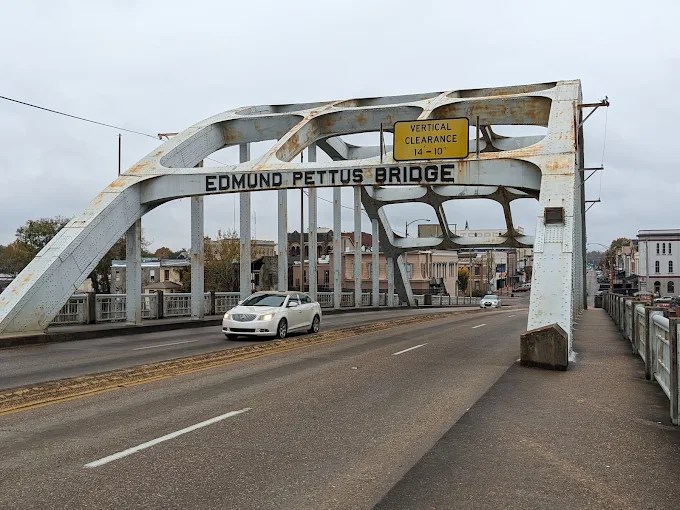
Selma, Alabama, and Lake Havasu City, Arizona, are comparable in two respects. Both populations are located near recognizable bodies of water, and each is home to a famous bridge. Havasu and Selma eventually became victims of a severe economic drought, although Selma’s has lasted much longer.
Craig Air Force Base was located in Selma, starting before World War II in 1941. When it closed in 1977, the area’s businesses suffered greatly. New home building all but came to a screeching halt. The Dallas County school system lost a significant number of students, and several teachers and administrators were eventually laid off.
Valiant efforts by politicians and businesspeople to address the issues helped some, yet the city never fully regained the financial stability it once had. From the outside looking in, it appears town leaders have yet to get a firm grasp on how to promote the historical and recreational potential of the area. It also seems, judging by crime statistics, that they’ve become somewhat lax on enforcing crime.
Lake Havasu City is known for the London Bridge and was home to the McCulloch Corporation, which employed hundreds of workers. It was the largest employer in town during that time. When the company moved its operation in 1988 to Tucson, those employees were left without jobs. Some of them relocated to the famous western town, with a significant number also staying in Havasu and toughing things out.
Our local economy was severely wounded for a few years, yet being a popular vacation destination helped overcome the downfall. Fishing and boating were major attractions. Sound conservative leadership from business and political leaders was a major factor in the success, and in the last 20 years, this city has prospered.
I lived in Selma, Alabama, from late 1958 to early 1963. This was right before the civil rights demonstrations and police brutality took place, which was witnessed by millions on mainstream news throughout the country. I’ve been asked numerous times over the years, “Do you remember seeing any discrimination?”
I was quite young, and the only thing I recall was a small ice cream and hot dog stand with a sign saying they did not serve negroes. I only use that word because it was on the sign. A small black boy walked up as we were parked there, and he, along with another child, was turned away.
Not knowing why, I asked my parents, yet I don’t recall their explanation. It wasn’t until later years that I discovered the serious discrimination that wasn’t observed by me as an adolescent.
We left Selma for Lubbock, Texas, in 1963, right before the famous 1965 march, which crossed the Edmund Pettus Bridge and went a good 50 miles from Selma to Montgomery. Martin Luther King Jr. headed up that procession of approximately 25,000 protestors. On March 7, 1965, marchers were turned back from crossing the bridge, with that day now labeled “Bloody Sunday.”
The civil rights group walked along US Highway 80 directly in front of where we once lived. That road is now called the “Selma to Montgomery National Historic Trail.” It was on this stretch of asphalt that I remember “chain gangs” cleaning the right-of-way on each side. The workers consisted of both black and white prisoners.
I enjoyed living in Selma. We boated and fished in the Alabama River, with my family feeling safe and comfortable living there, just as I do now in Lake Havasu City. Having a local police force that takes a dim view of crime breakers is a major asset in helping keep things that way in Havasu.
Selma still has a solid place in my heart, and I’d love to see the rebirth of this once vibrant and prosperous city. If I were the mayor of Selma, the first thing I’d do is seek the advice of Lake Havasu City movers and shakers on how to fix things.
My father always told me, “If you want to be successful, emulate the traits of successful people.” I believe that advice directly relates to city leadership as well!

 I like to write junk...