PASSING THROUGH SELMA

“Citizens were encouraged to write the soldiers for encouragement and to lift their spirits.”

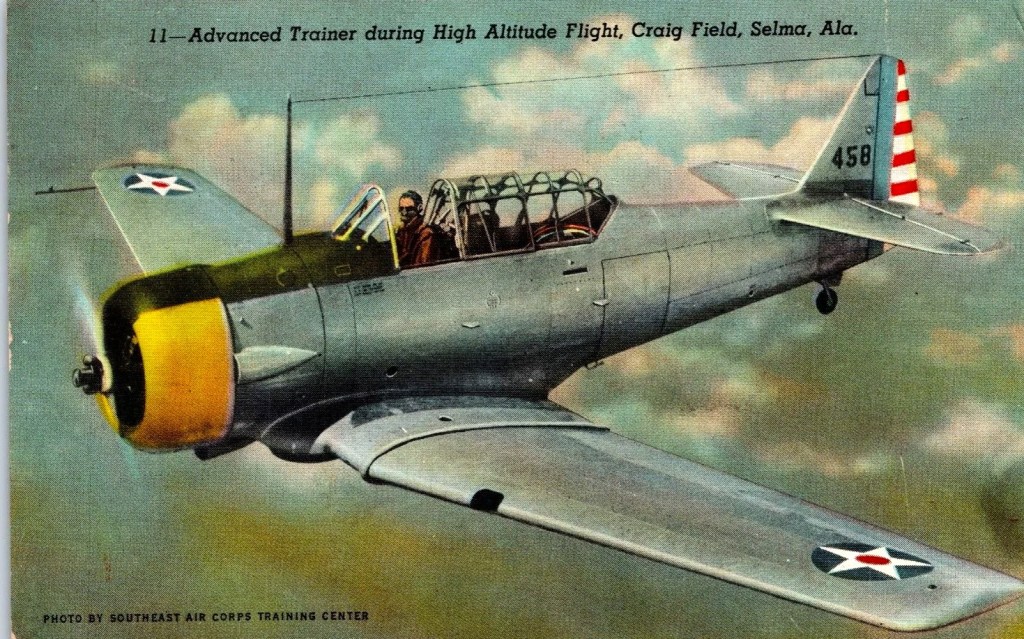
Craig Field AT-6 trainer

A picture postcard showing an Army Air Corps training airplane on the front was sent to Miss Sue Howard of Mt. Vernon, Illinois, on September 16, 1942. The sender was Private Anthony “Tony” J. Infantino, who was at the base during this time. Infantino’s postcard has a Selma postmark. His message to Sue was a polite and cordial one.

“Stopped here and will soon be on our way to Texas by plane. Will write later. Your pal, Tony”

Craig Field, located near Selma, Alabama, was a significant military airfield during World War II. Established as part of the United States’ rapid expansion of air training facilities, Craig Field played a vital role in preparing pilots for combat and supporting the broader war effort. This overview explores the history, operations, and legacy of Craig Field during the WWII era.

The base was constructed in 1940 as the threat of global conflict grew and the United States recognized the need to train a vast number of aviators. Named in honor of Lieutenant Bruce K. Craig, a military aviator who lost his life in service, the field became operational in early 1941. Its primary mission was to serve as an advanced pilot training base under the Army Air Forces’ Southeast Training Center.

During WWII, Craig Field was primarily dedicated to advanced flight training. Cadets, having completed basic flight instruction elsewhere, arrived at Craig for rigorous, comprehensive training on advanced aircraft.

The base specialized in transitioning pilots to operate single-engine fighter planes and multi-engine bombers, crucial to the Allied air campaign. Training included instrument flying, formation maneuvers, navigation, and aerial combat tactics.

Thousands of American and Allied pilot trainees passed through Craig Field during the war. The influx of personnel brought economic growth and increased activity to the surrounding Selma community. The base employed both military and civilian workers, fostering a sense of shared purpose in the national war effort.

Craig Field operated a variety of aircraft, including the North American AT-6 Texan, which was widely used for advanced pilot training. The field was equipped with modern runways, hangars, and support facilities, reflecting the technological advancements of the era. The curriculum emphasized proficiency in the latest aviation technology and combat readiness.

The pilots trained at Craig Field went on to serve in every theater of World War II, flying missions over Europe, the Pacific, and North Africa. The field’s rigorous training programs ensured that aviators were well-prepared for the challenges they would face in combat. Craig Field thus played a pivotal role in the overall success of the U.S. Army Air Forces during the war.

With the end of WWII, Craig Field continued to serve as a training and operational base, adapting to the needs of the emerging U.S. Air Force. Its contributions during WWII are remembered as a key chapter in the history of American military aviation, and the field’s legacy endures in both the region and the broader context of air power development.

Craig Field’s history during World War II is marked by its critical function as a center for advanced pilot training, technological innovation, and community involvement. Its legacy reflects the determination and teamwork that underpinned the Allied victory in the air war.

At Craig Field for a brief time, Pvt. Anthony Infantino was probably on his way to Randolph Field near San Antonio for further training. He was born on July 22, 1919, in New York. Enlisting in the Army at the age of 23, tragically, Tony was killed in action (KIA) while parachuting into enemy territory in the Netherlands.

This happened on March 24, 1945, with his remains not brought back to the States until 1948, where it was interred in his hometown of Pawling, New York. Flags were lowered to half staff, with quite a few residents turning out for the service. Tony’s young friend may have never known.

Sue Howard was much younger than Tony, and judging by the context of the postcard message, their relationship was strictly one of friendship. Perhaps she was more of a pen pal than anything. Citizens were encouraged to write the soldiers for encouragement and to lift their spirits. This nationwide campaign was called V-MAIL, or Victory Mail.

Miss Betty Sue Howard married Eugene L. Delves on March 27, 1954. The couple stayed together until their deaths. Eugene passed away in 2011, and Betty Sue, seven years later, in 2018.

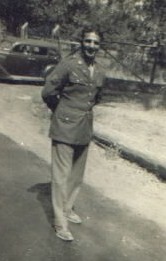
Private Anthony “Tony” Infantino
Betty Sue Howard-Delves
1954

WAR BROTHERS

“There’s much more to this postcard than a scene from a 1940s movie.

Old Tucson, located just west of Tucson, Arizona, is well known today as a movie studio and theme park. However, its history during World War II is less widely discussed.

Old Tucson was originally constructed in 1939 as a movie set for the film “Arizona,” starring William Holden and Jean Arthur. The set was built to resemble a western frontier town, and its authentic design quickly made it a popular location for film production. After the completion of the movie, the site remained intact and began to attract attention from both Hollywood and the local community.

When the United States entered World War II in late 1941, much of the nation’s resources and attention shifted toward the war effort. Tucson itself became a hub for military activity, with Davis-Monthan Air Force Base playing a critical role in flight training and aircraft operations.

Old Tucson, however, did not directly serve as a military installation or training ground during WWII. Instead, its primary use remained as a movie set. Hollywood productions slowed during the war years, but the site was maintained and occasionally used for film work when resources allowed. Some local residents visited the site, and it became a small tourist attraction, offering a glimpse of the Old West to servicemen on leave or stationed in the area.

The war years were marked by resource shortages and rationing, which affected all aspects of life, including movie production. Building materials, fuel, and manpower were prioritized for the war effort, limiting expansion or redevelopment of Old Tucson during this time. Nevertheless, the site’s existence helped sustain local interest in western heritage and provided a modest economic boost through tourism.

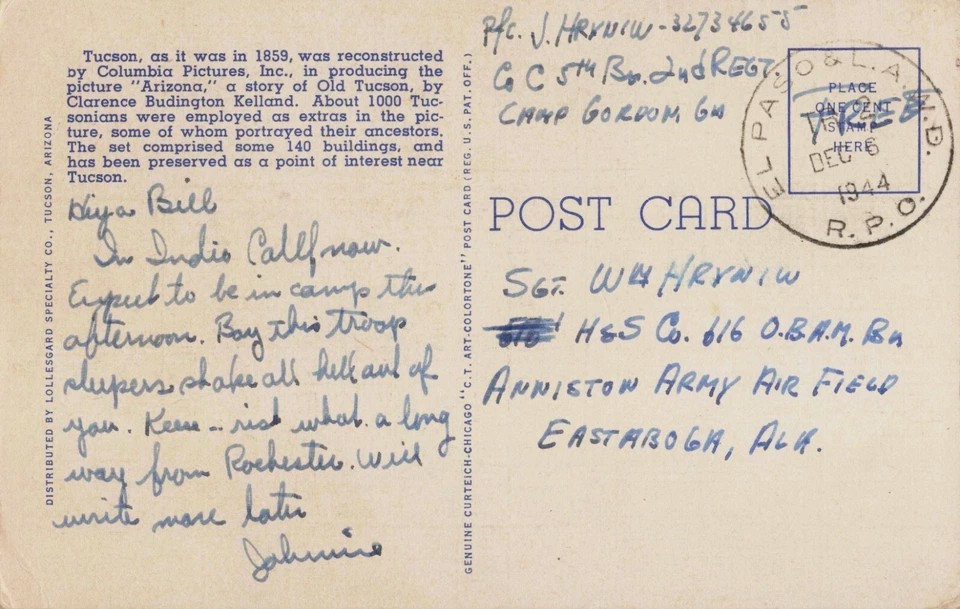
A 1944 picture postcard sent from Pfc. John Hryniw in Indio, California, to Sgt Wm. Hryniw at Anniston Army Airfield in Eastaboga, Alabama, shows a photo of Old Tucson as it looked in the successful western movie, “Arizona.” There’s much more to this postcard than a scene from a 1940s cowboy movie.

A message on the back of this card reads as follows:

Hi ya Bill,

In Indio Calif now. Expect to be in camp this afternoon. Boy this troop slupers shake all hell out of you. Keee-rish what a long way from Rochester. Will write more later.

Johnnie”

John Hryniw and William Hryniw were brothers from Rochester, New York. Their parents, Peter and Anna, were immigrants from the Ukraine. Both young men had enlisted in the Army during WWII, with “Johnnie” sent to the Desert Training Center at Camp Young for duty.

I’m not sure what John meant by troop slupers, other than perhaps military slang for maneuvers, or supervisors. Marching and performing war games in the California, Nevada, and Arizona deserts was beyond brutal. Pfc. John Hryniw, along with thousands of others, endured the horrible elements with a good many dying. John’s brother, William Hryniw, on the other hand, had things much better in Alabama.

General George Patton had the following to say about soldiers training in the desert, “The California desert can kill quicker than the enemy. We will lose a lot of men from the heat, but training will save hundreds of lives when we get into combat.” 

PBS did a documentary on Patton’s Desert Training Center, and I’ve enclosed a short portion on what they reported:

“Indeed, during maneuvers away from camp, men lost their lives in the heat, with locals in Yuma and Phoenix registering protests over the training conditions.

Few of the troops had ever experienced the dry climate, and they struggled to acclimate to temperatures upwards of 120 degrees and brutal sandstorms. Salt tablets were distributed to the men in hopes they would prevent dehydration and cramping, but water was rationed.

Sometimes, particularly early on or while out on maneuvers, troops received only one canteen of water per day, with an erroneous understanding that one could be trained to survive on less water and that such deprivation prepared them for the harsh conditions they would face in North Africa.

Men learned to keep cool without much shade and to avoid the natural dangers of the desert like rattlesnakes and scorpions. The testing of equipment proved equally important and led to practice in desert camouflage, better maintenance of tanks and other vehicles, and even new supplies like dust respirators.

To prepare bodies for long hours and hard work, all troops were required to run a 10-minute mile within a month after their arrival, an activity that not only acclimated them to the desert but also hardened their bodies and minds for the challenges that lay ahead.

This “seasoning” of the men proved an important goal; while abroad, troops sometimes faced desolate locations, cut off from supplies or even water, lacking shade and the comforts of home.

Even as the Desert Training Center shifted to broader training operations after fighting in North Africa ended, officers celebrated the hardening of men as crucial preparation for the difficult conditions faced in Europe and the Pacific. That the landscape varied, with valleys, rocky foothills, and mountain ranges, served as an additional bonus; troops could prepare for diverse battle terrains.

The vast expanse of land provided enough room for multiple battalions to train in situ, to create living spaces from the ground up, and experience maneuvers that mimicked actual warfare. Engineers outlined camp roads, signal corpsmen laid telephone lines, and army air corpsmen took advantage of year-round clear skies to obtain crucial flying skills and practice. Thus, troops gained actual practice in the roles they would hold abroad in a landscape and climate similar to what they would encounter.

They did so in their units, which bonded the men together, particularly because of the isolation and new experiences they shared. Difficult conditions provided confidence to men who worked through them; even the days without sleep and hundred-mile marches provided a taste of what was to come.

Patton’s early emphasis was on constant movement; not only did this train the men for actual combat situations, but made it more difficult for the enemy to find and destroy a camp as well. Thus, while the Desert Training Center held about 14 divisional camps, much of the training happened beyond their borders in the raw desert landscape.”

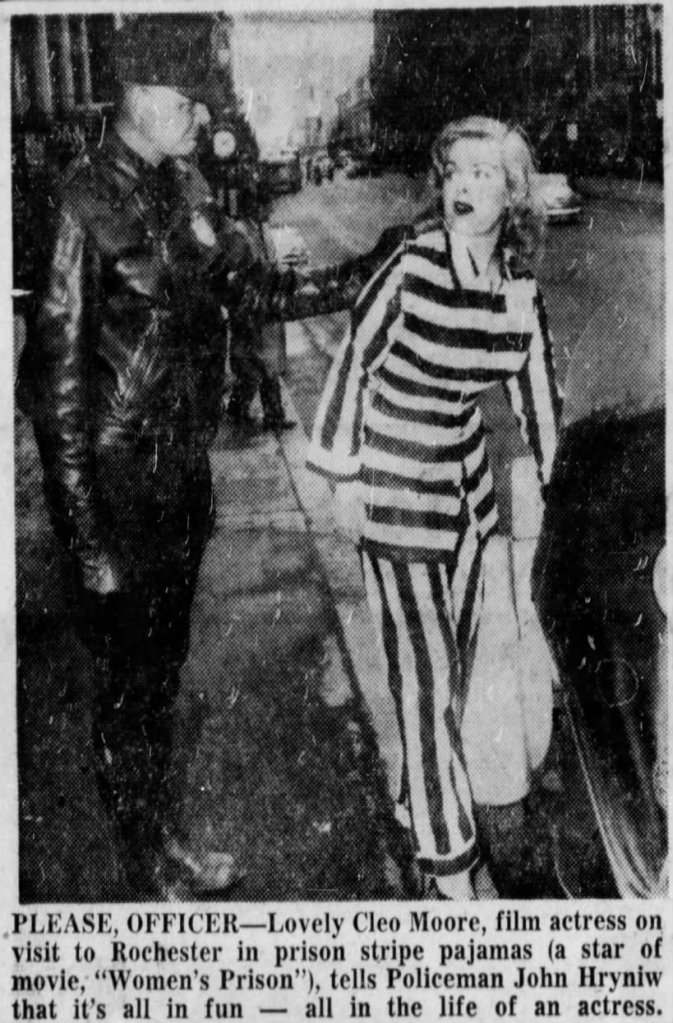
After the war, Pfc. John Hryniw became a policeman in Rochester, with newspaper accounts telling about some of his exploits dealing with criminals. There’s no doubt that the desert training toughened him up for this type of work.

Patrolman Hryniw spent time as a motorcycle cop—even surviving a crash when an evidently inebriated driver ran into his Harley-Davidson, knocking him off the bike. Injured as he was, John was still able to arrest the fellow and send him to jail.

For the latter part of his police career, John Hryniw became a detective before retiring, moving to Oregon with his wife, and then spending time as an auctioneer. John died on May 16, 2014, at the age of 92.

William Hryniw found a much safer and profitable occupation after leaving the service. He was a successful insurance agent and property manager, remaining in New York after retiring. William “Bill” Hryniw passed away at 83 on September 7, 2002.

The California and Arizona deserts are still littered with remnants of General George Patton’s desert training. I’ve found my share while out poking around. Old Tucson survives as well, although it’s seldom used for movies anymore.

From a 1955 Rochester, New York, newspaper

WAC

“Pvt. Mary Charlotte Wallace was one of these valuable personnel.”

A vintage WWII postcard that I came across was mailed from Mitchel Field, Schenectady, New York, to Ottumwa, Iowa. The card recipient, Agnes Dorothy Kittleson, has limited information available regarding her life. She was born in 1894, became a school teacher, and never married. Agnes died in 1973.

Pvt. Mary Charlotte Wallace, the card sender, was born on November 1, 1920, and enlisted in the Women’s Air Corps on November 11, 1943. She worked in the 1st Service Command Unit as a typist and a typesetter. These were important jobs to keep the paperwork flowing, essential tasks in the war effort.

It seems safe to say that Mary was Agnes’s student at one time and also a friend. Mitchel Field was a large training base during the war, and undoubtedly, Pvt. Wallace picked up Miss Kittleson’s card at the Mitchel Field BX store.

Mary Charlotte Wallace composed the following message within it:

“Pvt. Mary C. Wallace

A 702710

1st S.C.U.

Mitchel Field, N.Y.

Dear Kitty,

Decided it was time to let you know where I finally landed.

This is a grand field and I really like it here. My work is very interesting.

Have managed to see part of N.Y. already. There is so much to see.

I hope you are well. I imagine you are plenty busy with everything.

Maybe I will see you when I get a furlough. Charlotte”

Some women became pilots, but Mary wasn’t one of them. Private Mary C. Wallace was honorably discharged from military service in 1945. She was involved in an automobile accident on August 19, 1958, that killed two people. Mary Wallace was not seriously injured.

For the rest of her short life, Mary worked as a secretary for the Standard Oil Company. Miss Wallace died of bladder cancer on December 4, 1964, at the age of 44. She was buried beside her sister, Irene, in New Sharon Friends Cemetery in New Sharon, Iowa.

The Women’s Army Corps (WAC), established in 1942, enabled women to serve in non-combat roles within the U.S. Army during World War II. Members worked as clerks, mechanics, radio operators, and in many other essential positions, freeing men for combat duty and supporting the war effort. The WAC paved the way for greater inclusion of women in the military. Pvt. Mary Charlotte Wallace was one of these valuable personnel.

Thank you for your service!

Agnes Dorothy Kittleson
Mary Charlotte Wallace

PETERSON AIR FIELD

“Perhaps this had something to do with William Hunter selling life insurance after leaving the service.”

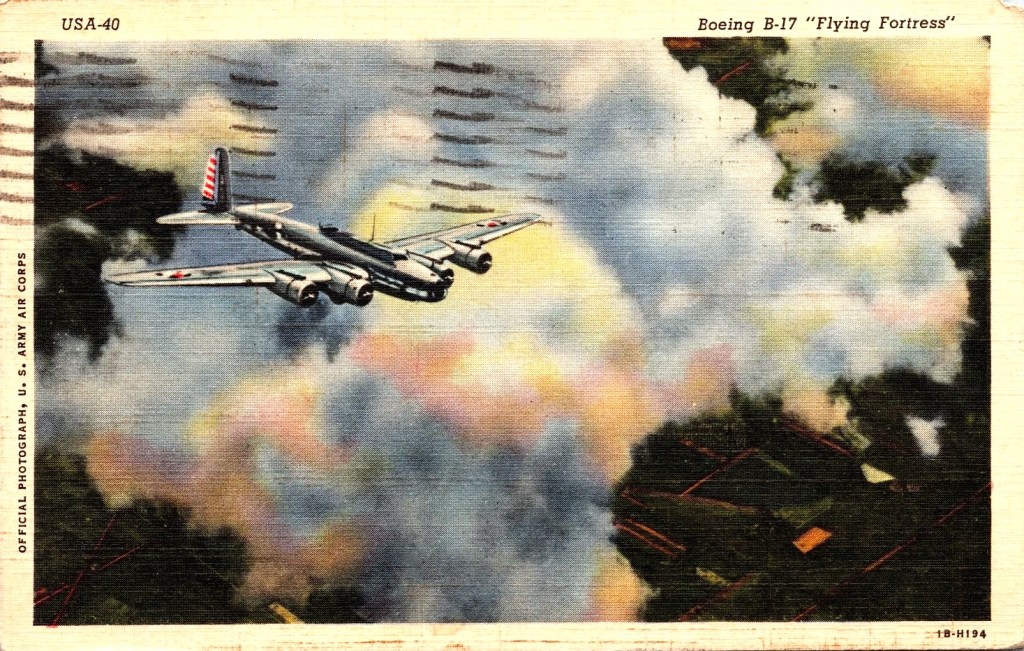
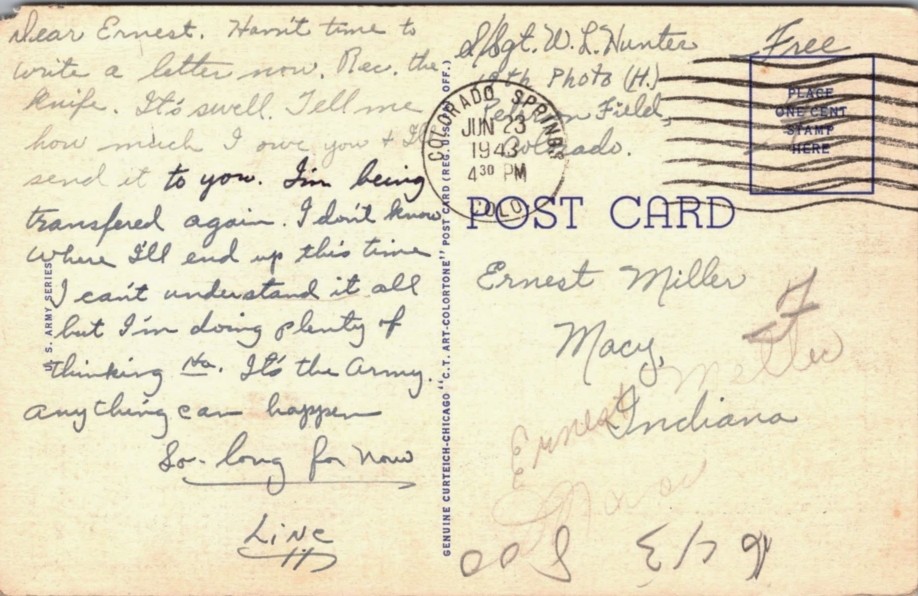
A 1940s WWII era postcard that I own was mailed from Colorado Springs, Colorado, on June 23, 1943, to a person in Macy, Indiana. The card sender was S/Sgt W.L. Hunter, assigned to the 19th Photo Headquarters at Peterson. The picture of the Boeing B-17 “Flying Fortress” on Hunter’s card is an official Army Air Corps photo. His letter to Ernest Miller says:

“Dear Ernest, Haven’t time to write a letter now. Rec the knife. It’s swell. Tell me how much I owe you and I’ll send it to you. I’m being transferred again. I don’t know where I’ll end up this time. I can’t understand it all but I’m doing plenty of thinking. Ha. It’s the Army. Anything can happen. So long for now. Line.”

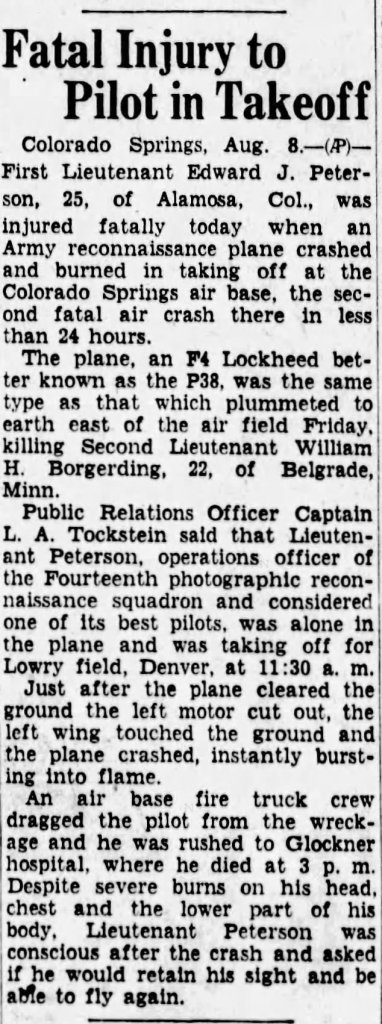
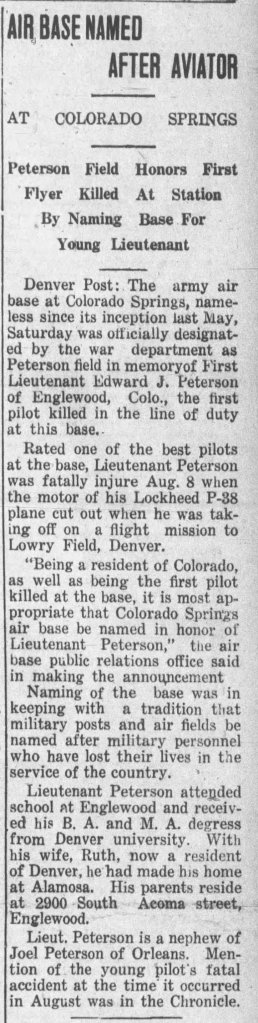
Colorado Springs Army Air Base, located in Colorado Springs, Colorado, was first established in 1942 as a military photo reconnaissance training facility during World War II, and was also used to train fighter pilots later in the war. Toward the end of 1942, it was renamed Peterson Field after 1st Lieutenant Edward J. Peterson.

1st Lieutenant Peterson was assigned to the 14th Photograph Reconnaissance Squadron in Colorado Springs, where he was promoted to operations officer on July 26, 1942. On August 8, 1942, only 13 days after his new assignment, Ed Peterson was seriously injured when an engine on his Lockheed F-4 failed and he crashed shortly after takeoff. An F-4 is similar to the P-38 Lightning.

The pilot was burned over his head, chest, and lower body. Peterson’s last wish before he lost consciousness was that he would fly again. Per his wife’s request, he was cremated and his ashes scattered over Pike’s Peak with an F-4 airplane like the one he flew.

Peterson Field was closed after the war ended in 1945, yet it was reactivated several times for different reasons. Renamed Peterson Air Force Base, it is currently home to the US Air Force Space Command, although that is soon to change. President Donald Trump recently made the decision to move the headquarters from Colorado to the Redstone Army Facility in Huntsville, Alabama.

William Lincoln “Linc” Hunter was born on September 15, 1919. He enlisted with the Army Air Corps on April 13, 1942. S/Sgt. Hunter saw action during WWII, most likely snapping photos from a B-17 aircraft like that one pictured on front of the postcard.

Thankfully, he returned, as many B-17 crewmen didn’t. Perhaps this had something to do with William Hunter selling life insurance after leaving the service. He lived to be 88, passing away on September 3, 2007.

Ernest Miller was a close friend. Born in 1909, he was 9 years older than William Hunter. Entering the draft on October 6, 1940, Mr. Miller was never chosen to serve. Ernest Howard Miller worked as a city engineer before retiring, succumbing to heart failure on August 22,1969, at the age of 60.

Lockheed F-4-1-LO Lightning