
I’m sure most everyone has watched television shows or Hollywood movies where court scenes play out. As a witness rambles on and on about what they seemingly know about a specific case, an attorney suddenly blurts out for the judge to hear, “I object, your honor…. this is merely hearsay!”
If this fictitious TV judge rules that the lawyer is correct, “Objection sustained!” is immediately heard from the bench. One of my favorite such shows is “Perry Mason.” I still watch the reruns, especially loving the comedic interaction between Perry Mason and Los Angeles City Attorney, Hamilton Burger.
If hearsay was allowed in court, can you imagine the case outcome? All a witness would have to do is interject a bit of “poetic license” on their testimony to make things appear as if it happened instead of using proven facts. A case could suddenly turn into “Days of Our Lives” with both sides resorting to storytelling.
There seem to be two venues where this sometimes holds true — the 6:00 news and history books. I’ll stick to history books as my main point here because history is my favorite subject, and one where poetic license runs free like a raging river.
Before continuing on, for those not knowing what the term, poetic license, means, according to Miss Purdy, my artificial intelligence (AI) helpmate, it’s the freedom to depart from the facts of a matter or from the conventional rules of language when speaking or writing to create an effect.
In layman’s terms, where history is concerned, “Anything goes as long as it seems believable to the masses!”
Hollywood uses poetic license more than anyone. My wife and I watched “Field of Missing Shoes” the other evening. It’s a movie about a group of mostly teenage Virginia Military Academy students being used as soldiers during the American Civil War.
At the beginning of this historical film, the five words “Based Upon A True Story” slowly rolls across the screen. To some viewers, “based upon” automatically means everything in this movie is factual when, in fact, it’s not. Some things, such as romantic scenes, were undoubtedly added to give the film more viewing pleasure as I like to call it. Regardless, it was an excellent movie.
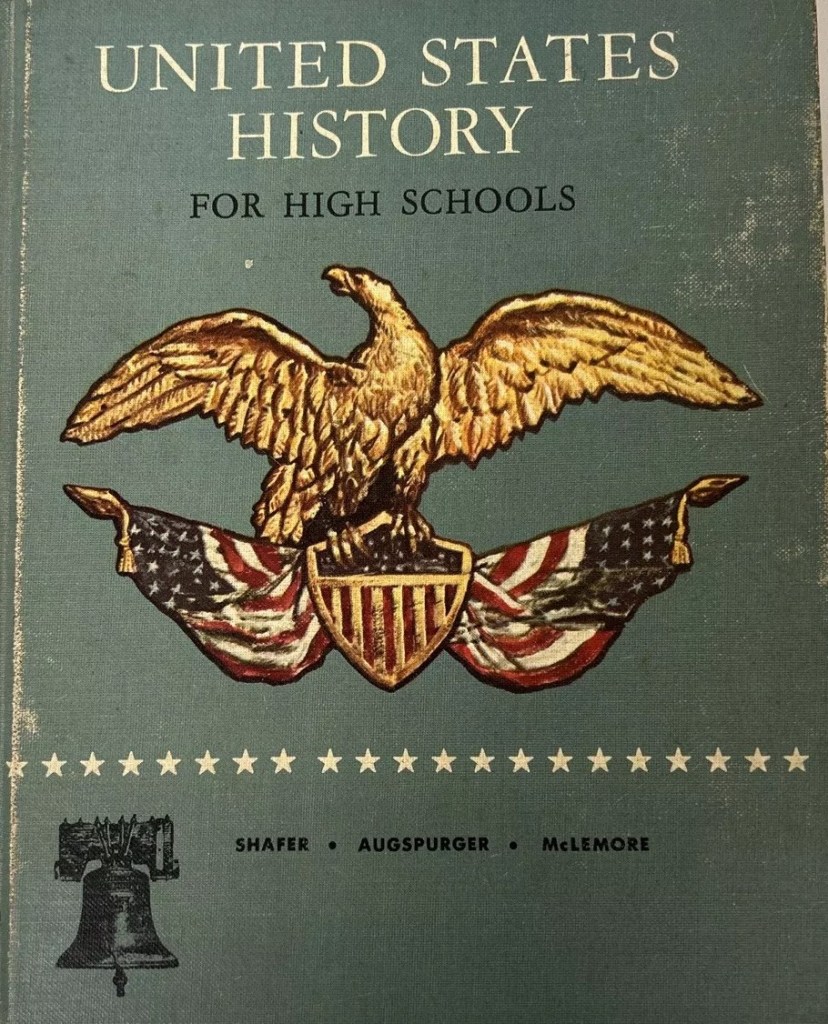
History books as a whole don’t have these five words anywhere in them. Readers are taught, especially elementary school students, that the contents inside are all real. I had no problem with that growing up, yet now I’m seeing this information attacked by activist groups using different truths or unadulterated hearsay to back up their changes.
It’s almost guaranteed that if I told someone a story about a 12-inch fish I caught in 1900, with that story being repeated over the years by 12 different people, now 125 years later, that fish story wouldn’t be close to the same.
Let’s take things back even further, with me telling it 600 years ago, with 125 different storytellers repeating it. That 12-inch fish would now grow even larger — perhaps being over 30 feet long.
Much of our history is based on passed-down stories, folklore, rumors, fables, and the like, with written documentation to back things up not always available. Christopher Columbus is a prime example. I was taught in grade school that he was a good man.
Some of his crew are known to have been filled with evil, based upon written records, yet trying to lasso Columbus into these same devious actions wouldn’t hold up in a court of law, at least not one presided over by a nonactivist judge. Much of this erroneous information against Christopher Columbus has been thoroughly debunked based upon Columbus’s own writings.
Saying that Christopher Columbus is guilty of atrocious acts because of what a few members of his crew possibly did is no different than holding President Joe Biden responsible for his son, Hunter Biden, and this younger man’s numerous illegal activities.
Mount McKinley, in Alaska, has been named that since 1895, as records prove. In 2015, President Barack Hussein Obama used hearsay in changing it to Denali, claiming that Denali is what the Alaskan Indians had originally called the mountain.
Obama’s statement is called spinning the truth, and even worse things, outside of Washington D.C. circles by those having done the research. Stories or folklore passed down via word of mouth have been proven countless times to be remarkably inaccurate.
Archived newspapers from the late 1800s, along with other documented records, show that Mt. McKinley was called “Bulshaia” by Alaska Natives and Russians way before 1895. It’s right there in black and white.
The Dena’ina Athabaskan Indians didn’t start phonetically recording their language until the 1970s. Denali would not have been one of their words five centuries ago, as their communication was strictly an oral language at that point, including simple drawings.
New Age historians are slyly trying to use the terms folklore or hearsay to substantiate their viewpoint here. That falls perfectly in line with my fish story example.
A good example of passed-down hearsay in Lake Havasu City is the rumor that an Olive Garden restaurant is coming to town. I’ve heard that story repeated over the years from many different people. Some of them still swear that their information came from reliable sources, with these people continuing to believe their own message.
It’s been some 30 years now, and no ground has been broken. In another 100 years, some citizens will erroneously report that Olive Garden was once located on Swanson Boulevard, yet has closed after being forced to by city leaders, with a good many future residents buying into this fable.
One of my favorite songs by the music group, Moody Blues, is “Knights in White Satin.” At the end of this popular 1970s song is a mind-provoking poem. In the poem, Late Lament, written by Graeme Edge, three ending lines sum up best how I now look at the truth, especially where certain manuscripts, books, movies, and television news channels are concerned.
“Red is grey and yellow white.
But we decide which is right.
And which is an illusion.”
That poem definitely applies to history books. The only book that I’ve found to tell the absolute truth, without reservation, is the Holy Bible.
If Christopher Columbus or any of my childhood heroes are guilty of atrocities against Indigenous people, as some now claim, all they need to have done afterward is ask Jesus for forgiveness, and those sins were washed away.
It’ll make no difference what history Professor Ima Knowitall or Dr. P.C. Leftist have to say about them in future history books, including me, or anyone else for that matter.
God is the ultimate and final judge here, with folklore, poetic license, and hearsay not admittable as evidence in His court of Absolute Truth!
John 17:17
 I like to write junk...