FLAGNOMICS 101

“Our city has extreme wind and sun that constantly tests the endurance of flags.”

I try to be a “Made in the USA” kind of guy. When I say this, I’m talking about buying products manufactured in our country. Unfortunately, most of the smaller products I purchase nowadays, including shoes and clothing, are made in China. I wish things weren’t that way, but it is what it is.

The higher cost of manufacturing certain items, along with stringent environmental laws forced many US companies to fold or move overseas. Politicians, greedy investors, and unions had a lot to do with this as well.

From day one, I’ve been a Chevrolet, Ford, and Dodge owner. My reasoning is that they’re still considered American namesakes, although Dodge is now owned by Stellantis, a multinational European corporation.

Friends and strangers have told me that some components in those three makes come from various out-of-country locales. Perhaps so, but the vehicle names are still synonymous with red, white, and blue. You’ll never find me owning an import because it isn’t in my genes to do so, although Japan, Korea, Germany, and other European nations produce some fine cars and trucks.

A while ago, I wrote about coming across an authentic American Indian Dreamcatcher in WalMart. At least that’s what the label said. In small letters, the back of this packaging was printed — Made In China. Alaska gift shops sell items supposedly crafted by local natives yet are manufactured in Taiwan, China, and elsewhere. Miniature totem poles are a good example.

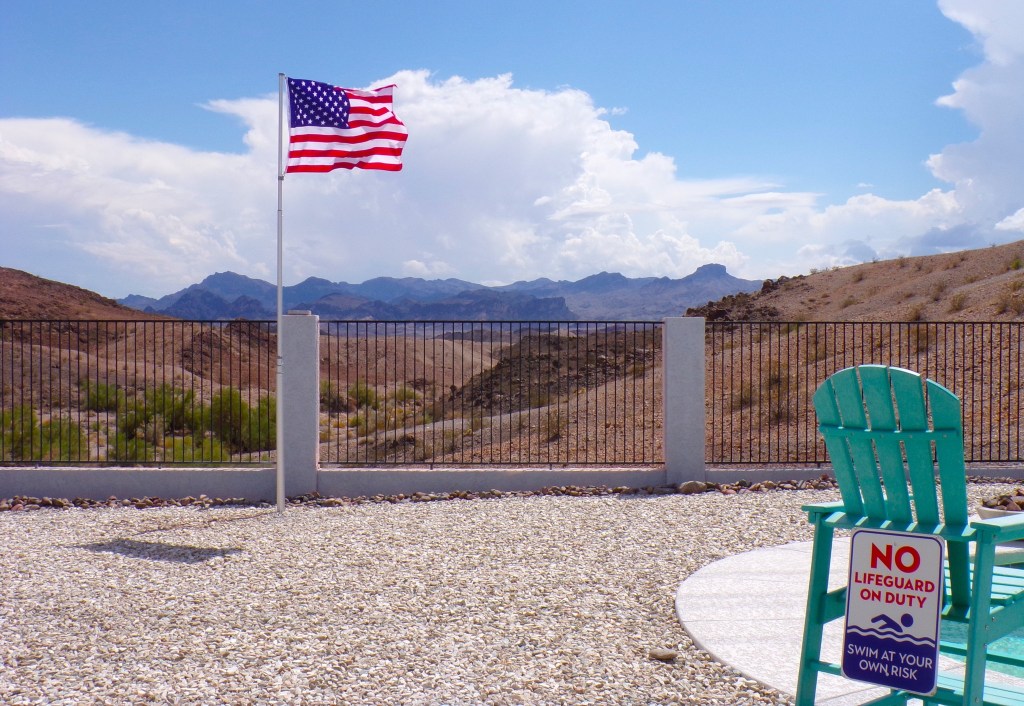
I purchased a stout aluminum flagpole with an American flag one year ago. Both items were identified as being made in the USA. The 4 x 6-foot flag looked to be of medium quality, manufactured of polyester, and vibrant in color. I proudly raised it to the flagpole’s full height of 30 feet. An extra flag identical to it was purchased for $49.

Our city has extreme wind and sun that constantly tests the endurance of flags. Driving about town I see them in all states of deterioration. Some are so bad that there’s not much left where color is concerned. One can only assume those flag owners are out of state, or they’re inside the house and refuse to go out and inspect things until the temperature cools down.

Within 90 days, strong Havasu winds had my USA-made American flag tattered in several places. Taking it down and running up the other, this spare lasted approximately 60 days before it too looked like it’d been through a major battle. That was $100 worth of flags destroyed in a little over half a year. At this rate by the end of 12 months, I’d be out 200 bucks.

Searching for a cheaper alternative to American-made flags I found none. The highest quality ones made of polyester were hovering around the $100 range online, while medium quality was half that price. This might be okay for some but it’s a bit rich for my wallet.

Looking further, I came across a tool supply company on McCulloch Boulevard offering Chinese-made polyester flags “on-sale” for under $4. They were smaller at 3 x 6 feet and I believe made of cheaper polyethylene rather than their advertised polyester material. I doubt that my USA-manufactured flagpole would know or even care that a foreign-made flag was perched on top.

A friend of mine from Minnesota is totally against flying flags made in other countries. In “The Gopher State,” a state law prohibits stores from peddling Chinese-manufactured American flags. That’s why so many Minnesotans buy them here and smuggle their contraband back into their home state. I say that jokingly.

Calculating that if my cheap China flags were to last one month, I’d only be out $50 for a year’s supply, 12 were purchased. For the most part, they’ve stayed together for less than 30 days, with the latest surviving just under 3 weeks. This one was in 4 pieces before being permanently lowered. At this rate of survival, a dozen might not be quite enough.

When I look at an American flag flying in the breeze, the furthest thing on my mind is whether it’s made here or in Timbuktu. I see red, white, and blue, along with the stars and stripes belonging to the greatest country in the nation—a place that I’m blessed to be born in.

I’ll go even further, by boldly stating that I bet many foreign workers making US flags wished they lived here too!

MAKING PREDICTIONS

“Closet drinker is my politically correct term for stealth alcoholics.”

I’ve always been one to predict certain things going way back. To me, it’s merely a way of making life more enjoyable. I can’t say my predictions have been highly accurate, especially with picking the winner of a football game or presidential election. More on those two later.

I don’t use a crystal ball or Ouija Board, believing they’re tools of the Devil. I rely on my own instinct or logic with analysis of the surroundings, and foremost, utilizing verses from the Bible. Philippians 4:13 is my favorite verse. “I can do all things through Christ that strengthens me.”

My weather predictions, especially those involving rain, are oftentimes better than the slick-dressed folks you see on television. If you don’t believe me—just ask my wife.

Some things predicted are kept to myself, especially whether I believe a business, restaurant, or especially a marriage will fail. I pray that all couples will remain together for the duration, but sometimes, I know more about the other half than their marriage partner does.

One of these failed nuptials involved a guy who was a “closet drinker.” He kept it hidden until after the last vows were said. Sadly, that marriage lasted one year.  Closet drinker is my politically correct term for stealth alcoholics.

A video game store opened in Anchorage, Alaska, with me predicting to my son they wouldn’t be in business for long. Gunnar disagreed with my analogy, saying that video games were so popular with kids that they’d always be around.

I was off by a few years but the establishment eventually went under. After eating at Kenny Rogers Roasters, I predicted that this restaurant chain wouldn’t last as I exited the front door. Blockbuster Video was picked as a loser a year before they went down.

I made the same prediction with Sand’s Market. This small grocery store was formerly in the London Bridge Shopping Center where the Chamber of Commerce is now located. A Havasu business where customers tossed axes at targets was an easy choice to fail.

I’ve been fairly accurate in predicting what items would appreciate in value. Antiques, guns, coins, and real estate are some things worth collecting. Years ago, before muscle cars hit the ceiling in price, I told family and friends they were a good investment. Some laughed at me.

My father chuckled at the notion of muscle cars. One vehicle Joleen and I owned, a 1968 Hemi Dodge Charger purchased for $3900.00 in 1977, is now worth upwards of $400,000.00. We sold this vehicle before it ever hit that mark.

Football games have never been easy to predict. My favorite team is the Miami Dolphins and I refuse to say whether they’ll win, not wanting to jinx things. Presidential races are my worst venue to choose going back to 1992.

In 1992, I predicted that George H.W. Bush would top Bill Clinton. Of course, “Slick Willy” easily won. In 1996, I thought Bob Dole would beat Clinton, and I lost again. When John McCain went up against Barack Obama in 2008, many predicted that Senator McCain would win by a landslide including me. Everyone knows the outcome there.

I had Hillary Clinton over Donald Trump in 2016, even though I voted for “The Donald.” In the last election, Donald Trump was supposed to win over Joe Biden. Somehow, Joe Biden came out on top making me eat crow again. For this latest election, having not picked a winner in 32 years, I’ll have to go with Kamala Harris.

If I make the wrong prediction this time—I’ll quit while ahead!

WOKE MENTALITY

“Records show that neither George Washington nor Martin Luther King Jr. were perfect, much the same as Christopher Columbus.”

Captain Christopher Columbus

Americans recently celebrated Columbus Day. Some “woke folks” have tried to change the name to Indigenous Peoples Day, but it’ll always be Columbus Day to me and others. For those illogically thinking members of society constantly wanting to change history—they should create another day to have American Natives honored besides the second Monday of October. There’s plenty of room for additional federal holidays on the calendar—354 open slots to be exact.

Columbus Day was created in 1892 by President Benjamin Harrison, as a way to memorialize the lives of 11 Italian Americans killed in New Orleans by a vigilante mob on March 14, 1891. Nine of the Italians were lynched with two of them shot. The massacre created quite a rift between Italy and United States relations, with President Harrison attempting to calm the tension with his declaration. This bit of history is never brought up by those trying to remove Columbus Day because undoubtedly, they know little of the history.

For political leaders to now try and erase Columbus Day is a blunt insult to Italians throughout the world, especially those immigrants and their ancestors having settled in America. It’s no different than 50 years down the road, a group of self-described “do-gooders” deciding to change the holiday names of Martin Luther King Jr. Day, or Washington’s Birthday, after delving into their lives and discovering morally questionable behavior.

Records show that neither George Washington nor Martin Luther King Jr. were perfect, much the same as Christopher Columbus. Why punish these guys eons after they were placed in the grave?

Getting back to the definition of “woke.” I hear this word all the time regarding a certain group of thinkers, and it makes me visualize a mass of half-asleep people trying to make decisions when they’re not fully awake. It’s evident that those trying to erase Columbus Day—still need to wake up and smell the coffee!

THE BLAME GAME

“Easily offended thin-skinned snowflakes would raise Cain and make sure it happened.”

The Blame Game is alive and well in America. I’m watching in High Definition (HD) on television right now, as well as seeing via social media, blame being spread on the recent Helene hurricane disaster. So and So is blamed for not sending money—while John and Sally Doe didn’t help enough.

Simply speaking, those doing the complaining generally did nothing at all, yet pointed their fingers at others to try and escape any guilt. Some folks, however, are simply born to complain.

All of this reminds me of a joke someone pulled on a former boss years ago. My supervisor was always griping about this or that on a daily basis. One morning he came to work and found a box of Midol sitting on his desk. For those not up to speed on what Midol’s intended, look it up. In today’s bizarre world of folks not knowing whether they’re male or female, I suppose the use of this drug has reached a whole different plateau.

Don (not his real name) thought the joke was funny, and I believe he got the message. Today, the person initiating this ruse would probably be fired. Easily offended thin-skinned snowflakes would raise Cain and make sure it happened.

Getting back to the blame game. A man on Facebook was criticizing Billy Graham for not sending money to South Carolina. This individual was immediately corrected, with many quickly saying that Billy Graham was dead. Franklin Graham, Billy’s son, through Samaritan’s Purse, has been on the ground running with supplies and crews of volunteers, helping out even before Helene hit.

Vice President Kamala Harris tried to play The Blame Game, by stating to anyone who’d listen, that Florida Governor Ron DeSantis didn’t return her phone calls regarding help, and that Floridians would suffer when Hurricane Milton hit.

Why would he expect calls from her, when President Biden acknowledged that he’s in constant contact with governors from all affected states? The president even went on to praise Ron Desantis, by saying he was doing an excellent job.

Our president is still at the top where the chain of command is concerned, and he’s letting that be known, especially to his possible predecessor, Kamala Harris. Without a doubt, she’s trying to create a ruckus here strictly for political gain.

I try and tune out those people routinely bellyaching but it’s sometimes hard. In the back of my mind, I often think of Don and that box of Midol. It seems after this joke was pulled the man did chill and change for the better. Is it possible he started taking the pills and they worked?

That’s something I’ll never know, because sadly, my former co-worker is no longer here to answer that question.

FLAGNOMICS 101

“Our city has extreme wind and sun that constantly tests the endurance of flags.”

I try to be a “Made in the USA” kind of guy. When I say this, I’m talking about buying products manufactured in our country. Unfortunately, most of the smaller products I purchase nowadays, including shoes and clothing, are made in China. I wish things weren’t that way, but it is what it is.

The higher cost of manufacturing certain items, along with stringent environmental laws forced many US companies to fold or move overseas. Politicians, greedy investors, and unions had a lot to do with this as well.

From day one, I’ve been a Chevrolet, Ford, and Dodge owner. My reasoning is that they’re still considered American namesakes, although Dodge is now owned by Stellantis, a multinational European corporation.

Friends and strangers have told me that some components in those three makes come from other out-of-country locales. Perhaps so, but the vehicle names are still synonymous with red, white, and blue. You’ll never find me owning an import because it isn’t in my genes to do so, although Japan, Korea, Germany, and other European nations produce some fine cars and trucks.

A while ago, I wrote about coming across an authentic American Indian Dreamcatcher in WalMart. At least that’s what the label said. In small letters, the back of this packaging was printed — Made In China. Alaska gift shops sell items supposedly crafted by local natives yet are manufactured in Taiwan, China, and elsewhere. Miniature totem poles are a good example.

I purchased a stout aluminum flagpole with an American flag one year ago. Both items were identified as being made in the USA. The 4 x 6-foot flag looked to be of medium quality, manufactured of polyester, and vibrant in color. I proudly raised it to the flagpole’s full height of 30 feet. An extra flag identical to it was purchased for $49.

Our city has extreme wind and sun that constantly tests the endurance of flags. Driving about town I see them in all states of deterioration. Some are so bad that there’s not much left where color is concerned. One can only assume those flag owners are out of state, or they’re inside the house and refuse to go out and inspect things until the temperature cools down.

Within 90 days, strong Havasu winds had my USA-made American flag tattered in several places. Taking it down and running up the other, this spare lasted approximately 60 days before it too looked like it’d been through a major battle. That was $100 worth of flags destroyed in a little over half a year. At this rate by the end of 12 months, I’d be out 200 bucks.

Searching for a cheaper alternative to American-made flags I found none. The highest quality ones made of polyester were hovering around the $100 range online, while medium quality was half that price. This might be okay for some but it’s a bit rich for my wallet.

Looking further, I came across a tool supply company on McCulloch Boulevard offering Chinese-made polyester flags “on-sale” for under $4. They were smaller at 3 x 6 feet and I believe made of cheaper polyethylene rather than their advertised polyester material. I doubt that my USA-manufactured flagpole would know or even care that a foreign-made flag was perched on top.

A friend of mine from Minnesota is totally against flying flags made in other countries. In “The Gopher State,” a state law prohibits stores from peddling Chinese-manufactured American flags. That’s why so many Minnesotans buy them here and smuggle their contraband back into their home state. I say that jokingly.

Calculating that if my cheap China flags were to last one month, I’d only be out $50 for a year’s supply, 12 were purchased. For the most part, they’ve stayed together for less than 30 days, with the latest surviving just under 3 weeks. This one was in 4 pieces before being permanently lowered. At this rate of survival, a dozen might not be quite enough.

When I look at an American flag flying in the breeze, the furthest thing on my mind is whether it’s made here or in Timbuktu. What I see is red, white, and blue, along with the stars and stripes belonging to the greatest country in the nation—a place that I was blessed to be born in.

I’ll go even further, by boldly stating that many foreign workers making US flags wished they lived here too!

DAILY SABBATICAL

“Studies show that employees spend an average of 2 – 3 hours each day on their electronic devices resulting in decreased productivity.”

Forty years ago, the pastor of our church announced to the congregation that a staff member was on an “approved sabbatical.” Like me, other people noticed this man was absent, with some wondering what happened to him.

Claiming that the church employee was on prearranged leave was the preacher’s polite way of answering our question. This fellow never came back, making me think he didn’t intend to or was fired. I’m sure he wasn’t paid during his absence.

Doctors are oftentimes jokingly referred to as being on sabbatical, with golf courses undoubtedly being their mecca of choice. I only say this because a receptionist told me that’s where many of them go to unwind. It does seem the perfect place to get away from stress.

I didn’t know exactly what sabbatical meant back then, only recognizing that Sabbath is sometimes used to describe a religious period of rest. Sunday is a day of Sabbath for many Christians. The Jewish celebrate the Sabbath from sundown on Friday to sundown on Saturday. They call this, Shabbat. There is a big difference between Sabbath and sabbatical.

The Greek explanation for a sabbatical is: an extended period of time intentionally spent on something that’s not your routine job. I found that interpretation to be quite interesting and open to further analysis. Generally speaking, those taking legitimate sabbaticals do so every few years. In this article, I use the word sabbatical as a politically correct way to describe employees stealing time.

Being observant, I like to watch folks at their places of employment, with some of them secretly or blatantly using electronic devices for nonwork purposes. I spot this activity all the time. Perhaps I’m just being an old fuddy-duddy and this is considered a new acceptable work ethic, but I don’t think so.

I recently saw an employee playing an online game in a somewhat secluded area at a big box store in town. I know this was the case because I walked up from behind and startled him with a question.

Driving around town, I constantly see construction workers standing about with their ears glued to phones. The other morning, a group of roofers were hard at work laying shingles, while one guy stood out like a sore thumb, trying to hide behind rolls of tarpaper while on his device.

During a recent and ongoing repaving project on Interstate 40, it wasn’t uncommon to see this practice. One fellow crouched behind an asphalt roller with a phone stuck to his ear—believing he was invisible to roaming eyes. I worked construction during my early years, with the only person needing to be on a phone—the foreman or superintendent.

A friend of mine managed large grocery stores for most of his lengthy career. Robert said that employees constantly using their cell phones during work hours was a definite problem. I suppose many of them saw this as being a power sabbatical of sorts much like power naps.

Studies show that employees spend an average of 2 – 3 hours each day on their electronic devices resulting in decreased productivity. It adds up quickly with wasted hours quickly turning into days. If you were to compile this misappropriated time over a year, the cost to employers would be substantial. One study shows it to be approximately 15 billion dollars annually.

Going back to the Greek explanation of sabbatical: an extended period of time intentionally spent on something that’s not your routine job. Judging by that definition, and using data provided by workplace studies, without question, it can be said thousands of employees are taking unscheduled mini-sabbaticals over the course of a year. If they’re smokers or vapers, add extra to the amount of nonproductive time spent in the workplace.

It might be advantageous for those employees to ask their bosses if they can go on permanent sabbatical status, along with still collecting a paycheck. I mean, that’s basically what they’re already doing!

BEYOND HOPE

“We’ve been searching for a place in Arizona that’s similar to Hope, Alaska.”

Hope, Alaska

While living full-time in Alaska, I spent a fair amount of time fishing, panning for gold, and hiking in the old mining town of Hope. My brother and I, along with friends, camped there for weeks on end. Having so much fun—we’d never want to return home to Anchorage.

Hope had a special appeal to me and still does. My wife and I contemplated retiring in the small community, but could never secure property on a bluff overlooking Cook Inlet. That was the only location I would’ve been satisfied with. Instead, Joleen and I chose Lake Havasu City, building our house with BLM land and Lake Havasu at the backside.

Regency Drive is the only area I would’ve been happy with here, and we were able to pull it off thanks to local realtor and former Alaskan, Richard Pagliero. With no property listed for sale on this street, Richard yanked some strings to make things happen. Having faith that he’d come through, our prayers were answered. A unique story in itself, I’ll save that tale for another day.

Hope, Alaska, is supposedly named after 17-year-old miner Percy Hope, although some historians question this. Percy Hope came to the area in 1895 as part of a contingent of gold seekers. With gold being discovered in Six Mile Creek, prospectors by the thousands flocked to the vicinity. Before long, saloons sprang up, with stores soon to follow.

Come 1898, when gold was discovered in the Yukon Territory, Canada, many miners left Hope to seek their fortunes in Dawson. Some of them remained, keeping the struggling locale from becoming a ghost town like Sunrise, located just a few miles away.

We were able to visit some of the old mining camps, with rusty relics still lying amongst the trees and brush. Large pipes that brought water for sluicing can still be seen in the old Palmer Creek mining camp. There is plenty of wildlife in this valley, with black and grizzly bears often spotted.

We’ve been searching for a place in Arizona that’s similar to Hope, Alaska. I wanted a spot to go for short stints and relax, with less noise than Havasu, although the sound of Harleys and Hotrods is music to my ears. It is a bit hard to concentrate at times while writing, with constant roaring in the background.

Listening to a friend one day talk about a small town where he loves to park his RV, I was more than shocked to hear the name, Hope. Joleen and I didn’t know it existed. Jim Brownfield and his wife have been going there for several years to unwind. They find it more peaceful and scenic than Bouse or Quartzite.

Hope, Arizona, is 89 miles south of Lake Havasu City via AZ-95 S and AZ-72 E. Ironically, the distance from Anchorage to Hope, Alaska, is 88 miles. Wanting to visit the town that Jim Brownfield refers to as a desert paradise, last month we traveled through there on the way to Prescott. I instantly fell in love with it, seeing the potential for great adventure.

Maps show the surrounding mountains chocked full of old gold mines to explore, while there’s a grocery store in town, along with a church, gas station, and antique store. Boondocking is in our immediate plans, meaning we’ll carry in our water, power, and septic system while carrying out all trash.

On the way out of this tiny town, my wife spotted a large billboard. Joleen read aloud, “You’re Now Beyond Hope.” Before I had time to chuckle she quickly became a poet, good-naturedly roasting me, “They made that sign with you in mind!”

Geographically speaking – she was correct!

Hope, Arizona

MISS PURDY

“For several years now, me and Miss Purdy have rendezvoused privately in my office or out on the road.”

Trying to remember complicated English rules for grammar is getting to be more difficult as the years slide by. English composition is considered the hardest to write because of so many complex rules. Add to this, advanced age with a pinch of male senility, and it becomes a toxic recipe for incessant typos.

With several books on grammar in my library to go by, stopping in midsentence to research what’s right and what’s wrong slowed me down considerably. I constantly needed help until eventually finding some.

Not long ago, I subscribed to an artificial intelligence (AI) program that helps catch the smallest mistakes. All I have to do is copy and paste my work into this site and it does the rest. The program is called Grammarly, but I named it Miss Purdy, after a character from the Jerry Lewis movie, “The Nutty Professor.”  Miss Purdy in this film is played by lovely actress, Stella Stevens.

Along the way, Miss Purdy has attempted to change my literary voice to match hers. If I strictly followed Purdy’s suggestions I’d be sounding more like “R2D2’ than anything. For “Star Wars” fans, they’ll recognize that alphanumeric name as the likable robots.

What I like most about Miss Purdy is that she helps me with semicolons, comma placement, apostrophes, capitalization, verbs, nouns, conjunctions, discombobulation, and archaic sentence structure. It’s like having my own English teacher or tutor sitting beside me. The cost is minimal and well worth the price.  All I have to do is “Charge it!” and her services are mine.

I pick and choose what changes I’ll accept which allows my voice to still come through, if ya know what I mean. For information’s sake, after running this article through her program, Miss Purdy sniffed out “ya” like a trained hound dog. My fictional tutor instinctively recommended that I change it to you. I didn’t.

For several years now, me and Miss Purdy have rendezvoused privately in my office or on the road while traveling. Songwriter and singer, Billy Paul, had a similar affair, with his 1972 tune titled, “Me and Mrs. Jones.” In Billy Paul’s song, two immoral souls meet each morning in of all places, a café. Hopefully, they order the chicken fried steak, scrambled eggs, and hashbrowns, because I hear it can’t be beat.

A tune about my plutonic relationship would be much different than Billy’s.

“Me and Miss Purdy.

Got a thang goin’ on.

I type out my words.

She points out those wrong.”

They say artificial intelligence can write complete sentences, paragraphs, and even articles with some initial direction and guidance. I’m sure Miss Purdy could do that for me but I’ve never asked her to.

When the day arrives that my submissions are totally error-free, with no slang tossed in for added effect, you’ll know that AI completely took over. My wife hopes there’ll come a time when little Miss Purdy’s smart enough to clean the house and cook.

With the speed at which AI technology progresses, that might be closer than she thinks.

TRAGEDY

“At that time, it was the worst transportation tragedy to ever hit Arizona.”

Kingman propane tank explosion (1973)

Tragedy through accidents hasn’t escaped Arizona over the years, nor has it in the other 49 states. It seems every day that we read of some horrific event taking place throughout the country.

Several years ago, I wrote a lengthy piece about two locomotives colliding near Franconia, almost directly across from where the Pilot and Love truck stops are on Highway 95 and Interstate 40. Five railroad crewmen were killed in that 1901 accident, while 19 other railroad employees and passengers were badly injured.

There was no official memorial at the site, with me making simple wooden crosses for each railroad worker, and having their names written in black marker. They were then placed in soft sand at this approximate location. Hopefully, the crosses still remain, with it now illegal to visit this property.

On July 5, 1973, a large propane tank on a railroad siding exploded in Kingman, killing 12 people and injuring another 80. The shock wave from this explosion was felt well over 5 miles away. Remnants of the tank ended up over a quarter of a mile from the blast. There are at least 3 memorials in Kingman for those who died during this incident, if not more.

Most everyone in the country has heard of the Yarnell Hill Fire taking place on June 30, 2013. This fire took the lives of 19 firefighters. A memorial can be found at the exact location where they died, including one in Yarnell called the Granite Mountain Hotshots Memorial Park.  Another large memorial is in Prescott at the courthouse, along with others throughout the state.

On January 8, 1944, an accident occurred in Kingman that took the lives of 28 cadet soldiers stationed at the Kingman Army Air Field. I’d never heard or read of this tragedy until just recently. While doing some research on the base, I came across several articles written about the incident in various newspapers back then.

At that time, it was the worst transportation accident to ever hit Arizona, until two commercial airliners collided over the Grand Canyon in 1956 killing 128 people. Despite this, it still holds the macabre record of the most killed in an Arizona motor vehicle accident.

1944 newspaper accounts paint a horrific picture of the Kingman train and bus crash, and I’ll attempt to tone things down a bit in my description. Several of the soldier’s names were also corrected by me by using their gravestones for accuracy. I also identified their middle names by using the same.

On Thursday, January 6, 1944, 34 aviation cadets (A/C), along with their instructor and a driver, approached the Santa Fe Railroad crossing at the Kingman Army Air Field entrance. Witnesses say the bus stopped, yet lurched onto the track for whatever reason just as a train was coming. This wasn’t a bus by conventional standards. It was a semi-truck pulling a trailer converted to carry passengers.

The soldiers were all returning from night gunnery training, undoubtedly looking forward to hitting their bunks for some rest before the next grueling day. With the diesel-powered locomotive doing some 45 miles per hour, it easily tore through the bus, strewing bodies everywhere. The Kingman mortuary was overrun with corpses, with many of them sent to Needles, California. Most of these guys were in their early 20s.

Thousands of soldiers volunteered to donate blood, but because of the severe trauma incurred by those unfortunate men on the vehicle, there was not much need. Only 8 survived the crash. Oddly enough, the base commander, Colonel Harvey P. Huglin, absolved the military of any responsibility in the accident six days later. This was despite a railroad crossing agent flagging the military bus to stop.

On January 20, two weeks after the tragedy, the Arizona State Highway Department announced bids were being accepted for a new crossing that wisely placed this dangerous section of road underneath the tracks. Sometimes, it takes a tragedy to get things done, and this was precisely the case here.

I found no memorial at this site for those unfortunate 28 soldiers. To honor the deceased for their service to our country, I’ll bring to light after some 80 years, their names and hometowns one more time.

Some residents living in Lake Havasu City may be related to them. These young and brave warriors who lost their lives while preparing to go off to battle during WWII should never be forgotten, and are most deserving of a permanent plaque or monument!

Second Lieutenant Altemont Roscoe Britton Jr. – Hamilton, Alabama.

A/C Robert Lloyd Johnson – Pottstown, Pennsylvania.

A/C Seymour Kahn – Bronx, New York.

A/C Donald Bernard Keller – Minot, South Dakota.

A/C Kenneth Lawler Kirk – Sioux Falls, South Dakota.

A/C Alfred Mahler Kite – Waynesboro, Virginia.

A/C Robert Joseph Knapp – Davenport, Iowa.

A/C Robert Whittemore Knapp – St. Louis, Missouri

A/C John Henry Kubiak – Olean, New York.

A/C Chester Stephen Kulpa – Chicago, Illinois.

A/C Donald Louis Kusnerek – Little Falls, Minnesota

A/C Norman Frederick Leap – Riverside, California.

A/C Arlo Quinten Leavitt – Bunkerville, Nevada.

A/C Herbert Arthur Lewis – Schenectady, New York.

A/C Norman Levine – Long Island, New York.

A/C John Paul Liddell – Lackawanna, Pennsylvania.

A/C Niles Earl Long – Bethlehem, Pennsylvania.

Private Frank Edwin Smith – West Point, Iowa.

A/C John H. Stiltz Jr. – Wilkinsburg, Pennsylvania.

A/C George Theodore Stine – Aliquippa, Pennsylvania.

A/C William M. Stolle Jr. – St. Louis, Missouri

A/C William Frank Swadener – Indianapolis, Indiana.

A/C Joseph C. Taylor – Atlanta, Georgia.

A/C Alfred Hannis Tees – Philadelphia, Pennsylvania.

A/C Lewis M. Thompson Jr. – Hollywood, California.

A/C William R. Thornell – Metuchen, New Jersey.

A/C Fred Charles Vogley – Canton, Ohio.

A/C Robert Keith Tingley – Marshall, Illinois.

Type of military bus like the one used at Kingman Army Air Field

NO ANGRY BIRDS

“Angry birds the whole way, they tried several times to bite the fingers that fed them.”

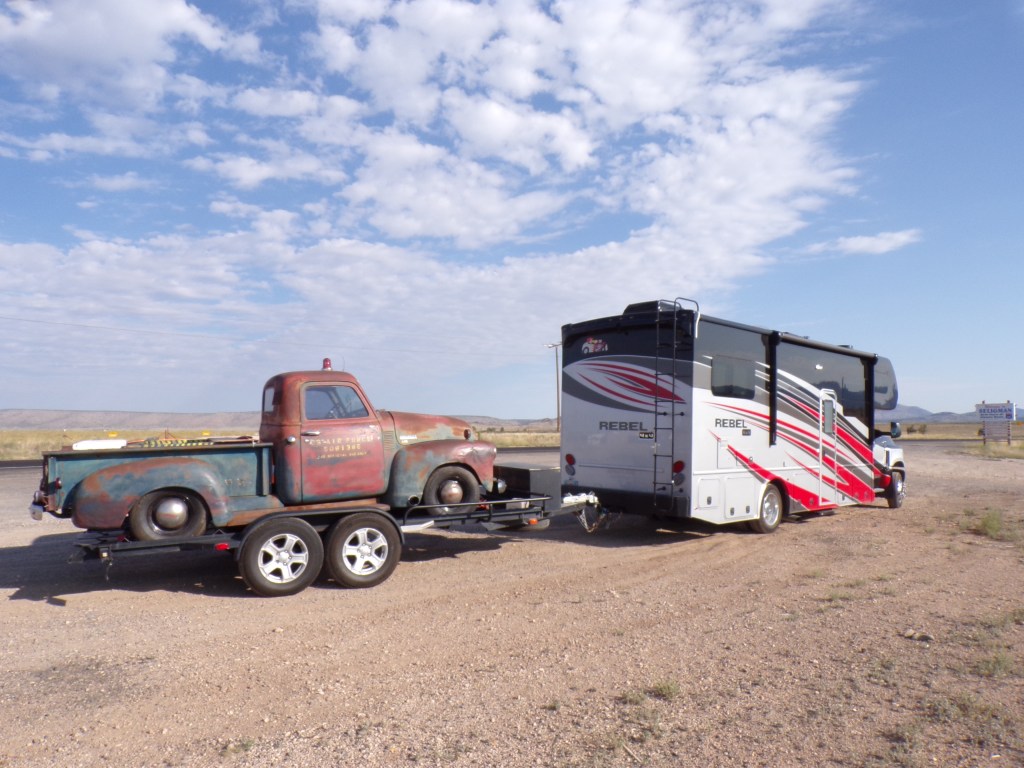
My wife and I recently returned from a lengthy driving excursion through Arizona, New Mexico, Texas, Oklahoma, and Kansas. It was not unlike other trips that we’ve made over the years, with thankfully, no major incidents. Our two Amazon parrots, Jess and Aldo, rode along making things quite interesting and noisy. They’ve been entertaining us now going on 35 years.

Jess and Aldo were not happy from the git-go being forced into smaller cages. Their larger metal homes wouldn’t fit inside our RV so they were left behind. Angry birds the whole way, they tried several times to bite the fingers that fed them. I’d probably be doing the same after enduring day after day of bumpy roads while standing on wood perches. Joleen and I had cushy seats so we wouldn’t exactly know how they felt.

The purpose of the trip was for my wife to reconnect with her brother, aunt, and cousins, along with displaying our old 1950 Chevy pickup at the McConnell Air Force Base, “Frontiers in Flight Air Show” including the Chapman, Kansas, “Labor Day Car Show.”

Getting to our destinations, we traveled a good many miles on rural highways. There were interesting things to see on this route while meeting some down-to-earth people in cafes, restaurants, and truck stops. I talked politics with a couple of truck drivers, including doing the same with an Amish family in Kansas. Amish people generally don’t vote, but these folks are fully aware like most of us of what’s going on in the country.

Sadly, it’s amazing how much roadkill we saw on our journey. Raccoons, possums, armadillos, coyotes, and skunks had been a bit too slow crossing busy roads and highways. We generally smelled the skunks before and after seeing them. Hungry ravens, vultures, and hawks were usually circling above the carcasses. I honked our horn at a few on the ground so that the scavengers didn’t end up with missing feathers.

While away from home for any lengthy time, it never fails that our alarm system goes berserk, with it doing the same this time around. After a physical inspection, we were assured by the alarm company that no entry had been made into the dwelling through opened doors.

Strangely enough, one motion detector had picked up movement in the living room. With no ceiling fans left on, and it being too early for Santa to come down the chimney, a ghost evidently set things off.

The only problem we encountered while driving, was on the return leg coming down that steep hill out of Kingman. An 18-wheeler blew by us nearly sideswiping our RV on the final sweeping curve. In the process, the careless truck driver came close to running our vehicle off the road while he was traveling well over the speed limit.

After this happened, four angry birds were squawking inside our motorhome, with Joleen and I being the loudest. Wanting to desperately catch the driver, the tantalizing allure of a succulent Cinnabon roll at the newly opened Flying J truck stop just down the road in Yucca, quickly took revenge off my mind.

On our final push into Lake Havasu City, there were several RV’s sporting out-of-state plates behind and in front of us. They were most likely snowbirds making their way back to Arizona paradise to escape a forthcoming cold winter.

Hopefully, none of them became angry at the hotter-than-normal temps here. On a positive note, where getting the best RV parking spaces is concerned, these savvy visitors understand that the early bird catches the worm.

As far as Jess and Aldo the parrots go, they lost their angry bird status once back inside their comfortable and spacious cages. Something tells me they’ll opt to stay home next time or ask to sit up front with us.

Outside Seligman