Years ago, after listening to the classic 1960’s hit, The “In” Crowd by Dobie Gray, my daughter asked if I was part of that group during high school. I told her I didn’t think so. To be honest, I didn’t know who the incrowd was back then? Thinking about it this past week, I decided to Google the song title to learn more.
I’m in with the in crowd. I go where the in crowd goes. I’m in with the in crowd. And I know what the in crowd knows.
Any time of the year, don’t you hear? Dressin’ fine, makin’ time. We breeze up and down the street. We get respect from the people we meet. They make way day or night. They know the in crowd is out of sight.
I’m in with the in crowd. I know every latest dance. When you’re in with the in crowd. It’s easy to find romance.
At a spot where the beat’s really hot. Oh, if it’s square, we ain’t there! We make every minute count. Our share is always the biggest amount. Other guys imitate us. But the original’s still the greatest.
We got our own way of walkin’ We got our own way of talkin’, yeah.
Anytime of the year, don’t you hear? Spendin’ cash, talkin’ trash. Girl, I’ll show you a real good time. Come on with me and leave your troubles behind. I don’t care where you’ve been. You ain’t been nowhere, till you’ve been in with the in crowd, yeah.
Oh, with the in crowd (yeah, yeah, yeah). We got our own way of walkin’, yeah (yeah, yeah, yeah). We got our own way of talkin’ (yeah, yeah, yeah). In the in crowd.
If the in crowd went fishing and hiking I suppose I was part of that elite group. On the other hand, what did these cats know that I didn’t? I’m guessing it was algebra. Never did catch on and still haven’t. I might’ve had a tinge of square in me but only a small dose. Most of my friends had the same.
Should blue denim jeans and flannel shirts be considered dressin’ fine, then I was hip. That alone would’ve placed me into theprestigious group.
Without doubt I loved to breeze up and down the street. Dobie Gray had to be talking about cruising. What else could it be? Yeah, after analyzing Gray’s song, it appears I had more in crowd traits than I realized.
One important item I noticed after reading through all of the lyrics, was that walking and talking were top notch criteria for being part of that group. Dobie Gray mentioned those items two times in his song.
Friends often told me that I had my own way of walking. They weren’t impressed. Years later I discovered it had to do with an inner ear problem. While ambling down sidewalks or hallways I generally veer to one side. Yeah, I was a big part of the in crowd during high school and didn’t even know it.
These days I can say without question I’m a bonified member of the end crowd. Just being able to walk and talk is highly important to us cats. Sadly, Dobie Gray’s no longer here to compose a revised senior citizen version of his song. I did my best in constructing this slightly shorter version than the original:
The “End” Crowd
I’m with the end crowd.
I go where the end crowd goes.
I’m with the end crowd.
I wear end crowd clothes.
Any time of year, can’t you hear?
Dressing fine, with half a mind.
Who cut the cheese? We need a breeze.
Turn up the heat, can’t feel my feet (yeah, yeah, yeah).
“Sugar in the gourd – gourd on the ground. The way to get the sugar out is to roll the gourd around.”
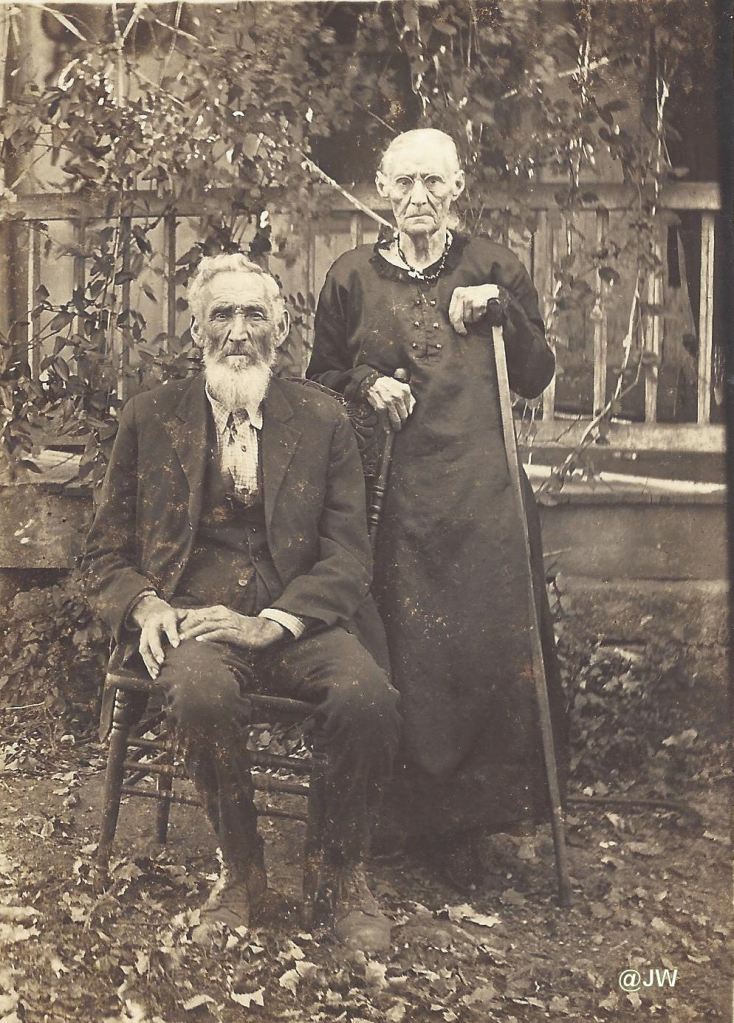
Mike Hankins and his wife Ruthie Jane Hankins (circa 1920’s). Photo credit: John & Retta Waggoner
I came across the strangest story titled, Mike Hankins, in a December 2, 1906 – The Tennessean (Nashville) newspaper. The cleverly written piece was first published in The Hartsville Times newspaper in 1906. Composed in somewhat riddle form, it took some deciphering on my part to figure things out. All-in-all, the reporter was giving Mike Hankins a fond farewell, while at the same time delivering a literal rebuke of sorts. It seems Mr. Hankins was one of the ringleaders where town gossip was concerned in Hartsville. Honey-Run evidently relates to gossip flowing freely amongst a certain group of citizens. At the end of the story is the saying, “Sugar in the gourd.” Those words refer to simple lyrics from an old square dance tune going back to the late 1700’s. Sugar was placed in gourds during pioneer days and oftentimes it was hard to get out. The metaphor in using this term relates to gossip being contained within a container, instead of allowing it to seep out. This story was copied verbatim.
*******************
Mike Hankins
Mike Hankins, the blacksmith at “Honey Run,” left with his family Monday for Lake County, west Tennessee. Mike is a good fellow, and will be missed very much from “Honey Run.”
So Mike has gone west, at last. He heard it was better further on, and often talked of moving out into the world and trying his fortune among strangers. Not that he was unappreciated in his old home, for everybody in the county knows Mike, and all wish him mighty well.
But he is “a
good fellow,” and fun and poverty seem to have chosen him for boon companion
and running mate. He is capable in his line, but he would rather joke than
work.
He knows as much scripture as the circuit rider, is conversant with the fine points and literal quotations concerning baptism, also the exact formulate for foreordination, and the final perseverance of the saints, but his convictions are not deep enough to root the turnip seed of truth. Day after day he will argue, ever sticking to the literal word.
Leaving his eldest hopeful and the striker to run the shop, he frequently foregathers at the village post office with the congenial spirits to sample the gossip of the countryside that the rural carriers have brought like honey to the hive, to discuss the candidates and the issues of the most important campaign since Sherman marched with fire and sword to the sea.
There is never real want at his house, but there are times when the wife and children feel that they would rather do without than ask the grocer to “charge it.” Mr. Grocer has not yet lost anything to Mike, but the quid pro quo sometimes comes on crutches; and besides, a man with a trade, and a family, and at his time of life, ought to have a home of his own and should have achieved a secure standing in the church that would enable him to read his title clear to “mansions in the skies” on the slightest provocation.
But nothing
sticks to Mike, for Mike will not stick to anything more than three days in
succession. “Mike is a good fellow.” He
has done nobody harm, except himself and those for whom he would gladly lay
down his life in an emergency.
He is as
ready to sit up all night and keep an ice towel on the fevered brow of a friend
as he is to grab a horn and away to the meadow and the woodland on a moonlight
night, following the melody-making hounds as they give on the hot trail of
“that old red fox.”
The smithy
fires have glowed and the cheerful anvil rung till late; many a night to
accommodate the emergency of an energetic neighbor, whos team must be afield
ere dawn.
Because of
these characteristics, he “will be missed very much.” His quaint sayings and curious riddles will
be repeated again and again as the boys gather to settle the momentous matters
of state and fix with unerring certainty the destiny of aspiring genius.
His crude philosophy, crystalized into provincial epigrams, will be the familiar tongue of generations yet to come. Yes, Mike Hankins is gone from “Honey-Run.” It is not worth while to wish that his tribe may increase, for there will be Hankinses in every settlement when the bones in the valleys begin and the seas give up their dead.
So, let us
the rather trust that his new post office is “Sugar-in-the-Gourd.”
A friend told me that Tom Selleck is 98 years old.
Some people age gracefully while others age ungracefully. Unfortunately or fortunately, I’m firmly mired in that latter category. You’ll understand why I use the word fortunately in short order.
I don’t count movie stars or celebrities in my gracefully aging synopsis except Tom Selleck. A recent National Enquirer article mentioned that Selleck has never done a thing cosmetically to reverse his aging process.
On television I believe he promotes something called, “Reverse Moreage”. I didn’t catch the entire commercial, but most likely he’s peddling some type of de-aging pill or elixir.
A friend of mine claims that Selleck is 98 years old. I looked it up and the actor’s only 74. Perhaps Tom Selleck tells people he’s 98 to hawk his product? Wise thinking!
Most Hollywood types use plastic surgery and other outlandish measures to try and keep their youthful appearance. Not that there’s anything wrong with such. I suppose if you have the money go for it.
When I say age gracefully, I’m talking about ordinary people here; those folks we’ve met that travelled through time without doing anything outlandish to their skin.
I decided a couple of years ago to grow a long beard so that I could accurately play Santa Claus for my grandchildren. Using phony facial hair for the gig didn’t seem the right way to go. After two years of being Kris Kringle I’ve kept the beard for other reasons.
I used it as a prop in becoming a homeless person for a story. A fake beard would’ve never worked. Thankfully I was able to pull the stunt off to near perfection. An article I composed about my experience was published in several periodicals. I also used it on the reality show Pawn Stars in trying to come cross as a grizzly old desert rat. That act never quite materialized as they cut some of the best footage.
A friend of mine, Rod Sanborn, after seeing me in a long beard said that I needed to cut it. He claimed the thing made me look 10 years older. Well hopefully it did. Santa must be at least 400 years old.
That got me to thinking for a change. One friend already pegged me four years older than I really was without the beard. I decided to keep growing the bush and then ask strangers to guesstimate my age.
Rod was right. People that I didn’t know believed I was around 75 years old. When I told them 65 they gasped and quickly apologized for the insult. I decided to take the experiment one step further. I wanted to know if it was more savvy for seniors to appear older than they really are, rather than younger. It didn’t take long to get my answer.
I was in a grocery store one morning chitchatting with a middle-aged cashier. When I asked how old she thought I was the woman politely replied,
“Ummmm… seventy one or seventy two?”
“Thank you for the compliment!”, I told her. “Would you believe I’m ninety eight?”
Being able to say this with a straight face helped to seal the ruse. Taken completely by surprise the lady couldn’t believe how much I hadn’t aged. She wanted to know my secret.
“Donuts.”, I informed her. “A donut a day will keep the wrinkles away!”
I’ve decided to keep my beard another year so that I might have more investigative fun with it. Some folks say it isn’t right to lie about anything. They’re correct! I look at things a bit differently where this joke is concerned.
“In my case it’s not actually a lie. It’s part of an unscientific study!”
From what I’ve learned thus far, it’s better for seniors to claim they’re older in their golden years than the opposite. If it works for Tom Selleck then it works for me!
Camo hat: $4.99 – Invicta diver’s watch: $99.99. – Claiming to be 98 with a straight face: Priceless
Jess and Aldo love to watch YouTube videos on my laptop.
I’ve had my share of pets throughout the years: dogs, cats, a hamster, horned toads, turtles, parakeets, and two parrots. The parrots, Jess, and Aldo, have been with my wife and I the longest. It’s going on forty years. Out of all our pets, these guys are up there in the intelligence department.
We, or I should say I, came by Aldo after a visit to a pet store. I was looking at birds with a friend, Jeff Thimsen, when a lady customer walked up asking if I was interested in a parrot. I told her I’d have to see it.
Jeff and I decided to stop by the gal’s place on our way home. Aldo is a Red-lored Amazon parrot of medium size. He seemed to immediately take to me. The woman placed Aldo on my shoulder and the parrot sat there perfectly content. Six hundred dollars later the accomplished actor was in a cage on the way to my place. Evidently Aldo wanted out of her home quite badly as he no shed tears.
Once inside the door, I showed Joleen how docile the guy was. I sat him on my right shoulder, and he immediately pierced the lower lobe. Blood flowed and I shrieked as he wouldn’t let go.
My wife was able to rescue the angry bird before I could get my hands on him. Since that day he’s been hers and hers alone. He’ll let me feed and clean his cage but that’s it. If I try to hold him, he instantly goes into angry bird mode. I’ve been pinched enough times to no longer attempt such. Whenever Aldo has to venture out of his pen, I use a long wood pole or have Joleen do it.
Jess is strictly my pet. He’s a Yellow Nape Amazon also of medium size. I came by Jess after my pal could no longer keep the guy. Jeff’s wife developed bad asthma being exposed to his parrot dander. Some folks are that way.
Jess will chase Joleen if placed on the floor. It’s quite comical. She knows enough to not place tender fingers inside his domain. We warn visitors not to do the same. He’s also quite the talker. One of Jess’s favorite lines is,
“Bad bird!”
I taught him that. It’s especially funny when Joleen walks by his cage and he attempts to scurry over and bite her while reciting that line. It’s amusing to me but not to her.
Aldo is a bird of few words. He’s only been able to mimic one since we got him. On occasion he’ll utter,
“Hello.”
Jess on the other hand has a full vocabulary. Some of the things coming out of his beak came from when Jeff and Laura owned him.
“Tired bird. Ready to go nighty night!”
“I live at 9940 Springhill Drive”. That’s where they lived in Alaska.
Jeff told me that someone taught Jess “Aloha” while they were on vacation in Hawaii. He says it all the time.
“Hello Jeffie!” That’s what he calls me. I’m glad he doesn’t use “Mikey” like some of my friends do.
“Laura!” Jess calls Joleen that and she always corrects him by saying, “I’m not Laura, I’m Jo Jo!” For close to forty years the two have been going back and forth.
Jess is smart enough to sing. His favorite tune is,
“You are my Sunshine.”
He
especially likes to emphasize the lyrics,
“When skies are gray.”
Evidently he’s referring to Alaska weather as skies are rarely gray in Arizona.
When Jess mimics our children’s names, Gunnar and Miranda, it comes out,
“Gunna” – “Man-dah.”
I started coughing one morning because of a cold. Jess quickly picked up on it. That was several years ago and he’s still mocking me. I generally ask in return, “Have you taken up smoking again?” So far, no reply.
There’s a good possibility these guys will outlive us. Some parrots hang in there ’til eighty. At that point, Joleen and I will be well past the century mark.
I’m not sure what’ll happen then. We’ve talked about finding them a new home with younger owners. Soon after that discussion it seems Aldo picked up on Jess’s cough. My wife believes it’s a cleverly hatched plan between the two of them.
How likely is it for anyone to want these guys if they begin hacking in unison? Not only can they be bad birds, but they’re very clever as well!
“The view from here is lovely. There isn’t much left of the quaint town. It is beautiful tonight with the moon on the water.”
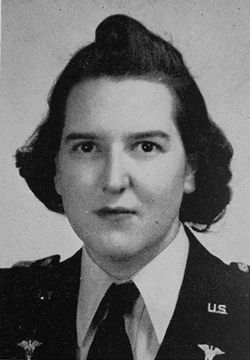
Faded newspaper photograph still exudes her beauty and charm – Lt. Kitty Steele-Driskell Barber
Some folks have a knack for writing exquisite letters. Their words paint a beautiful portrait of where they are or what they see. Kitty S. Driskel of Selma, Alabama, had such a gift.
“Miss Kitty” as friends and family called her was born February 27, 1919, in Selma, to Eugene and Corrie Driskell. From the beginning, Kit loved to entertain much like her mother. Articles in the Selma Times-Journal show that the little girl’s birthday parties were well attended. Gifts and prizes for attendees were a big part of the celebrations.
Mrs. Eugene Driskell was active in the bridge society, and daughters Kitty and Betty were soon to follow. At two years of age, according to a newspaper article, “Miss Kitty” held her first bridge party. In reality, it was a birthday bash in disguise. Many more such parties were soon to follow throughout the coming years.
In 1931, one month shy of being 12, Kitty’s dad suddenly passed away from pneumonia. Her mom was left to raise two daughters as well as run the family grocery business.
At 17, she became President of her First Presbyterian Church youth group. She was actively involved in the church. One newspaper account had her being a highly sought after young lady. Kitty Driskell was definitely a Southern Belle.
In 1939, Kitty left Selma to attend nurse’s training school In New Orleans, Louisiana. By 1941, she’d graduated and returned home. When WWII broke out Kitty enlisted in the Army Nurses Corp with a rank of 2nd Lieutenant. Her duty station was Craig Field Infirmary.
While working at Craig she met Lieutenant Wendell Barber. Things got serious quite fast. They married on March 4, 1943. Two months later both were deployed overseas to different locations. Wendell went to South America, while Kitty ended up first in Africa, and then on to the enchanting island of Sardinia, Italy, in the Mediterranean Sea.
The young nurse sent back a glowing letter to her husband’s parents in Rutland, Vermont, describing the temporary home. On December 10, 1943, The Brattleboro Reformer newspaper in Brattleboro, Vermont, saw fit to print much of it in verbatim:
“I did not know that any foreign duty could be so wonderful! This place is simply beautiful! There is a lovely yard and the hospital is as modern as I’ve ever seen.
Cream colored walls and red tiled floors, two white marble staircases – twin. They are lovely.
There are glass doors everywhere and it makes it so light. It is built like houses in Florida and California. Lots of angles for sunshine. Almost every ward opens onto a porch. The big glass doors are built on rollers so that they can be pushed out so as to enclose the porches in glass.
Nine of us are living on the fourth floor of the hospital. It is really ideal. Margaret and I have a double room. The bath is lovely with a new tub and washstand, very much like those at home except that “C” is for cold water and “F” for hot. It mixes me up.
Our room opens onto a balcony. It is a little too cold to enjoy it now but we have a clothesline there. The water is so soft the dirt just falls out of things. It is so nice to be able to get clean again and stay clean.
The rest of the nurses are quartered in a home back of the hospital. It is a two-story building with a living room fitted with comfortable furniture, a reception room and a kitchen.
The upper floor has bedrooms and two baths. It is built on the side of a hill overlooking the sea, and you can step out of the second floor window into a formal garden. Hitler probably still wants this place for his summer home.
They have beds of mint and rose geranium rose bushes, and oleanders. As soon as the electrical plant is repaired, we will have central heating. We couldn’t have asked for a better place.
The people here are of a much different class than those we had dealings with in Africa. They too are poor, nearly to the point of starving, but will do any amount of work for an old sweater or shoes.
They are proud, though, but really appreciate what you give them.
The view from here is lovely. There isn’t much left of the quaint town. It is beautiful tonight with the moon on the water. This side of the globe, though, doesn’t care much for moonlight now. The Jerries (Germans) can see far too well. It has been quiet and I hope it stays that way.
(later)
I was given two days’ leave so I spent it in Sassari. The Colonel was going up and had room for one nurse. I had a light case of ‘overseas nerves’ so the chief nurse sent me away for a rest. I did not want to go, but am so glad I did. It was quite an experience.
I can’t speak a word of Italian and expected to stay with the nuns at the Italian hospital, but was finally quartered with a woman doctor in the doctor’s quarters and didn’t even see the nuns. We took one of the boys with us who spoke the language and he was with us at all the meals except breakfast.
The young doctors practically went crazy over an American nurse as did everybody else. After dinner, which lasted from 1:30 to almost 4, all of the doctors quit work and took us shopping. It was really a riot.
Droves of people followed me up the street, even in the car. I felt like President Roosevelt must feel riding through a small town. The turnout was almost as good as he gets. The storekeeper of one of the stores had to close and lock the doors while we were in there and the people were jammed at the door and to the top of the windows.
I understand that I am the third American nurse ever to be in that town. The Italian doctors went first and cleared a path for me from the doors to the car.
I must tell you about the food. Those people ate more than anyone I’ve ever seen. For breakfast they have only bread and coffee. Here is a sample of the other meals.
First we had Sardinian salami (no pepper or spices in it but it was good), bread and wine. Next came spaghetti. They eat as much of each thing as if it were the only course. I ate what I thought was a large helping but they were almost insulted. Kept saying that I did not eat anything. After the spaghetti came steak and French fries. That tasted like heaven after C rations. Then they brought out a fish, and it was about two feet long, and eight inches wide, and six inches thick. Head and all cooked on it. Delicious.
With the fish we had a dry wine, a salad bowl, and something that looked like onions only it tasted like licorice (horrible!) and a celery that looked like ours but tasted like the stalk of an old plant, (horrible too).
Then came the pastry and almond candy, oranges and coffee. I don’t know what they make their coffee out of but definitely not coffee.
One of the doctors was precious, silver-haired, and even though Nick had to tell us what he said, he kept us laughing. I loved him! He asked me if I liked honey. I said “Yes”. Later I realized I shouldn’t have said it so enthusiastically because he brought out a beautiful bottle and poured the honey into a cup.
I had to eat it plain with a spoon. He kept bringing it out every meal and on top of all the other food it was a little too sweet.”
Nine months after she wrote that letter, on September 19, 1944, 2nd Lieutenant Kitty Driskell-Barber was tragically killed in an aircraft accident. She’s buried at the Sicily-Rome American Cemetery in Netuno, Italy. A cenotaph (plaque) in her honor resides at the Live Oak Cemetery in Selma.
Kitty Driskell-Barber was posthumously awarded the American Campaign Medal, including World War II Victory Medal. In 1947, an Army Air Corp bomber was ceremoniously named after her.
I once ended up with one of those professionals that couldn’t hit the broad side of a barn.
Going to the doctor for a routine exam isn’t something I look forward to. Now days they expect blood to be taken beforehand, along with a report afterwards showing just what condition your blood is in.
Kenny Rogers and the First Edition had a hit song years ago reminding me of such. Lyrics go like this,
“I just dropped in to see what condition my
condition is in.”
I’m not afraid of giving blood. It’s the person standing behind the needle that has me most concerned. I once ended up with one of those professionals that couldn’t hit the broad side of a barn. I’m actually talking about my vein here. The gal tried so many times that my arm became black and blue. Thankfully a different phlebotomist took over. She hit the mark first try.
It seems whenever I do find a good phlebotomist they don’t hang around more than a year. The last guy deserted ship to drive a truck. What does that tell you?
Larry is the fellow poking me the past two times. He’s good. This young man always hits the bullseye.
The lab I currently patronize plays classical music in their lobby. My wife says it’s for soothing the nerves of those waiting. I say it’s to drown out any screaming. You’ll never convince me that some folks don’t scream. We just never hear them.
Whenever I sit there nervously waiting for my name to be called I’ll gaze around at other customers. If a person is of average size or weight I pay no attention. The real skinny folks are the ones I worry about.
One poor lady’s arm was so thin that I wondered if it even held veins. What happens if a phlebotomist went a bit too deep on her? Have they ever poked all the way through? Imagining such horrible scenarios doesn’t ease my fears.
Phlebotomists generally ask if a person’s been fasting. Just once I’d love to reply,
“Yesterday. On the interstate.”
Maybe it’s best not to. I wonder if these people even have a sense of humor?
I make sure to always hydrate before I give blood. Why? You tell me. That’s another thing phlebotomists tell you to do before coming in. I’m always searching for a restroom as soon as the ordeal’s over.
With another
blood draw coming up next month I have a plan. Last time I marked exactly where
the needle went in using a ball point pen. Unfortunately the ink washed off
when I showered.
This time
I’ll mark the spot with a waterproof marker. I’m not the type person to ever
get a tattoo, but perhaps one of a bullseye might not be a bad idea.
Should Larry decide to move on to a truck driving job like that other fellow, at least the new phlebotomist would be able to hit the mark; hopefully!
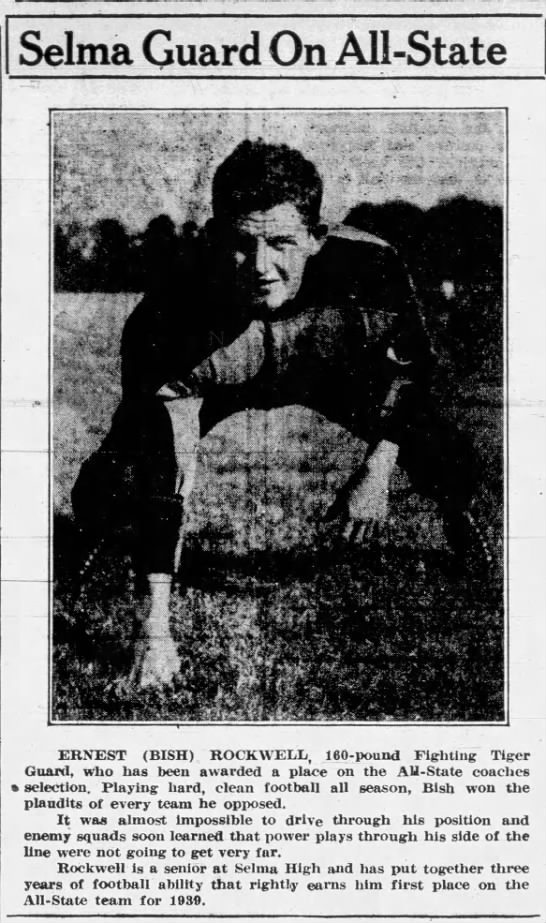
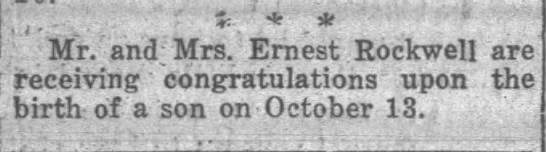
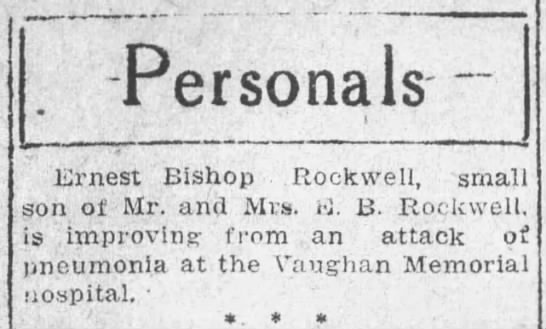
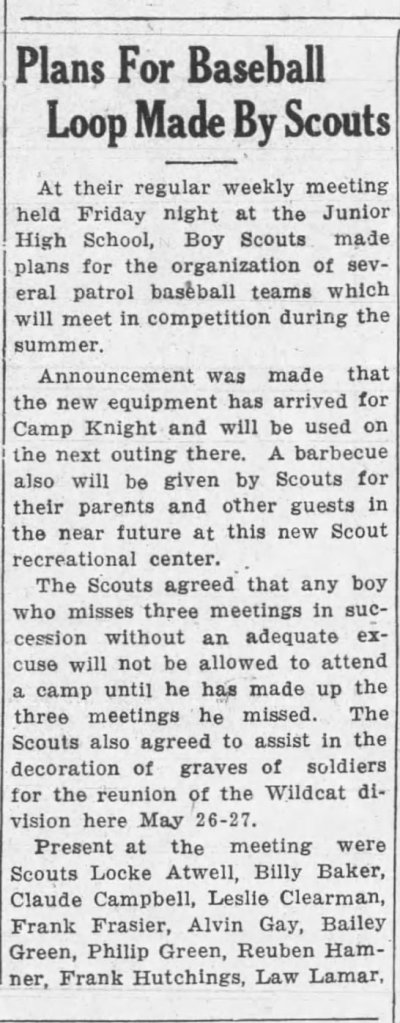
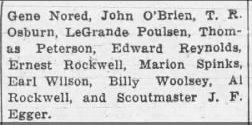
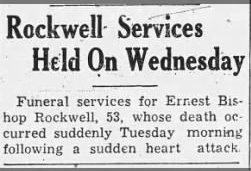
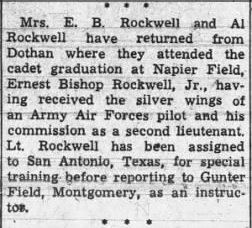
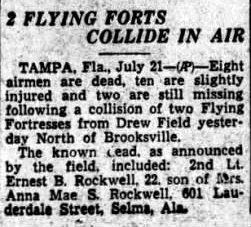
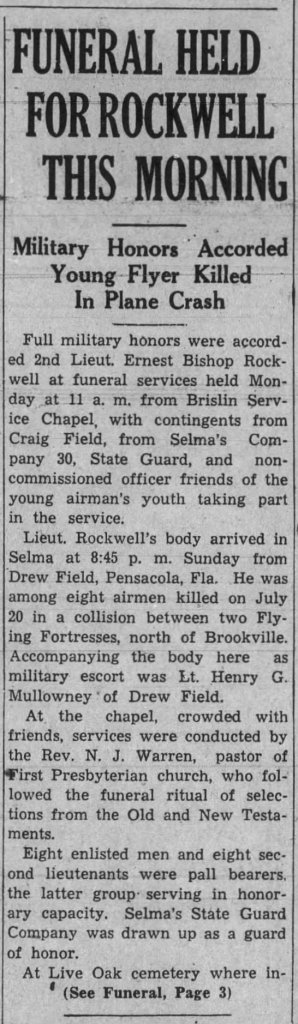
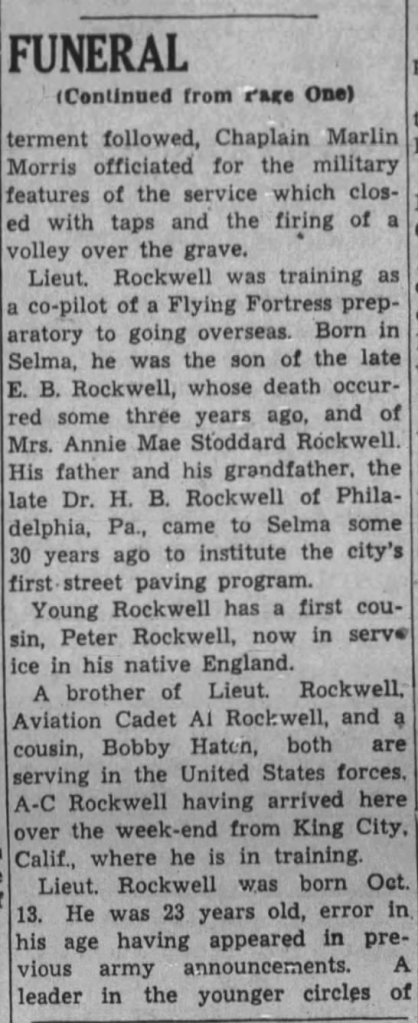
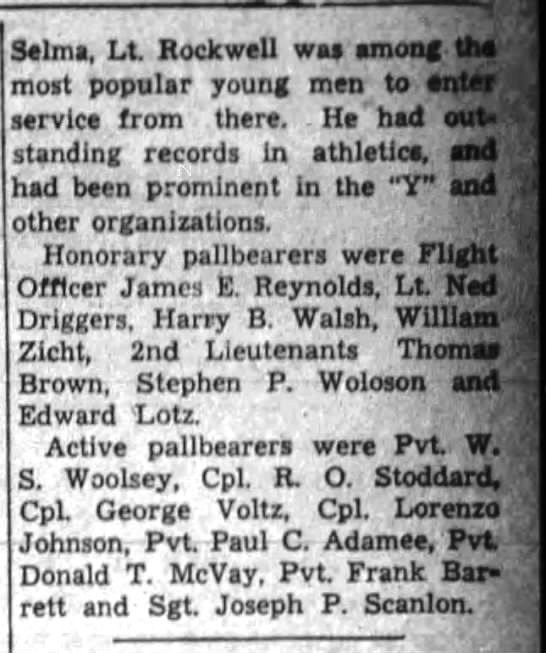
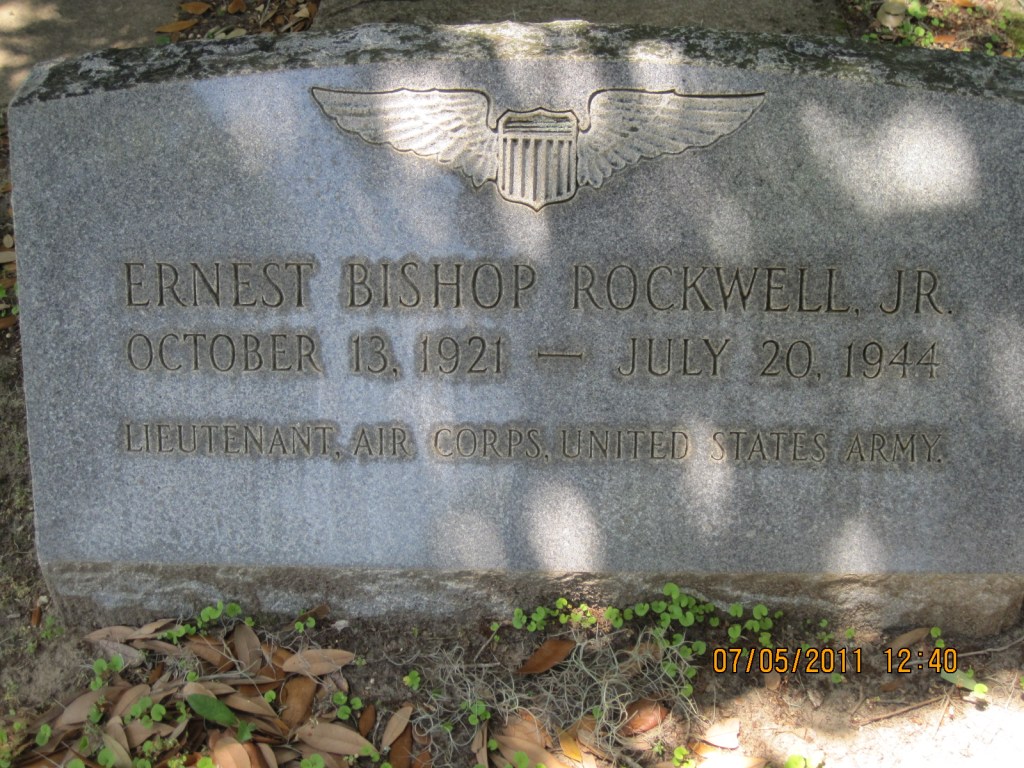
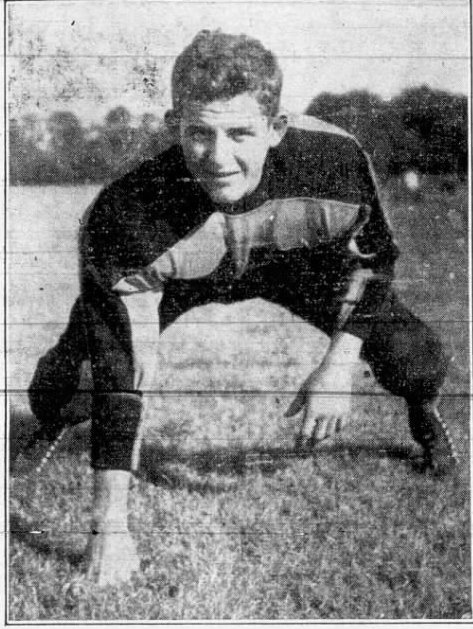
I put together this collage of archived newspaper clippings on Lt. Ernest Bishop Rockwell Jr. of Selma, Alabama, for Doug Buster and his organization: Cemetery Preservation Group Incorporated.
The collection of articles is designed to show the ease in reconstructing a person’s life even if you don’t like to write.
I only subscribed to newspapers.com this past year finding it’s an invaluable tool for composing historical articles and stories. If the cost of a subscription seems too high, perhaps have your church or local library open an account.
October 13, 1921. “The Selma Times-Journal”. The young boy was named after dad.December 20, 1927. “The Selma Times-Journal”May 19, 1935. “The Selma Times-Journal”Ernest Rockwell Sr. (dad). September 24, 1941 “The Selma Times-Journal”.July 30, 1943. “The Selma Times-Journal”July 21, 1944. “The Decatur Daily” – Decatur, AlabamaJuly 24, 1944. “The Selma Times-Journal”Continued article from above.Continued article from above. Sadly, honorary pallbearer Lt. Ned Driggers also of Selma was killed in Normandy, France a little over a year after Lt. Rockwell’s death. Lt. Driggers is buried in a Normandy military cemetery.The beautiful home in Selma where the Rockwell family once lived. It’s easy to imagine young Ernest and friends scrimmaging in the front and back yards.Gravestone located at Live Oak Cemetery – Selma, Alabama – WWW.Findagrave.Com
I’d relegate such an angel to stand on the fireplace mantle rather than our coffee table. I think that’d be a mite too close to the uncovered bowl of M&M’s.
Earth Angel
Making
telephones out of string and tin cans was something my brother and I did as
kids. The crude instruments worked fine
as long as the twine was kept tight.
Jim was
quite clever in coming up with a more advanced system. He started collecting empty toilet paper and
paper towel rolls while having friends do the same. After several months of accumulation my
brother finally had enough cardboard tubes to begin taping them together.
In the
classic 1954 Walt Disney film, “20,000 Leagues
under the Sea”, Captain Nemo of the submarine Nautilus used tube phones to communicate
with various sections of his boat. Early
day submarines and ships used similar arrangements.
By splicing
the tubes together my brother created a 20-foot long communication device. Jim was proud of his accomplishment.
Before we had a chance to try things out mom shut the operation down. She deemed the tubes unsanitary, instructing him to chuck the disgusting things into a garbage can. That only temporarily slowed my brother down. Jim discovered that a length of garden hose replaced his beloved tubes just fine.
Oddly enough a prized gift given to mom by me was constructed from a TP tube. My teacher in 5th grade brought in a box of tubes along with paste, glitter, cloth, pipe cleaners, and other miscellaneous items.
It was near Christmas and Mrs. Drake had students use the components to create special earth angels. The tubes became torsos or bodies. There’s no telling where Mrs. Drake got hers? Back then kids didn’t care. They probably still don’t!
The earth angel I made for mom didn’t last long as it was quickly destroyed by our boxer dog, “Jet”. I suppose he was attracted to the odor. The angel contained gobs of paste which gave it a sweet tantalizing aroma.
The other day I was browsing through Hobby Lobby when I spotted a clear plastic bag full of cardboard tubes. The bag label had one of those yellow recycle logos on it.
I’m not sure if they were the real deal; size and shape was exactly the same. I know all kinds of paper items are recycled these days, so perhaps these tubes did at one time hold sheets of Charmin or Angel Soft. If that was the case there’s no telling where they’d been. My mind went numb thinking of all the bizarre possibilities.
If one of my grandchildren wants to make me an earth angel I’d be tickled to death. Hopefully the tube used to construct such comes from their home. If it hails from a bag of tubes purchased at Hobby Lobby I’ll still accept the gift of course. What loving grandparent wouldn’t?
I would relegate my angel to stand on the fireplace mantle rather than our coffee table. I think that’d be a mite too close to the open bowl of M&M’s.
I like to believe that father and daughter have been together now for close to 60 years in Heaven.
Our next door neighbor in Selma, Alabama, Lt. Richard Neal Herndon, was killed in a T-33 training accident on September 19, 1959 close to where we lived. He was an instructor pilot at Craig Air Force Base. Herndon’s student, Lt. Donald B. Wilcox, also perished.
Mrs. Herndon (Mary) was my babysitter back then while mom worked at Vaughan Hospital. I believe she made the transition to New Vaughan Memorial Hospital as well. My family lived in Jones Trailer Park at the time.
Lt. Herndon (Dick) always took time to talk to my brother and me. He even fixed a flat on Jim’s bicycle. While dad was away in Korea we kind of adopted him. He was our hero in being a jet pilot. After the accident I never saw Mary Herndon again. I still remember a wreath hanging on the Herndon’s small trailer door.
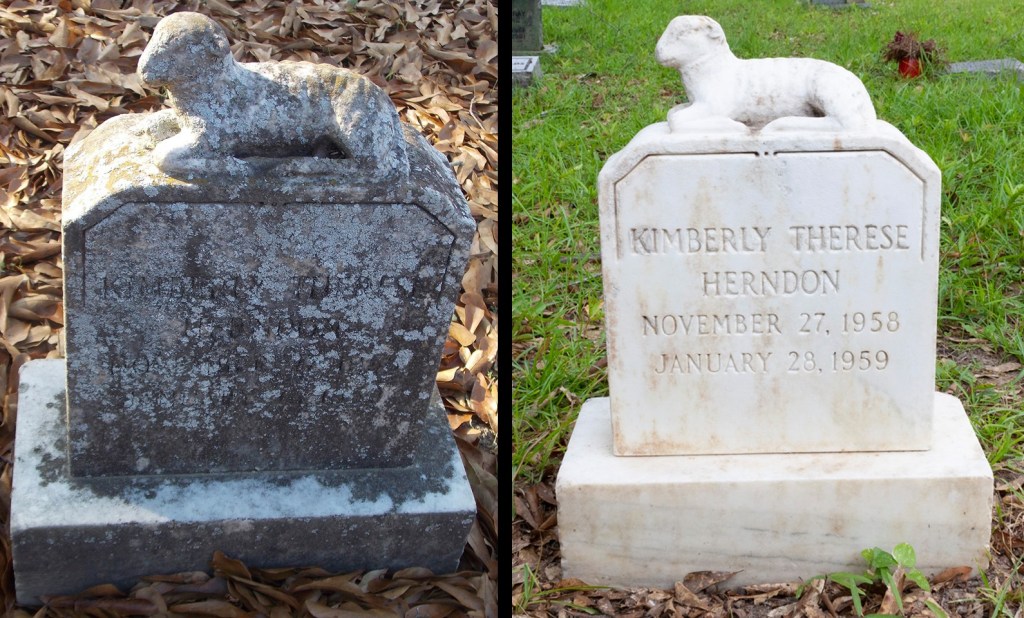
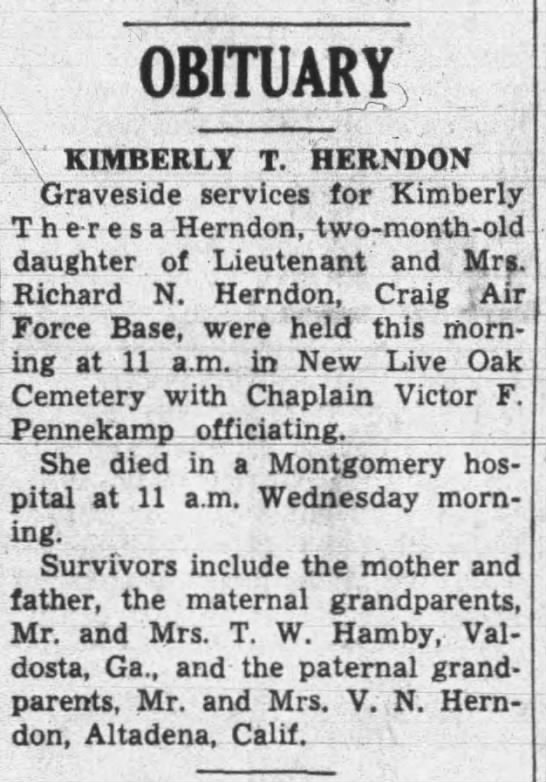
I didn’t find out until much later that Richard Herndon and his wife lost a newly born daughter on January 28, 1959. The little girl, Kimberly Therese Herndon, was only two months old. She’s buried at New Live Oak Cemetery in Selma. Mary Herndon lost a husband and child in eight months.
Kimberly Therese Herndon’s gravestone was nearly undistinguishable from algae and grime. Thanks to the efforts of Doug Buster and his Cemetery Preservation Group, the small white monument was cleaned and looks as it did 60 years ago.
Kimberly’s dad, Lt. Richard Herndon, is buried some 2,038 miles away at Forest Lawn Memorial Park in Glendale, California.
I like to believe that father and daughter have been together now for close to 60 years in Heaven.
Obituary from the January 29, 1959 – “The Selma Times-Journal”
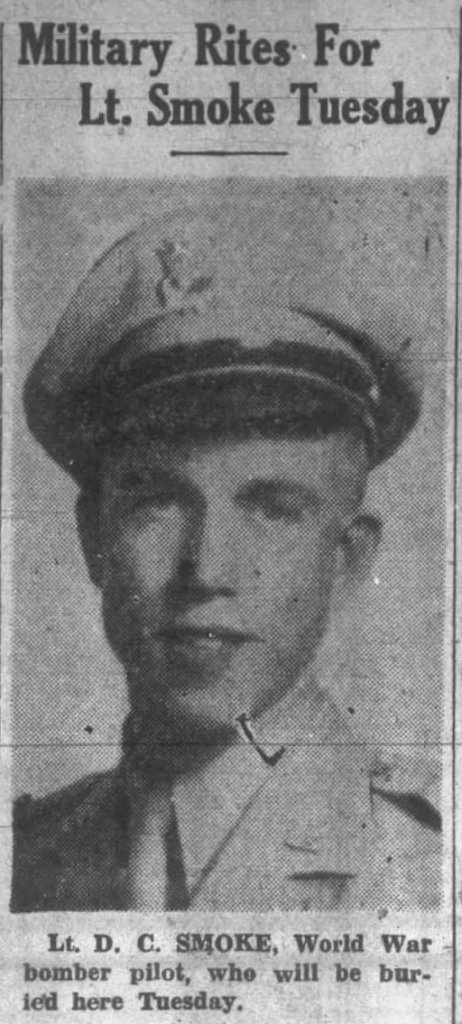
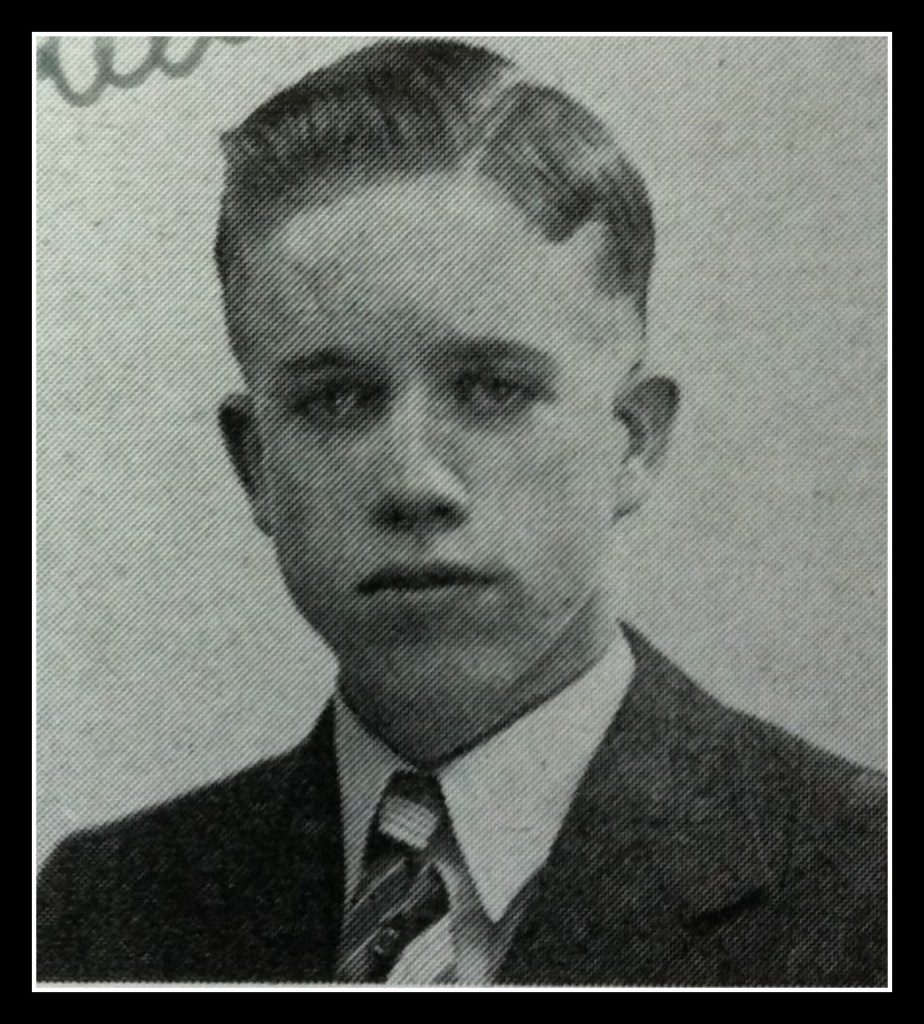
Daniel Collier Smoke Jr. was considered the class poet at A.G. Parrish High School in 1941. A poem he composed that senior year contains seemingly spirtual premonition.
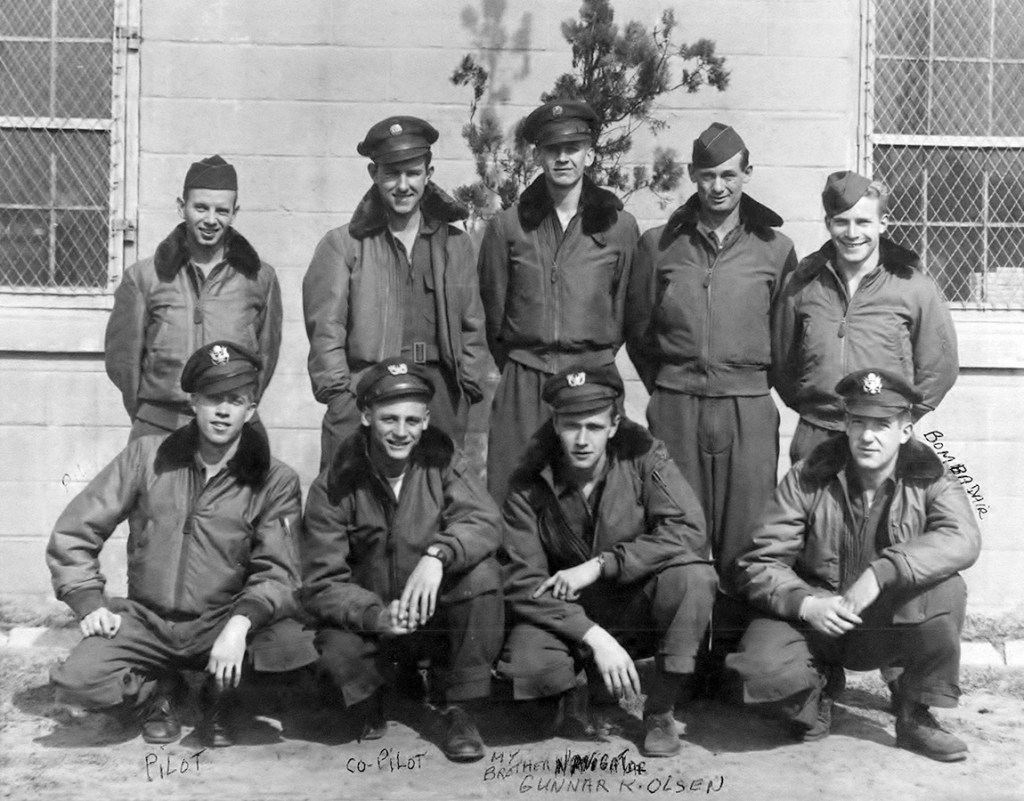
Front row left to right: 2nd Lt. Daniel C. Smoke Jr. (pilot), Flight Officer George Pendarvis (co-pilot), Flight Officer Gunnar Olsen, 2nd Lt. John Strong. Back row left to right: Sergeant John White Jr., Sergeant Harold Stone, Sergeant Richard Burres, Sergeant Elmer Koepsel, Sergeant David Sala.
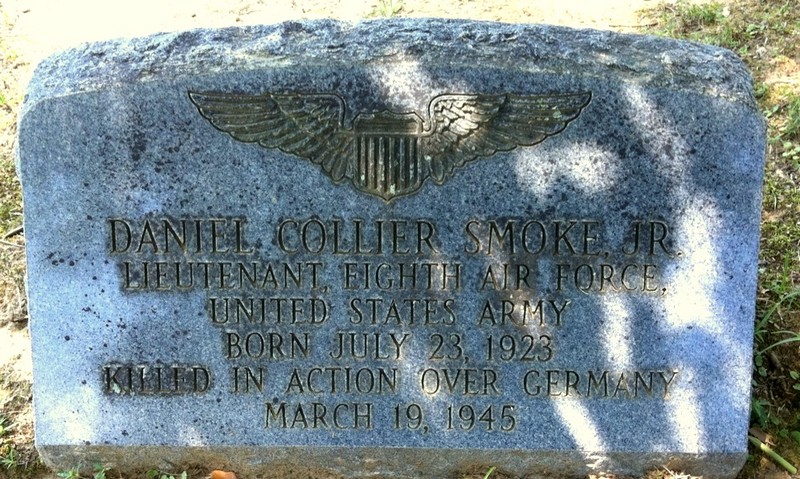
Daniel Collier (D.C.) Smoke Jr. was born in Selma, Alabama on July 23, 1923. He lived with his family on Rural Route 2 – Old Orrville Road. Daniel had an older brother, Joe, and a sister, Georgia Angelyn.
The young man attended local Selma public schools graduating from A.G. Parrish High in 1941.
In 1942, he enrolled in Alabama Polytechnic Institute in Auburn majoring in aeronautical engineering. He was one of the prestigious school’s brightest students. After two years of study he left and enlisted in the Army Air Corp for flight instruction. Assigned to bases in Biloxi, Mississippi and Savannah, Georgia, Lt. Smoke was trained in the operation of multi-engine aircraft.
On November 23, 1944, before leaving for Europe, Lt. Smoke married his sweetheart, Nancy Lewis, of Citronelle, Alabama. The couple’s wedding announcement in the Selma Times-Journal portrayed it as a gala affair.
Lt. Smoke departed the United States on February 18, 1945 as command pilot on a B-17 Flying Fortress. The Boeing aircraft were called that, because of their ability to defend with 50-caliber guns mounted throughout the fuselage.
A letter sent to his parents and wife mentioned that plane and crew had safely landed in England. The newly crowned pilot indicated that it’d been a beautiful trip.
Several weeks’ later tragic word was received that on March 19, 1945, Lt. Daniel Smoke Jr. was killed in an airplane crash along with eight others. This was only the second mission for Lt. Smoke and his crew. His B-17 nicknamed “Flying Chapel” mysteriously collided with another plane on a flight to their target. The crew of that B-17 survived after parachuting from their damaged craft. Turbulence or propwash were some of the possible factors mentioned for the planes coming together.
Lieutenant Smoke left behind a grieving widow. The young couple had been married for less than four months. On a bizarre twist of fate, Georgia Angelyn, Daniel’s sister tragically passed away from illness 14 months previous to his death.
The airman was initially buried in France before his body was exhumed in 1948 and shipped to Selma. His funeral was conducted with full military honors. Daniel Smoke Jr. is buried in New Live Oak Cemetery along with his father, mother, sister, and brother.
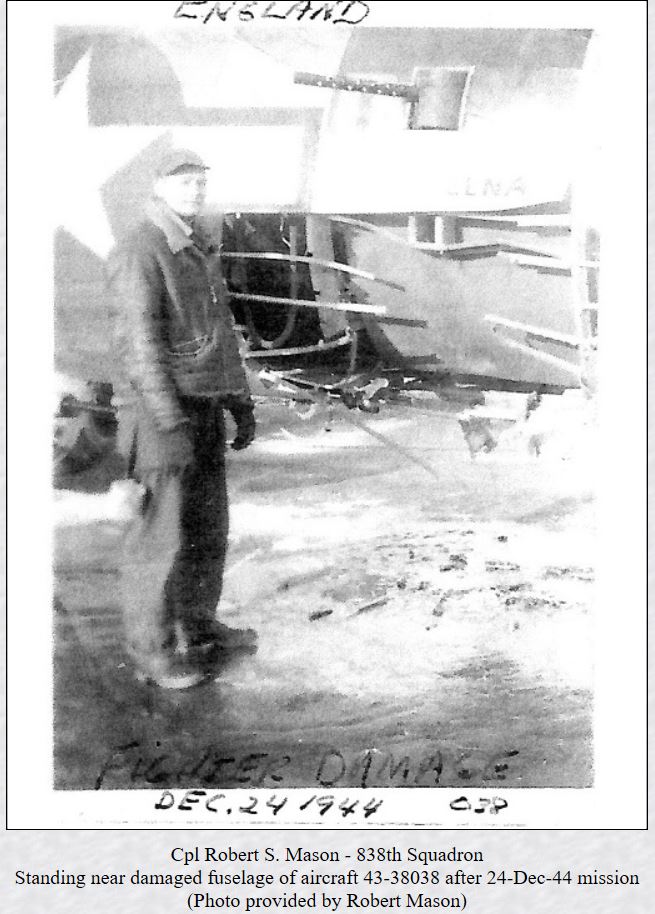
Ironically, the B-17 that Lt. Smoke was piloting that day had been in several serious accidents previous to his taking command. On December 24, 1944 it was extensively damaged from German fighter planes strafing the tail section.
The airplane (serial number 43-38038) received its “Flying Chapel” namesake by former crew members. It seemingly limped home after each mission only through the power of prayer.
This battered Flying Fortress had four complete wing replacements during its short life span. Like many such airplanes during WWII, it was quickly repaired then put back into service. Just how thorough some of those quickie repairs were finalized will never be known.
A black & white photograph shows a side of the aircraft literally blown apart. Sections of aluminum fuselage is missing. Lt. Smoke’s B-17 was structurally compromised without question.
Those killed in the crash along with 2nd Lt. Daniel Smoke were:
Flight Officer George Pendarvis
Flight Officer Gunnar Olsen
2nd Lt. John Strong
Sergeant John White Jr.
Sergeant Harold Stone
Sergeant Richard Burres
Sergeant Elmer Koepsel
Sergeant David Sala
On a parting note, Daniel Collier Smoke Jr. was considered the class poet at A.G. Parrish High School in 1941. A poem he composed that senior year contains seemingly spirtual premonition:
“When the last bell rings, at the close of each school day, we separate from our comrades, and homeward wind our way. The days are flying swiftly; yes, time still marches on: and before we have time to stop and think, our life is half-way gone.”
Daniel Smoke Jr. and his family were devout members of First Christian Church in Selma.
* After the accident Lt. Smoke was posthumously bestowed the rank of Captain.
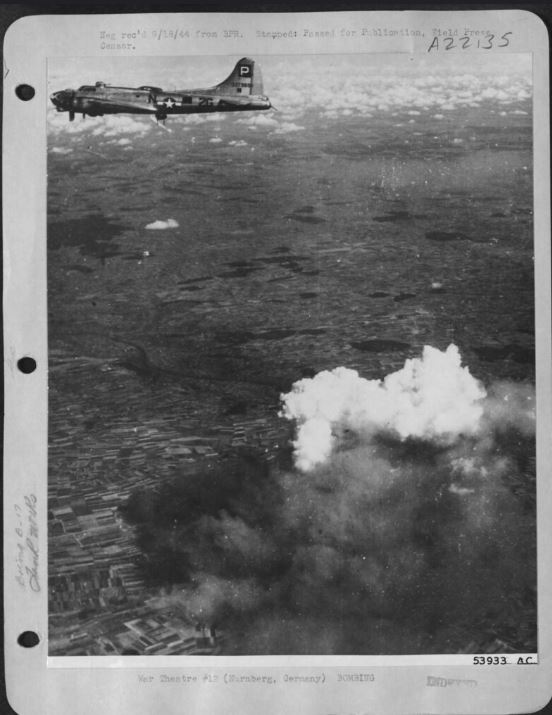
This photo shows “Beverly Jean” (43-37969). The other B-17 that crashed.From an article in the October 24, 1948 “Selma Times-Journal” Grave marker in New Live Oak Cemetery – Selma, AlabamaHigh school photograph.















 I like to write junk...