Fire Island Refugees

I was intrigued by a place called Fire Island. To me it sounded like some mysterious location from a pirate movie.

Fire Island Air Force Station – Fire Island, Alaska (circa 1963)

In my younger days I did my share of stupid things like most adolescent boys. Some stunts I’ll admit to while others will remain secret.

Slithering like a snake through a culvert underneath Muldoon Road in Anchorage, Alaska being one bonehead move. I wasn’t the first or last kid to do so. Several of my friends completed the claustrophobic mission with no problem.

Looking back some 54 years later, I think Jeff Cloud made the journey before anyone. He generally took the lead on attempting dangerous things. Muldoon Road during that time was two-lanes. This particular culvert was near 30-feet in length.

“Piece of cake!”, boasted one pal after exiting the tube.

Several years later I heard tale of another kid trying the stunt and getting stuck. Only through assistance of the Anchorage Fire Department was he safely extracted. After that incident metal grates were placed on both ends to dissuade juvenile foolishness. When Muldoon Road was widened to four-lanes the lone culvert was removed.

Fireworks in Anchorage were available at several makeshift stands. My brother and I lived less than two blocks from one of the largest dealers. It was there that we purchased M-80 firecrackers for a quarter a piece. An M-80 is oftentimes equated to having the power of a quarter-stick of dynamite. I believe the comparison is overly exaggerated. They were powerful enough to take fingers off.

Many kids including myself found M-80’s the perfect propellant for homemade mortars. I’d take a piece of pipe, then hammer a good portion of it into the ground. A lit M-80 would be dropped in the open end with a round rock to follow. With a loud explosion the projectile would go flying completely out of sight. I always pointed my mortar into the woods so not to hit anyone. Because of misuse including serious injuries, M-80’s were eventually banned for sale throughout the country.

Going back to my first year in Anchorage (1966) I was intrigued by a place called Fire Island. To me it sounded like some mysterious location from a pirate movie. The small clump of ground rose out of Cook Inlet approximately 3 ½ miles west of the city. It was originally called Nutul’l’iy by Dena’ina Indians. They had a village there for many years there until an epidemic forced all residents to leave.

In 1794, Captain Cook and his band of explorers renamed it Currant Island, and then Turnagain Island. The Russians changed things to Mushuklhi Island in 1847. That namesake lasted until the U.S. began calling it Fire Island in 1895. The seemingly sinister title seems to have stuck.

During WWII, soldiers were stationed on the island to prevent Japanese submarine attacks on Anchorage. The military had a facility called Fire Island Air Force Station there from 1951 – 1969. During that time the grounds were off limits to civilians unless they had proper security clearance.

Rumors circulated throughout town about WWII Jeeps abandoned on Fire Island along with other wartime equipment. I desperately wanted to search for that treasure. My dream eventually became somewhat of a reality.

In the late 1960’s, I walked to Fire Island with my brother Jim and good friend, Rod Sanborn . We were told the feat was possible by an old timer as long as you moved quickly. It had to be done at the lowest possible tide at a breakneck pace. Even so, this person told us it was a dangerous trek if we didn’t time things just right.

Many folks have biked or ridden to Fire Island since then with no problem. A few unfortunates have drowned. Most likely those successful ones were smart enough to check tide schedules before starting. We didn’t do such, electing to use a roll the dice method instead. It was a spur of the moment decision for us to even go.

We had no problem hiking to the island. On the return leg the tide quickly came in drenching us with freezing water. We were fortunate to survive. None of us realized at that time the seriousness of our blunder.

I was never satisfied in having touched Fire Island’s shore and then promptly leaving. A burning desire had me still wanting to explore the place. That opportunity came unexpectedly 29 years later.

In 1998, Doug Harvey, Jeff Thimsen, and I decided to ride personal watercraft (PWC) from the Port of Anchorage to Kenai. Our plan was to spend the night on a Kenai beach and then return home the following day.

We made it just beyond Fire Island when gale force winds started blowing out of Bear Valley. We were hit with gusts 70 miles per hour and higher. At the same time, a powerful tide came roaring in with incredible fury. The waters of Cook Inlet resembled a giant muddy vortex. It was akin to flushed water inside a humongous toilet.

Deciding it best to turn around, we elected to hit the shore of Fire Island first. It appeared my long awaited exploration of the infamous locale was about to happen.

We secured our craft and quickly found a place to eat lunch. Doug saw two people farther down the beach. It looked as though they were salmon fishing with nets. The native couple paid no attention to our being there.

I wanted to search the mainland for artifacts while Jeff said I’d be wasting my time. He told me the Air Force had recently cleaned up all of the wartime junk. That news threw a blanket on my enthusiasm.

Fire Island is mostly owned by Cook Inlet Regional Corporation, while the remainder is government property. Permission is supposed to be obtained before going ashore. The last thing any of us wanted was to be arrested for trespassing. We basically ended up there by accident figuring property owners would understand.

Taking ample time to check out the surroundings, it looked no different than those ugly beaches surrounding Anchorage. Flat stones, mud, and gravel comprised the majority of shoreline. A fair amount of plastic bottles and garbage was visible.

Wanting some type of souvenir to remember the place by I quickly searched for a unique piece of driftwood. Finding none, I spotted a couple of round stones much different than all the rest. They stood out amongst flat rocks like black flies on a pumpkin pie. I carefully placed the treasure into my backpack.

The two round stones in the middle are my Fire Island refugees.

*******************************************************

It’s been 21 years since I last touched foot there. Whenever I hear the song, “Fire Lake”, by Bob Seger, I think of Fire Island. Seger’s timeless lyrics make mention of bronzed beauties lyin’ in the sun. I seriously doubt he was referring to stones.

My Fire Island refugees have turned a nice golden brown after relocating them to sunny Arizona. Since 2010, they’ve found refuge in my backyard along with other mineralized escapees from various states.

I tend to believe the stones were lobbed to Fire Island via an M-80 powered mortar. Some ingenious kid residing on the west side of town intentionally sent them that direction. In my twisted way of seeing things, there’s no other way it could’ve happened!

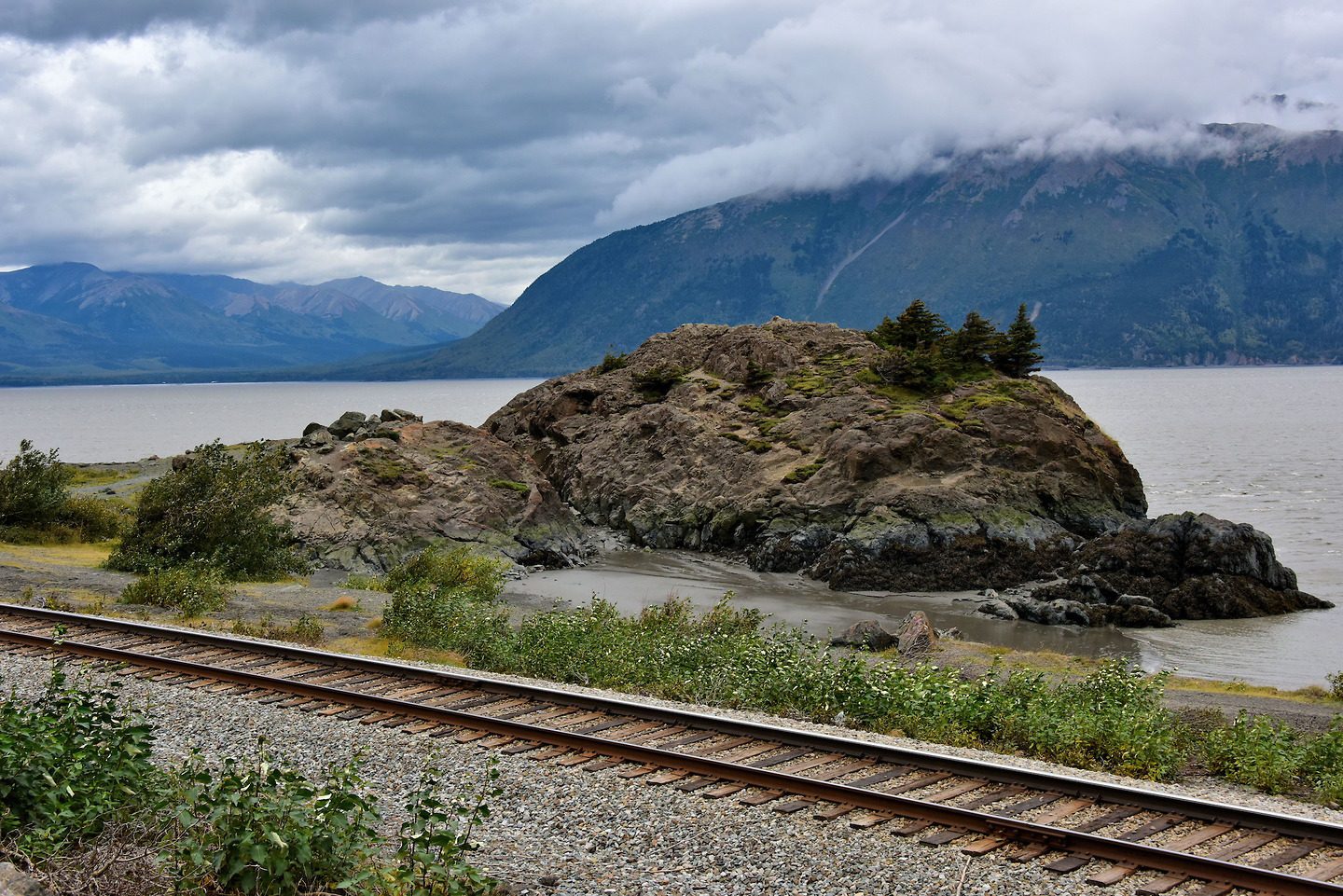
Fire Island as it looked before 11 wind generators were installed.

ASK JIM

Because he’s no longer able to work, Jim Witherspoon turned to the internet for assistance.

Jim Witherspoon is an unemployed rotary telephone repairman living in El Dorado, Kansas. An attempt at opening a convenience store in another town set him back financially, as well as physically. Because he’s no longer able to work, Jim turned to the internet for assistance.

Witherspoon discovered opinions galore. He had advice coming in from all walks of life. A farmer in Beijing, China recommended that Jim move to another country where rotary phones are still in use. That was an impossibility at this time.

Dot Mathers told Jim he should consider plastics as that’s where the world was headed. She urged him to purchase stock in her company, Plastics Unlimited. Jim deemed that offer as suspicious.

A tip that Jim thought highly of came from a fellow in Juarez, Mexico. Kim Sing told him that a person could make millions from home as an internet advice expert. For $99.00 he’d send out instructions on how to organize such a company.

Realizing that he couldn’t move from El Dorado just yet, Witherspoon coughed up the funds and mailed them off. He’s thankful that he did! Today, Jim operates a successful internet business called, “Ask Jim”. The small, one-employee company pays big dividends.

For a modest fee of $5.00, Ask Jim will give advice in all areas of life. He hands out financial advice, medical, interpersonal relationship, corporate, religious, and his specialty, legal. Jim Witherspoon pretty much covers all bases. Mr. Witherspoon will never refuse to give advice if money is sent.

Enclosed are some actual questions along with Jim’s replies:

Peggy Rainwater of Clearwater, Florida writes“I’ve been going with a fellow for two years but don’t know how to tell him it’s over. He’s a real sweet guy and I hate to break his heart. What would you suggest?”

Ask Jim“That’s a good question Peggy. Wish I had an easy answer. I suppose the simplest way is wait until he’s not home. Leave a message on the man’s telephone recorder or better yet text him. If you don’t mind could you please send me your picture?”

Bobbie Valhi of Pascagoula, Mississippi writes “Is there a proper way to ask my boss for a raise?”

Ask Jim“Do so in a threatening manner. Tell the person unless he coughs up more money you’ll begin a work slowdown. I’ve heard folks say that either works or it doesn’t. Let me know the results.”

Chance Smith of Baker, Utah writes“I have a serious medical condition and friends say I should seek a homeopathic doctor. Do you agree with them?”

Ask Jim“Homeopathic doctors are much like voodoo doctors. Personally I wouldn’t go that route, yet I see no reason why you can’t. Just make sure you have all your personal things in order!”

Howie Keller of Ruby, Texas writes“My car shakes like crazy whenever I hit 65. It feels like a wheel’s about to fall off. Any ideas on what could be wrong?”

Ask Jim“I’m no mechanic Howie. My suggestion is slow down. You’ll get much better fuel mileage. If a wheel hasn’t fallen off by now it probably won’t.”

Veronica Jacobs of Arlington, Virginia writes“I have ten-thousand-dollars that I’d like to invest. What do you recommend?”

Ask Jim“Excellent question Veronica – Ask Jim LLC is the safest place to put your money. I promise returns better than any on Wall Street. You’ll find an address to mail your check on my website.”

Peggy Lipton of Grover, New York writes“I’m not sure who to vote for in the next presidential election. What candidate do you prefer?”

Ask Jim“Peggy, I generally don’t make political recommendations, but since you paid $5.00 I’ll make an exception. A friend says to always vote for the tallest candidate and you won’t go wrong. I’d recommend you follow suit.”

Harley Downs of Tupelo, Mississippi writes – “I’m thinking about taking an out of country vacation. Do you have any countries to recommend?”

Ask Jim“Personally I’ve never been on vacation and at this point probably never will. If I had to pick a country, Persia sounds great. I hear extradition from there is non-existent.”

If you’d like to know how to become financially independent like Jim by owning your own IAC (internet advice company), send a check for $99.99 along with a stamped, self-addressed envelope to:

Jim Witherspoon

C/O El Dorado Correctional Facility

P.O. Box 311

El Dorado, Kansas 67042

El Dorado, Kansas

Lord Trapper – Bill Devine

William “Bill” Devine

My family was blessed living next door to Anchorage resident Bill Devine for 35 years.  Both our homes were located within Elm-Rich Subdivision on the north side of Muldoon.  Bill joked about this name all the time.  He’d say there are no elm trees, and most everyone’s poor in this ‘hood.   Of course he knew Elm-Rich stood for joint military bases ‘Elmendorf – Fort Richardson’.

Bill was an exceptional artist specializing in Alaska related topics; dog mushing at the top of the list.  Most folks know that artists are ‘different thinkers’ with Bill being no exception.  I say that with upmost respect, because my friend’s insight and twisted humor on various topics kept us in stitches.

During the Anchorage Fur Rendezvous sometime in the 1980’s, Bill was crowned “Lord Trapper”. He had his beard trimmed to perfection and handlebar moustache waxed just right for the competition. He easily beat out the other contestants. From that point on the name stuck. People called him “Lord Trapper” up until the end.

There was one gentleman in our neighborhood going beyond the call of duty in keeping his lawn prim & proper.  Bill referred to him as “The Inspector”.  This fellow would get down on hands and knees holding what appeared to be tweezers.  The perfectionist would individually pluck dandelions from his perfectly manicured grass.  Early in the morning he’d walk the block inspecting our yards.

Of course Bill and I had more important things to do besides tend to lawns.  Neighbor Bill said one summer morning he looked out his bedroom window seeing the man, hands on hips, shaking his head profusely.  When Bill glanced down at his grass there were yellow pedaled dandelions everywhere.  The wind was blowing that day in a northerly direction towards this person’s house.  The puffy white seedlings were beginning to take flight making their 50-yard journey to greener pastures.

“That’ll give him something to do!”, Bill quipped.

Sgt. William “Bill” Devine was a true American patriot.  He served in the U.S. Air Force in both the Korean and Vietnam War.  I recall one poignant story involving Korea.  Bill was erroneously reported as killed in action (KIA).  That was because he was the only survivor out of his squadron after being overrun by communist troops.  All men were reported lost.  It was several months later when the Devine family found he was alive.  Bill said the news hit his mother especially hard, most likely taking a few years off her life.  His parents kept this tragic letter hidden away until their deaths.  Bill’s sister now has it.

Bill talked less of his time in Vietnam.  He briefly mentioned being part of a clandestine Cambodia mission.  He parachuted in with no personal identification, assigned an M-1 folding stock carbine minus serial number.  Bill never explained a reason for going there only saying he was fortunate to come back alive.  Sgt. Devine served with one other decorated Alaskan soldier during that time.  The late and great native leader Percy Blatchford was in one of Bill’s units.  Bill told me Percy was the toughest and strongest man he’d ever met.  The two war veterans remained good pals long after their military careers ended.

It was in the Air Force where Bill’s art career blossomed.  Even though he’d shown artful ability at an early age, his commanding officer took note of the soldier’s exquisite skill in writing; calligraphy for the most part.  From that point on Bill created special letters or bulletins for the muckety-mucks as Bill liked to call officers.  

Our neighbor was a good hearted and generous person.  He gave each of our children a vintage gold coin each Christmas.  This was when the precious metal was hovering around $300.00 an ounce.  Bill candidly told Gunnar and Miranda,

“Hang on to ‘em because someday they’ll be worth millions.”

Bill had considerable knowledge regarding valuable coins, stamps, and precious metals. He told me whenever he visited a coin or stamp shop, he was like a kid in a candy store.  Over the years I observed many people take advantage of my friend.  One incident stands out in particular.

Bill designed impressive patriotic eagles for a well-known Anchorage company.  A businessman from California saw his work, claiming he could make Bill a fortune by placing the art on clothing.  This man had connections to a huge firm selling motif apparel to Wal-Mart.  Plans were made for Bill to fly to Los Angeles and present his designs to corporate types.

Bill made the journey taking along several pieces.  After the meeting he was informed they’d let him know.  He left his artwork behind for executives to scrutinize.  Several months rolled by with him hearing nothing.  One day as Bill strolled through Wal-Mart something caught his eye.  Walking over to a rack of clothing there perched on a cotton tee was one of his eagles.  Looking through the rack he spotted several more of his designs.

“I was robbed!”, he sadly told my wife Joleen.

Asking what he did after learning such Bill shrugged his shoulders and replied,

 “What could I do? It would’ve taken thousands of dollars to fight those guys!”

He went on explaining how he quickly got over the blow.

“I figured if my work was that good, it must’a been worth stealing!”

That’s how ‘Neighbor Bill’ looked at things.  He knew in the end that nobody takes worldly things with them.  Had Bill derived considerable wealth from the clothing deal most likely he would’ve given it away!

Bill was especially known for his dog mushing ties. He was best friends to legendary Joe Redington Sr. and wife Vi.  The Redington’s would sometimes spend nights with Bill whenever they were in town. He had many dog mushing celebrities’ stop by the Fern Lane house.  It wasn’t unusual to spot Susan Butcher at his door; her truck of howling huskies parked out front. 

George Attla, Dr. Roland Lombard, and other notables dropped in to have coffee.  Bill designed many Iditarod trophies throughout the years.  The much celebrated sled dog monument on 4th Avenue has Bill Devine’s name on it.  Another one of his works is the stately Joe Redington Sr. memorial in Knik.

Joe Redington Sr. monument designed by Bill Devine
Bill Devine inspired statue on 4th Avenue. Contrary to what some believe, Bill used the likeness of his beloved dog, “Knik”, in the design of this monument. Joe and Vi Redington gave Bill “Knik” as a puppy.

As the years slid by Bill’s health took a turn for the worse.  A good pal of his and mine, Dale Myers, stepped in to help.  Joleen and I did what we could by shopping for groceries or bringing over food.  When it became obvious Bill was not going to make it, Dale was appointed executor of his estate.  About a year later Bill sadly passed away.  Elm-Rich Subdivision was no longer the same.  With my mom also gone Joleen and I decided it was time to move.

We think often of Bill and all the kind things he did. ‘Dollars for Dogs’   was a recipient of Bill’s financial support.  Many veterans groups either received monetary donations or his valuable time seeking them.   The Korean War Veterans Memorial in Washington D.C.  was a favorite.  Almost every worthwhile charity in town garnered some type of assistance.  Bill was a behind the scenes lobbyist, making sure our son Gunnar received appointment to the Air Force Academy.

Bill wanted a portion of his estate proceeds going to the Iditarod Sled Dog Committee.  At a special meeting Dale Myers presented them a check for $124,000.00.  Several days later Dale handed Joleen and I a substantial amount of money.

“Bill wanted you guys to have it!”

It was around 1996 when I nominated Bill for ‘Neighbor of the Year’ award.  When he was announced winner I wasn’t surprised.  The man was quite humble saying others were more deserving.  I told him if there were others, I didn’t know their names.

William David Devine left this world on January 16, 2007.  If dandelions grow on the other side of life’s fence, I assume Bill’s picked a few.  I’m sure he’s put their seeds to humorous use.

On our office wall hangs a marble plaque.  Bill Devine’s signature is etched on bottom along with the date 1982.  Artwork portrays realistic portrait of a bearded miner bent over a stream. The grizzled character is holding a gold pan and nugget.  Very few people know this:  Bill penned that scene in his own image.  My neighbor claimed had he not been an artist, he would’ve become a gold miner.

“There’s gotta be more money in it!”

I can only imagine with Heaven’s streets covered in the precious metal, Bill Devine’s staked out several claims!

Batman & Robin

“Suspicious of the characters, Murray trailed both men back to a residence in Gattman, Mississippi, where he found signs of chickens recently handled.”

Sheriff Murray V. Smith on left. Deputy Sheriff Herschel C. Smith on right. Herschel is standing beside the wrecked Ford getaway car that Otis Dickie and Charlie Owens crashed. (Circa 1937)

When one thinks of a dynamic duo where crime fighting is concerned, Batman and Robin immediately come to mind. Many years ago, Lamar County, Alabama had their own legendary crusaders. Unlike the fictional heroes protecting Gotham City, Sheriff Murray Virgil Smith and Deputy Sheriff Herschel C. Smith were the real deal.

I decided to look into some of their more illustrious cases. There were plenty to choose from going through over 30 years of archived newspaper records.

Murray V. Smith began his law enforcement career it appears in 1923. Before that time he was in the military and most likely served in WWI.

Perhaps the most unusual case Sheriff Murray Smith solved was before sidekick Deputy Herschel came along. It involved of all things, stolen chickens.

A couple of  outsiders, Fred Felkins and Leonard Simpson, drove into Lamar County early one morning with near 200 of the birds in a truck. They attempted to peddle them to local farmers. The following excerpt is a word by word account taken from an October 1, 1930, The Lamar Democrat,

“Suspicious of the characters, Murray trailed both men back to a residence in Gattman, Mississippi, where he found signs of chickens recently handled.”

After a quick and through investigation it was discovered the chickens were stolen from six different farms in Caledonia, Mississippi. The chicken thieves eventually had their day in court.

Sheriff Smith, in January 1936, had to investigate a tragic hanging. A young girl of 18, Miss Laura Veal, was found by farmers hanging from a tree. With some believing that foul play was involved, Murray Smith, after investigating the scene sadly concluded that it was suicide. Over the years, Officer Smith along with his deputy had to look into several suicides in the county.

Murry’s younger nephew, Herschel Smith, started working alongside the veteran cop a few years later. During that time they flip flopped job titles a couple of times. The Lamar County sheriff position was voted for back then as it is today.

Archived newspaper accounts show Murray and Herschel Smith were well-respected officers. That explains them continuously being reelected.

On November 2, 1937, two strangers came wheeling into Vernon in a 1934 V-8 Ford Deluxe. This vehicle was akin to the one Bonnie and Clyde preferred in bank robberies because of its speed. For reasons unexplained, a fellow at the wheel lost control and crashed. Both him and his passenger were taken to a local Vernon clinic.

While Sheriff Murray Smith tended to them, Deputy Sheriff Herschel Smith poked around underneath the wrecked Ford’s seat. He located a suspicious amount of money.

Phone calls along with an investigation showed Otis Dickie and Charlie Owens had robbed The First National Bank in Huntland, Tennessee days earlier. Their fast getaway car was stolen in Russellville, Alabama. The on-the-run crooks were quickly tossed in jail, with news of their arrest spreading across the country. Both Lamar policemen were congratulated for their quick thinking.

Numerous moonshine operations in and around Lamar County were broken up by the savvy cops during their long career. One raid in 1939 netted 2500 gallons of mash. That was enough to create 1200 gallons or more of booze. Officer’s Smith & Smith succeeded over the years in pouring thousands of gallons of illegal liquor down the drain.

There are several archived newspaper articles showing where the infamous law enforcement officers solved robberies and burglaries. They were a team to be reckoned with when crooks came to town.

Sheriff Murray V. Smith retired from law enforcement in 1947. On February 8, 1950, Murray was strolling along a sidewalk near the Bank of Vernon when he dropped dead of a heart attack. His funeral was reported to have been attended by many.

Sheriff Herschel V. Smith continued in his capacity as Lamar County Sheriff. On August 8, 1951, the sheriff was helping Winston County lawmen search for a man named Taylor Peoples. Taylor was know as a violent person and had critically shot two Mississippi officers. One of them, Sheriff Clifford Peak, eventually died. Taylor People’s own family feared for their lives.

As Sheriff Smith walked through the brush, a shotgun blast rang out. Taylor Peoples had been hiding behind a bush. Herschel was hit in the chest and face by pellets. Even though unable to clearly see, Smith fired several shots back at the assailant from his service revolver. Taylor Peoples immediately dropped his shotgun and surrendered.

It seems that unfortunate incident ended Sheriff Herschel V. Smith’s career. A newspaper article right afterwards mentioned he might possibly lose an eye. A newspaper photo taken in a hospital bed showed Smith considerably bandaged up.

I found nothing about Herschel continuing to be in law enforcement after that incident.

Sheriff Herschel C. Smith died June 22, 1969. He’s buried at the Friendship Baptist Church Cemetery in Sulligent.

Batman and Robin Smith are gone, but other heroes have come along.

God bless all Lamar County Police officers and personnel continuing to fill Murray and Herschel’s shoes!

Sheriff Murray Virgil Smith.
"God bless those in law enforcement!"
Sheriff Herschel Smith’s badge. Sadly, it was sold on eBay. Notice the pink tape over last name.

Remnants of War

“I hate to see myself die!”

War between the states ended four days later on April 9, 1865.

During the American Civil War, Selma and Vernon, Alabama had one thing in common. Both towns were locations of foundries, used in the manufacture of essential war material needed by Confederate troops.

Selma’s blast furnace and smelter sat along the Alabama River. It’s referred to in most publications as the Selma Ordinance and Naval Foundry. This was a large operation, producing cannons, cannon balls, ammunition, rifle components, and the like. The facility was destroyed by Union soldiers on April 5, 1865.

The Hale & Murdock iron furnace in Vernon was constructed in 1859. A much smaller plant than that in Selma, initially it produced plow parts, horse shoes, and other farm related equipment. In 1861, production shifted to manufacturing bullet molds and cast iron products designed to help the war effort.

Remarkably, Union troops did not discover the Hale & Murdock location like it did Selma’s, sparing it from destruction. The facility continued to operate four years after the Civil War ended until finally going bankrupt in 1870.

Both the Selma and Vernon foundries were responsible for making components that killed thousands of federal troops. The precise number of deaths those items are responsible for, will of course, never be known.

Some 23 years after Vernon’s Hale & Murdock smelter shut down, one more fatality was added to the list. This one wasn’t due to an act of war. Thomas Ballinger Moore’s death was the result of a freak accident.

Mr. Moore was a much-respected farmer in Lamar County. He had a wife and several children. On July 24, 1893, he was at the abandoned smelter salvaging bricks. Most likely they came from the kiln.

Evidently some of the heavy bricks had sunk into mud. The old foundry location is close to Yellow Creek which is prone to flooding. Digging a trench to retrieve his treasures, Moore was standing near six-feet in the hole when a bank of dirt collapsed on top of him.

One of Thomas’s young sons, along with another boy, rushed over to brush dirt away from his face. Mr. Moore was solidly encased up to his neck. The children ran for help.

It took several men to extract Thomas from his unintended grave. He was upbeat during the whole episode, telling rescuers,

“I hate to see myself die!”

When they finally got him out there was no noticeable external injuries. It appeared he’d be okay.

Unfortunately, serious internal damage had been done. Four days later the much loved man passed away.

As it always does, remnants of war claimed yet another, in Thomas Ballinger Moore!

Plaque dedicated 2002 in Vernon, Alabama.

New Phenomenon?

The car turned completely over and landed in middle of the creek.

It seems each week I pick up the latest copy of, The Lamar Democrat, the front page has a photo of either a wrecked car or truck, or one stuck in a ditch. Is this phenomenon something new to Lamar County? I did a bit of research uncovering the following article from a December 14, 1927 issue of the newspaper. Perhaps someone in Vernon still remembers this event?

                             ********************************

Car Overturns into Yellow Creek

“It was nothing less than a miracle!”

This was the genera icencus of opinion of those who visited the scene of the wrecked Ford car, which left the bridge and plunged into Yellow Creek at the Turner Water Mill just east of Vernon, on the Vernon-Fayette Road, Saturday night, carrying with it three passengers, a young lady and two men, who escaped with no injury except a ducking in the icy waters of Yellow Creek.

According to a statement of Mr. Knight, of Guin, owner of the wrecked car, he was driving at about twenty-five miles an hour and when he struck the bridge, which is in a bad condition, he lost control. The car turned completely over and landed in middle of the creek.

Assistance was secured and with the aid of W.L. Turner’s tractor the car was removed from the creek Saturday night.

                                *******************************

Judging by this article it appears people have been wrecking vehicles in Lamar County since day one. The two things puzzling me most about this story are,


“Exactly who took a ducking and what’s a genera icencus?”

Hey, I don’t make this stuff up!

Ultimate Sacrifice

It would be a fitting tribute to those five brave men!

Looking upward towards Crossman Peak crash site.

Honolulu, Hawaii has perhaps the world’s most remembered WWII memorial. Millions of people travel to Pearl Harbor each year to pay their respects. The U.S.S. Arizona is the cornerstone of that monument.

Lake Havasu City, Arizona has such a memorial, yet it’s unofficial, tiny in stature compared to the one on Oahu, and visitors annually trekking to the remote site most likely number in the hundreds; if that.

The location of our city’s memorial is known by very few, and most of those knowing the locale would prefer to keep it secret.

                                        *******************

On a stormy and overcast Saturday afternoon, August 11, 1945, five Army Air Corp personnel winged their way west towards Yuma, Arizona. They’d departed Las Vegas, Nevada on the final leg of a roundtrip combat training mission.

Just two days earlier the United States had successfully dropped a plutonium bomb nicknamed “Big Boy” on Nagasaki, Japan. Forty-eight hours previous to that a uranium laden bomb named “Little Boy” exploded over Hiroshima, killing thousands. After those horrific bombings WWII seemed to be winding down with the U.S. in total control.

Flight Officer Robert L. Laird from Laredo, Texas was pilot of the twin-engine B-25 Mitchell bomber that late summer day. The military identification number for his craft was 44-34201. Most likely, seeing that the war was coming to an end made the young officer happy, as it did the rest of his crew.

Robert Laird’s father, Colonel John Laird, was a distinguished military officer. Like any loving dad, the old man was probably elated in knowing his son might not see combat. Being a seasoned veteran he knew the dangers of such.

Flight Officer Juan S. Madero Jr. from Tucson, Arizona was co-pilot. His wife and two children remained in Tucson with Juan’s father, brother, and three sisters. Juan was a nationalized American citizen coming to this country from Mexico. A hazy newspaper photo shows Madero to be a striking and handsome young man in military uniform.

Juan was an all around athlete, becoming the starting catcher for the 1940 La Azteca semi-professional baseball team. Juan Madero was also an accomplished boxer. He’d taken a commission into the armed forces to help with the war effort.

Second Lt. William G. Winter and Second Lt. John R Winter were on the B-25 undergoing radar navigation training. They’d made history by becoming the first identical twins to be assigned to the same airplane in the Air Corp. The Winter brothers were from Towanda, Pennsylvania. They were star basketball players at Towanda High. Their dad, William Winter, fought in France during WWI.

PFC William F. Strange of Rockmart, Georgia completed the Yuma based crew. He was their radio operator. William “Bill” Strange had a wife back home in Rockmart. The small town in Polk County only had 3,700 citizens. PFC Strange was the only enlisted man on the crew.

Somewhere near the Yucca, Arizona Air Field around 6 PM, someone onboard the polished aluminum bomber, most likely Lt. Laird, radioed asking if anyone could hear him. Flight Officer Arnold Kast, in another B-25 identified by serial number, 44-86881, flying 20 miles south of Kingman acknowledged that he could.

“Roger, Out”, were Laird’s last words.

Several minutes went by before Flight Officer Kast unsuccessfully tried to regain contact with Laird. It was assumed by Kast that Lt. Laird was lost in the clouds and trying to get his bearings. Flying over the Mojave Mountains in stormy conditions even with instruments was risky.

B-25 Mitchell J model similar to the one Lt. Robert Laird was piloting.

When Lt. Laird’s airplane did not arrive in Yuma a search and rescue was initiated. The following day wreckage was located by aircraft near Crossman Peak. The B-25 had struck the upper part of a jagged mountain near the 3500 foot level. The medium size bomber disintegrated as it cartwheeled up and over the peak. Fire ultimately took care of the larger section of fuselage.

It took searchers some time to reach the wreck because of a lack of accessibility. Air Corp rescuers in Jeeps used an old mining trail to inch their way up. All five crewmembers were reported to have been killed instantly.

There’s been discussion amongst Lake Havasu City veteran’s the past 10 years, about placing a permanent marker on this site. From all indications that’s yet to happen. I searched for a place to donate funds finding none. I was told that there is a ‘sealed tube’ on the summit with accident information inside.

As patriotic and supportive as this community is towards our military, money cannot possibly be the object. From what I was told, it’s more of a government bureaucracy problem than anything. This is nothing a strong political leader couldn’t take care of. Hopefully someday a proper and permanent memorial becomes reality. It would be fitting tribute to those five brave men, and to Lake Havasu City for making sure they were properly honored.

I was asked by one former service member not to disclose the exact location of the crash site. His fears are that people will disturb what’s left up there. That information is already on the internet and has been for some time.

This person said that over the years, aluminum shards and broken parts from the plane have gradually disappeared. He believes it’s nothing more than desecration of a grave site although there are no bodies up there. Such acts would be considered sacrilegious at Pearl Harbor.

The accident took place exactly seven miles from my home. I’ve been to the foot of the mountain where the B-25 hit, yet never walked to the top. It’s rugged and dangerous terrain.

I’m able to stand in my front yard with binoculars and gaze up there. It’s hard to believe this coming August 11, the tragedy will be 74 years old. Had those fellows lived they’d be in their 90’s. There’s good chance a couple of them would still be around.

On any clear day look towards Crossman Peak and a tad to the left of it. In that general vicinity, five of our nation’s finest lost their lives on a stormy Arizona evening.

Although never seeing battle, they gave the ultimate sacrifice for their country during WWII.

Lt. William G. Winter, and identical twin brother, Lt. John R. Winter.

Mountain Bike Mike

My brother was standing and pumping the pedals for all its worth when the chain came off.

1994 Cannondale Delta V-1000 mountain bike.

I’ve been an avid bicyclist for most of my life. My love of bikes started at an early age. When I was 10 years old I received a 3-speed Raleigh English Racer for Christmas. My brother Jim got the same.

These bikes had thin wheels and tires making for less friction on the road thus more speed. Jim and I would burn around the neighborhood seeing who was fastest. Of course he always won being older and more physically developed.

One problem with the bikes was that they’d unexpectedly pop out of gear. That was no problem if you were sitting and pedaling, but standing on the pedals and going for it was a different situation.

Jim and I were blasting down the road one day in a show of speed. My brother was standing and pumping the pedals for all its worth when the chain came off. He immediately went down hard on the center bar.

I can still visualize him on the bike with both feet dragging ground, slowly drifting to a halt. At that point he fell over. The look of pain on his face was none I’ve ever witnessed since. My brother remained black and blue in that area for weeks. I don’t recall him ever standing and pedaling again.

My first combination road/trail bicycle was an Azuki 10-speed made in Japan. A fellow working at The Bicycle Shop in Anchorage, Alaska recommended it for my type of riding. He told me the bike would hold up well to rough Alaskan roads and terrain.

I purchased the Azuki in 1971 for $300.00 and the thing’s been ticking ever since. If I were to guess overall mileage I couldn’t. The number would be up there. What I like most about this bike is it’s name. I use my Southern laced Japanese accent whenever pronouncing it.

I rode this bicycle for basic transportation whenever my car was being repaired which was often. The bike served me in that capacity including camping trips and weekend jaunts along Turnagain Arm. The thin tires were eventually upgraded to thicker ones to survive rock punctures. This all took place before mountain bikes came along.

I’d come home from work, grab a quick bite to eat, and then pedal around Anchorage averaging 30 miles or so per trip. My route always took me through Russian Jack Springs Park which was basically a mile from our house.

On May 2, 1982, I was getting ready to ride when my five year old son Gunnar asked me to stay home and play. That request turned out to be a life saver.

At the precise time I would’ve hit the park, a mentally disturbed man, Charles Meach, shot four teenage campers to death along the bike trail. One boy tried running away with Meach hot on his heels. After shooting the kid in back of the head Meach quickly left the scene.

There’s no doubt I would have been in the thick of this massacre. Thankfully Charles Meach was caught a few days later. Had God not spoken through my son that evening I most likely wouldn’t be here.

Charles Meach killings – Russian Jack Springs Park – May 2, 1982

My reliable Azuki racked up mega miles, yet a 1994 Delta V-1000 Cannondale became my favorite bicycle to ride. Made of aluminum; the chassis welds are tig and near perfect. The frame geometry is a work of art!

The Delta V-1000 has adjustable front forks and a solid rear suspension. It carried me all over Alaska including the top of a Nike missile site several times. The Cannondale’s considered old and archaic compared to newer full suspension mountain bikes, yet none will ever touch it in the looks department.

I was riding the Cannondale, when a Toyota pickup with a Russian professor behind the wheel struck me. It was July 3rd and pre-holiday traffic was extremely heavy. Attempting to cross a major intersection when the light turned green, the truck nailed me doing 40mph. That’s what the police report said. I was the one getting a ticket.

My prized bike suffered minor damage while I took the brunt of the collision. The professor’s truck suffered even worse. My hip and shoulder took out his side window and mirror plus dented the driver’s side door. It took several months to recoup from all injuries. My right leg still aches on occasion.

A Trek Y-5 full-suspension bicycle was added to my stable after this accident. It worked fine off-road but the Trek’s weight was a bit too much for long trips. Because of that I hardly use it. I keep it around mainly because parting with my stuff is hard to do.

My last and most likely final bicycle to purchase is an UGMO 18-speed fat tire special. It takes extra pedaling to keep the thing rolling because four-inch wide tires make for lots of friction. I like the bike because it’s extremely stable on uneven ground. UGMO works fine in sand and I suppose snow as well, although I have no plans of riding it in cold locales.

Years ago my wife began calling me “Mountain Bike Mike”. I found it amusing. The name was cool enough to use on my eBay account. I abbreviated the title to ‘mtbikemike’ for simplicity sake. Oftentimes people think the letters stand for Montana Bike Mike. I never correct them. That name sounds cool as well.

For several years I sold stuff on eBay like antique bottles and old car magazines. I had labels printed to make the shipping easier. The stick-on labels have my name and address along with a clever saying,

“Peddling is my middle name!”

There’s a silhouette of a guy on a mountain bike in the center of each. Because I no longer sell on eBay that often, Joleen and I I sometimes use the labels in sending Christmas or birthday packages to family and friends. It never fails that a recipient will erroneously claim I misspelled pedaling. I let them believe such, knowing that trying to explain things would take forever.

I should be doing more peddling and pedaling. There’s plenty of junk around the house that needs sold, including a few extra pounds on me that need whittled away. With 2,000 of those labels in a desk drawer, I can peddle until the cows come home and then some

I’ll always be a bicycle fanatic even when that time comes that I can’t ride. Having a bike sitting in my garage or living room will help rekindle special memories. I believe memories will be most welcome in the later days.

Most likely the bicycle I keep for memory sake will be my tried and true Japanese Azuki. If it could talk I’m sure it’d tell me,

“Omo-ide-woar-igatō”

That’s Japanese for,

“Thanks for the memories!

Time to Let Go?

“When do we know it’s time to let go?”

A friend of mine recently dropped by telling me he was cleaning out his garage.  When I asked why he replied,

“Because it’s time to let go!”

Believing I saw tears in the man’s eyes, he suddenly sneezed.  Through several attempts to unclog a plugged nose Jerry told me garage dust had rekindled old allergies.  I felt sorry for my pal.  Not so much for his sinus problem, but for having to get rid of precious junk.  I didn’t know how he could do it.  I was in that exact situation several years previous.

When we moved from Alaska to Arizona, Joleen and I had lived in the same house for 34 years.  Surveying my accumulation of treasure overwhelmed me.  I had boxes and boxes of car parts and tools, including plastic milk crates filled with “Hot Rod” magazines. I’d kept the magazines just in case I needed to reference an article.  Amazingly throughout the years I’ve never had to reference an article.

I wasn’t sure what direction to go in packing.  Calling for a huge dumpster, I knew a majority of the stuff needed to disappear. I wanted to make sure it wasn’t all mine.  Thankfully Joleen was in Arizona at that time with our dogs and parrots.  I received many calls throughout the two week separation, with her worried about me making the wrong decisions on what to toss.  I told her not to worry!

Much of the ‘stuff’ went to Salvation Army as well as Big Brothers – Big Sisters.  Those folks were eager to take kitchen items including an old frying pan I deemed unusable.  Thoughts of donating my precious magazine collection quickly disappeared. They were way too valuable to simply give away.

Since moving, the majority of our Home-Depot moving boxes sit unopened in a storage complex.  Joleen keeps asking what did I do with this or what did I do with that?  I tell her I won’t know until we open things.  Right now I’m putting that project on hold as long as humanly possible.  Unbeknownst to her, most of the boxes contain car parts and tools.

A couple of items she wants me to find is her wedding dress, plus an old frying pan her Grandma Schweitzer owned.  I imagine that griddle was put to good use by now.  I can mentally smell thick bacon frying alongside scrambled eggs.  Most likely the person owning it does not realize its sentimental value.

As far as Joleen’s wedding dress goes, I do remember packing it.  I placed it in a thick cardboard box with my digital torque wrench and micrometer. The problem is finding that exact box.   Looking back I should have marked ‘Digital Torque Wrench’ on the container instead of tools.  I could’ve used that instrument last month.

Standing in my garage drinking a Diet Pepsi, I thought of my friend Jerry and his gut-wrenching decision.  Tears came to my eyes yet not the sentimental variety.  Dust was especially bad that day because of the wind.  Gazing at a shelf full of oil filters and oil cans an important question arose,

“When do we know it’s time to let go?”

I called Jerry intent on asking that question yet quickly changed directions.  As soon as he picked up the receiver I instructed my pal,

“If you have more car parts and tools to give away, I’ll take ’em!”

* On a parting note: My wife says next time we move she’s doing the packing.  I’ll be the one traveling to our new destination with pets, while she makes the important decisions on what stays and what goes. I’m okay with that as long as she carefully packs my things.  Some of those electronic tools are delicate and fragile items!

Luke 9:11

“Things will be okay!”

Kansas County Road – 911.

I’ve wanted to write this piece for some time. I kept putting it off for whatever reason. Something told me to begin typing.

To most people, 911 signifies either an emergency, or a reference to terrorists striking the World Trade Center in New York City. That infamous number represents something a bit different to me. You see, my mother was born on 9/11. Each September 11th marks her birthday. Whenever I see the number 911 I think of her.

Mom was the type person always wanting to stay in touch. If my wife, Joleen, and I were on a trip I’d best check in each evening or else. She wanted to know that us and the kids were safe before she went to bed. Evidently it was something ingrained in mother and her sisters from an early age. Before cellphones and answering machines, mom and her siblings had a special code arranged to communicate in case of an emergency.

In our early Alaskan years, phone calls from Alabama to the 49th state were very expensive. Should storms strike Birmingham or Mobile where the two sisters lived, they’d dial our house letting the phone ring three times before hanging up. This was a signal to let their younger sister know all was okay. If an earthquake or trembler hit Alaska, mother would do the same their direction. It didn’t cost a dime.

I tried doing stuff for mom but she was a very independent woman until the end. If anyone volunteered she’d generally refuse help. Most times I’d perform things without even asking. I worked on her vehicles on numerous occasions and tried to wash them whenever possible. One thing mom liked was a clean car. What I did for her was nothing compared to what she did for me.

When mom died, I was left with one less person to call whenever I needed help. Mother was great at giving me wisdom especially in areas of finance and spirituality.  Dad did the same where money was involved, yet his philosophy was less than conservative,

“Son, nothing ventured, nothing gained!”

Following dad’s financial roadmap got me in trouble several times. Mom’s advice was much more cautious and frugal.

“Always sock money away for a rainy day!”

One of mom’s comments to me whenever I became worried was,

“Things will be okay!”

Often times I called her just to hear those soothing words. My wife has now taken over the job.

On the day of mom’s graveside service I decided our Chevrolet pickup needed cleaning. Even though temperatures were well below zero, and truck door locks can easily freeze with water added to them, I knew doing so was was most appropriate. The vehicle’s white paint was exceedingly dirty with brown mud.

I drove it to one of those automatic touchless washes, waiting patiently for a car in front of me to go through. As I sat there thinking about what was still to come that day, I glanced over seeing a white hearse pull up at an adjoining stall. As it entered the wash bay a coffin could be seen in back.  Surprised at this I whispered out,

Mom?”

Making note of the vehicle license plate, LEGCY1, I couldn’t help believe this was more than ironic. Legacy was the name of the funeral home we used. When I exited the carwash the hearse was long gone. Telling Joleen, my brother Jim, and son Gunnar about it, they said we’d know in two hours. The service was being held at Pioneer Cemetery in Palmer some 50 miles away.

We were the first ones to arrive, remaining inside the frosty truck to stay warm. Wind outside was howling making the chill factor -30 degrees or colder. In a matter of minutes a white hearse rolled up. It slowly backed to the recently dug gravesite. I was not surprised at all to see LEGCY1 on its rear license plate. At that point I knew all would be okay.

Since then many interesting events have occurred regarding 911. The number pops up at opportune or inopportune times depending on how you look at it.

Joleen and I were contemplating the purchase of a home in Manhattan, Kansas. The old farm house plus huge limestone barn was unique in it being 110 years old. One thing that mother always chastised me about was my love of old stuff; especially cars and trucks.  She called them ‘money pits’.

I definitely wanted that house with Joleen not so keen with the idea. Deciding to drive back out for another look, we were stunned to find the home was located off Kansas County Road – 911. Neither of us had previously noticed this as we’d used a GPS to find the location.

That made our decision easy to make. We decided against buying the place. It was the right choice, because later on we discovered the old limestone dwelling needed thousands of dollars in mechanical and foundation upgrades. Such repairs initially went unnoticed by my eyes.

An antique Chevrolet truck I purchased in Kansas a year later turned out to have 911 connections. After buying the pickup and hauling it to Arizona, I seriously ruptured 3 vertebrae while dismantling the chassis.

Later on I severely cut my head and hand on rusted metal, incurring several painful burns as well. On top of that my initial estimate on getting it running quadrupled. Mom would’ve said something crass had she been alive, about me bringing it home. Joleen took over that task.

One evening out in the garage, I took a long hard look at a rusty and faded license plate still attached to the Chevy’s cab. All of the plate’s glossy paint was long gone.  I could barely read the license plate number, 2 911. I knew Mom would be saying,

“I told you so!”

I couldn’t help but grin.  Had I noticed from the start, I probably would’ve refrained from buying. For the truck’s sake it’s good I wasn’t looking for such that day.

I could go on and on regarding the number of times 911 has popped up since mom’s death. Some skeptics would say it’s pure coincidence. I know different. It’s my mother’s way of letting us know all is okay. Joleen has come across such including my son, daughter, and my brother.

This past year has been an awful one for me physically speaking. If mother were around to chat with me she’d insist I slow down and pray for healing.  She didn’t have to tell me. Someone did that for her.

Last Sunday morning in church, Pastor Chad Garrison’s sermon began with Luke 9:11. To paraphrase:

When the crowds learned it (that Jesus was present) they followed him, and he welcomed them and spoke to them of the Kingdom of God and cured those who had need of healing.

My first though after hearing the message was,

“My back could sure use some healing!”

Thinking about the unusual Luke 9:11 sermon for several days afterwards, I initially believed it was mom’s way of telling me things would be okay. It didn’t take long to realize that wasn’t the case.

My assurance this time came solely from the one in charge, my Lord and Savior, Jesus Christ. All I needed was ask him for help.

Follow up: I was told by doctors that I needed laser surgery to fix my back. Family, friends, myself included, prayed that I wouldn’t have to go that route. Miraculously, such a surgical procedure is no longer required.