“No one complained until a Greta Thunberg type noticed a Piggly Wiggly bag littering her front yard.”
Great Wall of China
I’ve had plenty of time these past several weeks to look back on my life. Part of that reflection has to do with revisiting illogical dilemmas I’ve encountered along the way.
As I sit with a glass of iced tea in hand, watching ice cubes grow smaller, I think to myself: Frozen water has a tendency to do that. Ice has been melting long before I was born. No amount of scowl on environmental activist Greta Thunberg’s face will stop it from doing so. What is it with these people? Their intentions are good, yet folks with misguided ambitions to save the world sometimes do more harm than good.
I was doing quite well in grade school where simple arithmetic is concerned. Six plus six equals twelve. Unfortunately, when we moved to another state, “New Math” was the rave. It was strange stuff to me. I never did catch on and my grades suffered. I wasn’t the only student having problems. The person responsible for new math is most likely a Greta Thunberg type. Their goal in life is to reinvent the wheel. They’ll never understand the logic of,
“If it ain’t broke don’t fix it!”
Grocery bags. My pet peeve. Paper grocery sacks were used for many years. Billions of school books were covered with the brown paper to protect them from damage. Greta Thunberg environmentalists view them as a sin against Mother Earth. Tree huggers from around the globe eventually cried out,
“Too many trees are being murdered!”
So we changed to plastic bags. No one complained until a Greta Thunberg archetype noticed a Piggly Wiggly bag littering her front yard. It was smothering a pink petunia. Green activists took notice and soon a war cry was heard,
“Plastic grocery bags are killing the environment!”
Reusable cloth bags were introduced as the wave of the future. Trees would no longer be slain and no more flowers or grass would be cloaked in petroleum based plastic. Greta Grunberg types patted themselves on the back believing indeed, they’d reinvented the wheel where bagging groceries is concerned.
Research now proves that sponge-like cloth grocery bags spread germs and disease like wildfire. The return of paper and plastic is inevitable. San Francisco is already doing so. Hopefully other towns and cities follow suit. I’ve yet to hear an epitome of Greta Thunberg say,
“We made a mistake!”
Our country needs to be protected from illegal aliens crossing the border. Concrete and steel walls, in conjunction with electronic surveillance devices work well for such. The ‘Great Wall of China’ is solid proof. Greta Thunberg liberals believe in open borders.
“Come on in the water’s fine!”
This ideology seems to be rapidly changing as the Covid-19 virus gains momentum. You don’t hear immigration protesters moaning so much these days about keeping illegals out.
After the Covid-19 dilemma ends will Greta Thunberg wannabes see the ill of their ways? Is it possible they’ll have a different perspective on how things should be done in the United States, and other countries?
The answer is,
“No.”
Where the trough of logic is concerned, these people refuse to partake of it.
“Many young people associate old age with decreased mental capacity. Why disappoint them!”
“Crazy Old Man” – no that’s not me 🙂
I’m close to reaching a significant milestone in my life. In several days I turn 66. That means I’ll leave middle-age status behind. I don’t mind being labeled as middle aged. It has a good ring to it. Unfortunately, old-age status is next in line. There will be no celebration.
At 65, I was forced by higher powers to start receiving Medicare. I refer to it as Medi-No-Care. I’m still filling out forms. Seasoned Medicare recipients tell me the paperwork is endless. Why do they do this to retired people? It’s not like we don’t have better things to do.
The first person I recall being referred to as old man was, “Old Man Jones”. This gentleman owned a trailer park in Selma, Alabama. Many adults called him that including my parents. I suppose he had a first name but to my knowledge it was never used. Being taught to respect our elders, my brother and I were instructed to call him, Mr. Jones.
Being referred to as Old Man Hankins doesn’t bother me. I’ll get use to it. I’ve been called far worse. “Mr. Hankie” was one such name from my work days. It was not used out of hate, but out of humor. I laughed along with them. Some will recognize this name from the cartoon series, South Park.
According to an article in an Arizona newspaper, men are considered old at age 66. Women don’t reach that plateau until 72. My wife says that’s because women live longer.
I’ve often thought of what benefits lie in reaching old man status. Of course, ‘senior citizen discount’ ranks right up there. I’ve been getting that perk going back some 10 years; even longer. It seems odd that I received senior citizen discounts as a middle aged man?
The other day I was pulled over for speeding. The officer asked if I knew how fast I was going.
“Ninety?”, I politely answered.
“I clocked you at 89.” was his stern reply.
The policeman wanted to see registration and proof of insurance. I opened our packed-full-of-clutter glove box as he carefully watched through the door window. Joleen began pulling out expired registration after expired registration, one at a time, 2009, 2011, 2013, 2015, 2017, until she finally found the right one.
When she began repeating the same routine with insurance cards he informed her he’d be right back. Unbeknownst to the fellow, we had one for every year going back to 2009. I’d meant to toss the expired cards but never got around to it.
As she continued to search the state trooper walked to his vehicle. A few seconds later he returned with an official looking paper. It was a warning. He smiled before advising me to slow down. I believe we were given a break only because he saw us as bumbling seniors.
As we wheeled back on the road I said to Joleen,
“Why didn’t this happen when I was younger?”
It seems whenever I venture to the grocery store I’m always asked if I need help. This began a couple of years ago. I’ve never accepted the offer but perhaps I should. With plans on doing some painting around the house I could use an extra hand.
Reaching old age status means I can intentionally say stupid things and get away with such. Many young people associate old age with decreased mental capacity. Why disappoint them!
The other morning in a restaurant, with straight face, I mentioned to our server that it looked like rain. Gazing out the window she saw exactly what I did; perfectly blue skies. The gal nodded and agreed with me probably thinking I had lost it.
I’ll take this old age badge as far as I possibly can. Tax breaks, discounts, coupons, deals, free meals, desserts, pencils, pocket protectors, and all other precious gratuities will be gladly accepted. I’m sure Old Man Jones would’ve done the same.
After old age there’s one more status to be had. I rarely mention it for obvious reasons. Dearly-departed status does not excite me at all.
With God leading the way, I plan on riding the “Old Age Stage” ’til its wheels fall off!
“My metal detector screamed like a wounded banshee indicating something of value was in the ground.”
Sutphen Mill Church
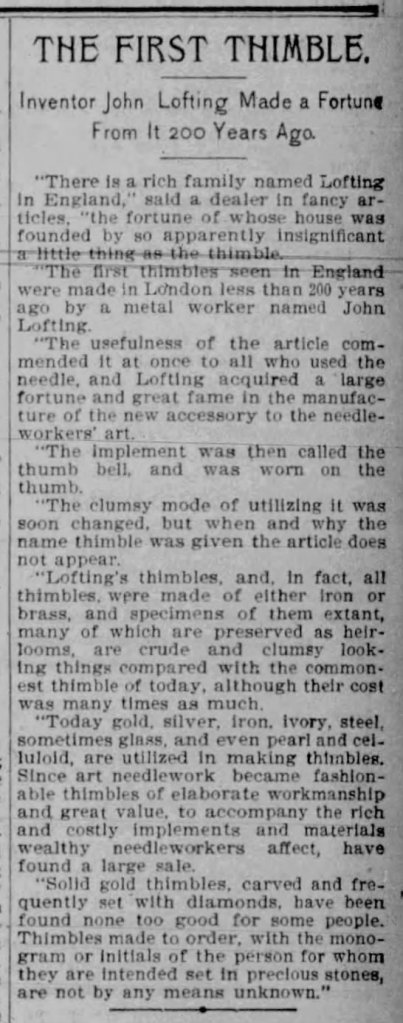
My interest in thimbles dates back to my childhood. Grandma Hankins taught me to sew and embroider, and her thimble was essential in pushing the needle through the cloth. I found it intriguing to play with as well.
Placing a metal cone on my puny finger was as close to being a robot as I’d get. The device made a distinct clicking sound when tapped on wood. That was painfully annoying to those around me, especially Mom. Most likely, back then, I wished Grandma had nine more of the toys.
These days, I view a thimble (when turned upside down) as a miniature vase. Add a few tiny flowers, and it’d look great in an oak curio cabinet. I might’ve collected thimbles at an early age had it not been for my male friends. It’s easy to imagine the harsh words they would’ve had if I asked,
“Would you like to see my thimble collection?”
Because of this, I stuck to rocks, comic books, marbles, coins, and other valuables that normal guys are supposed to own.
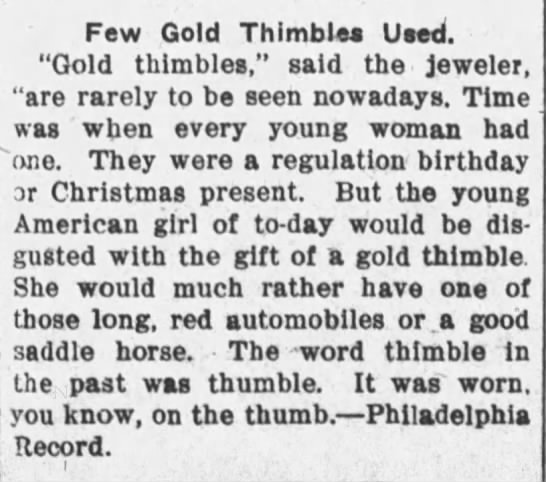
The thimble’s origin goes way back. Archaeologists have discovered crude sewing tools used by cavemen in various locations. Their archaic thimbles, made of stone or shell, were used to sew leather. Animal hide clothing was extremely popular back then. The thimbles of today were invented around 1695 in England. They were originally called a thumble.
Many Victorian-era thimbles are ornate with intricate designs and inlaid jewels. The owners’ initials were exquisitely engraved into soft metal. Thimbles were extremely popular as gifts, especially to young women about to marry. Solid gold and silver thimbles were not uncommon. Today, these small antiques, made of precious metal, command a premium among collectors.
The thimble that my mother owned was not fancy. It was not made of gold or silver. The plain, simple device appears to be made of common aluminum. Regardless, she used it for many years without begging dad for a newer, shinier model.
My wife’s thimble is much like Mom’s. Joleen’s owned the same one for 48 years. Her parents gave her a Singer sewing machine, along with other high school graduation presents. I presented her with a wood abd cloth sewing basket for Christmas four years before we married. She still has it.
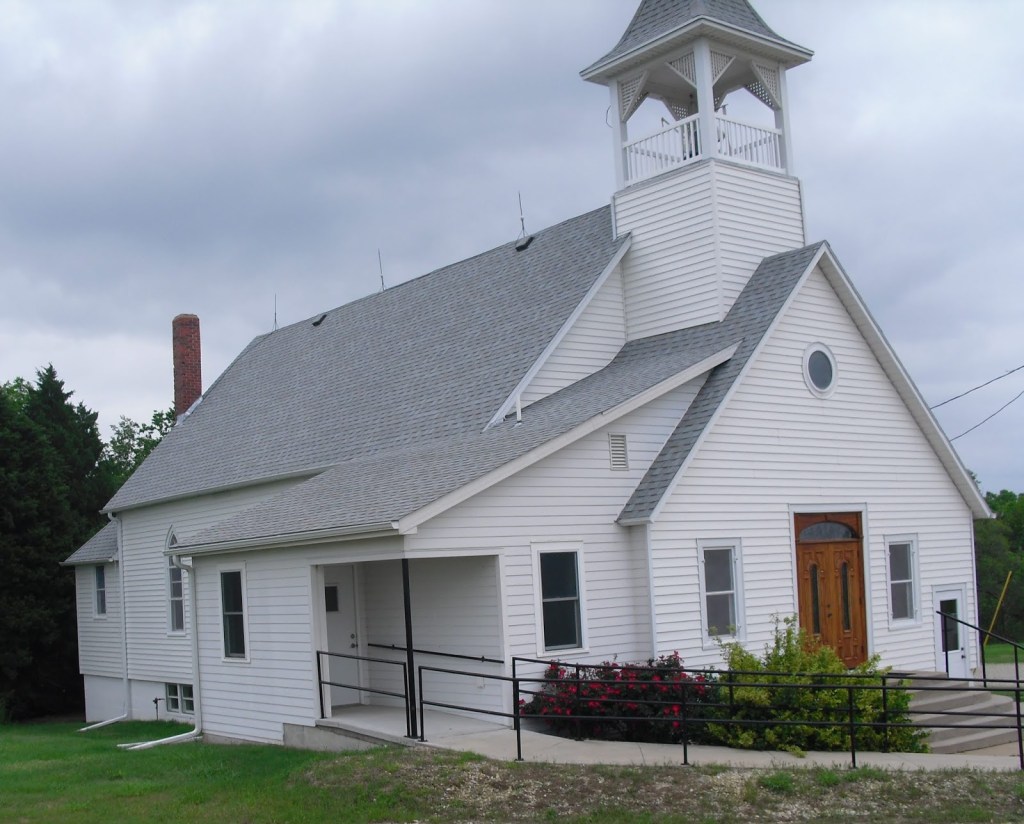
Sutphen Mill Christian Church is located near Chapman, Kansas. The church began services around 1872, and its small sanctuary, with a distinctive steeple, has been added to over the years. My wife’s dad and mom were married there in 1952. I first saw the place in 1975. Joleen and I attend services at Sutphen Mill whenever we’re visiting.
In 1976, I purchased a metal detector in Alaska to explore old Kansas homestead sites while on vacation. On my second trip to the Sunflower State, I put it to good use. Driving to an old abandoned farm called the “Wackly Place”, the property was owned by Joleen’s Uncle Jay & Aunt Wava Schweitzer.
They were kind enough to let me dig around to my heart’s content. At that time, the Wacklys were long gone with their limestone house and barn reduced to rubble.
I slowly moved about the grassy perimeter, getting all kinds of beeps with my machine. Most, if not all, hits turned out to be rusty cans and metal. Hot, sweaty, and tired, I was ready to call it quits until a signal from my detector rang out stronger than any other.
Digging down about 6 inches, I uncovered a glass piggy bank with a metal lid. After a few rinses with soap and water, the lid finally came free. It was thin and delicate, rusted through.
Inside were several Kansas gas ration tokens dating back to WWII. The tokens are not particularly valuable, yet their history is. The Wackly brothers owned a wheat-harvest business during the war. Fuel to keep their operation going would’ve been as valuable as gold. It’s likely the piggy bank and tokens belonged to them. How these items came to be buried will always remain a mystery.
In 2017, Joleen and I made another trip to Kansas to see her mother and brother. Near the top of my list of things to do is metal detecting around the old Sutphen Mill church.
It was the last day we were to be there, and I’d yet to explore the church grounds. Deciding to skip supper in pursuit of treasure, I headed over and put the White’s metal detector to work.
A couple of hours were wasted pulling bits and pieces of discarded metal from the front lawn. I placed the garbage into a bag I always carry. Dark clouds began to form, and I was ready to pack up and leave. Kansas lightning will kill a fellow faster than a sharp stick.
Spotting an old limestone retaining wall near the rear of the structure, I decided to take one last stab at finding something of significance before electricity started flying. Ancient stone walls are notorious for hiding coins and tokens. Evidently, people would sit or climb on them, losing valuables from their pockets in the process.
Within a few seconds, I had a strong signal. My metal detector screamed like a wounded banshee, indicating something of value was in the ground. The coin indicator revealed it was a silver quarter.
According to the attached depth meter, the object was about 8 inches down, directly beside the wall. It took several minutes of digging with thunder exploding over my head before I reached the booty.
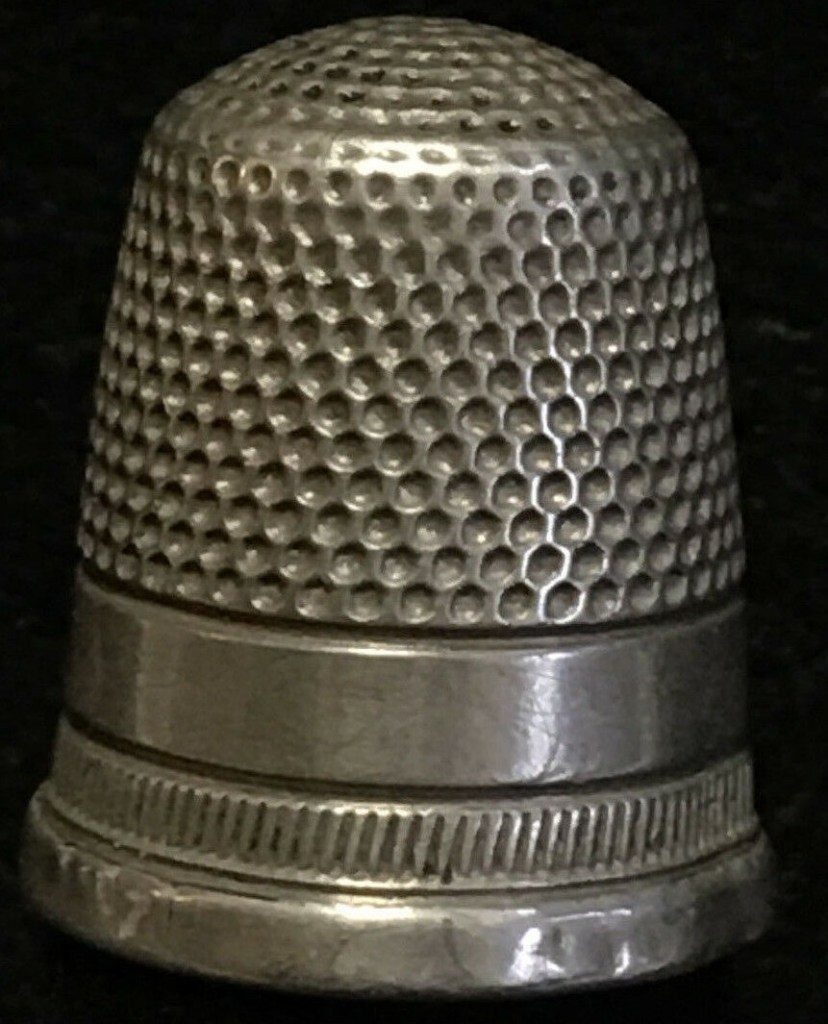
Spotting something dull and definitely metal, I excitedly pulled it out. The object appeared to be a chunk of aluminum. Brushing off dirt and grass, I began seeing the distinct outline of a sewing thimble. The artifact was smashed flat from being in the ground for so many years.
Hauling it to safe confines in my pants pocket, I used a rounded dowel to bring things back to life. The thimble was definitely made of silver, yet it was not as fancy as the others I’d come across. There were no initials or jewels adorning the outside. A frugal farm lady most likely owned it.
My wife believes church women sat on that wall while sewing and talking. The area is still used for picnics, and probably was back then. Evidently, one of them accidentally dropped the thimble, and it fell into a crack between the wall and the ground. It remained there quite a spell until I happened along.
Just like the glass piggy bank and gas tokens excavated from Wackly’s old farm, this thimble has no significant value where dollars are concerned. It holds special meaning for me. My fingers were the first to touch it after it was lost.
It’s easy for me to visualize a Kansas pioneer using her thimble, needle, thread, and cloth to make all the family clothing, including Sunday dress for herself. I can also hear this terribly upset woman telling her weary husband late one evening as he crouched over cornbread and beans,
“Honey, my birthday’s only a few days away. I could use a new thimble!”
“A true friend would discreetly tell John that he desperately needs a new, smartly styled hairpiece.”
In my research I often stumble across interesting stories. At the request of several friends eager to read somethingbesides the negative news currently swirling around our county like a tornado, I’ve decided to share a few. Several newspapers from which these non-fiction or informational pieces came are no longer with us. All articles can legally be shared for educational purposes as long as I give credit to the periodical in which it originated. I’ll start out with 13 and add more as time allows. There are hundreds. Present times are indeed troubling and I sometimes forget the reason. Matthew 24: 6 – 14
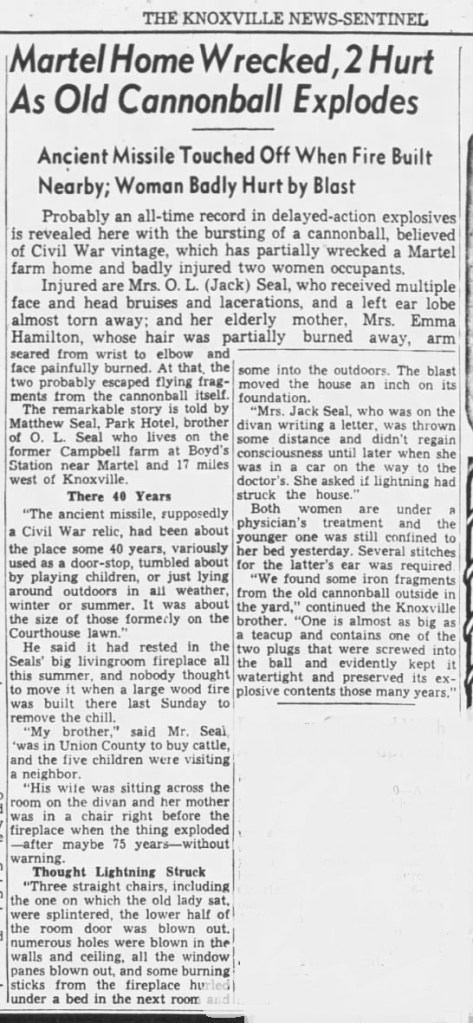
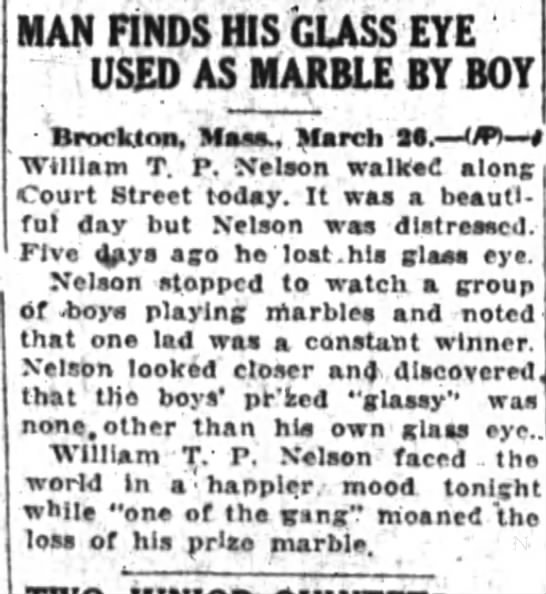
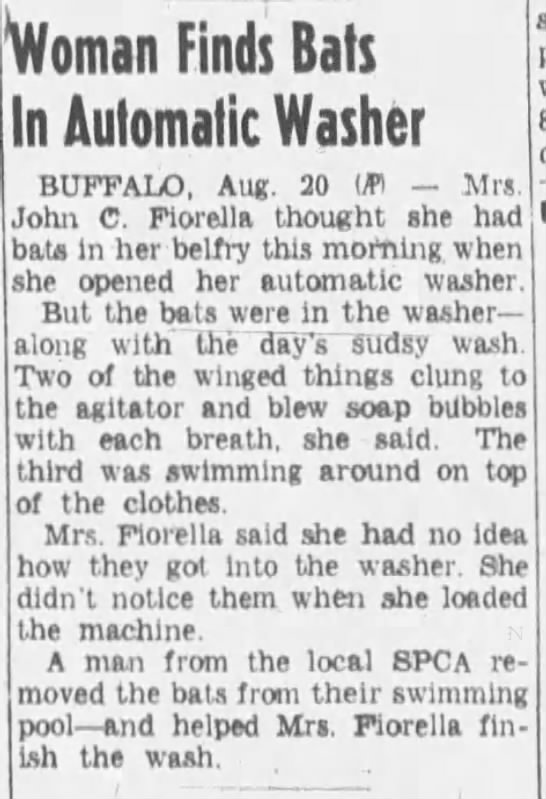
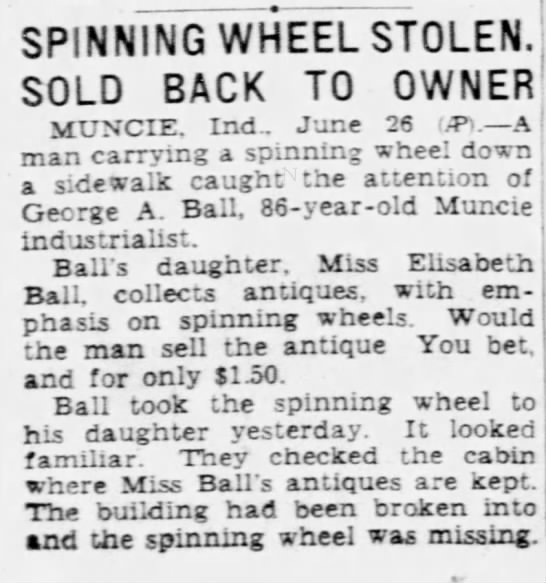
“The Daily Chronicle” – February 17, 1932 – DeKalb, Illinois“The Mansfield News and Wisconsin Hub” – March 19, 1914 – Mansfield, Wisconsin“Press and Sun Bulletin – October 21, 1977 – Binghampton, New York“The Knoxville News-Sentinel” – August 30, 1944 – Knoxville, Tennessee“Poughkeepsie Eagle-News” – March 27, 1930 – Poughkeepsie, New York“The Duncan Barrier” – January 12, 1960 – Duncan, Oklahoma“The Baltimore Sun – July 28, 1905 – Baltimore, Maryland“The Post-Star” – August 21, 1959 – Glens Falls, New York“The Morning News” – June 27, 1949 – Wilmington, Delaware“Buffalo Evening News” – December 27, 1898 – Buffalo, New York“The Journal” – July 30, 1903 – Logan, Utah“The Fort Wayne News” – November 15, 1901 – Fort Wayne, Indiana“Leavenworth Post” – June 26, 1907 – Leavenworth, Kansas“Muncie Evening Press” – June 24, 1965 – Muncie, Indiana=“The Times” – January 13, 1889 – Philadelphia, Pennsylvania“Tampa Bay Times” – November 22, 2008 – St. Petersburg, Florida“The Sedalia Democrat” – August 30, 1953 – Sedalia, Missouri“The Selma Times-Journal” – October 9, 1936 – Selma, Alabama“Dixon Evening Telegraph – May 12, 1954 – Dixon, Indiana“The Daily Sentinel” – January 28, 1959 – Grand Junction, Colorado“Knoxville Sentinel” – May 9, 1912 – Knoxville, Tennessee“Argus-Leader – April 26, 1970 – Sioux Falls, South Dakota“Longview Daily News” – June 23, 1995 – Longview, Washington“The Times-Democrat” – May 6, 1996 – Orangeburg, South Carolina
“Even though I walk through the valley of death, I will fear no evil; for you are with me, your rod and your staff they comfort me.” Psalm 23:4
I recently wrote an article saying that it’s okay to have fear in your life. My life contains a good number of fears, which I view as nothing more than common sense reminders.
The majority of people reading my column understood what I was saying. Christian friends did for the most part, although one fellow thought it was contradictory to what the Bible teaches. This individual is a family member that I was trying to reach most. He does not seem to understand that there are two distinct types of fear.
Webster’s defines things this way:
1: An unpleasant often strong emotion caused by expectation or awareness of danger. 2: Concern about what may happen; worry of the unknown.
The family member I refer to believes that the Biblical definition covers both arenas.
Fear that I mention in my initial composition equates to Webster’s definition number one. Having fear of being in a swimming pool when an electrical storm suddenly appears is purely common sense. This fear tells you to get out, and get out quick.
Unfortunately, there are some believing have no fear means they can stay in the water, and regardless of the danger, God will always have their back. That doesn’t always work out. I could tell you story after story about foolish things people have done via the non-Biblical interpretation.
Here lately, we see these fearless ones (if you can call them that), continuing to go about their daily lives as if Covid-19 will never touch them. I call it Superman or Superwoman mentality.
In my town, bars and taverns fill up with patrons each evening, going against the professional advice of medical experts. Newspapers show groups of young people partying it up on local beaches. The Biblical principle of have no fear does not apply here.
Psalm 23:4 says: Even though I walk through the valley of death, I will fear no evil, for you are with me; your rod and your staff they comfort me.
God tells us that as believers in Jesus Christ, we should not fear the unknown. This covers a lot of ground. If we practice specific medical guidelines handed down to us by infectious disease experts, he will lead us through this pandemic crisis. God does not instruct folks though, to go about their lives in a fearless and reckless manner.
In the 1990’s, there was a popular clothing line called, “No Fear”. Young people wore the company’s attire with pride including my son.
An attitude of having no fear back then was quite prevalent among teenagers; still is.
The owners of “No Fear” perfectly followed their namesake by making risky business deals. They eventually crashed and burned (bankruptcy).
Many young people from that era, now adults, have scars much like the defunct clothing manufacturer, showing where they crossed the line. Some of them still didn’t learn.
They’re still doing things contradictory to God’s definition of, have no fear!
“I wanted to get up and head for the restroom but couldn’t. That was evidently part of Jack’s overall plan. Had I been able to escape I would’ve intentionally stayed gone for quite a spell.”
Amway 1997 Platinum Award
I’m an aisle person where seating is concerned. Never put me in the middle seat of an airplane. That’s only happened once and it’ll never happen again.
In church, I plop down on the outside of a pew; same thing in a restaurant booth. If it’s a meeting I’m attending, a chair at the back of the room is always taken for obvious reasons. No, it doesn’t have to do with OAB.
I view the rear of an auditorium as the perfect place to launch an escape. If a long-winded speaker rambles on and on I want to be able to bail. My aisle-seat-fetish if you can call it that began many years ago.
Jack was a fellow I worked with. He was a nice enough guy. We had a good working relationship and nothing more.
After a year of being my co-worker, Jack started asking me financial questions like,
“How’d you like to be financially independent, Mike?”
“Wouldn’t it be nice to have enough money to share with family and donate to those in need?”
“Have you ever dreamed about a different lifestyle and didn’t know how to achieve it?
In all reality, I hadn’t given much thought to any of his inquiries. I was quite happy where I was.
These type questions went on for some time, with Jack often trying to get me to attend what he called a ‘non-committal financial meeting’. I generally fabricated valid reasons to turn him down, until one day he popped this question on me,
“Wouldn’t you like to know that that your wife and kids would be financially taken care of should you suddenly die?”
What responsible husband could say no to that.
“Sure.”, was my reply.
Before I realized it he’d lassoed me in to attending a seminar.
I told Jack I’d meet him at the building where it was being held, yet he insisted on picking me up. I should’ve sensed something was up at that point but didn’t.
When we arrived at the Sydney Laurence Auditorium, there were hundreds of other people waiting in line.
“Hi Jack!”
It seemed everyone knew this guy. Many walked over and shook his hand. Jack then politely introduced them to me. Most of the folks were dressed for success.
Stuck in the middle
I was led to a seat in the middle of a row, smack-dab center of the room. There were perhaps twenty chairs on each side. Why Jack chose this location I didn’t know at the time. Evidently he’d been taught early on where to place visitors. Once again my antennas should’ve went up yet they remained down.
The meeting started with an announcer thanking everyone for coming. After his short message, an infomercial began playing on a large screen.
A younger man in the video was seated at a table in the rear of a mansion next to a swimming pool. Palm trees dotted the property. This individual began telling his life history.
Paul (not sure of the real name) was a husband/father with several kids working two jobs. The struggling dad could barely make ends meet where income was concerned. He was in debt with no visible way out.
Someone at Paul’s place of employment introduced him to something called multi-level-marketing. That was the day his life changed for the better.
Throughout the video I kept hearing a sound akin to air escaping from a hose. I glanced around spotting people spraying something into their mouths. It seemed that everyone was doing it. Jack leaned over and told me it was breath freshener. He handed me a small aerosol can.
I wanted to get up and head for the restroom but couldn’t. That was evidently part of Jack’s overall plan. Had I been able to escape I would’ve intentionally stayed gone until the brainwashing was over.
The video ended with a menage of photographs. They showed Paul, his wife and kids, plus dog, in front of a private jet, vacationing at exotic places, along with plenty of shots of his spectacular oceanfront home. Paul’s final statement to the audience was,
“Amway changed my life and it can change yours as well!”
The attendees stood and clapped. I joined them not wanting to look out of place.
On the way home Jack asked if I’d like to be part of the Amway team. To get started all I needed to invest was $100.00 for a startup kit. I politely told him,
“No thanks.”
After several more months of badgering I finally gave him the money hoping that’d end the nightmare. Unfortunately, it only got worse. I was invited to various AMWAY product demonstration seminars. They seemed to take place every week. Jack called me every night at home including constantly hounding me at work.
One seminar featured the breath freshener that folks were huffing during that video. Jack said they’d only been on the market a short time. Closely examining a can, I noticed that the percent of alcohol was quite high. I chuckled to myself thinking that was the main reason Amway people used it.
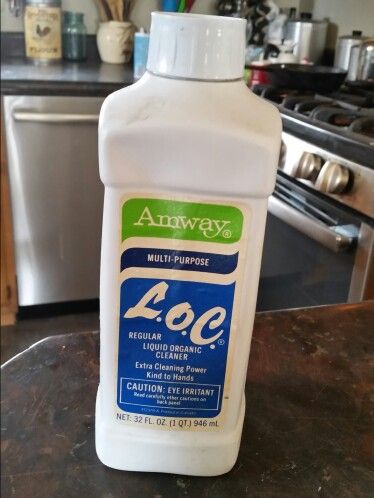
As time went on I stopped going to the seminars. The sample products from my kit were almost gone and I was glad not to refill them. I was left with a lone bottle of LOC. It was supposedly a concentrated detergent. I could have cared less!
Jack claimed there was no better product for cleaning clothes than L.O.C. A small bottle cost as much as three boxes of powder detergent. Several weeks later Jack and I came to odds, when I informed him that Tide did a much better job on cleaning my clothes than L.O.C ever could. That deeply hurt his feelings.
My insult of an AMWAY product sealed the deal on him expecting me to be on his team. I was elated.
Jack moved on, using his energy to try and persuade a friend of mine, Dee, to join his pyramid scheme. Jack told Dee that a person reaching the level of platinum in AMWAY could make millions. Dee was much smarter than me in quickly getting Jack off his back. Dee told the fellow that he was already there. Jack could only laugh.
The next morning Dee walked in to the break-room carrying a crystal AMWAY Platinum trophy. Jack wanted to know where he got it? The award was evidently like a Holy Grail of Amway sales.
“I’m living the dream!”, was Dee’s reply.
Dee didn’t tell him that the award belonged to a friend and that the guy had loaned it to him.
My pal kept this bogus trophy on his desk just to rub it in. Jack thought it was totally uncouth what Dee did, and he didn’t hold back on expressing his feelings.
Jack left the state soon afterwards. The last I heard he was living in a huge house in Aspen, Colorado. Evidently, he’d obtained his dream without Dee’s help or mine.
On Jack’s journey to financial independence he discovered that not all of us share the same vision. Just how many people he drove away in the process is merely a guess.
I still have that bottle of L.O.C. Perhaps some day I’ll actually try it 🙂
“I believe folks having a touch of fear in their lives, probably live longer than those that don’t.”
AMWAY indoctrination seminar.
A family member recently told me,
“We can’t live our lives in fear!”
Out of fear in starting a feud or getting smacked, I decided to keep my mouth shut.
This person was wrong, but I wasn’t going to openly tell them.
I believe folks having a touch of fear in their lives, probably live longer than those that don’t.
The Bible mentions that we shouldn’t have fear in our lives, but I believe those verses pertain to fear of the unknown. The fear I refer to is that which keeps us from doing stupid things.
Pondering things that I’m fearful of creates a rather lengthy list.
I’ll share ten of them:
1. I have a fear of sticking my index finger into an electrical socket and coming out unscathed.
2. I have a fear of telling my wife that it appears she gained a pound or two.
3. I have a fear of placing my hand on a stove burner just to see if it’s hot.
4. I have a fear of driving fast down a pothole-riddled-highway on bald tires.
5. I have a fear of reaching into a hole in the desert.
6. I have a fear of sticking a sewing needle smack-dab in the middle of my eyeball.
7. I have a fear of pulling the trigger on a gun in the house without first seeing if it’s loaded.
8. I have a fear of being locked in a room full of AMWAY fanatics with no way out.
9. I have a fear of embarking on a cruise, or flying in a germ-laden-airplane, when a deadly virus is running rampant.
10. Most of all, I fear the wrath of God when I’m disobedient to him.
The AMWAY incident actually happened. That’s a tale to be told on another day.
Most of the above fears are connected with having common sense. What responsible adult would stick their finger in an electrical socket? Just recently, I read where some guy did just that checking to see if his bathroom circuit breaker was turned off. He found out it was on.
Sometimes these type individuals are labeled as idiots although I don’t use that word. We do run into these brainless folks on a regular basis.
What fool would ever stick a needle in their eye? Hopefully, there are none. Just the mere thought of such gives me the heebie jeebies. As everyone should know, the heebie jeebies is a tremendous amount of fear.
With that said, in spite of my fears, I’m doing just fine.
Looking back, I should’ve replied to that family member,
“Yes, we can live our lives in fear!”
Had I done so, I would’ve wisely turned and quickly scurried away.
“It’ll continue to talk with future owners long after I’m gone!”
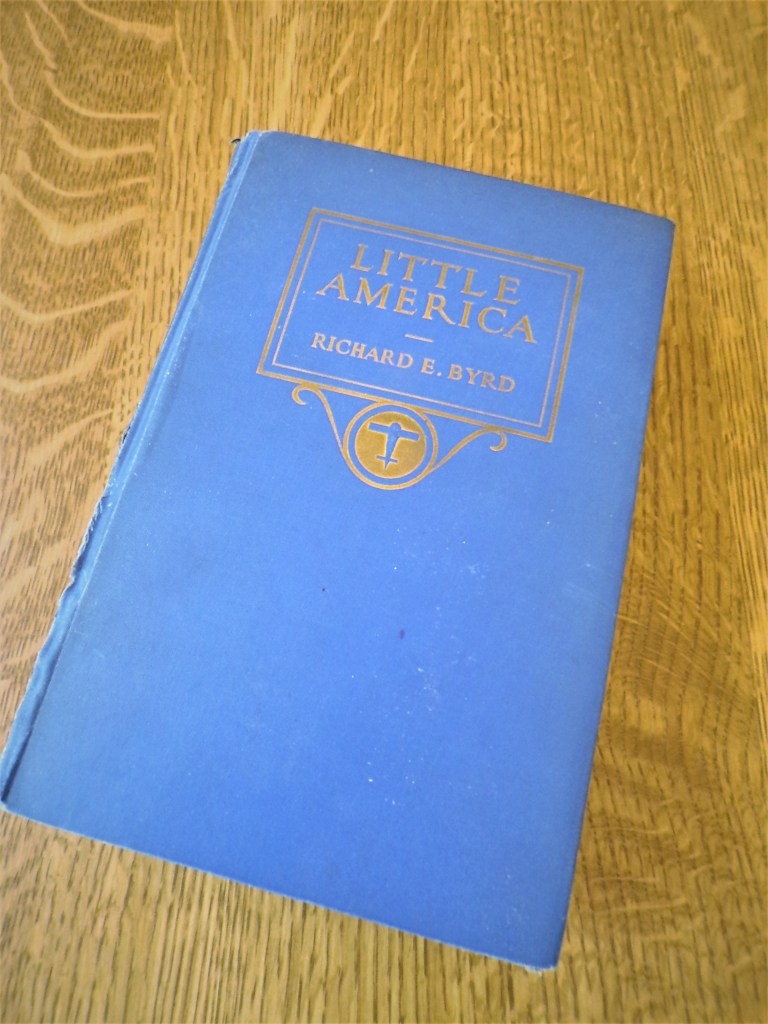
“Little America” – Admiral Richard E. Byrd
My mother told this story numerous times. Dad did the same. With my brother being four years older than me, Jim recalls the incident as clear as day. I vaguely remember it at all. This event would’ve taken place in 1958. We were either traveling to California from Alabama or vice versa:
When I was four years old, I was sitting in an Arizona restaurant with my family eating breakfast when a stranger appeared. He’d walked over from a nearby table where his wife and two children sat.
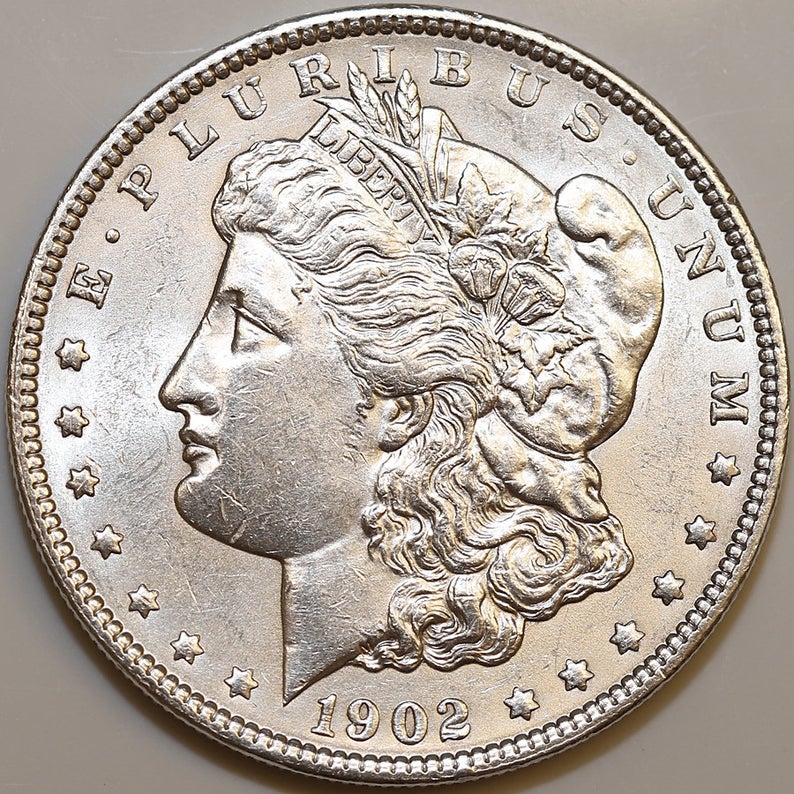
The man smiled and then asked my folks if Jim and I could have a gift. He held out two silver dollars. They were the real deal; Morgan dollars made from 99% virgin silver.
Dad and mom allowed us to accept his gracious offer. I’m quite positive they made sure we thanked the gentleman. They never missed a chance to remind us on doing such. Eventually it stuck without their prodding.
We still have those dollars only because mom held on to them over the years. Jim and I always wondered why this person singled us out for the gifts? Something led him our direction. Mom joked, saying we probably looked deserving. I mistook that as meaning poor!
While looking at them one day, Jim made this statement,
“If only these coins could talk!”
I’ve heard that term numerous times regarding all kinds of old things; lately it seems to be antique cars and trucks.
Unfortunately, material objects often do not historically speak unless a portion of their background is known. In the case of these silver dollars, such prior information is missing and always will be. That’s not the case with an old book I own.
Morgan silver dollar given to me by a stranger when I was a kid
Admiral Richard E. Byrd has always been one of my heroes. Back in the day he was just about every kid’s. I tend to believe most young people of this generation have never heard of the man. Let’s just say he was an Antarctic explorer and leave it at that. There’s plenty of information floating around about Mr. Byrd if you desire to learn more.
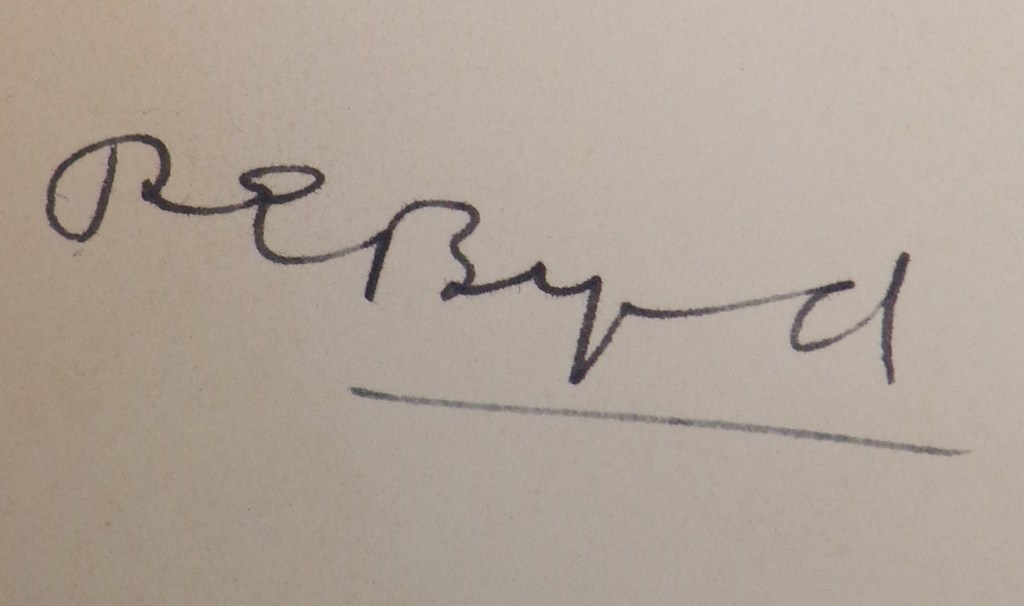
Richard Byrd wrote a book titled, “At the Bottom of the World” regarding his South Pole experiences. I purchased a first edition copy (1930) from a used book dealer in Hendersonville, North Carolina. It has Byrd’s signature in ink on the inside front cover. The book has loose bindings which I intend on getting fixed.
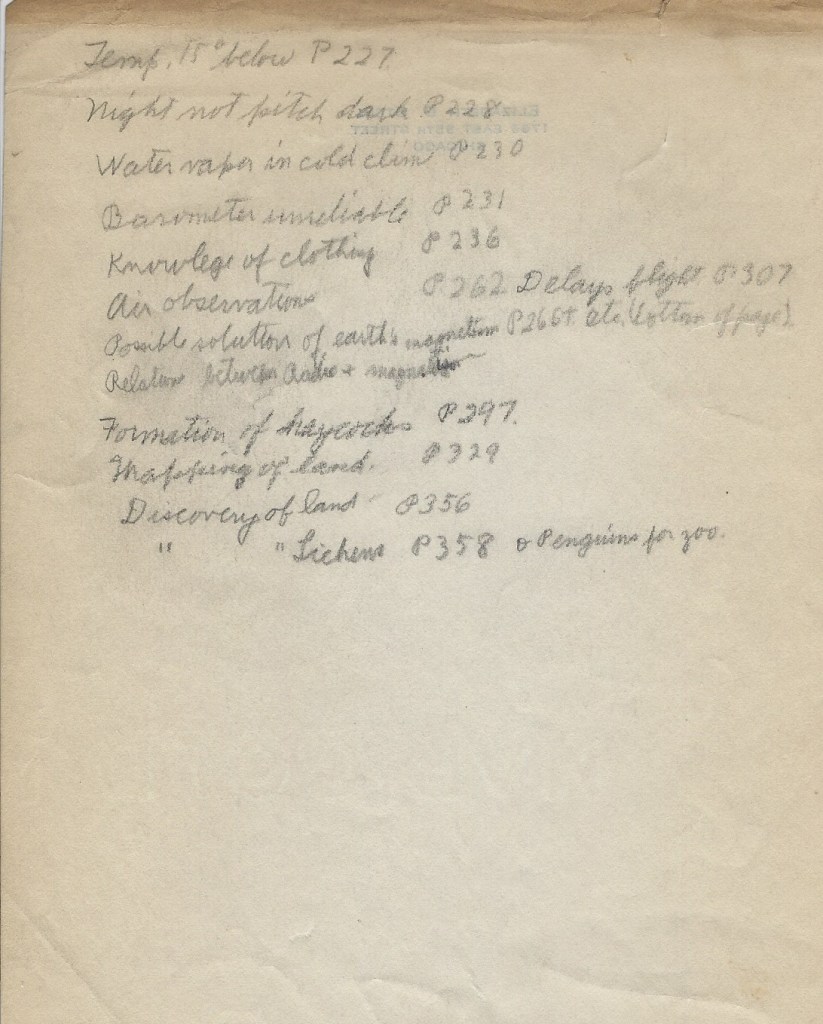
A private library stamp identifies the manuscript as once belonging to Frank and Joy Blazey. Stuck in the middle of this book almost unnoticeable I discovered a thin, personalized stationery page. The top letterhead reads: Elizabeth B. Stein. 1765 East 55th Street. Chicago. She’d evidently used it as a book marker. Notations written in pencil are on the backside.
Joy & Frank Blazey private library stampElizabeth Stein stationery headerBackside of Elizabeth Stein’s stationery with page references and corresponding notations
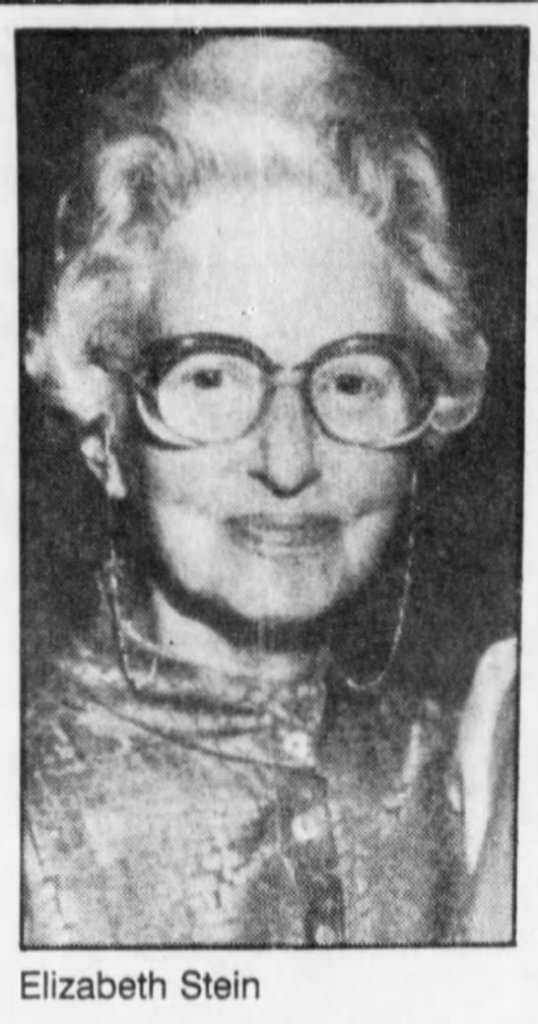
I decided to investigate further and see who these former book owners were. What I found was nothing short of amazing. While Admiral Byrd’s life was nothing to sneeze at, the Blazey’s life experiences including Elizabeth Stein’s were just as remarkable. I believe Ms Stein was the first owner because she’s the oldest person here being born sometime around 1898. I’ll start with her adventurous life.
Elizabeth B. (Lischa) Stein
Lischa as most people called her, means, “The Lord is my salvation.”
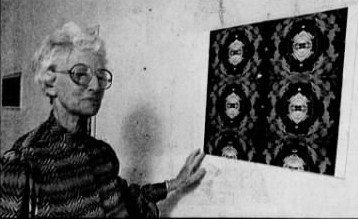
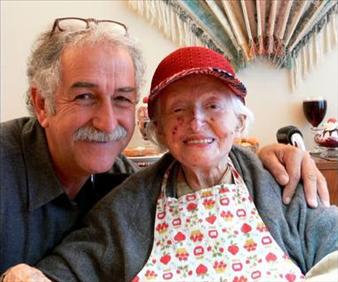
An article by Pulitzer Award winning Chicago Tribune writer, Mary Schmich, tells Elizabeth Stein’s life history much better than I ever could:
Elizabeth SteinElizabeth Stein with an unidentified friend
Joy Drew Blazey
Joy Drew Blazey was a teacher just like Elizabeth Stein. A well-written obituary best sums up her life.
Joy Drew Blazey
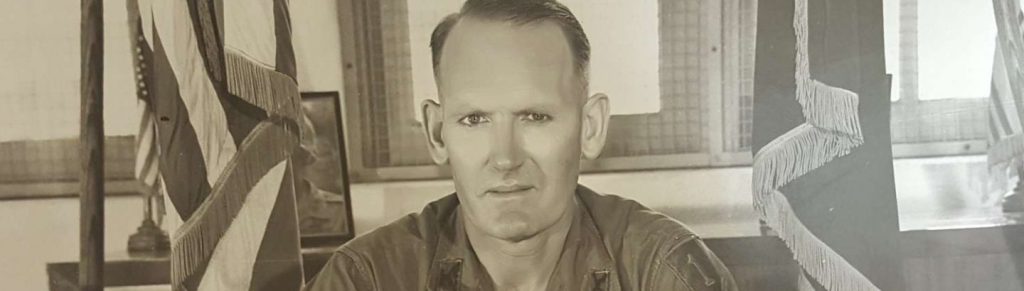
General Frank Blazey
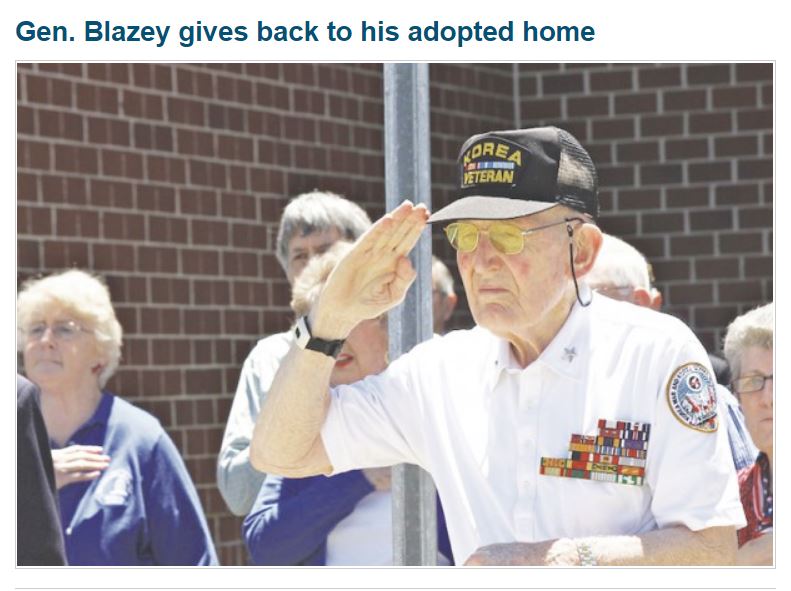
General Frank Blazey – U.S. Army (retired)
General Frank Blazey is an American military hero. His list of accomplishments in life is quite substantial. The following information comes from an excellent article written by, Derek Lacey, of the “BlueRidgeNow Times-News Online”:
Friends and family are mourning the loss of a generous, dedicated and humble man after the passing of Brigadier Gen. Frank Blazey on Monday. He was 92.
Blazey is remembered as a philanthropist, a true patriot and a voracious lover of life, as well as a fierce friend and a humble but accomplished veteran who was always ready to give of himself and his time.
Born in Farifield, Illinois in 1924, Blazey spent some time before high school with his mother’s father in Springfield, according to his son, Frank Blazey III. Blazey’s grandfather was a state senator and Blazey would clean spittoons and served as a page on the floor of the Illinois Senate before heading off to high school at Columbia Military Academy in Tennessee.
He attended the University of Illinois for more than a year when the attack on Pearl Harbor happened. Blazey sought entry into the Military Academy at West Point, which took him more than a year to get into with competition from other volunteers, Frank Blazey III said.
But Blazey graduated from the U.S. Military Academy at West Point, commissioned as a lieutenant in 1946. He went on to serve in the Korean War as an infantry company commander, to include assignments with the 65th Infantry Regiment, where he was awarded the Silver Star for valor under fire.
After serving in Korea, he returned to West Point, assigned as an instructor, and served two assignments on U.S. Army staff at the Pentagon. He then served in Vietnam, where he commanded a brigade, before an assignment commanding the Airborne Division at Fort Bragg, according to information provided by Mike Murdock, Henderson County veterans services officer.
Blazey returned to Vietnam for the withdrawal of U.S. military forces in 1972 and 1973.
“He had a sterling military career,” Frank Blazey III said, a career that included volunteering for Korea, where he received a field promotion from captain to major, and two tours in Vietnam, retiring from service in Germany as a brigadier general in 1975.
In 1975 he moved to Hendersonville and worked for Coca-Cola of Asheville. Blazey went on to work with a friend who established a manufacturing business for bottling equipment out of Edneyville, a job he held for about 10 years.
He was also involved in many organizations, including the Rotary Club, of which he was a 40-year member, the YMCA, United Way and Blue Ridge Community College. He was a co-founder of the Environmental Conservation Organization and served as chair of the Board for the Department of Social Services.
‘Larger than life’
Blazey is remembered as a humble, giving man who inspired others to be their best.
MarthaJean Liberto first met Blazey eight years ago through her work at Compassionate Home Care. She was sent to work with Blazey, she said, because she has experience as a professional chef. It started a “fast and true” friendship between the two.
Each night, Blazey and his wife, Joy, would eat by candlelight at 6 p.m. following a cocktail hour, Liberto said. It was a habit he kept up after his wife died in 2013, and the setting for some of the many stories he told Liberto.
She knew the first night she walked in that they’d be friends, and even after she retired last August, they remained close.
General Blazey
He was always larger than life, she said, and lived life to the fullest.
“He used to say ‘I’m just a Southern Illinois farm boy who got lucky,’” Liberto said. But he was much more than that.
“He is American,” she said. “He is what our country stands for and has always stood for. He was a true patriot and lover of life.”
Blazey loved life so much that Liberto would often tell him, “You’re my inspiration; you get up every morning and you do life and you help people.”
“As you can tell, I more than think highly of him,” she said. “I love him dearly and I said to him often, the honor of your friendship is more than I can ever have imagined.”
Jeff Miller, Hendersonville city councilman and founder of Blue Ridge Honor Flight, described Blazey as extremely generous, a man who was very proud of his service and wanted to be around others who had served.
“The bottom line is Gen. Blazey was just a one-of-a-kind guy that is really going to be missed around here by not only by the whole military family, but those of us who had folks like him to look up to and respect and enjoy being around,” Miller said.
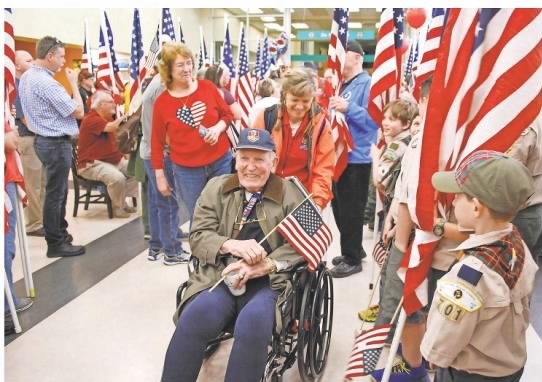
Just last month, Blazey joined more than 50 other Korean War veterans and veterans of Vietnam and World War II on a Blue Ridge Honor Flight, flying to the nation’s capital for the day to visit war memorials, his first trip with the program.
It was a big deal for the general to experience that with other veterans, Miller said, after he missed q 2016 flight for health reasons. He got through the day, though it was hard on him, spending most of it in a wheelchair, but he told organizers often how much he enjoyed it.
Marybeth Burns, who first met Blazey through the Rotary Club, was able to accompany him on the trip. She remembers a “stern but gentle” teddy bear with lots of integrity, a generous man who gave so much back to the community.
She said that when Miller started the trips for Korean War vets, Blazey was among the first he mentioned.
Burns was supposed to accompany him on the 2016 trip, and afterward they made a pact that they would go on the 2017 flight.
One particular part of last month’s trip sticks out in Burns’ mind more than others. As she and Blazey were leaving the Tomb of the Unknown Soldier at Arlington Cemetery, she noticed him crying. “It just makes me think of all those who didn’t come back,” he told her.
Burns said it was evident how much Blazey and the other veterans appreciated those soldiers, that they were on their minds the entire time. Blazey was able to lay the wreath at the Korean War Veterans Memorial, an emotional moment, Burns said. For days later, he told everyone about the trip.
Liberto said his ability to see the good in people — and praising them for it — and to make people want to do better were some of the things that made him such a successful military leader. He was always giving compliments, she said, and not “that fake kind of compliment.”
He let nothing stop him, she said, whether it was cleaning trash from Mud Creek, ringing a bell for the Salvation Army or donating considerable sums to community organizations. “He was always willing to help someone out if they needed help — an employee, a worker, whatever.”
There are so many things that he did for others, Liberto said, “and that was his lifeline: service to his country, service to his fellow man. (He was) just an amazing person, in the humblest of ways and in the largest of ways.”
U.S. Rep. Mark Meadows also lamented Blazey’s passing, saying the brigadier general represents the best of the country.
“When I think about those who represent the best of our nation, both in service and in sacrifice, Gen. Frank Blazey is among the first to come to mind,” Meadows said in a statement Tuesday. “Gen. Blazey was not only a military hero but someone who never hesitated to pour himself out to his community, including his involvement in the Blue Ridge Honor Flight program and his work on my office’s Service Academy Board. Debbie and I are saddened to learn of his passing, and we send our thoughts and prayers to his family. He will be missed.”
Blazey was very active until age 87 or 88 and played his last round of golf at 90, Frank Blazey III said. He also loved his children and grandchildren. He was married to Joy for 65 years and they had three children — Frank III, son Drew and daughter Kay, who passed away from cancer in 1993.
He leaves behind five grandchildren and seven great-grandchildren, with one on the way.
“This man was just an amazing man who loved people and loved life and loved this country and loved his lord,” Liberto said. “Everything you would ever want a person to be.”
A funeral is planned for 2 p.m. Friday, June 30, at First United Methodist Church, Hendersonville, with visitation from noon to 2 p.m. and a reception following the service. Burial will follow at a later date at West Point, N.Y.
This compilation of stories will be printed and then added to Richard Byrd’s book. It’ll continue to talk with future owners long after I’m gone.
As far as those two silver dollars go, hopefully I can talk my brother out of his. I’d like to pass them on to some deserving youngsters; a couple of kids appreciative of things old!
Admiral Richard E. Byrd signature inside book cover (1930).
When I was a child, I looked forward to visiting my grandparents. It was always an exciting and adventurous occasion. Generally we traveled at night, and often times came upon road construction sites along the way.
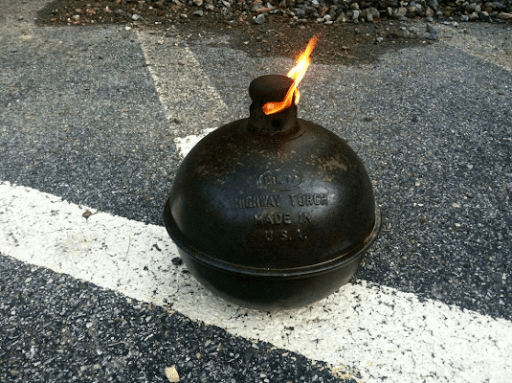
Back then there wasn’t battery-powered warning lights on the edge of the highway advising folks to slow down. Construction crews used black “smudge pots” as dad called them to alert drivers. These pots were round in shape and contained kerosene and cotton wicks much like lanterns and lamps. To me they resembled bombs.
As we slowly drove through these areas the soot-laden-pots flickered in the night much like sinister candles. The smell of burning kerosene permeated the air. It’s an eerie scene that’s never left my head!
My brother and I deserted our television and toys in Selma when we ventured to Vernon. That’s the name of the rural Alabama town where both set of grandparents lived. Neither of them had TV’s or electronic gadgets to keep us entertained. Smartphones and computers weren’t invented back then. Jim and I relied upon our imagination to keep from getting bored.
We’d bring along BB guns, comic books, and our own digging utensils. We used these tools to build an underground fort at Papa and Mama Haynes’ place. It turned into quite the structure with tin roof and wooden door, until a tornado totally destroyed our creation. It was good we weren’t inside at the time.
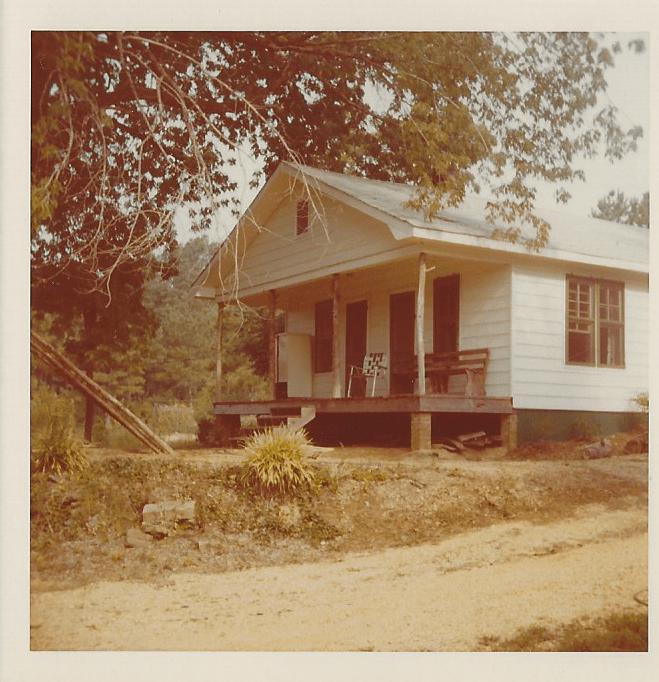
Papa & Mama Haynes’ home – Vernon, Alabama (1974)
My grandparents on both sides would take time to sit and talk to us about their early years. I was always eager to hear what they had to say. A few of their tales I still remember while most of them I don’t. One that’s never left my brain is a bizarre story that Grandma Hankins unexpectedly shared. I’m sure she was chatting with my parents when I accidentally overheard her words.
Grandma said that a fellow she went to school with had recently ate some Red Devil Lye. This product is highly poisonous and no longer sold in grocery stores. The FDA banned it for good reason. Too many little ones were getting into the toxin and innocently ingesting it. Back then lye was popular for cleaning.
The caustic powder evidently destroyed this poor fellow’s stomach. Grandma said that doctors removed the useless organ and transplanted a goat’s stomach in place of it. For some strange reason I found that fascinating.
Each time we visited I wanted to hear the tragic tale. More and more as she repeated it I had to know more. Finally things got to the point where on one trip I asked,
“Grandma, why did this man eat Red Devil Lye?”
To the best of my knowledge she never answered that question. I’m pretty sure Grandma and my parents knew, but most likely they believed I was too young to understand.
With the horrible story still rattling ’round inside my skull, a year ago I decided to investigate. Using http://www.newspapers.com it didn’t take long to find the answer.
It wasn’t uncommon back then for folks to commit suicide by swallowing lye. Doing so wasn’t always an instant death. Instead, it could be slow and painful. Evidently this former classmate of grandma’s elected to take his own life for whatever reason? Grandma said he didn’t live long after the transplant.
Not all of my grandparent’s tales were so macabre. As I mentioned earlier, this Red Devil Lye tale wasn’t meant for my ears to hear.
The events I still recall basically dealt with good things. Stories like my grandma and grandpa walking to school, wading or swimming in a stream, working in the fields, or going to church each Sunday in a horse-pulled wagon. Grandma said they’d not return home until late evening. Evidently it was customary back then to visit friends after a sermon.
When it was time for us to leave and return to Selma, Jim and I never wanted to go. We had too much fun there in spite of having no television.
I now have to wonder. Could children these days endure such an ordeal?
I’ve had my share of heroes over the years. Daniel Boone, Davy Crockett, Admiral Richard E. Byrd, Amelia Earhart, General Chuck Yeager, Colonel Norman Vaughan, to name a few. Hollywood actors or sports heroes have never been folks that I wanted to emulate, other than perhaps, Tim Tebow.
I’ve always admired adventurers. The late evangelist Billy Graham is at the top of my list although most wouldn’t call him an explorer. He was to me where exploring the Bible is concerned.
Of the seven names mentioned, I’ve only met one in person and that’s Colonel Norman Vaughan. The colonel was a close friend of my Fern Lane neighbor, Bill Devine. Bill invited me to a lecture by the famous dog musher and explorer. I was mesmerized by what this gentleman had to say. Norman had a captive voice that was easy to listen to.
Colonel Norman Vaughan
Vaughan told the packed auditorium that evening only a very small portion of his near century-long-life which is truly remarkable. He was born into a wealthy family in Massachusetts, yet chose not to pursue business endeavors like his parents wanted. He desired to be a dog musher instead.
When Norman mentioned going to Antarctica with Admiral Richard Byrd, he had me by the gizzard. What Vaughan was able to do in his life were things I only dreamed of. The stories he told that night at Alaska Pacific University had everyone on the edge of their seats. When the talk ended I wanted to know more.
As he sat at a table signing books I had several questions to ask. While others shook his hand and thanked the man I patiently waited for my chance. After the last person walked away, Bill Devine introduced me.
He slowly stood to shake my hand with a noticeable hunch, yet his grip was stronger than most young men. The always smiling Norman was more than happy to chat. He filled me in a bit more on his military career, including a few funny things regarding neighbor Bill that I’d never heard. I eagerly purchased one of his manuscripts before saying thank you and goodbye. Colonel Vaughan inscribed on the inside front cover of my book,
“To Michael – Dream big and dare to fail! Norman Vaughan.”
Before meeting Norman Vaughan that night I’d read about his exploits along with those of Admiral Byrd in a book titled, “Little America: Aerial Exploration in the Antarctic the Flight to the South Pole.” I have a copy of that 1930’s hardcover book signed by Richard Byrd. It’s not unusually rare because most every book he peddled contains a signature.
During Admiral Byrd and Norman Vaughan’s Antarctic trip, the admiral named a mountain after his much younger accomplice. In 1994, at the age of 88, Norman Vaughan was finally able to scale Mt. Vaughan. The mountain is 10,301 feet tall.
In memory of his feat, a group of us at work constructed a metal and cloth tribute on top of a huge snow hill. A photo of it was featured in the “Anchorage Daily News.” Colonel Vaughan made a special trip to our workplace to view the creation along with extending thanks to everyone involved.
Monument we built commemorating Norman Vaughan. That’s me standing next to it in top photo.
I’ve done my own exploring over the years with friends and by myself, yet nothing on the scale of Byrd or Vaughan. Through the reading of books written by explorers and adventurers, I’ve accomplished more dreaming than anything. During early school years, I daydreamed to the point where one teacher thought there was something mentally wrong with me.
She called my parents in for a special talk. It dealt with my staring out the window during class. I still find myself doing such out the living room or kitchen window. The same teacher brought dad and mom in again because I’d fall asleep at my desk. That was only because I stayed up late each night reading “The Hardy Boys”mystery series.
Back then it was easy for me to imagine being inside a homemade submarine constructed from 55-gallon drums. I’d actually drawn up plans for such but thankfully my folks wouldn’t allow the coffin to be built. On other days, my mind would take me deep within hidden caves in search of buried treasure. Sometimes I was an explorer lost in the wilds of Alaska or a pilot breaking the sound barrier. My imagination was endless and still is. It got me into trouble several times where practical jokes were concerned.
Books took me to remote places that I’ll never set foot on. An avid reader, I won an award the summer of 1965 for reading the most books at our local library. My total for three months was well over 100. The prize being of all things; a non-fiction book titled,“Kon-Tiki”, by Thor Heyerdahl.
“Kon-Tiki” is an adventure story about a group of men building a raft out of balsa, and then attempting to cross the South Pacific. I made a copy of their fledgling creation with Popsicle sticks and Elmer’s glue for a school project.
Thor Heyerdahl’s book was the perfect prize because it dealt with something that my brother, Jim, and I had already constructed in Alabama. Unfortunately, our crude raft came apart soon after it was launched.
I still have my “Kon-Tiki” book minus front cover thanks to one of our dogs. It was either, “Brutus” or “Ringo”, although after so many years I can’t recall exactly which one. Recently, I saw where aHeyerdahl book in good condition is worth upwards of $150.00 unsigned. The one I have was signed until that valuable portion was consumed.
When my wife saw the title to this story, “Byrd, Vaughan, and Hankins”, she had to chuckle.
“You can’t put yourself on the same level as a Richard Byrd or Norman Vaughn!”
I knew she’d say that and Joleen was right. I figured that’d be the comment of friends and strangers as well. Some might even say,
“That’s mighty vain of him!”
My reply is simple: I believe we’re all explorers in one way or another. A person doesn’t have to climb mountains or hike across frozen Alaska glaciers to lay claim to the title. Visiting an antique shop, historic cabin, or museum is exploration on a different scale. Walking along a meandering stream or through a meadow of blooming Fireweed is the same.
If Norman Vaughan was here I believe he’d say,
“Never stop dreaming or exploring no matter how old you are.”
Placing my name next to Byrd and Vaughan on this article is merely a symbol of where I’d like to be as an explorer. Nothing more. According to Norman Vaughan, there’s no harm in dreaming and setting our goals high!
Norman never stopped dreaming until he passed away at age 100.Michael D. Hankins