I’m as interested in reading about other people’s adventures as I am in my own. Reading has become more the norm here lately, with our excursions amounting to daily outings rather than weekly or longer ones.
I have over 150 stories about early-day expeditions, including this one from Arizona, written almost 100 years ago. I transcribed it, correcting numerous typos and archaic sentences. See my note at the end of this story for current cave information and a bit of personal trivia on those involved.
******************************************************
From “The Border Vidette” – Nogales, Arizona – August 9, 1930:
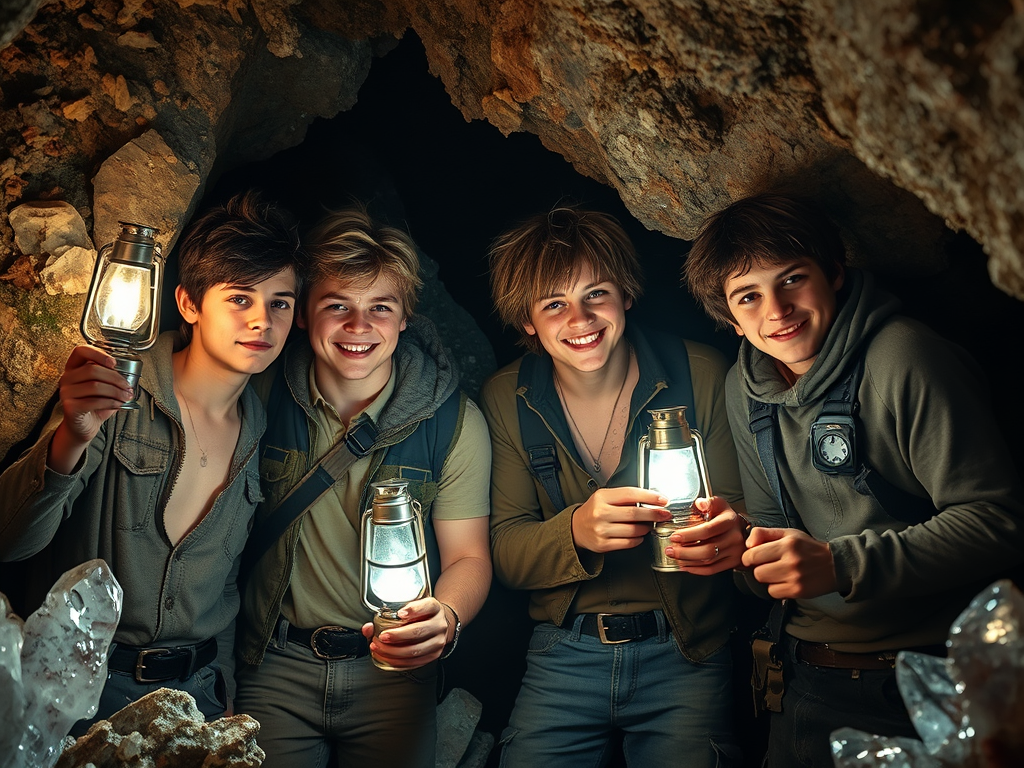
“Marooned for twenty-four hours a mile deep in a cave, in total darkness, and afraid to move more than a few feet of distance because of the treacherous passageways and deep canyons on all sides, four youths, three of them Nogales boys and one from Yuma, were rescued about 1:30 o’clock yesterday afternoon by a searching party at Crystal Cave in the Santa Rita Mountains, 20 miles west of Sonoita.
The boys who went through this rather harrowing experience were: David Coughanour, Jr., 20; his brother, Clay, 17; Paul Macgregor, 18, all of Nogales, and M. E. Hughey, 19, of Yuma.
“We owe our lives to the fact that we told our parents where we were going,” said David Coughanour, recognized leader of the exploring party, “and we surely were almost overcome with joy when we heard the searching party coming after us. We yelled as loudly as we could when we first heard sounds of tapping up above us, but it was fully two hours before they found us.”
The boys had started out about noon Sunday, reaching the mouth of Crystal Cave about 1:30 o’clock. Armed with two carbide lights and a small supply of matches, they started into the narrow entrance on their exploring expedition. They had explored the same cave the Sunday before but were anxious to go further this time.
They had proceeded about a mile underground when Clay Coughanour, who was carrying one of the lights, stumbled as he tried to dodge a loose rock that was rolling down towards him, and the light slipped from his hand and fell to the bottom of a precipice, fully a hundred feet below. Hughey was with him at the time.
The other two were quite a distance away, and it was with considerable difficulty that Clay and Hughey finally managed to climb back to where the others were. Clay then carried the last remaining light. Again, he slipped and fell, and the light was extinguished, leaving the four boys in total darkness.
The heavy, damp atmosphere in the cave had rendered all of the matches useless, so nothing could be done. It was suicidal to attempt to find their way back, so they stayed where they were on a small elevation about 15 feet square and just waited.
Fortunately, there was a small pool of fresh water close at hand, so they did not suffer from thirst. But as time passed, they grew increasingly anxious about their safety. Being accustomed to exploring caves, they were not at all frightened by the darkness or loneliness. They were merely afraid that they might be exhausted from starvation or exposure.
Due to the dampness, they were unable to sleep and had to exercise as best they could to keep warm. They had driven to the cave, and their car was left standing near the entrance. They also had thrown their hats on the ground near the opening of the underground passage.
When their sons failed to return home late Sunday night, W. R. MacGregor and David Couganour, Sr., set out to search for the boys. The latter had said they were going to Crystal Cave. Unable to find any trace of the lads after an all-night search, the men returned to Nogales and formed a search party, including themselves, veteran deputy sheriff Hugo Miller, and a Mexican helper.
While they were still searching yesterday, they were joined by T. F. Friday and son and a detachment of troops from the C.M.T.C., occupying two Army trucks and bringing provisions enough to last for four days.
Several trips into the treacherous cave had been made by the search party, but without success. They located the boys. Hugo Miller was the first to reach them, and right behind him came Jack Donlin, carrying a strong light.
“They had come in the hardest way,” said David Coughanour Sr., “and as soon as he had a light, we showed them the easiest way out.” We were not long in getting out, either, and we sure were glad to see daylight again. We did not realize we had been in there for 24 hours. We thought it was midnight and were surprised to learn it was noon the next day. Certainly, we were hungry when we got home, but we were not suffering. We all feel fine now.”
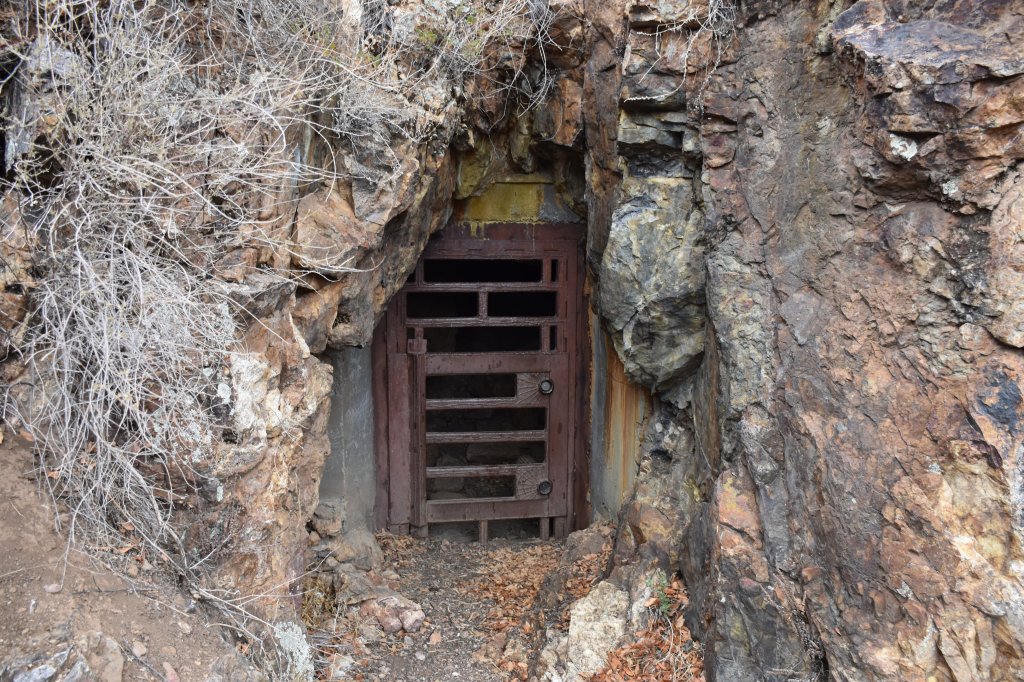
Note: The Chiricahua Crystal Cave is now a protected, gated cave in the Coronado National Forest near Douglas, AZ, roughly east of Nogales. It offers spectacular quartz crystal formations within 2.38 miles of passages. Access is strictly managed with a required permit, fee, and key from the Douglas Ranger Station. It is approximately 436 miles from Lake Havasu City.
Paul Clark MacGregor died on August 21, 1997, at the age of 85. He’s buried in Bisbee, Arizona. Marvin E. Huey passed away on June 11, 1981, in Oklahoma. He was 70. The newspaper had Marvin’s last name spelled wrong. Clay Bernard Coughanour died on April 10, 1988, and is buried at McGee Ranch Cemetery in Sahuarita, Arizona. He was 75.
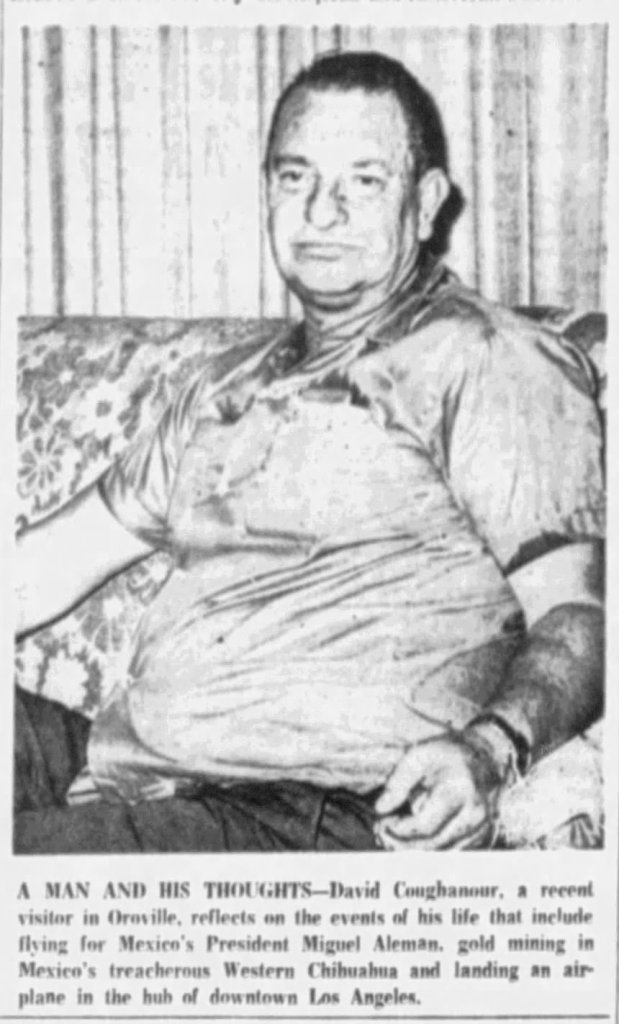
David Elmer Coughanour Jr. was the hardest to track down, and it gets somewhat confusing. He had the same name as his father and grandfather, whom died in 1904 and 1937, respectively, while David Coughanour Jr. also named one of his sons David Coughanour IV.
David III continued to live in Mexico, where he had mining interests and worked as a pilot and owner of a flying service. One newspaper article shows him losing power in a small Beechcraft airplane given to him by President Miguel Aleman of Mexico, as a Christmas present, during a flight over Los Angeles. He successfully landed in a field. This information is substantiated in the July 24, 1964, “Oroville Mercury Register.”
At one time, he was a pilot for several Mexican political figures, including the president, while some people also believed he had connections to a local cartel, although this was never proven. An article titled “The Bunker,” written by Melissa del Bosque and featured in The New Yorker on April 10, 2023, detailed such.
In 1962, David’s son, David Coughanour IV, was shot and tragically killed in Chihuahua over what was thought to be a robbery. David III died in 1975 at the age of 69, and his widow assumed control of all mining operations. From my research, it appears that after surviving that harrowing cave experience, this man literally lived on the edge of a cliff for the rest of his life.






 I like to write junk...