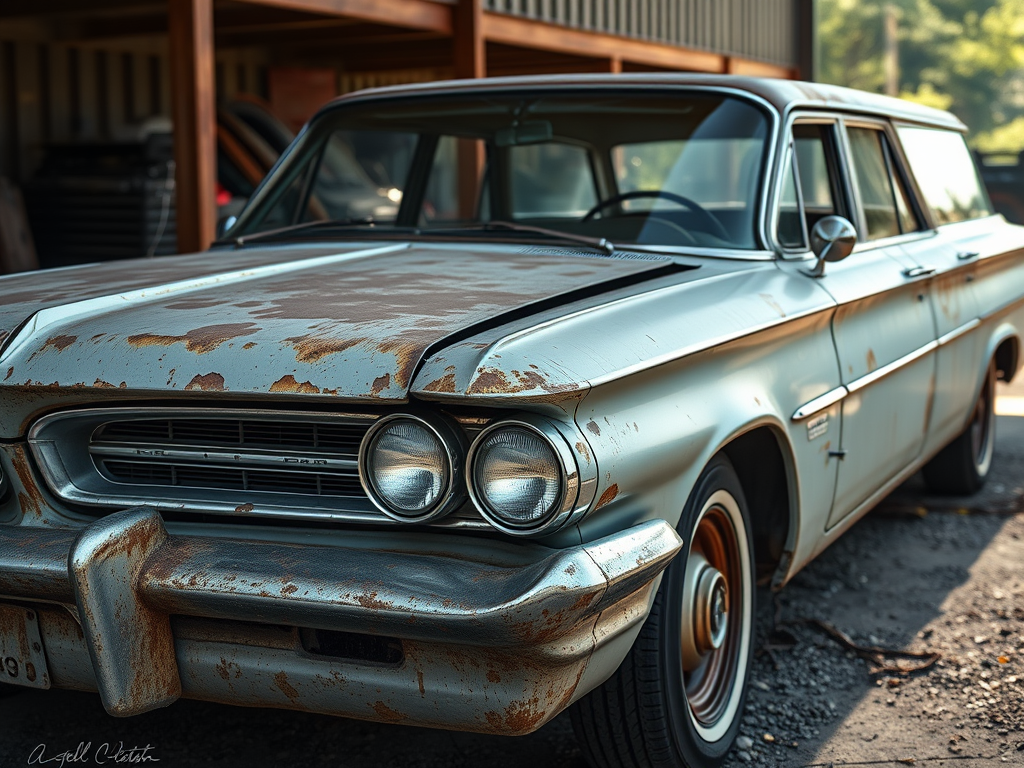
The phrase “grin and bear it” means to endure an unpleasant situation with good humor, without complaint. It suggests facing something difficult or uncomfortable with patience and a positive attitude, even if it’s not enjoyable.
Old age to me is something difficult and uncomfortable, and I’ve learned to grin and bear it over time. Several years ago, before he retired, my wife had me ask Dr. Thomas Wrona why I was beginning to feel so tired with aches and pains seemingly everywhere.
With a smirk on his face, the good doctor looked at me and answered. “It’s called old age, Mike. Get used to it because things won’t get better!”
As a former mechanic, I knew this and had told her that, yet Joleen didn’t like my self-prescribed analysis; she wanted a professional one. My experience working on many older vehicles during my career is the basis for my grassroots comparison.
I believe a 1962 Pontiac station wagon with bad ball joints feels about the same pain—as that of a 64 year old man with bad hips. I say this because I know someone who has undergone hip replacement surgery, and they were in great agony beforehand. Unfortunately, cars cannot express their torment as humans do, so we can only assume they feel the same.
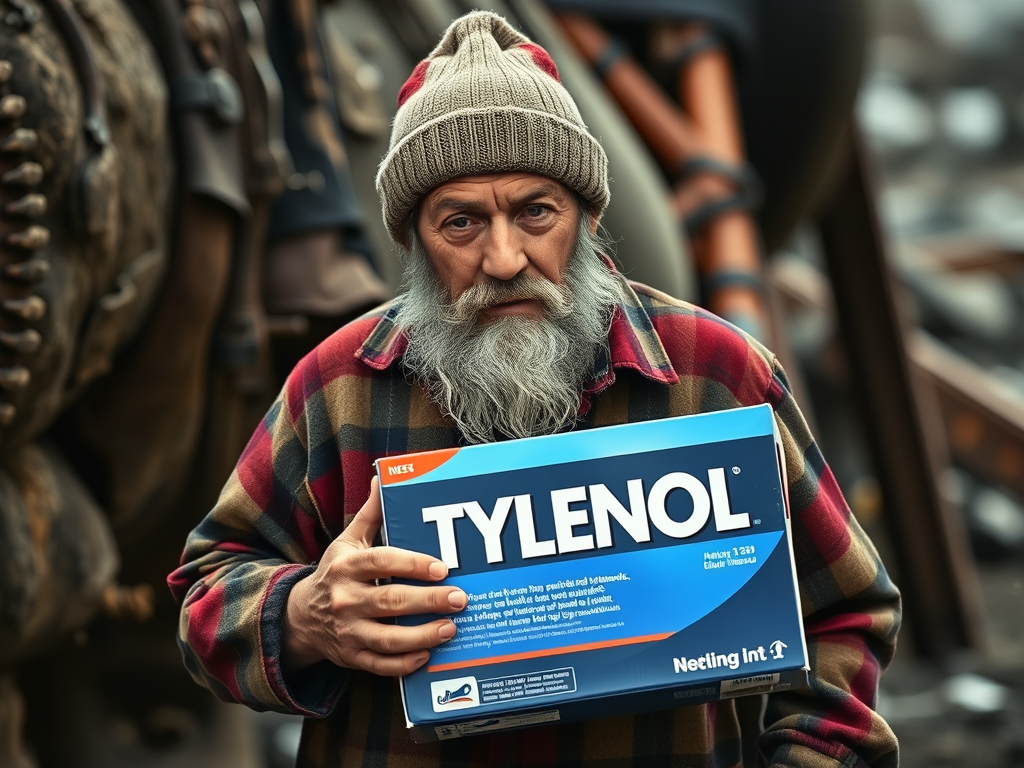
Right now, my ankles, both elbows, and shins hurt. Thankfully, Dr. Ace Taminophen is on call 24 hours a day. Most folks know him as Dr. Ty, or Dr. Tylenol. A couple of his 500-milligram gel tablets seem to work best. I take them at bedtime so I can sleep.
Older people often feel more pain as they age due to a combination of factors. As the body ages, joints and tissues can wear down, leading to conditions like arthritis and reduced flexibility. Additionally, the body’s ability to repair itself slows, making it harder to recover from injuries or strain. These physical changes, along with reduced muscle mass and bone density, contribute to increased aches and pains.
Furthermore, inflammation tends to increase with age, making everyday movements feel more uncomfortable. Chronic health conditions, such as diabetes or heart disease, may also play a role in amplifying pain and discomfort. All of these factors together explain why many older adults like myself experience more frequent or intense pain as the years go by.
I recall reading about someone years ago looking for a fountain of youth. If there is such a place, I’d definitely take a long drive to investigate. It didn’t take me long to find information on this.
The legend of the fountain of youth is often linked to the Spanish explorer Juan Ponce de León. In the early 1500s, Ponce de León sailed to what is now Florida, with stories claiming he was seeking a magical spring that would restore youth and vitality to anyone who drank its waters. While there is little historical evidence that Ponce de León actually sought the fountain, the tale persists as a symbol of humanity’s desire to reverse aging and find eternal youth.
This myth has become a cultural touchstone, representing the hope and pursuit of ways to ease or escape the discomforts of growing old—much like the aches and pains I experience as I age. The story reminds us that even centuries ago, people dreamed of solutions to the challenges of growing older.
Unfortunately, it turns out the fountain of youth is on the same level as the fake news we’re now seeing on TV. Getting back to Dr. Wrona and his advice to get used to the aches and pain, I’m getting there. I’ll take both extremities over that of being permanently laid up in a hospital bed or an assisted living facility.
Walking my usual path at Rotary Park this morning, finally getting back to the truck, I was achy and sore. While resting and rehydrating, a familiar thought popped into my head. “Grin and bear it, Mike, things don’t get any better than this!”
At that point, I could’ve cried, but chuckled instead. That’s what we seniors need to do if we’re going to make it through the day, along with having a case of Tylenol, of course.
 I like to write junk...