“Balance is essential for a model rocket to successfully lift off and go straight up without problems.”
Count me as guilty. I’ve done a few things in my life that violate our country’s laws, like exceeding the posted speed limit, but I’m now fixing that by driving slower than the speed limit. In a couple more years, my slate should be totally wiped clean.
Something else I violated, or at least think I did, was the National Association of Rocketry safety code. This was many years ago, and I can’t remember whether I ever signed the sheet that came with an Estes-brand model rocket.
For several years, my son and I built model rockets and flew them successfully. I think that might have helped him eventually join the United States Space Force. I’ll have to ask Gunnar that question sometime.
Being a hot rodder at heart, I couldn’t help but put a couple of solid-propellant rocket engines on a toy car and light them off on Fern Lane. That was the road in front of our house in Alaska. This goes against the safety code.
With a crowd of spectators watching, the car set a new land speed record for that stretch of asphalt before running off the road and crashing into a neighbor’s truck tire. No damage was done.
Knowing I wasn’t setting a good example for my son and other kids, I performed my next experiment in secret, much like Lockheed’s Skunk Works. This entailed stuffing three rocket engines onto one rocket tube. Balance is essential for a model rocket to successfully lift off and go straight up without problems.
Taking my creation to a large field, I lit it off and watched as it danced in every direction possible before heading toward some houses and then changing course. The parachute eventually popped out, and I retrieved things. Some kid had been watching, and he walked up asking me, “You didn’t balance it, did you?”
I quit tinkering with rockets then and experimented with making Gunnar’s gravity-propelled AWANA model cars faster with some illegal modifications. I didn’t know that went against the rules at the time, as I’d never read the instructions. I suppose that’s akin to telling a police officer you didn’t know the speed limit after being pulled over.
One of the first cars I helped Gunnar build, with me doing 99% of the work, jumped out of its lane much like that wayward rocket, and took out several other cars. You guessed it. Improperly balanced.
I’ve had the same problem towing trailers, opening several heavy toolbox drawers at once, and leaning out too far while using a ladder. That last one hurt. Just recently, I wrote a song titled “I landed in Heaven.”
It’s an imaginary tune with a serious message. You can find it on YouTube under the same title beginning October 22nd. Look for a photo of a large homemade rocket ship on the cover.
Children cheer as handmade cars speed down the Awana Grand Prix track.
“To add more drama to the scene I placed both hands behind my back as if I was being handcuffed.”
I asked a local bakery employee in a grocery store the other day if they offered a baker’s dozen on donuts. The young lady said yes and gave me the price. When I asked if that was for 13, she looked at me as if I were crazy. “No, a dozen is 12!” It was easy to see the gal didn’t know what a baker’s dozen was.
A baker’s dozen means 13 instead of 12, and its history is usually traced to medieval English baking laws—not specifically donuts at first. In medieval England, bread was heavily regulated because it was a staple food. Bakers could be punished for selling underweight loaves.
Since bread weight could vary after baking due to moisture loss, bakers often added an extra loaf when selling a dozen to ensure the customer received at least the required number.
Over time, that “extra” became known as a baker’s dozen. Where donuts are concerned, the phrase carried over naturally because donuts—like bread rolls, pastries, and bagels—are commonly sold by the dozen.
A donut shop offering 13 donuts for the price of 12 is continuing that old “extra one to be safe or generous” tradition, though today it’s more of a customer-friendly bonus or marketing gesture than a legal precaution.
I decided to check around to see if this bakery was the only one not following the old English tradition, and they weren’t. It seems that with the increase in price, a baker’s dozen has been reduced back to 12. Never mind that when you pay, and change is due, you’ll also be shafted any Lincoln pennies.
I believe it’s hocus-pocus how stores now advertise “deals,” as they like to call them. Older folks like me have to carefully read the small print on signs to see just what we’ll be paying.
I don’t know how many times I scanned an item only to see the regular price instead of the sale price at the end of a transaction. Walking back to read the sign, I discovered I needed to purchase another 11 to get the lower price.
Special offers can also be confusing and are undoubtedly subject to change in the near future. BOGO (buy one – get one) will mean exactly that. Folks will be stupefied when they look at their receipt and see they’ve just paid for two.
Shouldn’t this have been BOGT (buy one – get two) to begin with? This reminds me of tactics used by car lots in the 60s and 70s to leave customers mystified. A car would be advertised for a certain price on television, and when a customer came in expecting to buy it, they’d be told it was sold.
Perhaps I am making a mountain out of a molehill. A friend says that when she’s buying a dozen donuts, a thirteenth is stuck in the box without fear. “Who’s gonna open the box and count them?”
It’d be my luck that a store clerk would nab me as I walked away, or worse yet, the AI security camera in the self-checkout would spot things. This actually happened to me with grapes.
I’d placed a sack of them on the scale and in a hurry to get going, picked them up, and put them in the bag without hitting ‘accept weight.’ Everything locked up immediately ─ with a black & white grainy video showing my mistake. The clerk corrected things and said it happens all the time.
By then, those standing in line behind me were watching. To add more drama to the scene I placed both hands behind my back as if I was being handcuffed. Most folks chuckled except one.
The donuts I buy generally go to the chemotherapy lab in Kingman. If they’re short a couple of donuts from here on out it won’t matter as I always take them two dozen.
One thing I’ve been planning on doing but haven’t thus far, is the next time that automated AI produce scale asks if I accept the weight, I’ll decline, just to see what happens. I’m sure I’m not the only person wanting to do that. Will lights and buzzers go off? My wife says that she doesn’t want to be around to see.
“Google makes it easy, with perhaps a million definitions alone for head colds.”
My mother wanted me to become a doctor, but I never made the grade. The closest I got was my first two initials—M.D. She’d be proud of her great-grandson Kevin, who’s now a pre-med student at a college in Ohio.
My career field was automotive, and there is a direct correlation between the medical field and mechanics, as I’ll allude to in a few minutes. First of all, though, I’d like to touch upon some doctor jargon or lingo.
I’ve visited enough doctors over the years to pick up some of their language, as confusing as it is. I believe it’s purposely kept that way to make things tough for patients to ask questions. Most of us don’t want to come across as stupid, so we refrain. I generally go home and look up the medical terms afterward.
Google makes it easy, with perhaps a million definitions alone for head colds. I generally pick the first one, believing it’s probably closest to being correct. Never go to the very end of the list, as that could put you in outer space.
Endoscopy is one of those medical terms that seems twisted. One would think it’s a scope specifically designed to probe the end, yet it can also be placed down the throat. That’s somewhat unnerving to me if you catch my drift.
I’ve had a few sonograms over the past few years and have come away liking them. It’s as close to a massage as I’ll ever get, with the cool-sonogram-gel feeling quite relaxing during hot Arizona summers. The only downside is that it lasts only a few minutes.
Testing me for neuropathy, Dr. Livingstone in Havasu performed what he called an NCS test, short for nerve conduction study. Probes were placed on my legs, and then electricity was induced into them.
This is as close as I’ll ever come to experiencing what death row inmates eventually feel in Texas prisons. NCS should stand for nerve-curdling shock rather than anything else. A very precise test, I came away with the doctor finding I have mild neuropathy, as many seniors do. I highly recommend this test for those with leg pain. It’s the best way to locate the source.
Cardioversion is another one of those technical medical terms. I had a cardioversion when my heart was in atrial fibrillation, with the process thankfully working. If it hadn’t, I wouldn’t be writing this.
Probes were placed on my chest and backside, and when I was under anesthesia, my bebopping heart was shocked back into sinus rhythm. I didn’t feel anything other than when they peeled the sticky probes off my skin. That hurt!
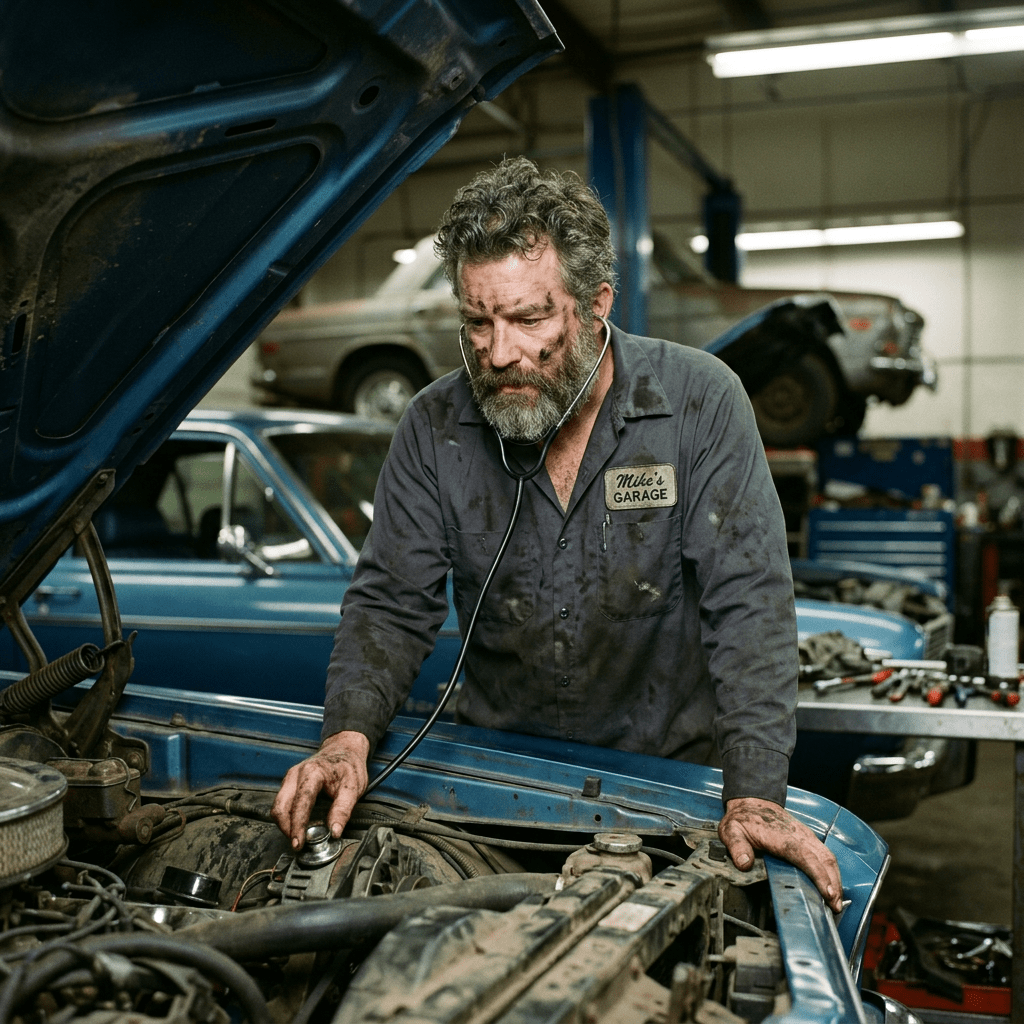
Doctor’s jargon and techniques are slightly different than mechanics. Automotive technicians use sonic stethoscopes to listen to an engine’s internal workings. A former coworker wore one around his neck, as doctors and nurses often do, just as an attention-getter.
We used camera scopes as well, much like the colonoscopy and endoscopes. These are used to peer into cylinders through sparkplug holes. The tool helped determine whether there was any damage to the piston or cylinder walls. They can be used for other tasks, such as checking tight spaces for loose wire connections, or looking up one’s nose.
Medical nerve conduction studies (NCS) using electrical impulses are not much different from some circuit tests used by automotive technicians. Voltage is applied through individual wires by a circuit checker to look for shorts or open circuits. Sometimes a wire will come alive and glow if a short is detected, like a faulty nerve.
Instead of performing cardioversions on hearts, jump-starts were quite common for restarting a dead engine. We had mobile battery packs about the same size as those portable defibrillators seen hanging on hospital walls. I have a couple of them in my home garage, mobile battery packs that is.
I can’t tell you how many vehicle cardioversions I’ve done in my life. Many of these rigs were brought in dead on arrival (DOA) on the hook of a wrecker. The difference between a wrecker and an ambulance is minimal in my mind, aside from the cost of transport. A hospital and a garage are also much the same.
No, I didn’t become a doctor like Mom wanted. Instead, I became a practicing mechanic, using my talents to sometimes bring cars and trucks back from the ravages of neglect and poor maintenance.
Given the number of misdiagnoses I made on vehicles over the years, it’s probably for the best I didn’t become a doctor!
“Bicycling is something I was good at, and I still ride, but I learned early on that being the fastest doesn’t always pay dividends in the end.”
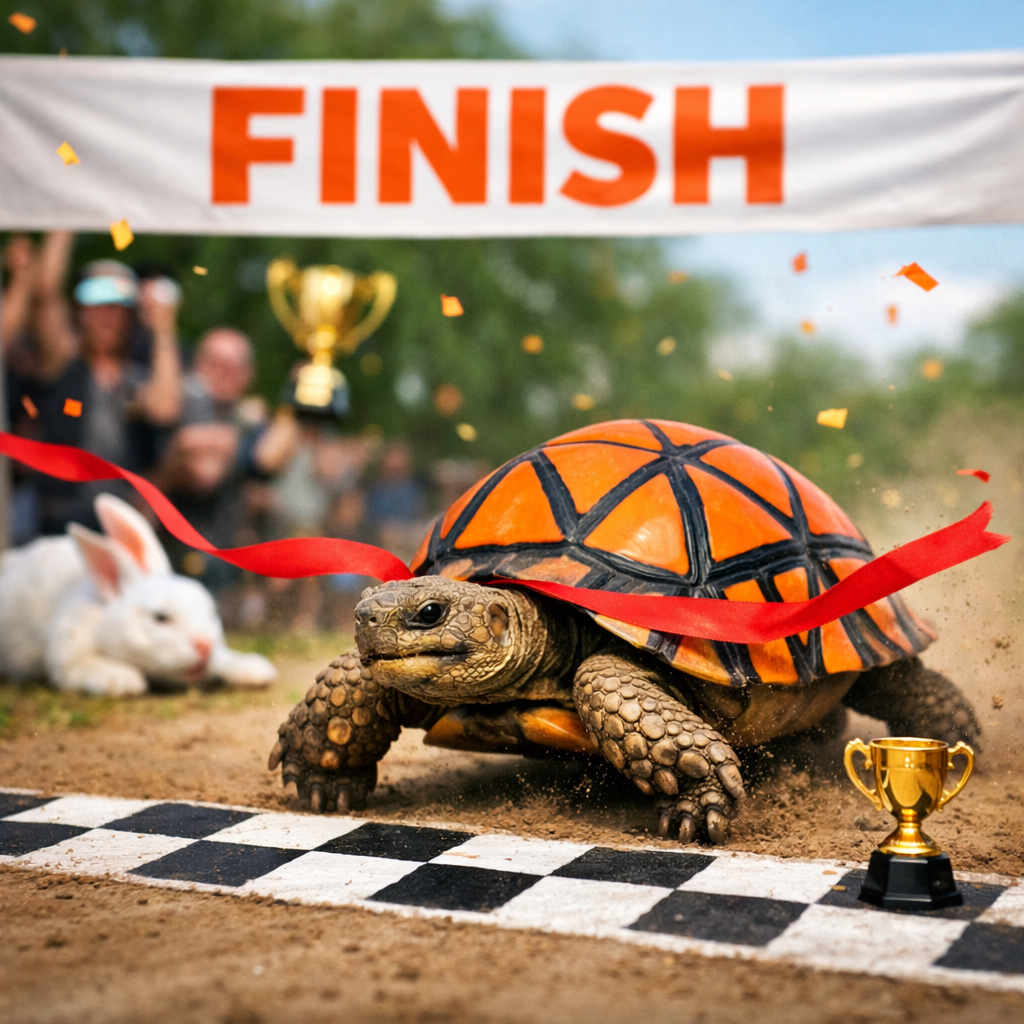
Tortoise and the Hare
I’ve never been the fastest at anything other than perhaps eating and reading. Mom was constantly telling me to slow down at meals and chew my food. My wife offered up a serious warning with her lecture. “You’ll choke someday. That’s how Janis Joplin died!” I believe she meant Mama Cass Elliot, but I wasn’t going to correct her.
As for my reading, no one has ever complained. I’ve been a fast reader since the earliest days, with SRA (Science Research Associates) labs in elementary school, fine-tuning my ability. No classmate was quicker, and even with weakening eyes, I’m still a whiz. No brag, just fact!
The phrase “slow and steady” comes from the classic fable of the rabbit and the hare. In this story, the hare is fast and confident, but he becomes overconfident and takes a nap during the race.
The turtle, moving slowly but steadily, never stops and eventually wins the race. The lesson is that consistent effort and patience often lead to success, even if progress seems slow at times.
Other examples include a student who spends little time studying every day instead of cramming at the last minute, who is likely to perform better on exams. Similarly, someone saving a small amount of money each month will eventually build up substantial savings, demonstrating that perseverance often outweighs speed.
Bicycling is something I was good at, and I still ride, but I learned early on that being the fastest doesn’t always pay off. My knees and hips can still function well without needing replacements; this is partly because I didn’t push my torso beyond its limits. I give the bulk of the credit here to Jesus Christ for helping keep me in good health.
Now that I’m an older homosapien male, I have nothing to prove, other than I can still move forward without the assistance of an electric motor. Hopefully, that day never arrives. If it does, I’ll want 36 volts. Horsepower is still king, even on senior-citizen mobility scooters.
Driving around town, I notice lots of potential hares tailgating and trying to push me up the road. If the speed limit says 35, that’s where you’ll find my truck speedometer pegged. Being retired, I’m in no hurry to get anywhere, as those days are long gone.
Walking is the same. No longer do I scurry about a grocery store in a tizzy, burning up calories. Younger folks behind me will just have to safely pass when the opportunity arises. “ Walk and smell the roses” is my motto, although around Havasu it’s more like inhaling mesquite and paloverde pollen while popping Allegra tablets.
Joleen says that I oftentimes don’t walk a straight line in stores or while hiking numerous trails in Rotary Park. I’ve noticed that myself, blaming it on my shoes or deteriorating asphalt, neither of which is the problem.
It appears that my slow and steady gait is turning to slow and unsteady, a problem that many seniors have. Despite this, if I keep each foot moving forward, all is good. Slow and unsteady still beats not moving at all.
I’ll end this with a bit of humorous wisdom that a coworker gave me years ago. I was around 30 at the time, while Martin Allen was in his 70s. Martin grew up in Arizona, where he worked in the copper mines of Bisbee before moving to Alaska. Some of his words have been changed to make it acceptable to all readers, although some might still be offended.
“Two bulls were standing on a hill looking down upon a group of heifers. The youngest bull, full of testosterone, snorted and boldly proclaimed, “I’m gonna run down there and make love to one of them bovines.”
The older bull, chewing on a blade of grass, shook his head in disagreement before replying. “Not me, I’ll walk down there and make love to them all!”
I suppose only a few got the hidden message. As a young man, it took a moment to fully understand what Martin was trying to say. After it sunk in, with me being a rookie mechanic, his lesson was on the same level as Albert Einstein, at least to my brain it was.
I’ve never forgotten Martin Allen, often putting his wisdom to good use in other areas of life. Before closing, I took a popular John Deere advertisement regarding their lawnmowers and twisted it to fit this story.
“It’s not how slow you mow – it’s how well you mow slow!”
After hundreds of crazy and oftentimes inflammatory Facebook posts, perhaps a couple of thousand over 20 years, I wanted the last post to be totally special. To me, this is like retirement all over again.
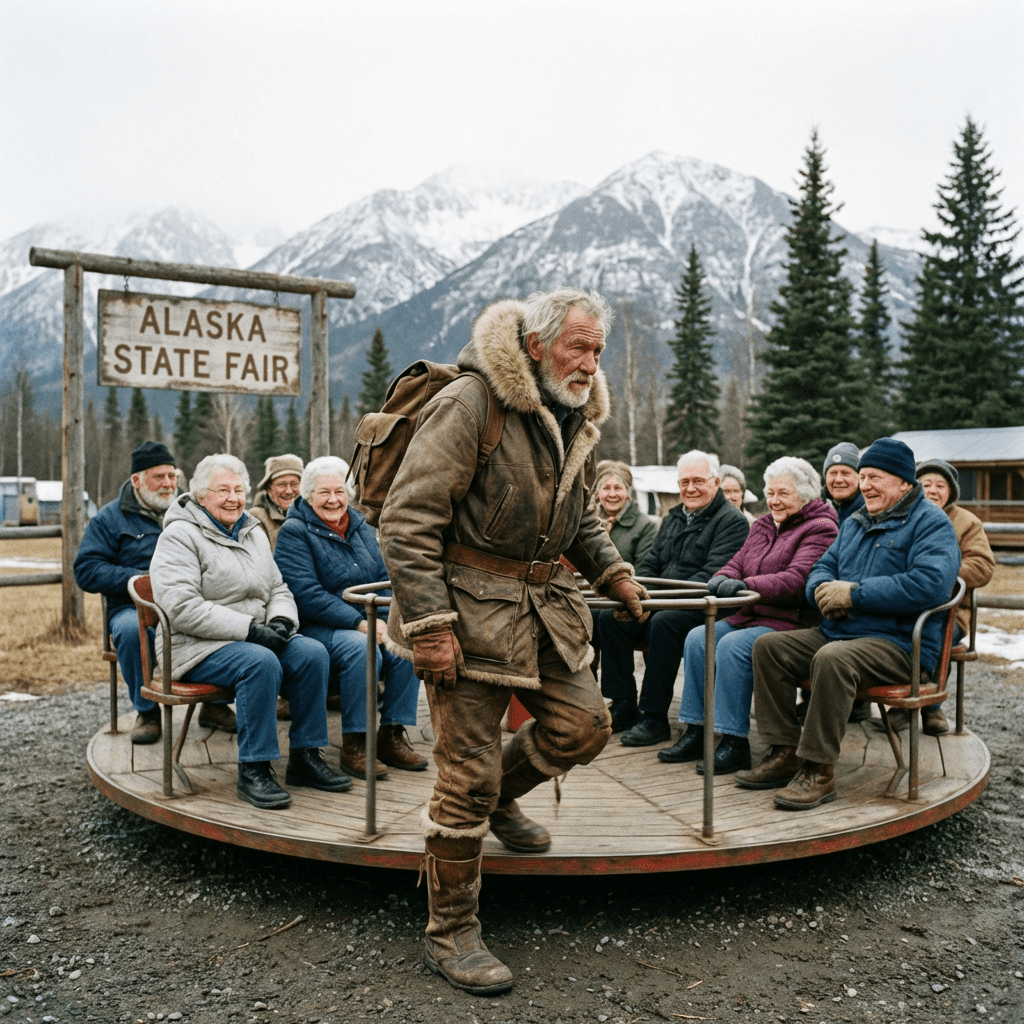
For this final project, my new and improved AI (artificial intelligence) photo generator asked for early ‘facial only’ images of 12 friends, with the 12th being me. Twelve bodies were all that would fit on the merry-go-round.
This was a tough assignment, yet I succeeded by snipping and copying school yearbooks and classroom photographs. No names or personal information was supplied.
AI somehow aged these people to make them appear in their late 70s, as if that was hard to do. We all look pretty much the same at that stage. If you see a similarity, it’s probably you, but my lips are sealed on exactly whose mugs were submitted.
I’m extremely happy with the outcome, especially with my early-Alaska-pioneer resemblance. That leather jacket is striking. I was so impressed that I ordered an 8×10 print for the office. That’s a first for me in framing something created entirely by a computer program.
From this day forward, many of my biking, hiking, Jeep adventures, and car show experiences will be permanently housed on the following website: www.michael-hankins.com.
That site and the associated email section are monitored daily, unlike fb. The latest goal is to start producing drone videos of mysterious areas that are unreachable by foot, car, or plane, and to preview them on YouTube. Arizona is full of such inaccessible places.
I’m still kickin’, but I’d much rather use my rapidly diminishing time to create entertaining videos watched by many, rather than continue posting redundant info, stories, humorous memes, and photos seen by a few on fb. Nevertheless, I’ll still write for my blog and various periodicals, especially “The Today’s News-Herald.” A short update post will appear on April 9 each year.
YouTube seems to be growing, while Facebook continues to suffer from declining group participation. Always one to take an unknown path, new adventures and discoveries hopefully await me around the bend. The ability of drones to scour the desert for treasure has great potential. “I’m very excited” is more than an understatement here. 😊
“Everyone goes to Walmart, including the Clintons…”
I might be running out of good material to write about, as the low-hanging fruit in our town and neighborhood has already been picked. ‘Low-hanging fruit’ refers to topics or ideas that are easy to write about because they’re familiar, straightforward, and commonly discussed.
These include personal anecdotes, popular trends, well-known events, and topics extensively covered in the media, such as Joe Biden and Kamala Harris. Taking the easy way out, I tackled these subjects first because they required less research and creative effort compared to more complex, obscure, and off-limits topics, such as family and friends.
Telling my wife, Joleen, that I finally reached writer’s block, a goal I’ve not achieved before, she suggested a few topics, with Walmart being one of them. I’ve never written about our trips to Walmart, figuring they weren’t print-worthy.
Everyone goes to Walmart, including the Clintons, with nothing out of the ordinary ever happening there, at least I’ve never seen or read about anything terribly strange occurring at ours.
People sometimes walk the wrong direction in Walmart aisles, yet they do that in all stores. The right side is for all traffic going forward, while the left is for the opposite. This might not seem like a big deal, but it can be if a person’s not paying close attention.
I’ve never had a big problem because I walk slowly, as older people are expected to. With a fully loaded buggy and wheels that don’t easily turn, moving too fast without brakes is an invitation to sideswipe someone. Thankfully, that’s never happened to me, but I have lightly ‘tapped’ the back of a few shoes, namely, Joleen’s.
Folks sometimes wear strange clothing in these stores, with the Walmart in Kingman easily beating out the one in Lake Havasu City in this department. That might have something to do with I-40 being close by Kingman and lots of California travelers dropping in.
During the last holiday season, just for kicks, I walked up to a life-size cardboard replica of Patrick Mahonnes in Walmart, jokingly asking where the Pop-Tarts were. Joleen saw what I was doing and quickly scurried ahead to escape the embarrassment.
A kindly female employee with red hair, who’s been there for many years, evidently overheard my question and walked over, telling me, with a straight face, that they were next to the cereal section. Caught off guard, I didn’t expect this, with me saying, “Thank you!” in return.
Strangely enough, that woman didn’t act as if ‘my comedy routine’ was anything out of the ordinary. Joleen later told me that some Walmart shoppers undoubtedly chatted with that cardboard replica all the time, and that it was no big deal to workers. To that seasoned clerk, I was just another one of their “special customers.”
“You would’ve never known it because she was the most beautiful girl with brown hair.”
I’ve never held a grudge against someone that I know of, but have had a few crushes on people in my life, thankfully, always someone of the opposite sex. One of them involved a college-age girl who worked at a Pizza Hut in Spenard, Alaska. The year was 1970.
I don’t believe I was the only one taking a liking to her, as my friend Jeff saw the same merits in Tracy Turnbull as did I. We were just high schoolers back then, but this young lady talked to us with sincerity, knowing, yet not saying, that we were much too young for her.
Part of our intrigue was that Tracy told us her dad had taught her how to work on cars, and she didn’t mind getting grease under her fingernails. You would’ve never known it because she was the most beautiful girl with long brown hair. Jeff and I each saw her as a perfect girlfriend, yet there was no jealousy or competition between us.
We haunted Pizza Hit as often as our money held out, generally opting for the cheapest thing on their menu: splitting a ham or turkey sandwich. Water was our beverage of choice because it was free. There came a time when we both became terribly sick from food poisoning, a ham sandwich the culprit, no fault of Tracy’s.
I seriously thought about asking this gal out, that is, until we bumped into her in a Carr’s grocery store with her boyfriend. Jeff and I were riding bicycles that day. Knowing both of our names by then, Tracy introduced us to her fiancé as good friends. The guy was athletic and tall, and I believe on the University of Alaska – Anchorage basketball team. I saved myself some future embarrassment by seeing this.
A crush, unlike a grudge, is a strong but often short-lived feeling of romantic attraction or infatuation that someone experiences toward another person. Having a crush usually involves thinking about the person frequently, feeling excited or nervous around them, and admiring their qualities, even if the feelings are not reciprocated or openly expressed.
A grudge is a persistent feeling of resentment or anger toward someone, often due to a past incident or perceived wrongdoing. Holding a grudge means you continue to harbor negative emotions and refuse to forgive, which can affect relationships and personal well-being.
Letting go of grudges is important for emotional health and is often encouraged in teachings like Ephesians 4:26-27, which emphasize resolving conflicts promptly.
My wife once asked me why I held no grudge against a family member who had basically robbed me of a few thousand dollars. When I say robbed, I mean that I invested money with the person on the promise that I’d get it back. That never happened. I just took things in stride here, knowing better than to let it happen again. Afterwards, we still talked as if nothing had ever happened.
Going back to my teenage years, a crush could leave an almost exhilarating feeling, making me happy to be alive. Grudges, on the other hand, according to doctors and also the Bible, have negative connotations that can take years off a person’s life. Thankfully, I was wise enough to get the message early.
God tells those holding grudges to resolve their conflicts before the sun goes down. I’ve always done this, especially with my spouse and children, not wanting the stress from lingering conflict to prematurely age me and shorten my time with loved ones. It’s worked according to God’s plan thus far.
I’m not sure I’ll ever have another crush, at least not of the human variety. I did see a vintage unrestored truck at a local car show with a “for sale” sign in its front window—the brown patina immediately catching my attention. Crush, lust, call it what you want. All I know is that I loved that rust!
“The other night at home, Joleen and I were watching a movie when I heard the unmistakable sound of nails being clipped.”
A pet peeve is a particular behavior, habit, or occurrence that someone finds especially annoying or irritating, even if it might not bother others. These are often minor frustrations that can trigger disproportionate reactions in certain individuals.
Some common pet peeves are loud chewing or slurping, people who interrupt others mid-conversation, leaving dirty dishes in the sink, talking during movies, slow walkers blocking the sidewalk, not using turn signals while driving, using a phone during meals, leaving lights on in empty rooms, not replacing the toilet paper roll, and people who show up late.
While these are some of the most common pet peeves, everyone has their own unique list of things that bother them. Before I go into mine, I decided to research uncommon pet peeves, figuring there had to be some real doozies out there. This is what I found:
People who use excessive punctuation in texts, when someone moves your belongings slightly out of place, finding a tiny sticker left on fruit after peeling or slicing, when socks are mismatched or twisted inside shoes, group text messages where the conversation spirals off-topic, plastic packaging that’s difficult to open, unnecessary background noise in videos or audio recordings, people who walk slowly in the fast lane of a grocery store, when someone leaves a tiny bit of food or drink in a container and puts it back in the fridge, receiving flyers or advertisements tucked under windshield wipers.
I’m happy to report that none of these uncommon pet peeves are mine, because I’m guilty of creating a good number of them. Does anyone really care if socks are mismatched? The Stevie Wonder and Paul McCartney song, “Ebony and Ivory,” comes to mind here. Some of you will get it.
On the common list, drivers not using turn signals is a pet peeve, along with dirty dishes in the sink. That’s about it for me. I can think of a couple of others that weren’t mentioned on either list.
Going to car shows and hearing someone tear down another person’s ride is a pet peeve. I always think back to my days in school, when some kid was critical of another, only because they had low self-esteem and were trying to build it up at the expense of another. It’s a psychology thing.
My top pet peeve, and one that hasn’t happened for some time, is hearing someone cut their nails during church service. I’m talking fingernails here. In Anchorage, we always sat in the front row on the balcony. Perched up there, I could perfectly hear the music and preaching, yet also catch any oddities that happened along.
Watching someone being fast asleep in the pew while others stood to sing was quite common. It was generally the children and the older people who failed to rise. That’s understandable.
It’s amazing from up high, the bald spots folks had that weren’t visible at ground level. That’s one reason alone I didn’t sit down below. Getting back to the nail cutting. “Snip, snip, snip” for whatever reason bothered me more than anything. Once this noise began, my radar instantly began to pinpoint the location.
One might think it’s easy to find the culprit, but it wasn’t. Most were sly, quickly clipping a nail and then hiding the clippers. Several seconds later, and they’d snip another. Silver clippers were much easier to spot than black ones, which were next to impossible.
Not once did I find a man cutting his nails with it always being females; age not part of the equation. Once spotted, there was nothing I could do other than burn a hole through their head with my laser eyes. That still didn’t keep them from clipping.
Our pastor was good at finding congregation abnormalities while preaching, such as stopping his sermon in mid-sentence to ask someone to cease talking, or to get off their electronic device, but not once did he catch a nail cutting in progress.
Oh, I could’ve told him after church who was doing the snipping, but what good would it do me at that point? I’d merely be labeled a snitch by the person I snitched on. These days I don’t sit on the balcony, so it’s no problem.
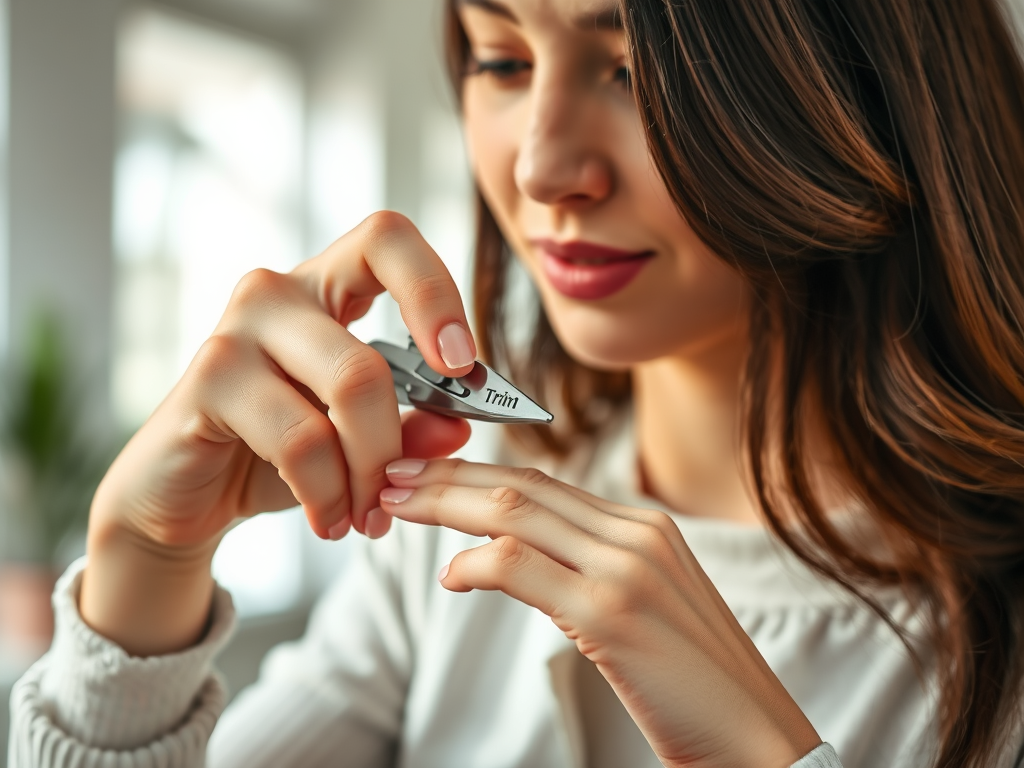
The other night at home, Joleen and I were watching a movie when I heard the unmistakable sound of nails being clipped. Looking over at my wife—I saw that one of her hands grasped a cup of coffee—so I knew it couldn’t be her.
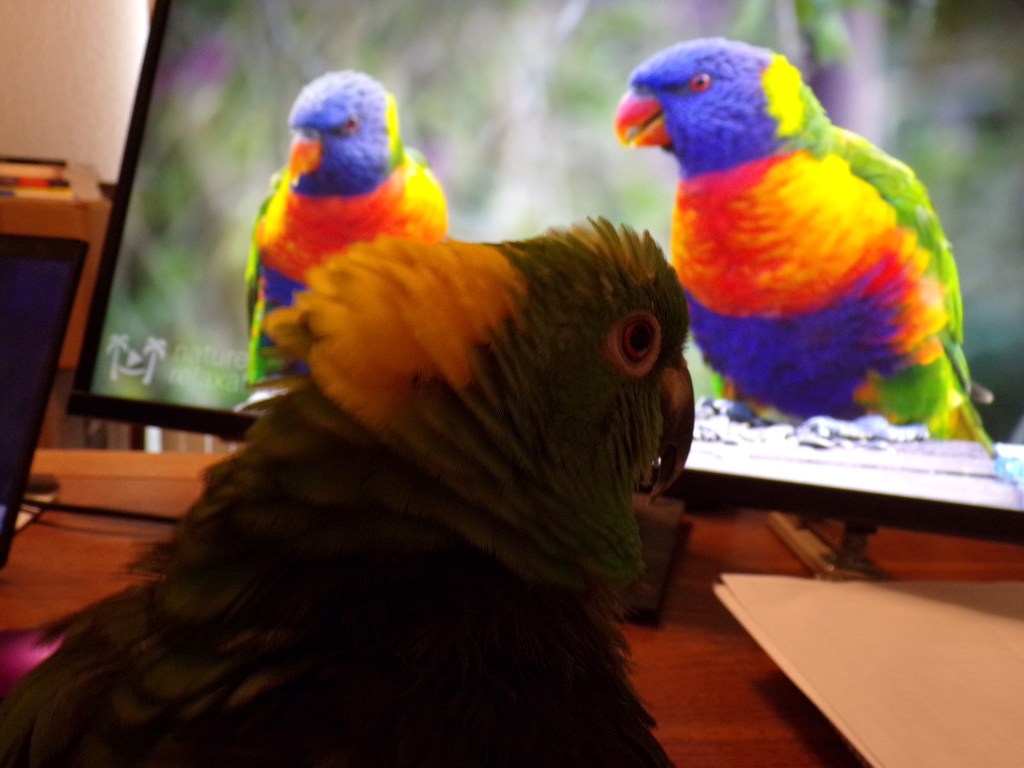
We have two parrots, Jess and Aldo, who’ve been with us going on 40 years now. Jess is very good at mimicking sounds, and he coughs exactly as we do when we’re sick. Our Yellow-naped Amazon thinks it’s funny.
Evidently, he’s now able to mimic the sound of fingernails being trimmed, which annoys me more than anything. Joleen believes that he’s merely rubbing his beak sections together, and it isn’t intentional. I don’t know this for sure, with Jess not saying.
The only thing I can do to drown out the noise is turn up the television volume. Last Saturday during Supercross, the volume number was 35, and that still wasn’t high enough. “Click, click, click,” came through loud and clear.
At volume 40, the television speaker sounded as if it were about to blow—with our neighbors undoubtedly hearing the motorcycle race announced word for word. Finally giving up, I had Joleen turn things back down.
At this point, I did as I’d seen so many old men do in church over the years, I fell asleep. When I awoke, the race was over, with Joleen telling me that Eli Tomac had won. That’s all I needed to know.
As my wife covered our birds up, Jess had one last thing to say, “Ready to go nighty night?” How could anyone stay upset with a pet peeve like that?
“I believe a 1962 Pontiac station wagon with bad ball joints feels about the same pain—as that of a 64 year old man with bad hips.”
The phrase “grin and bear it” means to endure an unpleasant situation with good humor, without complaint. It suggests facing something difficult or uncomfortable with patience and a positive attitude, even if it’s not enjoyable.
Old age to me is something difficult and uncomfortable, and I’ve learned to grin and bear it over time. Several years ago, before he retired, my wife had me ask Dr. Thomas Wrona why I was beginning to feel so tired with aches and pains seemingly everywhere.
With a smirk on his face, the good doctor looked at me and answered. “It’s called old age, Mike. Get used to it because things won’t get better!”
As a former mechanic, I knew this and had told her that, yet Joleen didn’t like my self-prescribed analysis; she wanted a professional one. My experience working on many older vehicles during my career is the basis for my grassroots comparison.
I believe a 1962 Pontiac station wagon with bad ball joints feels about the same pain—as that of a 64 year old man with bad hips. I say this because I know someone who has undergone hip replacement surgery, and they were in great agony beforehand. Unfortunately, cars cannot express their torment as humans do, so we can only assume they feel the same.
Right now, my ankles, both elbows, and shins hurt. Thankfully, Dr. Ace Taminophen is on call 24 hours a day. Most folks know him as Dr. Ty, or Dr. Tylenol. A couple of his 500-milligram gel tablets seem to work best. I take them at bedtime so I can sleep.
Older people often feel more pain as they age due to a combination of factors. As the body ages, joints and tissues can wear down, leading to conditions like arthritis and reduced flexibility. Additionally, the body’s ability to repair itself slows, making it harder to recover from injuries or strain. These physical changes, along with reduced muscle mass and bone density, contribute to increased aches and pains.
Furthermore, inflammation tends to increase with age, making everyday movements feel more uncomfortable. Chronic health conditions, such as diabetes or heart disease, may also play a role in amplifying pain and discomfort. All of these factors together explain why many older adults like myself experience more frequent or intense pain as the years go by.
I recall reading about someone years ago looking for a fountain of youth. If there is such a place, I’d definitely take a long drive to investigate. It didn’t take me long to find information on this.
The legend of the fountain of youth is often linked to the Spanish explorer Juan Ponce de León. In the early 1500s, Ponce de León sailed to what is now Florida, with stories claiming he was seeking a magical spring that would restore youth and vitality to anyone who drank its waters. While there is little historical evidence that Ponce de León actually sought the fountain, the tale persists as a symbol of humanity’s desire to reverse aging and find eternal youth.
This myth has become a cultural touchstone, representing the hope and pursuit of ways to ease or escape the discomforts of growing old—much like the aches and pains I experience as I age. The story reminds us that even centuries ago, people dreamed of solutions to the challenges of growing older.
Unfortunately, it turns out the fountain of youth is on the same level as the fake news we’re now seeing on TV. Getting back to Dr. Wrona and his advice to get used to the aches and pain, I’m getting there. I’ll take both extremities over that of being permanently laid up in a hospital bed or an assisted living facility.
Walking my usual path at Rotary Park this morning, finally getting back to the truck, I was achy and sore. While resting and rehydrating, a familiar thought popped into my head. “Grin and bear it, Mike, things don’t get any better than this!”
At that point, I could’ve cried, but chuckled instead. That’s what we seniors need to do if we’re going to make it through the day, along with having a case of Tylenol, of course.
I recall my mother watching the soap opera “General Hospital” on a rare day off. Mom worked in a hospital, so I assume that’s the reason why. I was never one to watch soap operas, as I’d imagine most guys don’t—unless they’re closet viewers. Life has enough drama of its own without adding to it through television entertainment.
When my wife and I moved to Arizona, one of the main reasons was to escape the drama that was continually coming our way in Alaska, no fault of our own. Anchorage was rapidly deteriorating under leftist Democrat leadership, like so many big cities across the US. The time was ripe to move elsewhere.
Our Anchorage church had its own drama: primarily, competition for recognition among select members, and I believe most large churches still do. It’s a given that some people love the spotlight, but churches shouldn’t be a place to try to outshine others.
That didn’t keep us from going. It seems any large body of people has drama, such as PTA meetings, sports events, and even the Democratic National Convention. Drama, in a way, is purely human nature.
A few in our flock felt compelled to publicly proclaim they were doing well financially. For the most part, I could overlook this, since I was there for one reason—to soak up the message. Our pastor was good at preaching, so the distractions were overcome.
The friends I had and still do never flaunted their excesses, although most, if not all, did much better than we did. I was just, Mike to them, a faithful friend. Competition amongst the stuff we owned or were still paying for never entered the picture. It was all junk to me and still is. None of us takes our worldly treasures to Heaven.
There was no trying to outdo the Joneses in my life format, taking what came to Joleen and me with gratitude, no matter what it was. There were many times we made do with others’ discarded things. I was pretty good at fixing broken items that people tossed away, a bicycle comes to mind.
Drama in someone’s life typically refers to situations filled with heightened emotions, conflicts, or unexpected events that cause stress or excitement. It can involve arguments, misunderstandings, or challenges that disrupt normal routines and require attention or resolution.
Sometimes, drama arises from interactions with others, while at other times, it stems from personal struggles or circumstances. Some automatically attempt to lasso others into their drama. It’s best to steer clear here or totally escape the surroundings.
The Bible advocates for a life of “no drama,” urging believers to pursue a quiet life (1 Thessalonians 4:11).
I try my best to follow that Biblical rule and have been somewhat successful these past few years. Part of that has to do with not allowing drama to become a monkey on my back here in Havasu. Should any of this unwanted stress attempt to catch a ride, I’ll loudly say to myself, “Stop, drop, and roll.”