YUMA BLUES – PART ONE

“Imagine that you are Miss Ruby Ellens, having just received this card, or better yet, Ruby’s father.”

Main Street – Yuma, Arizona

Yuma Army Air Field, located near Yuma, Arizona, played a significant role during World War II as a key training base for military aviators. Established in 1942, the airfield was part of the United States Army Air Forces’ rapid expansion to meet wartime demands for skilled pilots and aircrew.

Throughout the war, Yuma Army Air Field hosted advanced flight training for thousands of cadets, specializing in single-engine aircraft. Its vast desert terrain provided ideal conditions for year-round flying and rigorous training exercises. The base operated various aircraft types, including the AT-6 Texan and P-40 Warhawk, and contributed to the preparation of pilots for combat missions across multiple theaters.

In addition to flight training, the airfield supported gunnery and bombing practice, further enhancing the capabilities of U.S. air forces. After the war ended in 1945, the base was deactivated but later reopened and evolved into today’s Marine Corps Air Station Yuma, continuing its legacy as a vital military aviation facility.

Private C.W. Hilleboe was assigned to the Yuma airfield at the start of WWII. I know this much because I have a picture postcard the private sent Miss Ruby Ellens in Sioux Falls, North Dakota, from Yuma, 71 years ago, on October 1, 1944. The card has a color shot of Yuma’s Main Street on the front, also showing older automobiles of the period.

Before I go any further, let me say that I’ve come across numerous vintage newspaper articles along with postcards having racist undertones. For the most part, I don’t include them in my stories, but in this case, the message that Pvt. Charles William “Bill” Hilleboe sent Ruby Ellens may have been the very reason this couple didn’t stay together.

I decided to print his short note, as written, to prove my point. Imagine that you are Miss Ruby Ellens, having just received this card, or better yet, Ruby’s father. Perhaps Bill didn’t mean what he said, but unfortunately, things came out wrong, especially where drinking alcohol is concerned.

“10-1-44

It isn’t that clean, believe me.

Here’s the card I promised to send you. I would have sent it sooner but last night was my first night in town, also my last. The town is no good. All you see are Mexicans and halfbreeds. One thing though they have plenty of liquor. Believe it or not, I didn’t touch it last night. I am waiting until I get home. Will write you a letter soon. Love, Bill.”

Ruby Jean Ellens was born on February 16. 1922, in Minnehaha, South Dakota. She came from a very religious family, and she was highly active in church as a young person.

Charles William “Bill” Hilleboe was born on March 5, 1924, in Minneapolis, Minnesota. Enlisting in the US Army on June 27, 1942, at the age of 18, he was only 20 when he wrote Ruby Ellens.

Pvt. Hilleboe served as a radio operator on B-17 and B-24 bombers during WWII. He married Barbara Ellen Doherty on June 29, 1946, but that marriage didn’t last. They divorced on May 19, 1950.

Bill then wed Iva Maurine McKinney on October 9, 1950. After leaving the service, he worked as a depot agent for Union Pacific Railroad for 37 years before retiring. Mr. Hilleboe was also mayor and city councilman of his hometown in Idaho, and an active Lions Club officer and participant. The couple had three children.

Bill and Maurine stayed together for 53 years before she died in 2004. Bill died one year later, on May 10, 2005, at the age of 81.

For those wondering what happened to Miss Ruby Jean Ellens, stay tuned for my next story, “Yuma Blues – Part Two.”

Charles William “Bill” Hilleboe

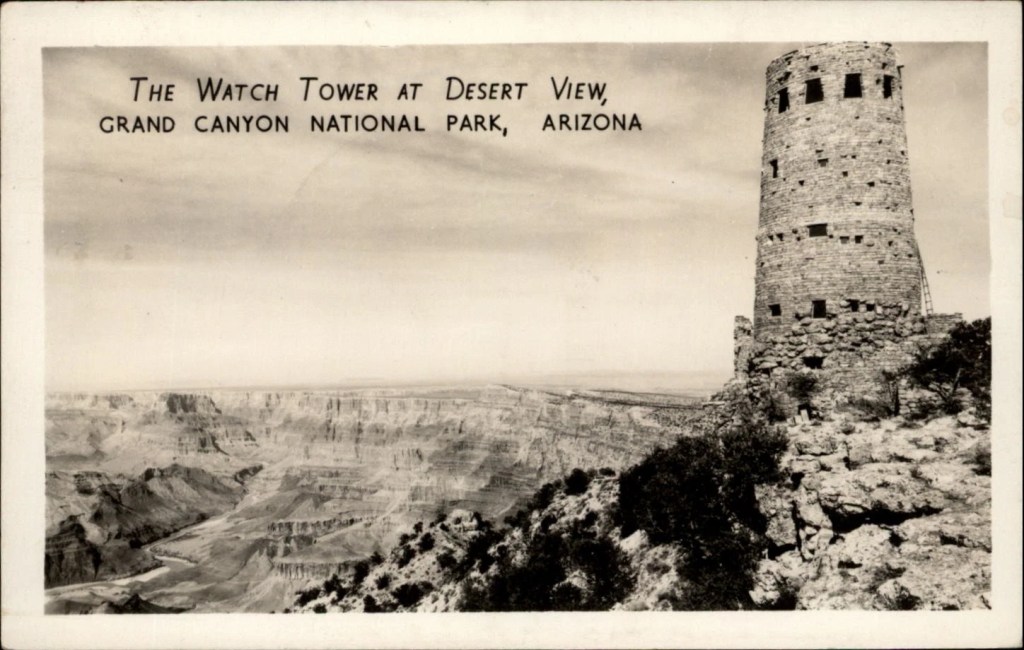
THE WATCH TOWER

My mother made it a point to always mail family and friends, postcards, whenever she traveled. I kept a few of these cards to pass on to my grandchildren. This was quite common back in the day, but not as many people have followed through on the tradition these days. It’s much like Christmas cards.

The featured postcard in this writing is one from the Grand Canyon National Park in Arizona. It shows a building called The Watch Tower. I remember this structure from visiting the place almost 38 years ago, and I was quite impressed with it. The tower was very busy, and we had to wait in line to go in. The rock and steel structure is also known as Desert View Watchtower and Indian Watchtower.

The late Jimi Hendrix had a hit song called “All Along The Watchtower.” Released in 1968, yet written in 1966 by Bob Dylan, this was some 48 years after the Grand Canyon tower was constructed.

I doubt this song was written about Dylan’s visit to the national monument, but he did spend considerable time in the state, living in Scottsdale with his wife. Some say that the tune has Biblical meaning, with Isaiah 21:5-9, mentioning such a dwelling. “Watchtower” is also the name of a magazine published by the Jehovah’s Witnesses religious organization.

The Grand Canyon tower was conceived by Mary Holter, an employee of the Fred Harvey Company. It was completed in 1932, becoming a major attraction to park visitors. It was designed by Mary Holter to resemble an ancient Puebloan watchtower, but the overall size is much smaller than the real thing.

Today, the lower floor is a gift shop, while the upper is designed for tourists to take in the spectacular view. Millions of visitors over the years have visited this structure and undoubtedly came away awestruck. The canyon itself had a lot to do with that.

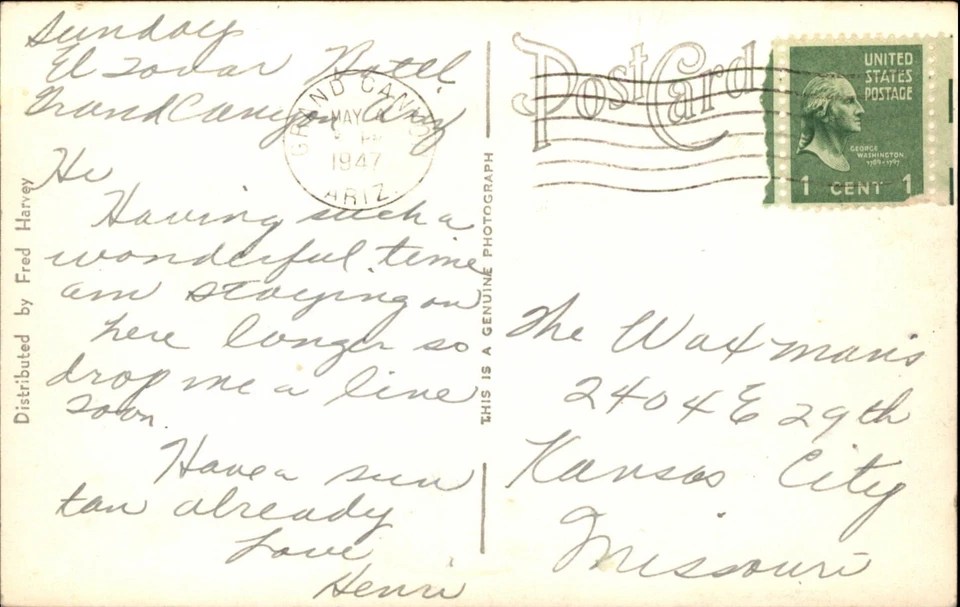
Someone named Henri visited the Grand Canyon in 1947. He mailed this postcard to The Waxman’s in Kansas City, Missouri. As I always try to do with addressed and cancelled postmark cards. I attempt to track down the sender and recipient, with it not always being easy.

In this case, the recipients were Meyer & Fannie Waxman. They lived at 2404 E. 29th Street in Kansas City. I can visualize Meyer retrieving the card from his mailbox, with Fannie reading it out loud to her husband.

“Sunday

El Tovar Hotel

Grand Canyon, Arizona

Hi

Am staying here longer so send me a line soon

Have a sun tan already

Having such a wonderful time

Love Henri”

Afterwards, the Waxmans talked about how they should visit Arizona before getting too old. Maybe they already had? It was only 9 years after getting the card that Meyer died in 1956. Fannie outlived him another 41 years, living to be 103.

Unfortunately, for now, Henri will have to remain a mystery in my postcard history.

CHOICES

“Joleen and I were told years ago that this eatery was a well-kept secret, and we eventually found out why.”

There are plenty of good places to eat in Lake Havasu —with my wife and I patronizing a good many. Some might say there’s absolutely no reason to drive out of town to dine out, yet sometimes it’s nice to leave paradise behind and check out nearby towns.

On occasion, we journey west on I-40 across the border to California and eat at the Wagon Wheel Restaurant in Needles. I was first taken there by the late John Ballard for a Lion’s Club meeting. It was lunchtime, and John recommended their pot roast sandwich.

There’s nothing close to it here in Havasu, as the restaurant has been making this acclaimed delicacy with their secret recipe since 1955. When friends are in town, Wagon Wheel is one of our stops. The history of the business goes back to Route 66 days when diners would turn off The Mother Road just to eat there.

Chicken fried steak for breakfast is a once-a-month delight for me, and the best I’ve found out of all eateries is at Crossroads Café in Parker, Arizona. Their steaks are tenderized and hand-breaded each morning, with one steak filling a large plate. I’ve never been able to finish one. For the most part, they’re tender enough to not need a knife.

We were told of this place by Jim and Pat Brownfield ten years go. The Brownfield and their river friends have been eating there since the mid-70s. Several restaurants in Havasu have tasty country-style breakfast steaks, yet nothing quite tops Crossroads, where my taste buds are concerned. The drive to and from Parker along the Colorado River adds a bit of ambiance to such a meal.

I love eating at airports, and Hanger 24 in Havasu is a great place for lunch. You just never know what airplanes or helicopters you’ll see while there. Private jets are often parked on the tarmac, with my often checking N numbers to try and find out who owns them.

Many of them are registered under corporations, thus, it takes a bit of sleuthing to uncover their owners, most often with me failing. Military aircraft are always unique to see at Lake Havasu City Airport, with the Boeing V-22 Osprey combination helicopter/airplane being my favorite.

Last on my list, and our favorite place to journey to for breakfast or lunch at least once a month, is the Airport Café in Kingman. Joleen and I were told years ago that this eatery was a well-kept secret, and we eventually found out why. Their food is tops — and the price is right.

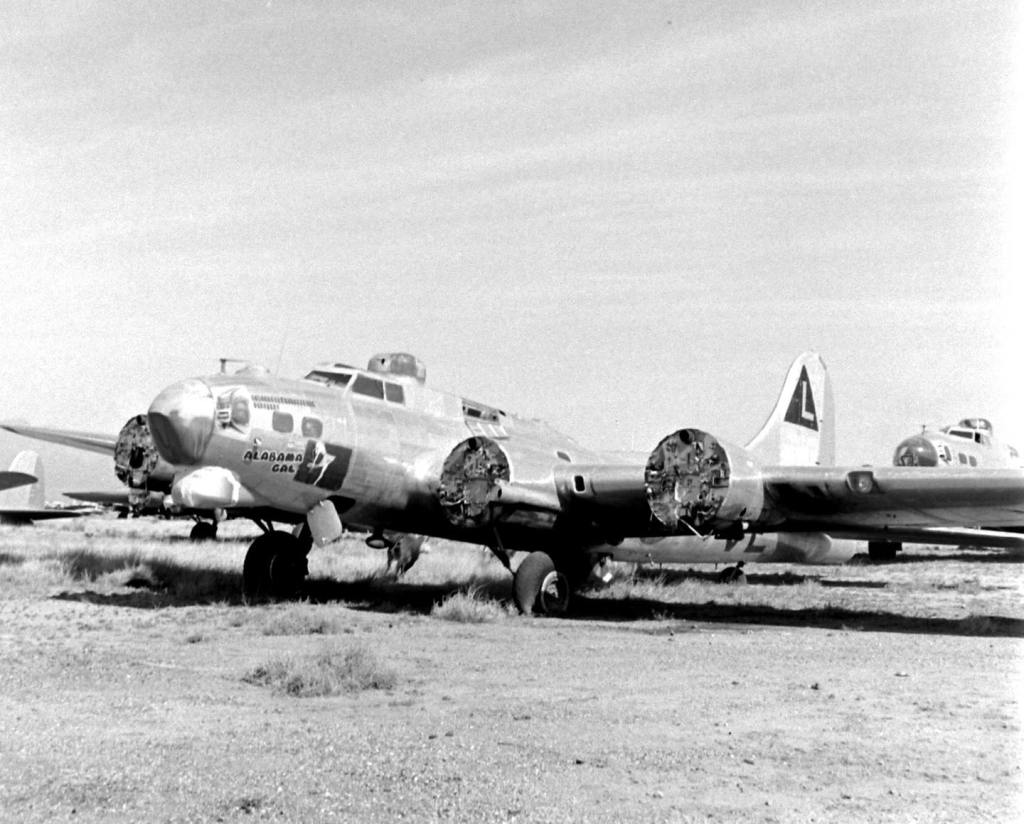
The scenery outside the cafe windows takes me back in time to when this airport was known as the Kingman Army Air Corp Base. Four-engine B-17 bombers once called this place home until they were cut up and sold as scrap aluminum

Locals in Kingman definitely know of it, and the smart ones travel there rather than go to Cracker Barrel. This café is decorated with all aviation memorabilia, including authentic WWII artifacts. A control tower out front dates to 1941. I’ve asked to go up the steps, but so far, no offers have been made. Perhaps one day I’ll succeed.

Pilots travel from throughout the west to Kingman Airport merely to have breakfast or lunch. I’ve talked to a good many of them, curiously wanting to know more about the airplanes and helicopters they flew than anything. All were very informative in their replies.

One fellow, owner of a heavy equipment manufacturing plant in Vegas, was piloting an amphibious turbine-powered airplane that was worth well over $2,000,000. The man was down-to-earth and more than happy to talk about his unique plane. I told him I’d seen several in Alaska, with him agreeing that was the place to definitely own one.

I love the selection of restaurants in our town, yet I also enjoy taking road trips to those eateries down the road. Poet William Cowper said in his poem, The Task, “Variety is the very spice of life, that gives it all its flavor!”  William Cowper had to be definitely be talking about different places to eat!

A B-17 named “Alabama Gal” at Kingman in 1947 destined for scrap.

BEYOND HOPE

“We’ve been searching for a place in Arizona that’s similar to Hope, Alaska.”

Hope, Alaska

While living full-time in Alaska, I spent a fair amount of time fishing, panning for gold, and hiking in the old mining town of Hope. My brother and I, along with friends, camped there for weeks on end. Having so much fun—we’d never want to return home to Anchorage.

Hope had a special appeal to me and still does. My wife and I contemplated retiring in the small community, but could never secure property on a bluff overlooking Cook Inlet. That was the only location I would’ve been satisfied with. Instead, Joleen and I chose Lake Havasu City, building our house with BLM land and Lake Havasu at the backside.

Regency Drive is the only area I would’ve been happy with here, and we were able to pull it off thanks to local realtor and former Alaskan, Richard Pagliero. With no property listed for sale on this street, Richard yanked some strings to make things happen. Having faith that he’d come through, our prayers were answered. A unique story in itself, I’ll save that tale for another day.

Hope, Alaska, is supposedly named after 17-year-old miner Percy Hope, although some historians question this. Percy Hope came to the area in 1895 as part of a contingent of gold seekers. With gold being discovered in Six Mile Creek, prospectors by the thousands flocked to the vicinity. Before long, saloons sprang up, with stores soon to follow.

Come 1898, when gold was discovered in the Yukon Territory, Canada, many miners left Hope to seek their fortunes in Dawson. Some of them remained, keeping the struggling locale from becoming a ghost town like Sunrise, located just a few miles away.

We were able to visit some of the old mining camps, with rusty relics still lying amongst the trees and brush. Large pipes that brought water for sluicing can still be seen in the old Palmer Creek mining camp. There is plenty of wildlife in this valley, with black and grizzly bears often spotted.

We’ve been searching for a place in Arizona that’s similar to Hope, Alaska. I wanted a spot to go for short stints and relax, with less noise than Havasu, although the sound of Harleys and Hotrods is music to my ears. It is a bit hard to concentrate at times while writing, with constant roaring in the background.

Listening to a friend one day talk about a small town where he loves to park his RV, I was more than shocked to hear the name, Hope. Joleen and I didn’t know it existed. Jim Brownfield and his wife have been going there for several years to unwind. They find it more peaceful and scenic than Bouse or Quartzite.

Hope, Arizona, is 89 miles south of Lake Havasu City via AZ-95 S and AZ-72 E. Ironically, the distance from Anchorage to Hope, Alaska, is 88 miles. Wanting to visit the town that Jim Brownfield refers to as a desert paradise, last month we traveled through there on the way to Prescott. I instantly fell in love with it, seeing the potential for great adventure.

Maps show the surrounding mountains chocked full of old gold mines to explore, while there’s a grocery store in town, along with a church, gas station, and antique store. Boondocking is in our immediate plans, meaning we’ll carry in our water, power, and septic system while carrying out all trash.

On the way out of this tiny town, my wife spotted a large billboard. Joleen read aloud, “You’re Now Beyond Hope.” Before I had time to chuckle she quickly became a poet, good-naturedly roasting me, “They made that sign with you in mind!”

Geographically speaking – she was correct!

Hope, Arizona