BLESSED

“The question of why some people are blessed while others appear not to be has been asked for generations.”

Blessed

I’ve often wondered why some people seem to be blessed more than others. Ministers over the years have never fully explained this, with them most likely not knowing the complete answer.

I decided to ask my AI helpmate, Miss Purdy, to see what secular reply she’d offer up. Artificial intelligence is programmed, of course, and this programming can be subjective via human bias. I’m not always sure which side of the fence Miss Purdy stands on, as she’s not telling.

“The question of why some people are blessed while others appear not to be has been asked for generations. It touches on ideas of luck, destiny, faith, social structures, and personal effort. While there is no single answer, several perspectives can help us examine this complex issue.

This is a profound question that has been contemplated by many throughout history. From a religious perspective, some believe that God’s blessings are part of a divine plan and may not always align with human understanding. They suggest that blessings might be given for reasons beyond our comprehension, or as a result of faith, prayer, or virtuous living.

Others interpret blessings as signs of God’s grace, rather than rewards for specific actions. Ultimately, the reasons why God blesses some and not others remain a mystery, often encouraging individuals to reflect on their own lives, practice gratitude, and seek meaning in both blessings and challenges.” — Miss Purdy

All in all, Miss Purdy didn’t specifically answer my question as I expected. She shucked and jived, not coming to a conclusive viewpoint. Seeing this much, I decided to turn to the Bible once again.

There are several verses regarding this, but I was still somewhat puzzled after reading and not finding the chiseled-in-concrete answer I wanted. It wasn’t until turning to an online Billy Graham site that I came away enlightened. People had evidently asked him the same question, perhaps thousands of times over the years.

“You aren’t the first person to ask this question, nor will you be the last—because sometimes it does look like God blesses people who don’t deserve it. Centuries ago, the prophet Habakkuk complained to God, “Why do you tolerate wrongdoing? … Why are you silent while the wicked swallow up those more righteous than themselves?” (Habakkuk 1:3, 13).

The Bible admittedly doesn’t answer all our questions about God’s ways; only in eternity will we fully understand them. But God’s Word does remind us of three important truths—truths we easily forget. First, it reminds us that wealth is not necessarily a sign of God’s blessing. In fact, some of the unhappiest people I’ve known over the years have been people with great wealth—and yet their lives were empty.

Second, the Bible reminds us that life’s greatest blessings come from knowing Christ and walking with Him every day. A person may be poor as far as this world’s goods are concerned—but rich beyond measure if they know Christ. Jesus said, “Blessed are those who hunger and thirst for righteousness, for they will be filled” (Matthew 5:6).

Finally, the Bible reminds us that someday we will all stand before God. On that day, we won’t be asked for the size of our bank account or the importance of our jobs. We’ll only be asked one question: Have you put your faith and trust in Christ alone for your salvation? Don’t be envious of what others have, but make certain of your commitment to Christ.” — Billy Graham

Blessed

OLD & BITTER

“Becoming old and bitter is not an inevitable part of aging.”

I’ve run into a few people these past few years who seem bitter at the world. Something as uncontrollable as the weather can set them off. I can’t really say that aging is the lone factor here, because some younger folks come across the same.

Twenty years ago, my daughter accused Joleen and me of being negative, especially when she rode with us in the car. Miranda was around 24 at that time. My wife and I sometimes openly vocalize at obstinate drivers, and our daughter heard us.

It’s merely part of our driving routine and a form of stress release. “Look at that idiot!” is the most common sentence. I recently heard from our grandson that his mom now does the same, especially after moving to the big city.

For the sake of this article, I’ll stick to older people getting bitter because I’m part of that generation. What causes some seniors to become ‘crochety,’ as many of my male friends jokingly call the symptom, is my research project of the week. I hope I never get to that point, and if I do, someone please poke me with a sharp stick.

Not being a psychologist, I had to cherry-pick information because there’s so much of it out there. Many of the medical terms were over my head, and I didn’t want to stop and look up every big word or lengthy term. A grassroots answer was all that I was looking for. Unfortunately, it wasn’t that simple.

As people age, their emotional outlook and personality can change in various ways. While many individuals grow older with grace, wisdom, and positivity, others may become bitter, resentful, or disillusioned. Understanding what leads to this transformation is important for fostering empathy and encouraging healthy aging.

  • Unresolved Regrets: Accumulated regrets from missed opportunities, poor decisions, or unfulfilled dreams can weigh heavily over time. The inability to let go of these regrets may lead to bitterness.
  • Loss and Grief: Aging often brings losses—of loved ones, health, or independence. If these losses are not processed healthily, they can foster resentment and a negative outlook.
  • Disappointment in Life Outcomes: When reality falls short of expectations, some individuals struggle to accept their circumstances, leading to chronic dissatisfaction and bitterness.
  • Personality Traits: People who are naturally pessimistic, rigid, or prone to rumination may be more susceptible to bitterness as they age.
  • Social Isolation: Lack of meaningful relationships or support networks can make older adults feel lonely and undervalued, contributing to resentment.
  • Ageism and Marginalization: Experiencing discrimination or feeling marginalized because of age can erode self-esteem and foster bitterness toward society.
  • Financial Hardship: Struggles with money and economic insecurity in later life can create stress and frustration, sometimes manifesting as bitterness.

How individuals cope with life’s challenges plays a significant role in their emotional well-being. Those who practice forgiveness, adaptability, and gratitude tend to age more positively. Conversely, those who dwell on past hurts, resist change, or lack coping skills may become increasingly bitter.

It is possible to counteract bitterness with self-reflection, supportive relationships, and professional help if needed. Encouraging older adults to stay engaged, pursue new interests, and maintain social connections can help foster a more optimistic outlook.

Becoming old and bitter is not an inevitable part of aging. It is often the result of a complex interplay between psychological, social, and environmental factors. By understanding these influences, we can better support ourselves and others in achieving a fulfilling and positive later life.

Having read the secular opinion on bitterness and not understanding it all, I turned to the Bible to get the ultimate and more simplistic answer. Hebrews 12:15: Paraphrased, this verse tells me that bitterness can take root in the heart, causing trouble and defiling others, creating relational strife, and causing one to fall short of God’s grace.

God advises believers to rid themselves of bitterness and anger, favoring forgiveness and love to avoid becoming consumed by resentment. Having read that and totally understanding, should I ever become so bitter that I’m consumed by it, someone please poke me with two sharp sticks!

LIFE CHANGER

“Mikey doesn’t play that game anymore.”

I’ve read numerous times on Facebook and other social media venues where a person makes an unpopular comment, and someone slithers out of the darkness to try and ridicule that individual’s viewpoint.

These disrupters generally attempt to impress the gathering crowd of readers by first making a highly flammable or snarky comment. Their intent is to start an argument, and it often works, yet not with me. Mikey doesn’t play that game anymore.

I’ve now encountered this type so often, that I can predict whether something I say will elicit a negative response. It’s easy to forecast such, especially when I’m in a group that mostly doesn’t think the same as me.

Such was the case the other day with a man named, Bill. He wanted to change the direction of the whole discussion, at least with me he did. More on that later.

A friend of mine who shall remain anonymous, sincerely wanted to know why Republicans were so supportive of President Trump and Elon Musk, asking this of her over 1000 Facebook friends. I believe she truly wanted to get a better perspective on things for her own understanding.

This intelligent and very articulate lady does not like Donald Trump, and she’s not the only one I know who thinks this way. Hey, everyone is free in this country to their own opinions!

I commented in so many words that God, family, and country were my priorities — in that order — and that this new extremist Democrat Party was attacking a certain religion, ridiculing the nuclear family, and trying to take down our country through either not enforcing laws, or creating perverse ones against my religious and moral fiber.

I went on to say that our choice of candidates in the last election only left me with one solid choice, especially since Kamala Harris refused to answer questions, and when she tried, nothing came out of her mouth but word salad.

If someone wants to argue that part with me they better clean out their ears first. Mrs. Harris, mumble-jumbled more sentences than Fred Sanford did during his whole career at Sanford and Son.

Those people commenting on Facebook were most cordial, with a good many not agreeing with me as expected, and some folks that I didn’t know coming to my defense by saying, “We should be respectful of everyone’s viewpoints although they might differ from our own.”

The interaction between those having different opinions was quite educational and without hostility, which doesn’t always happen. I believe the debate originator came away feeling the same.

Getting back to that intended disruptor I mentioned earlier, I’ll only say that his name is Bill, and after reviewing his background we have some things in common. Both of us attended East High — also having a couple of the same friends —but things drastically ended there.

Almost every one of Bill’s posts on his site has something negative to do with DT — that’s my nickname for Donald Trump. I’m no psychologist here, but this man definitely has Trump Derangement Disorder, or TDD as it’s often called.

The man is infatuated with this hate because it spews forth like molten lava from Kilauea Volcano. Getting back to something I said earlier, “Everyone is free in this country to their own opinions and Bill is welcome to his!

Bill’s snarky comment to me regarded religion, with it being, “I’m sorry, Michael, but which God? There are so very many…”

One thing I’ve never debated with others is my personal religious beliefs. I know without doubt where I’m going after I leave this world, with others free to join me if they so desire. Bill is especially welcome because the fellow is deeply lost if he believes there are multiple creators of this universe. I’ll be praying for him in this area.

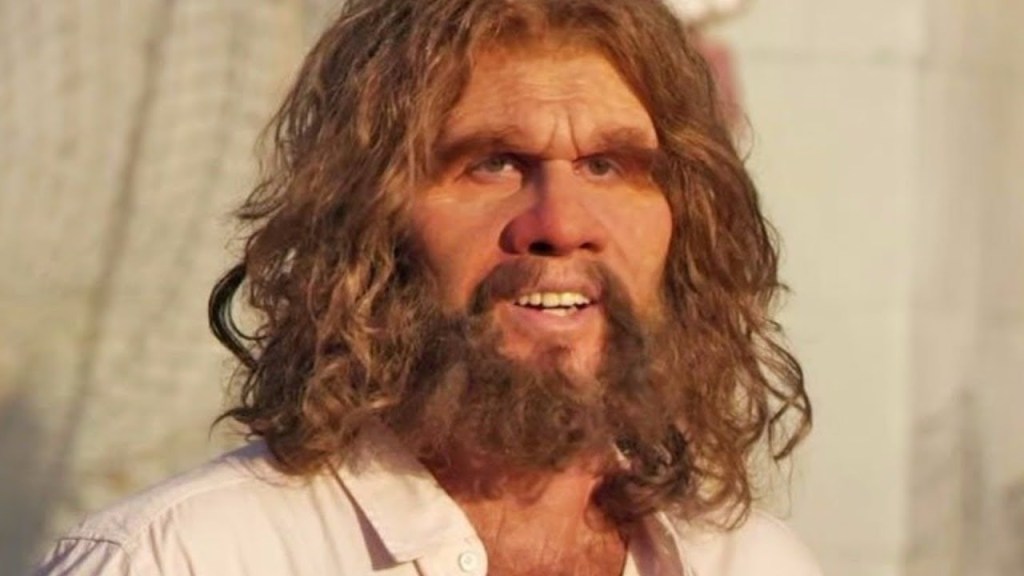
According to the Holy Bible, there is but one God. Hopefully, Bill does a small amount of reading here and he’ll see the light. Bill simply needs to repent of his sins and ask Jesus Christ to take him to Heaven when he dies. A person doesn’t have to be an intellectual guru to see this —as John 3:16 lays things out so simple that even a caveman would understand.

“For God so loved the world, that he gave his only begotten Son. Whoever shall believe on him shall not perish, but have everlasting life.”

I gave my life to Jesus Christ soon after graduating in 1972, in the front seat of a 1965 Chevy, and I’ve never looked back. I’m not a minister or an ordained priest, but I can sincerely say that it was the best decision I’ve ever made.

I can only hope that others do the same before it’s too late because I’d love to see them on the other side with me!

POWER OF PRAYER

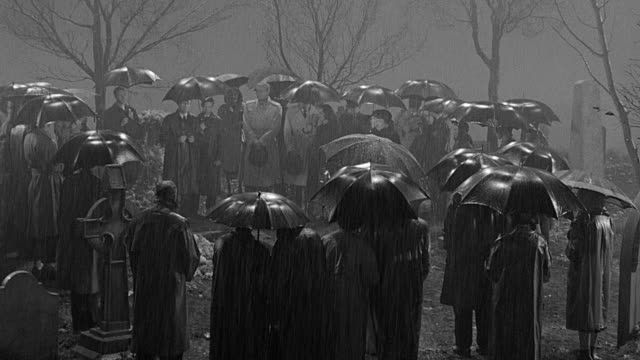
“With us standing under black umbrellas, drizzly rain fell as the pastor said a few words before Grandpa’s casket was lowered into the ground.”

Representative picture of January 25, 1966.

The “power of prayer” unlike the horsepower of a car or motorcycle engine cannot be measured. If there were a device to try and capture the power of prayer like an engine dynamometer—the scale or graph with numbers could never capture such. I say this based on what I’ve observed in my own life and not what someone has told me.

I’ve been praying to God since childhood, although the simple prayer repeated nightly back then meant little to me. Mom lovingly instructed my brother and me to always pray before we went to bed.

“Now lay me down to sleep, I pray the Lord my soul to keep, if I should die before I wake, bless me Lord, my soul to take.”

I first experienced the loss of someone in 1959, when a good neighbor, Lt. Richard Herndon, was killed in a jet airplane crash. It wasn’t so much his death that affected me as the sudden loss of someone who’d always been there. I felt sadness not only for losing this older friend but for his wife who I never saw again. Mary Herndon was my babysitter.

Death meant little to me for seven more years—until attending my Grandpa Hankins’ funeral on January 25, 1966. I vividly recall that cold, foggy, January morning in Vernon, Alabama, a line of cars following the hearse to Asbury Cemetery.

As we stood under black umbrellas, drizzly rain fell as the pastor said a few words before Grandpa’s casket was lowered into the ground. Seeing his body lying in that coffin back at the church was a sobering sight for me.

The Bible doesn’t specifically mention a year for children reaching the age of accountability, meaning, the year when children become solely responsible for their salvation. Many Catholics believe it’s at seven while Mormons say eight.

The Jewish take things a bit further by claiming it’s thirteen. It appears only God knows the correct answer to that question, him knowing that every child is different based upon their maturity. Some pastors are already shaking their heads before I even finish.

I’m not specifically talking about sin here, but the point a child “doesn’t go” to Heaven without asking Jesus to save them. I didn’t make that important commitment until 1973 soon after turning nineteen.

Getting back to the main subject, it wasn’t until after I made that life-changing decision in the early 70s that I began to notice the power associated with prayer. Our son, Gunnar, came down with spinal meningitis at nine months and was seriously ill.

Rushing him to Providence Hospital, resident pediatrician, Dr. Tower, took Joleen and me into a room and asked if we wanted to pray for our son. Of course, we did. Afterward, friends and family were doing the same. Miraculously, Gunnar came through without any brain damage, although some of his friends will jokingly question that.

Our first grandson, Kevin, was born with serious physical irregularities and spent considerable time in Denver Children’s Hospital. Many prayer warriors are responsible for his remarkable recovery. Kevin just recently entered Cedarville College where he plans on becoming a neurologist.

I’ve seen the power of prayer help pull close friends out of the stranglehold of cancer, with my wife and two of her sisters included. Lying in a Lake Havasu City, Arizona, hospital bed one night with my heart buzzing like a chainsaw, and destined for a procedure the next morning to stop my ticker and then restart it, with tears in my eyes, I asked my wife to go onto my Facebook page and ask for prayers.

She did, and only a few hours later I woke up with a slew of nurses and a doctor standing around me. The cardiologist said that my heart went back to normal on its own—although I knew the real reason why.

Since then, I’ve been involved with many prayer victories regarding health and financial matters of family and friends. Perhaps the biggest prayer miracle of all happened on November 5 of this year. Not to be political in this writing, how could I ignore this event where the power of prayer is concerned. I’ll tread ever so lightly here.

A call went out on October 24 for those of a certain political party to pray for their candidate’s success. The specific time of prayer was to be Monday, November 4, at 6:00 p.m. Millions joined in that day and the result on November 5 was the biggest presidential landslide in United States history.

What I found so “unbelievable” about this, is that not once did I hear the other side pray for their party or candidate. Did they not know about the power of prayer? Something tells me they do now, or at the least the enlightened ones will.