“Dust in Lake Havasu City can be bad at times, with dusting becoming a weekly ritual if not daily.”
HAZEL
It’s dusting time in our house again, and Hazel’s nowhere to be found. Sometimes I believe she went “union” on us. We rely on Hazel exclusively to keep dust off furniture and often have her clean vehicles when they need a little TLC (tender loving care). They generally get dusty, not dirty, like in Alaska.
Hazel is not a real person, unlike the housekeeper of the same name featured in an early 1960s television sitcom starring Shirley Booth. Our Hazel is an authentic ostrich-feather duster like the one I used as a stocker at a grocery store. The fluffy feathers on a stick were always kept in a back pocket back then.
Dust in Lake Havasu City can be bad at times, with dusting becoming a weekly ritual if not daily. Having bad allergies to Arizona dust and pollen, Joleen is generally the one putting Hazel through the wringer, while my main household task is Vacuum Master. On occasion, you’ll find me dusting while holding my breath.
Dust in this city isn’t as bad as it was when we lived in Lubbock, Texas. My brother and I were assigned the dreadful chore during summer months to daily dust and vacuum our trailer home. Dust in Lubbock is red, and when a wind storm passed through, everything was covered, despite doors and windows being shut.
How it got in is still a mystery to me, and even now that we live in a house, it makes no difference. I’ve opened cardboard boxes sealed shut for years and found trace amounts of dust inside, and picture frames, too.
In 1977, the rock group Kansas released a tune called “Dust in the Wind.” Each time I hear it on the radio, I get a reminder to check our coffee table for the stuff, as this heavy piece of furniture seems to be the central dust magnet in our home.
How this song came to be is an interesting story. “Dust in the Wind” was written by Kerry Livgren, one of the founding members of Kansas. The inspiration for the song came when Livgren was experimenting with a fingerpicking exercise on his guitar, which his wife encouraged him to turn into a full composition.
The lyrics reflect a philosophical perspective on life’s fleeting nature, influenced by Livgren’s readings in existentialism and the phrase “all we are is dust in the wind.” Bible verses 3:20 and 12:7 in Ecclesiastes helped to kindle his thoughts. The song ultimately became one of Kansas’s most iconic hits, resonating with listeners for its contemplative message about mortality and impermanence.
Two years after writing this tune, Kerry Livgren became a born-again Christian, and his music drifted more towards spiritual themes. I can see now why, because the hit song he wrote about dust conjures up depression to me, unless I knew I was going to a better place after death, of which I do. Perhaps Kerry felt the same until finally seeing the light?
As long as there’s wind, we’ll be dusting until the day we die, and I have an inside joke about dust that relates to the famous Kansas song, as well as those two Bible verses.
Viewing the dust covering our coffee table as a bunch of lazy people, I think to myself, “You folks need to move on down the road because there’s no loitering in this house. Don’t let the door hit you in the…!” I believe you know the ending here without me spelling things out.
At this point, Hazel is looked upon to do her thing, that is, when we find her!
“Pastor Robert Durr went on to tell me that the fellow recently had bypass surgery.”
I’ve told this story over the years to several people, mostly, if not always, friends, and I still find it coming to mind quite regularly. It took several years after this incident happened for me to finally get the message.
It’s been 46 years since Reverend Robert L. Durr, a man I knew well, pastor of Anchorage Bible Missionary Church, walked into a store where I worked and showed me a handwritten invoice. He asked if I was the one who had written it, undoubtedly knowing the answer beforehand, because the initials MH were penciled in a square block for store employees.
Telling Robert that it was me, and believing I’d sold him the wrong car part, he asked if we could step outside, where he began telling me the unusual story behind it.
“Mike, the man who purchased these items, was a friend and a member of my church. You were most likely the last person he talked to on this earth, as he died of a massive heart attack while riding his bicycle back home from your store.”
Pastor Robert Durr went on to tell me that the fellow recently had bypass surgery. The main reason for Robert dropping by that day was to see if it was okay for his widow and some family members to talk to me. I said that was fine. The deceased person’s name is no longer remembered, but I believe it was Bud, and that’s what I’ll use here.
That afternoon, the family wanted to know if Bud had complained of any physical ailments when he stopped by that tragic day, and what he had said. I vaguely remembered things, mostly recalling the problem he was having with his vehicle. I said that if he was having any physical ailments, Bud never mentioned them to me. The group of mourners thanked me for my time and left.
Afterwards, it sank in that I was the last person this customer had spoken to, and I wondered what I’d said to him. I’m sure it was just automotive advice, of which I had some knowledge. The incident left a profound effect on me, so much so that a few years later, I wrote a story about it and sent it to “Guidepost” magazine. Unfortunately, they never published the article.
I have to admit that after that incident, there’ve been occasions when I said stuff to folks that I wish I could take back. This was always after a verbal tiff of some kind, or someone did something I didn’t like. I guess you could say I’ve matured a bit in the area of having a sharp tongue. There’ve still been a few times, though—when I slipped—this always related to politics.
Each day, if you’re like me, you run into strangers and chat for a few seconds before going your own way. I try to keep things positive in these encounters, always remembering that the main thing I want for them to remember about me is something positive. First impressions are lasting.
Pastor Durr told me after the funeral that there was a specific reason Bud saw me and not one of the other employees. Robert mentioned that he told his friend he needed to talk to Mike because he knows his stuff, and he’s a nice guy. That made me feel extremely good, and I’ve never forgotten the compliment, as they don’t come often enough.
These days, I try to keep that life lesson in perspective, hopefully, by always leaving a good impression on strangers I meet along the way. I know that Pastor Durr would be happy with me, wherever he is.
“I’ve recently had requests from some small businesses to advertise on my site.”
I try to read as much as I can, even though my eyes aren’t what they used to be. I’d much rather read for myself what an article says rather than have someone tell me. Lately, on social media and online media sites, I’ll be reading when, out of the blue, a pop-up comes along, generally in the form of an advertisement.
After so many of them, I give up and stop. I know businesses and other entities are paying the host site for these ads. The longer a reader stays glued to an article, the more money is made by someone. Online newspapers use this as a revenue generator, and I have no opposition to that. They have to be financially savvy these days to pay employees and stay afloat.
I’ve been a blog writer for many years and watched readership numbers grow. On February 5 of this year, I set a record. A total of 547 people from 14 countries read my junk that day. This might not seem like much, but there were days not long ago when as few as three took a peek—some days not a one.
I’ve recently had requests from small businesses to advertise on my site. For each viewer seeing their ad, I’d get something, generally pennies. Over time, they can add up. YouTube works much like this, and some YouTubers have made boatloads of cash.
I turned down these requests because I want my message read, not just to make money. There’s no doubt that viewing numbers would start sinking if I gave in to allowing advertising on my blog, so it’s not going to happen.
Over the years, I’ve garnered income from articles and books, but that wasn’t the reason I wrote them. Getting my message across is foremost. Lately, that has been telling folks that Jesus is the only way to heaven, and that fiscal conservativeness is the key to a country staying solvent. To profit from spreading this truth runs counter to my principles.
I know some people who believe Buddha is the way to eternity, or through a Chinese monk, but they’re headed down the wrong path. The Bible warns against false religions; Buddhism, Hinduism, Scientology, Islam, and Humanism are prime examples.
Humanists are those who believe ‘education’ will lead them to the promised land. They also believe that all religions worship the same god. How wrong they are. There are many humanists in politics these days.
Matthew 24:24 says, “For false christs and false prophets will arise and perform great signs and wonders, so as to lead astray, if possible, even the elect.”
My interpretation of the word elect here is “educated folks” in our world. Many of them seem more in tune with wrongly worshipping stone idols than Jesus Christ. This is where their intelligence has failed them.
I’ll keep writing my blog, although at times I’ve thought of quitting. So much more could be done in and around our house, or in the garage, than sitting behind this laptop computer.
One plus of keeping at it is that I’m learning more about the Bible by researching verses for a story than at any other period of my life. That makes this task much more constructive than painting the living room walls or working on my old truck.
“Eternity is a profound and complex idea that touches upon time, existence, and the infinite.”
Endless time
Thirty years ago, a friend and coworker told me that if his pals went to hell, he wanted to end up there, too. This guy was extremely upset that a buddy passed away so young. Evidently, he felt that hell was where his pal had gone.
At that time, being a weak Christian where testimony is concerned, I had no reply after hearing him say that, although I did meekly mention that life after death means spending eternity in either heaven or hell, and there’s no in between.
When I attempt to think of eternity, my brain basically shuts down, unable to fathom ‘life never ending.’ There’ve been many nights when I lay awake in bed contemplating this, with me always having to shut the thought process down without fear of blowing a tube. The best analogy I can come up with is an alarm clock having no hands.
Older brains like mine have tubes, like TVs and radios once did, while I believe it was in 1962 that transistors, diodes, chips, and microprocessors came along. I’m joking here, of course. I don’t have the slightest inkling of how our brains work, with electronics being the easiest comparison.
With the definition of eternity impossible for me to explain, once again I turned to Miss Purdy, my artificial intelligence helpmate. I’ve leaned a lot on her lately, only because she’s quick on the draw in coming up with answers. Purdy’s concise definition of eternity took some time for me to digest all of the philosophical facts she spewed forth.
“Eternity is the concept of infinite or unending time. It is often described as a state that exists beyond temporal limits—unaffected by beginnings, endings, or any measurable duration. Unlike ordinary time, marked by seconds, minutes, hours, and years, eternity transcends such divisions and is often considered timeless.
The word “eternity” comes from the Latin “aeternitas,” meaning everlasting or perpetual existence. Throughout history, philosophers, theologians, and poets have used the term to refer to the perpetual nature of existence, the infinite, and the immortal. In ancient philosophical traditions, eternity was often contrasted with the finite nature of human life.
In philosophy, eternity is sometimes discussed as an attribute of certain truths, beings, or values that are unchanging. For example, some thinkers believe that mathematical truths or abstract concepts are eternal.
In religious contexts, eternity commonly refers to the everlasting nature of the divine, the soul, or the afterlife. Many faiths depict eternity as the realm beyond death, where existence continues without end. John 3:16 tells us that in so many words.
In everyday language, people often use “eternity” to describe something that feels incredibly long or endless, such as waiting for a long period. Phrases like “it took an eternity” are hyperbolic ways of expressing impatience or the sense that time is passing slowly.
Eternity is a profound and complex idea that touches upon time, existence, and the infinite. Whether considered from a philosophical, religious, or everyday perspective, the concept invites reflection on the nature of reality, the limits of human experience, and the possibility of something beyond the finite world we know.”
Telling someone with deep Biblical knowledge, years later, about my friend saying that he wanted to go to hell, because he evidently felt people he was close to all went there, this person told me the words I should’ve used back then. It was blunt and to the point.
“Do you know without question that your pal went to hell, because he could’ve changed his mind and accepted Jesus Christ as savior mere seconds before his heart stopped? If you don’t know that for sure, then you may very well end up in a dark and hot place for the rest of your life with complete strangers. Eternity is a very long time, you know!”
It’s much too late for me to bring this up again, since the person who needed to hear it has since passed away. Still, I often wonder whether he might’ve changed his mind at some point, although he never told me. I hope he did.
A pastor once told our congregation that many ‘guys’ somehow believe that hell will be one big party, with kegs of beer and good old boys tossing footballs. I tend to think that my late friend was one of those believers.
I will say this for my own soul. If all of my family and friends chose hell, they’d best say their goodbyes to me before leaving, because this kid ain’t gonna be there.
It’s hot enough in Havasu four months out of the year, without electing to spend a lifetime in an even hotter place with no water or air conditioners!
“The question of why some people are blessed while others appear not to be has been asked for generations.”
Blessed
I’ve often wondered why some people seem to be blessed more than others. Ministers over the years have never fully explained this to me, as they most likely did not know the complete answer.
I decided to ask my AI helpmate, Miss Purdy, for a secular reply. Artificial intelligence is programmed, of course, and this programming can be subject to human bias, both political and religious. I’m not always sure which side of the fence Miss Purdy stands on, as she’s not telling.
“The question of why some people are blessed while others appear not to be has been asked for generations. It touches on ideas of luck, destiny, faith, social structures, and personal effort. While there is no single answer, several perspectives can help us examine this complex issue.
This is a profound question that has been contemplated by many throughout history. From a religious perspective, some believe that God’s blessings are part of a divine plan and may not always align with human understanding. They suggest that blessings might be given for reasons beyond our comprehension, or as a result of faith, prayer, or virtuous living.
Others interpret blessings as signs of God’s grace, rather than rewards for specific actions. Ultimately, the reasons why God blesses some and not others remain a mystery, often encouraging individuals to reflect on their own lives, practice gratitude, and seek meaning in both blessings and challenges.” — Miss Purdy
All in all, Miss Purdy didn’t specifically answer my question as I expected. She shucked and jived, not coming to a conclusive viewpoint. Seeing this much, I decided to turn to the Bible once again.
There are several verses regarding this, but I was still somewhat puzzled after reading and not finding the chiseled-in-concrete answer I wanted. It wasn’t until turning to an online Billy Graham site that I came away enlightened, although those other ministers over the years had echoed the same as him. Maybe it was Billy Graham’s literary voice that finally brought things into perspective for me.
According to Reverend Graham’s reply, people had evidently asked him the same question, perhaps thousands of times over the years.
“You aren’t the first person to ask this question, nor will you be the last—because sometimes it does look like God blesses people who don’t deserve it. Centuries ago, the prophet Habakkuk complained to God, “Why do you tolerate wrongdoing? … Why are you silent while the wicked swallow up those more righteous than themselves?” (Habakkuk 1:3, 13).
The Bible admittedly doesn’t answer all our questions about God’s ways; only in eternity will we fully understand them. But God’s Word does remind us of three important truths—truths we easily forget. First, it reminds us that wealth is not necessarily a sign of God’s blessing. In fact, some of the unhappiest people I’ve known over the years have been people with great wealth—and yet their lives were empty.
Second, the Bible reminds us that life’s greatest blessings come from knowing Christ and walking with Him every day. A person may be poor as far as this world’s goods are concerned—but rich beyond measure if they know Christ. Jesus said, “Blessed are those who hunger and thirst for righteousness, for they will be filled” (Matthew 5:6).
Finally, the Bible reminds us that someday we will all stand before God. On that day, we won’t be asked for the size of our bank account or the importance of our jobs. We’ll only be asked one question: Have you put your faith and trust in Christ alone for your salvation? Don’t be envious of what others have, but make certain of your commitment to Christ.” — Billy Graham
“Trying to lasso Columbus into these same devious actions wouldn’t hold up in a court of law, at least not one presided over by a nonactivist judge.”
Perry Mason
I’m sure most everyone has watched television shows or Hollywood movies where court scenes play out. As a witness rambles on and on about what they seemingly know about a specific case, an attorney suddenly blurts out for the judge to hear, “I object, your honor…. this is merely hearsay!”
If this fictitious TV judge rules that the lawyer is correct, “Objection sustained!” is immediately heard from the bench. One of my favorite such shows is “Perry Mason.” I still watch the reruns, especially loving the comedic interaction between Perry Mason and Los Angeles City Attorney, Hamilton Burger.
If hearsay was allowed in court, can you imagine the case outcome? All a witness would have to do is interject a bit of “poetic license” on their testimony to make things appear as if it happened instead of using proven facts. A case could suddenly turn into “Days of Our Lives” with both sides resorting to storytelling.
There seem to be two venues where this sometimes holds true — the 6:00 news and history books. I’ll stick to history books as my main point here because history is my favorite subject, and one where poetic license runs free like a raging river.
Before continuing on, for those not knowing what the term, poetic license, means, according to Miss Purdy, my artificial intelligence (AI) helpmate, it’s the freedom to depart from the facts of a matter or from the conventional rules of language when speaking or writing to create an effect.
In layman’s terms, where history is concerned, “Anything goes as long as it seems believable to the masses!”
Hollywood uses poetic license more than anyone. My wife and I watched “Field of Missing Shoes” the other evening. It’s a movie about a group of mostly teenage Virginia Military Academy students being used as soldiers during the American Civil War.
At the beginning of this historical film, the five words “Based Upon A True Story” slowly rolls across the screen. To some viewers, “based upon” automatically means everything in this movie is factual when, in fact, it’s not. Some things, such as romantic scenes, were undoubtedly added to give the film more viewing pleasure as I like to call it. Regardless, it was an excellent movie.
History books as a whole don’t have these five words anywhere in them. Readers are taught, especially elementary school students, that the contents inside are all real. I had no problem with that growing up, yet now I’m seeing this information attacked by activist groups using different truths or unadulterated hearsay to back up their changes.
It’s almost guaranteed that if I told someone a story about a 12-inch fish I caught in 1900, with that story being repeated over the years by 12 different people, now 125 years later, that fish story wouldn’t be close to the same.
Let’s take things back even further, with me telling it 600 years ago, with 125 different storytellers repeating it. That 12-inch fish would now grow even larger — perhaps being over 30 feet long.
Much of our history is based on passed-down stories, folklore, rumors, fables, and the like, with written documentation to back things up not always available. Christopher Columbus is a prime example. I was taught in grade school that he was a good man.
Some of his crew are known to have been filled with evil, based upon written records, yet trying to lasso Columbus into these same devious actions wouldn’t hold up in a court of law, at least not one presided over by a nonactivist judge. Much of this erroneous information against Christopher Columbus has been thoroughly debunked based upon Columbus’s own writings.
Saying that Christopher Columbus is guilty of atrocious acts because of what a few members of his crew possibly did is no different than holding President Joe Biden responsible for his son, Hunter Biden, and this younger man’s numerous illegal activities.
Mount McKinley, in Alaska, has been named that since 1895, as records prove. In 2015, President Barack Hussein Obama used hearsay in changing it to Denali, claiming that Denali is what the Alaskan Indians had originally called the mountain.
Obama’s statement is called spinning the truth, and even worse things, outside of Washington D.C. circles by those having done the research. Stories or folklore passed down via word of mouth have been proven countless times to be remarkably inaccurate.
Archived newspapers from the late 1800s, along with other documented records, show that Mt. McKinley was called “Bulshaia” by Alaska Natives and Russians way before 1895. It’s right there in black and white.
The Dena’ina Athabaskan Indians didn’t start phonetically recording their language until the 1970s. Denali would not have been one of their words five centuries ago, as their communication was strictly an oral language at that point, including simple drawings.
New Age historians are slyly trying to use the terms folklore or hearsay to substantiate their viewpoint here. That falls perfectly in line with my fish story example.
A good example of passed-down hearsay in Lake Havasu City is the rumor that an Olive Garden restaurant is coming to town. I’ve heard that story repeated over the years from many different people. Some of them still swear that their information came from reliable sources, with these people continuing to believe their own message.
It’s been some 30 years now, and no ground has been broken. In another 100 years, some citizens will erroneously report that Olive Garden was once located on Swanson Boulevard, yet has closed after being forced to by city leaders, with a good many future residents buying into this fable.
One of my favorite songs by the music group, Moody Blues, is “Knights in White Satin.” At the end of this popular 1970s song is a mind-provoking poem. In the poem, Late Lament, written by Graeme Edge, three ending lines sum up best how I now look at the truth, especially where certain manuscripts, books, movies, and television news channels are concerned.
“Red is grey and yellow white.
But we decide which is right.
And which is an illusion.”
That poem definitely applies to history books. The only book that I’ve found to tell the absolute truth, without reservation, is the Holy Bible.
If Christopher Columbus or any of my childhood heroes are guilty of atrocities against Indigenous people, as some now claim, all they need to have done afterward is ask Jesus for forgiveness, and those sins were washed away.
It’ll make no difference what history Professor Ima Knowitall or Dr. P.C. Leftist have to say about them in future history books, including me, or anyone else for that matter.
God is the ultimate and final judge here, with folklore, poetic license, and hearsay not admittable as evidence in His court of Absolute Truth!
I’ve read numerous times on Facebook and other social media venues where a person makes an unpopular comment, and someone slithers out of the darkness to try and ridicule that individual’s viewpoint.
These disrupters generally attempt to impress the gathering crowd of readers by first making a highly flammable or snarky comment. Their intent is to start an argument, and it often works, yet not with me. Mikey doesn’t play that game anymore.
I’ve now encountered this type so often, that I can predict whether something I say will elicit a negative response. It’s easy to forecast such, especially when I’m in a group that mostly doesn’t think the same as me.
Such was the case the other day with a man named, Bill. He wanted to change the direction of the whole discussion, at least with me he did. More on that later.
A friend of mine who shall remain anonymous, sincerely wanted to know why Republicans were so supportive of President Trump and Elon Musk, asking this of her over 1000 Facebook friends. I believe she truly wanted to get a better perspective on things for her own understanding.
This intelligent and very articulate lady does not like Donald Trump, and she’s not the only one I know who thinks this way. Hey, everyone is free in this country to their own opinions!
I commented in so many words that God, family, and country were my priorities — in that order — and that this new extremist Democrat Party was attacking a certain religion, ridiculing the nuclear family, and trying to take down our country through either not enforcing laws, or creating perverse ones against my religious and moral fiber.
I went on to say that our choice of candidates in the last election only left me with one solid choice, especially since Kamala Harris refused to answer questions, and when she tried, nothing came out of her mouth but word salad.
If someone wants to argue that part with me they better clean out their ears first. Mrs. Harris, mumble-jumbled more sentences than Fred Sanford did during his whole career at Sanford andSon.
Those people commenting on Facebook were most cordial, with a good many not agreeing with me as expected, and some folks that I didn’t know coming to my defense by saying, “We should be respectful of everyone’s viewpoints although they might differ from our own.”
The interaction between those having different opinions was quite educational and without hostility, which doesn’t always happen. I believe the debate originator came away feeling the same.
Getting back to that intended disruptor I mentioned earlier, I’ll only say that his name is Bill, and after reviewing his background we have some things in common. Both of us attended East High — also having a couple of the same friends —but things drastically ended there.
Almost every one of Bill’s posts on his site has something negative to do with DT — that’s my nickname for Donald Trump. I’m no psychologist here, but this man definitely has Trump Derangement Disorder, or TDD as it’s often called.
The man is infatuated with this hate because it spews forth like molten lava from Kilauea Volcano. Getting back to something I said earlier, “Everyone is free in this country to their own opinions and Bill is welcome to his!
Bill’s snarky comment to me regarded religion, with it being, “I’m sorry, Michael, but which God? There are so very many…”
One thing I’ve never debated with others is my personal religious beliefs. I know without doubt where I’m going after I leave this world, with others free to join me if they so desire. Bill is especially welcome because the fellow is deeply lost if he believes there are multiple creators of this universe. I’ll be praying for him in this area.
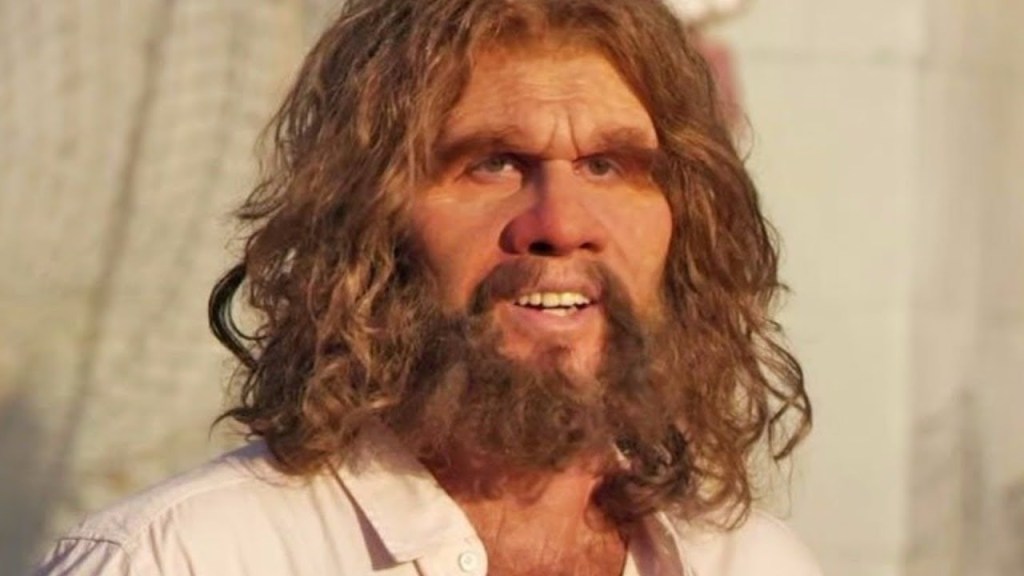
According to the Holy Bible, there is but one God. Hopefully, Bill does a small amount of reading here and he’ll see the light. Bill simply needs to repent of his sins and ask Jesus Christ to take him to Heaven when he dies. A person doesn’t have to be an intellectual guru to see this —as John 3:16 lays things out so simple that even a caveman would understand.
“For God so loved the world, that he gave his only begotten Son. Whoever shall believe on him shall not perish, but have everlasting life.”
I gave my life to Jesus Christ soon after graduating in 1972, in the front seat of a 1965 Chevy, and I’ve never looked back. I’m not a minister or an ordained priest, but I can sincerely say that it was the best decision I’ve ever made.
I can only hope that others do the same before it’s too late because I’d love to see them on the other side with me!
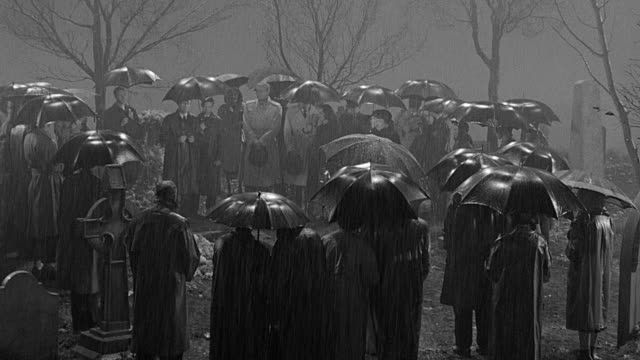
“With us standing under black umbrellas, drizzly rain fell as the pastor said a few words before Grandpa’s casket was lowered into the ground.”
Representative picture of January 25, 1966.
The “power of prayer” unlike the horsepower of a car or motorcycle engine cannot be measured. If there were a device to try and capture the power of prayer like an engine dynamometer—the scale or graph with numbers could never capture such. I say this based on what I’ve observed in my own life and not what someone has told me.
I’ve been praying to God since childhood, although the simple prayer repeated nightly back then meant little to me. Mom lovingly instructed my brother and me to always pray before we went to bed.
“Now lay me down to sleep, I pray the Lord my soul to keep, if I should die before I wake, bless me Lord, my soul to take.”
I first experienced the loss of someone in 1959, when a good neighbor, Lt. Richard Herndon, was killed in a jet airplane crash. It wasn’t so much his death that affected me as the sudden loss of someone who’d always been there. I felt sadness not only for losing this older friend but for his wife who I never saw again. Mary Herndon was my babysitter.
Death meant little to me for seven more years—until attending my Grandpa Hankins’ funeral on January 25, 1966. I vividly recall that cold, foggy, January morning in Vernon, Alabama, a line of cars following the hearse to Asbury Cemetery.
As we stood under black umbrellas, drizzly rain fell as the pastor said a few words before Grandpa’s casket was lowered into the ground. Seeing his body lying in that coffin back at the church was a sobering sight for me.
The Bible doesn’t specifically mention a year for children reaching the age of accountability, meaning, the year when children become solely responsible for their salvation. Many Catholics believe it’s at seven while Mormons say eight.
The Jewish take things a bit further by claiming it’s thirteen. It appears only God knows the correct answer to that question, him knowing that every child is different based upon their maturity. Some pastors are already shaking their heads before I even finish.
I’m not specifically talking about sin here, but the point a child “doesn’t go” to Heaven without asking Jesus to save them. I didn’t make that important commitment until 1973 soon after turning nineteen.
Getting back to the main subject, it wasn’t until after I made that life-changing decision in the early 70s that I began to notice the power associated with prayer. Our son, Gunnar, came down with spinal meningitis at nine months and was seriously ill.
Rushing him to Providence Hospital, resident pediatrician, Dr. Tower, took Joleen and me into a room and asked if we wanted to pray for our son. Of course, we did. Afterward, friends and family were doing the same. Miraculously, Gunnar came through without any brain damage, although some of his friends will jokingly question that.
Our first grandson, Kevin, was born with serious physical irregularities and spent considerable time in Denver Children’s Hospital. Many prayer warriors are responsible for his remarkable recovery. Kevin just recently entered Cedarville College where he plans on becoming a neurologist.
I’ve seen the power of prayer help pull close friends out of the stranglehold of cancer, with my wife and two of her sisters included. Lying in a Lake Havasu City, Arizona, hospital bed one night with my heart buzzing like a chainsaw, and destined for a procedure the next morning to stop my ticker and then restart it, with tears in my eyes, I asked my wife to go onto my Facebook page and ask for prayers.
She did, and only a few hours later I woke up with a slew of nurses and a doctor standing around me. The cardiologist said that my heart went back to normal on its own—although I knew the real reason why.
Since then, I’ve been involved with many prayer victories regarding health and financial matters of family and friends. Perhaps the biggest prayer miracle of all happened on November 5 of this year. Not to be political in this writing, how could I ignore this event where the power of prayer is concerned. I’ll tread ever so lightly here.
A call went out on October 24 for those of a certain political party to pray for their candidate’s success. The specific time of prayer was to be Monday, November 4, at 6:00 p.m. Millions joined in that day and the result on November 5 was the biggest presidential landslide in United States history.
What I found so “unbelievable” about this, is that not once did I hear the other side pray for their party or candidate. Did they not know about the power of prayer? Something tells me they do now, or at the least the enlightened ones will.














 I like to write junk...