Years ago, a good friend of mine had a wind-up set of chattering teeth. I believe they’re still readily available around Halloween. For whatever reason, each time I visit a graveyard, I hear the sound they make.
As a writer, I compare it more to the chatter or clicking noise that ancient typewriters made. To me, each granite gravestone in a cemetery is a typewriter ready to tell a unique story.
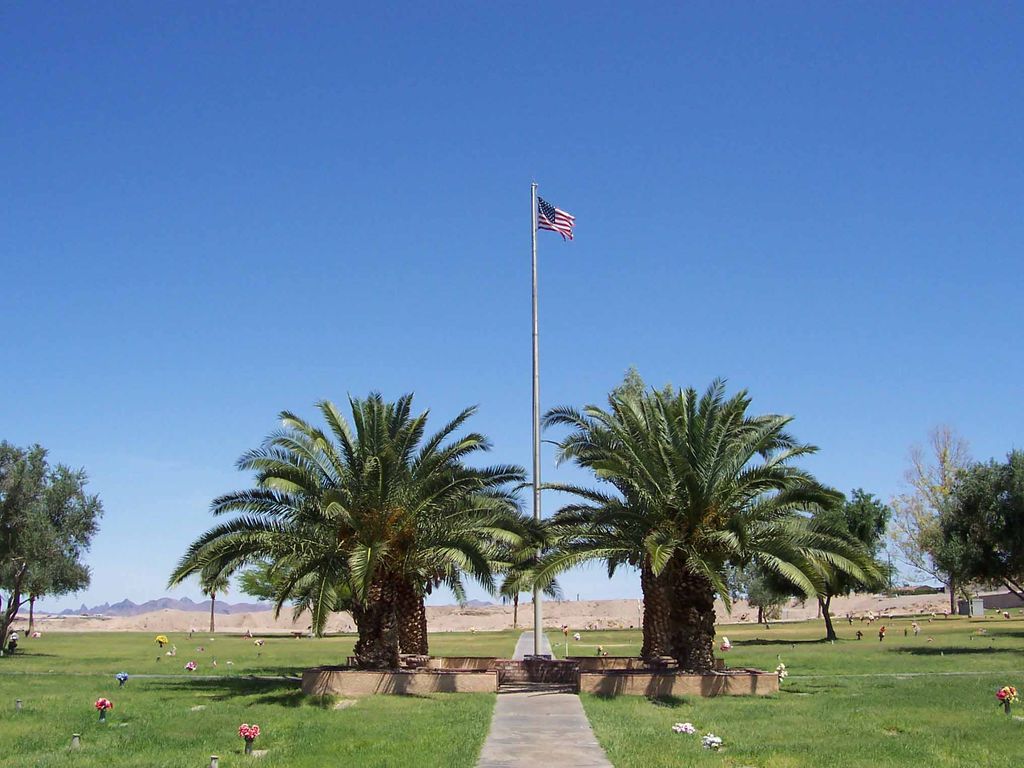
Opened in the early 1970s, Lake Havasu Memorial Gardens in Lake Havasu City, Arizona, serves as a final resting place for the remains and cremains of many residents and visitors. According to Findagrave.com, the cemetery is home to 4,945 gravesites, along with a couple of mausoleums and several columbaria.
The gardens were created to provide a peaceful and dignified environment for families to honor and remember loved ones. Over the years, the site has evolved to include landscaped grounds, memorial markers, and spaces dedicated to reflection and remembrance.
As Lake Havasu City grew, the memorial gardens became an integral part of the community, hosting ceremonies and offering support to those in mourning. Its history reflects the city’s commitment to preserving memories and honoring lives within a tranquil desert setting.
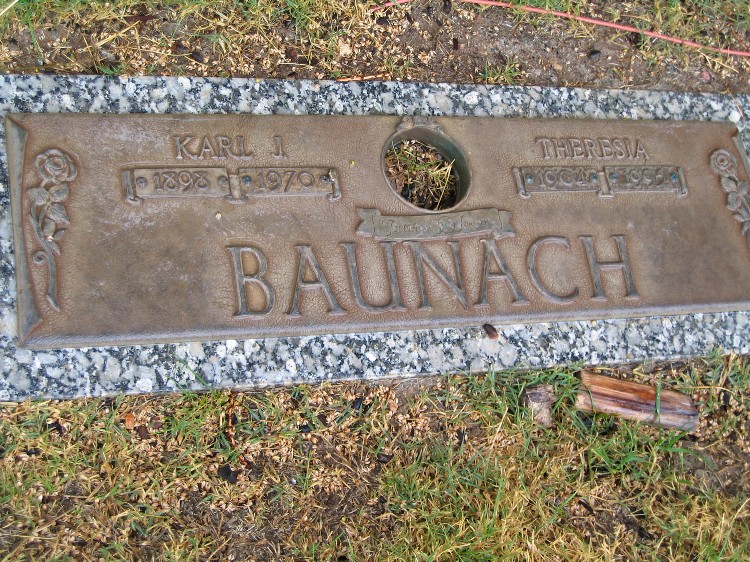
I was interested in identifying the earliest people buried there and learning a bit of their history. It appears that Karl Joseph Baunach is the first burial. Karl, born in Germany on March 11, 1898, married Theresia Schmitz in 1948. The couple had two children, Erika and Eric.
Karl Joseph Baunach died in Lake Havasu City on April 13, 1970. Wife, Theresia, died in 1995, some 25 years after him. She is also buried in Lake Havasu Memorial Gardens, along with their son, Eric. I was able to find out more about the son and daughter than I was about either parent.
Sgt. Eric Baunach served with the US Army in Vietnam, later becoming an archaeologist in Arizona and Oregon and owning his own construction company. He passed away on May 23, 2022, in Oregon. Eric’s remains were transported to Lake Havasu City and interred here. His sister Erika Baunach-Hinkel died in 2025. She’s buried in Oregon alongside her husband.
I tried to find out what brought the Baunachs to Lake Havasu City, with a 1956 ship manifest showing him as a shoemaker. That’s the year this family came to America, ultimately landing at Ellis Island. It seems unlikely that a shoemaker would be needed in our fledgling town at such an early period.
Karl was 72 when he passed away, so working in construction also seems unlikely, though some old-timers would argue otherwise. My guess is that he was one of the early realtors. If someone knows for sure, they can email me.
Undoubtedly, there’s so much more to be told about Karl Baunach, yet I was only privy to information available through archived newspaper articles, Ancestry.com, and Findagrave.com. Karl’s grandchildren might know some of the history, but the truth is, most young people have little interest in such.
The oldest person buried there is Gustave Adolph Dietze. He was born in Germany on April 28, 1875, and passed away on March 2, 1953. Gustave would now be 151 years old if still living. His remains were reinterred here from a cemetery in Ohio. Gustave’s wife, Zalalette Ceola See Dietze, died in 1971, with her remains also reburied in Lake Havasu Gardens.
It appears that Gustave and Zalaette Dietze’s daughter, Azalea Pearle Dietze Abbott, who resided in Havasu, was the family member having her parents’ remains moved from back east to Arizona. Azalea passed away on December 31, 1995.
A graveyard to me is like an open book. What unique and nonstop stories their tombstones would tell if only they could talk. It’s up to writers like me to decipher the historical chatter coming from them.