I’ve heard the statement, “Blind as a bat!” many times, yet I have never come across “Blind as a mule.”
Mules and donkeys have long been used as pack animals in mining operations due to their strength, endurance, and ability to navigate rugged terrain. Historically, they’d carry heavy loads of rich ore and other materials in and out of mines, especially in areas where mechanized transport was impractical. When they were no longer needed, the poor beasts were released to fend for themselves.
One significant issue that arose from the use of these animals in mines is their susceptibility to developing blindness, particularly due to conditions encountered in dark, enclosed spaces.
The environment in mines can be harsh, with dust, debris, and limited light exposure, which can lead to various eye problems. In some cases, prolonged exposure to darkness and poor ventilation can cause health issues, including vision impairment.
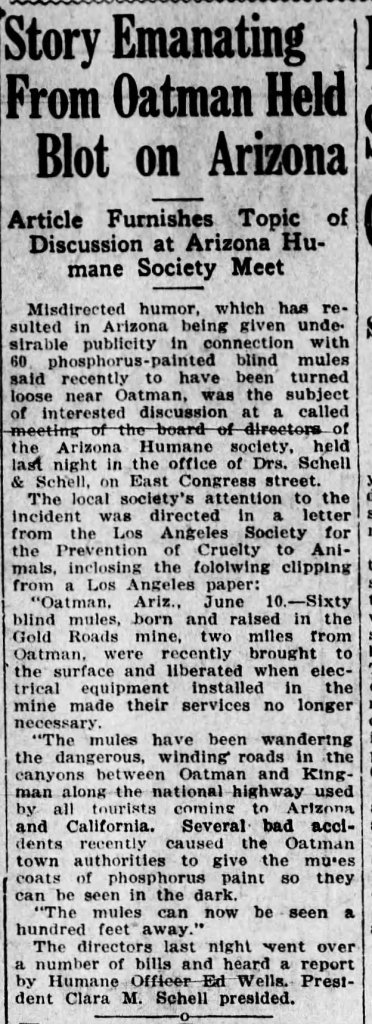
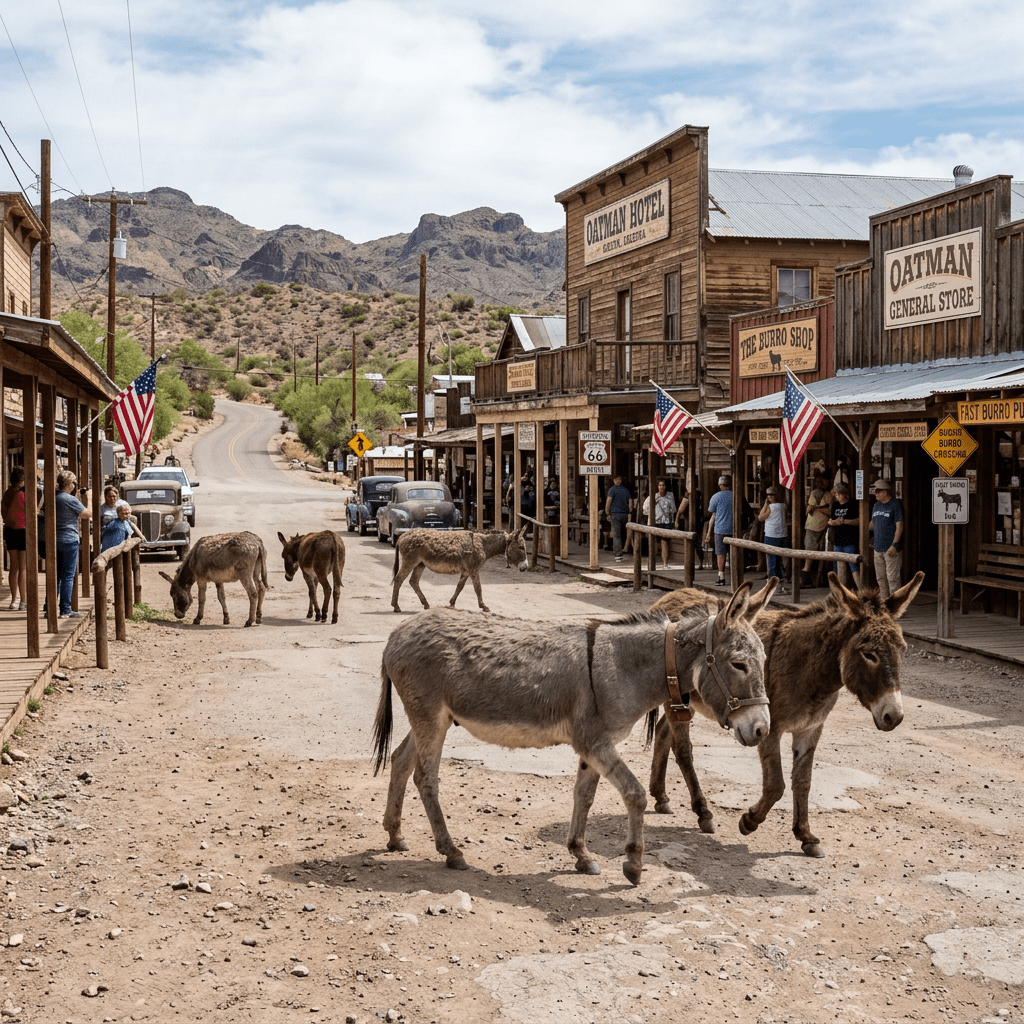
Years ago, burros and mules were used in mines in Oatman and Gold Road, yet you seldom hear of the abuses they endured. Today, burros freely roam the Oatman area and are a favorite of locals and tourists. That wasn’t the case back in the 1920s, as this newspaper article from the June 23, 1922, “Arizona Daily Star” (Tucson) points out.
“Oatman, Ariz., June 10. Sixty blind mules, born and raised in the Gold Road mines, two miles from Oatman, were recently brought to the surface and liberated when electrical equipment installed in the mine made their services no longer needed.
The mules have been wandering the dangerous, winding roads in the canyons between Oatman and Kingman along the national highway used by all tourists coming to Arizona and California.
Several bad accidents recently caused the Oatman town authorities to give the mules coats of phosphorus paint so they can be seen in the dark. The mules can now be seen a hundred feet away.”
Town officials probably thought this was a smart thing to do back then, to reduce accidents, but their actions inflicted a slow torture on these animals. The following is just a short warning regarding luminous paint.
Placing paint containing phosphorus (specifically white phosphorus) on skin is extremely dangerous. White phosphorus can cause severe, deep chemical and thermal burns and can be absorbed into the system, potentially damaging the liver, kidneys, and heart.
I’ve not seen any mules wandering the desert around Oatman. Perhaps the phosphorus back then wiped out the entire population, although the burros are still plentiful. They’re still struck by vehicles, mostly at night, even though drivers are warned to slow down.
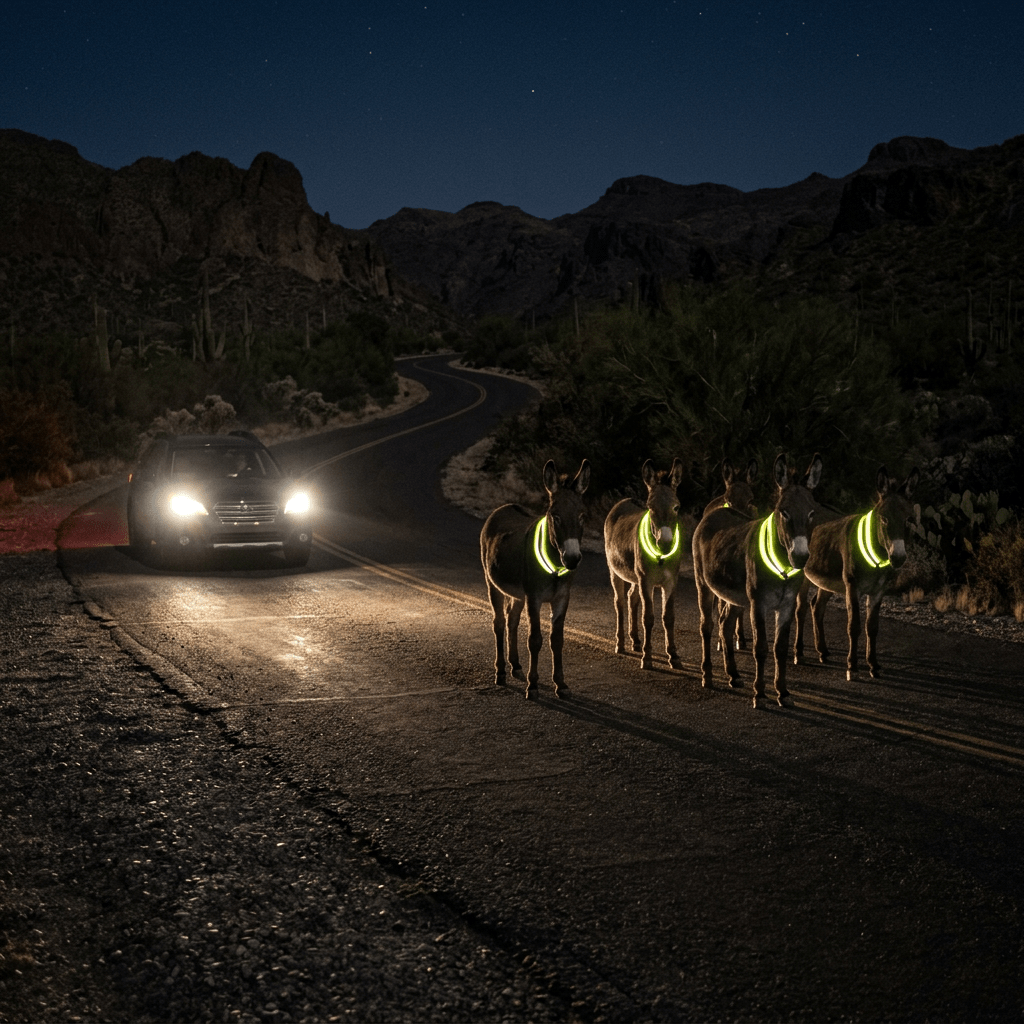
A lesson to be learned from the mistakes of early Oatman officials, is that harmless reflective collars should perhaps be placed on the remaining survivors instead of hazardous paint.
These collars weren’t available back then, and even if they were, it’s doubtful city leaders would spend the money on what they probably considered worthless animals at this point.
Even with these reflective collars, some folks will continue to hit the burros with their vehicles. “Blind as a bat” still has solid meaning, with a sizable number of drivers living proof. Sadly, we read about these people daily.