I asked my wife where she got her most satisfaction. Joleen’s answer without hesitation was,”Being around the grandchildren!”
If someone was to ask where I get personal satisfaction these days, I’d say in the garage. Many of my older male friends would echo the same.
I find no real satisfaction in writing. It’s something I do to keep busy, but otherwise the time could be better spent elsewhere.
Many hours can be burned composing a story, article, poem, or whatever. The feedback for this is generally minimal at most. For me, writing isn’t about receiving accolades or attaboys. I do it strictly to keeps the gears turning upstairs.
I asked, Renee Reeves, owner and Publisher of “The Lamar Democrat” newspaper, how she knew if readers liked the junk that her columnists wrote. She had a most interesting reply.
“It’s kind of strange. If subscribers are okay with anarticle, they’ll remain quiet. If they disagree, you’ll know in an Alabama minute!”
She didn’t actually use the words Alabama minute, but the terminology Renee used did equate to such.
Aunt Dora worked on crossword puzzles most of her 99-years and she was an expert at it. I’m not sure Dora did so out of enjoyment or merely to keep her mind sharp. Perhaps it was a little of both?
In my garage, I create things that get raves amongst the mechanical crowd. There’s something uplifting about fixing up an old car or truck, and then driving it somewhere to have someone give a thumbs up. This silent applause can be long lasting.I suppose artists get the same high whenever they see a crowd gather ’round their artwork.
I asked my wife where she got her most satisfaction. Joleen’s answer without hesitation was,
“Being around the grandchildren!”
I could utter the same but our little ones are a thousand miles away. I asked the same question again, this time informing her that I meant personal satisfaction during the time the grandkids weren’t close by.
It took her a bit longer to answer this go-around. After a few minutes of pondering, she narrowed it down being outside in the fresh air while walking Simon, and afterwards, quietly sitting out back watching and listening to wildlife.
“Rolling Stones” lead singer, Mick Jagger, sings a popular 1960’s song about not getting any satisfaction. The man has eight grandchildren and one great-grandchild. That should be satisfaction enough but evidently it isn’t.
I’m sure he’s not into doing crossword puzzles or writing junk, but he’s brilliant at composing music. That leaves me to believe,
“Mick needs a garage!”
There’ll come a day when I have to rely upon writing as a form of satisfaction. The glorious garage days won’t last forever. My back’s no longer able to do the things I could a few years ago because of vertebrae problems. Years of lifting and carrying heavy objects eventually weakened things. Pushing my luck on continuing to do herculean tasks could spell disaster.
The cliche, “Home is where the heart is!” holds merit. I added one final line to that age-old-saying.
“Home is where the heart is. A garage is where satisfaction begins!”
“Men and women who make three correct guesses consecutively.”
President Woodrow Wilson (Democrat)
I’ve been watching and listening this past month to self-appointed “experts”, as they point the finger at President Donald Trump for not doing things right during the Covid-19 pandemic. Many of these so called authorities have as much medical knowledge as SpongeBob SquarePants; maybe less.
A good majority of those critical of the president are Democrat politicians and left-leaning journalists. It might not seem wrong to some, but it does to me, that with an election close by individuals would use a national tragedy to try and garner votes.
During the Spanish Flu Pandemic of 1918, President Woodrow Wilson was in charge of the country. Although 675,000 American citizens died during this outbreak, I found no archived newspaper accounts showing where people criticized him for his actions, or lack of. By today’s standards, Woodrow Wilson was a complete failure as a leader during this crisis.
Had Woodrow Wilson been a Republican, I dare say those Democrats now throwing daggers at Donald Trump, would also be calling for the exhuming of Wilson’s grave. Some of them would go so far as to ask for a public hanging until the dead man’s bones were thoroughly bleached white.
I’m not an expert on anything! A while back I read where a gun collector mislabeled me as an authority on Sharps & Hankins antique weapons. I had to chuckle. Years ago I told this same man that I owned a few of the guns. If that makes me an expert, then the title is meaningless.
A friend gave me a perfect definition for expert:
“Men and women who make three correct guesses consecutively.”
Here lately, I watch less and less news because of all the hate and anger geared towards our president. Hearing such riles my feathers. I’ve always tried to follow the guidelines,
“Don’t knock a person when he or she is trying!”
There were times I’d like to reach into my TV and grab a complaining politician or news reporter by the hair. Bob Costa is at the top of my list.
Everyone seems to have an opinion on whether President Trump is doing things right or wrong. These are mere personal beliefs and there’s nothing wrong with such.
Most all Clint Eastwood fans should recall “Dirty” Harry Callahan’s rather crude definition for the word from his 1988 movie, Dirty Pool.
“Opinions are like assholes, everybody has one!”
There is serious problem in having an opinion on a subject, and attempting to come across as an expert. It seems some liberal politicians and reporters are trying to become experts at intertwining the two!
“Brother Hankins, I’m sorry we ran out of chicken and hot dogs. I see you haven’t partook of the goat?”
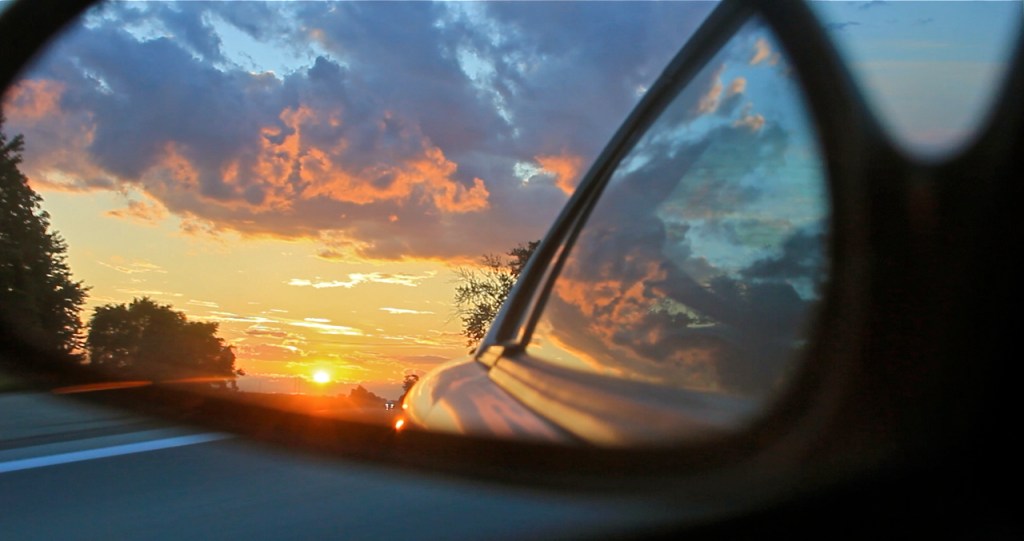
Looking in a rear view mirror to “The Great Depression” and other strange things.
My parents grew up during “The Great Depression.” Dad rarely talked about it, yet mom did until the very end. She always warned my brother, Jim, and I that it could happen again.
Mother told stories of harvesting the fields at her parent’s small farm in Vernon, Alabama during that time. Working alongside her older sisters, they picked cotton and helped tend a garden for food. Whatever produce they managed to raise in abundance, the family traded it to nearby neighbors for items they didn’t have.
Mom talked of going without where new clothes were concerned. The girls made their own dresses out of flour sacks. Hand me downs or clothing given to them was never questioned. In spite of bad times, the photos I’ve come across show them smiling and happy.
Some of the stuff she mentioned them eating didn’t sound appetizing to me. Squirrel, possum, goat, crow, chic peas, to name a few. I always figured mom was pulling my leg about eating goat and crow. She said if you didn’t eat what was on the table, you went without. There were no fast-food restaurants down the road for backup measures.
She mentioned how hard it was in getting to school. During her earliest years mother walked to a one-room school with her older siblings. In high school years, she rode in the back of a truck converted into a student transporter. Mr. Turner would pick them up at the bottom of Haynes’ Hill on Old Highway 17.
During one of those winter trips the vehicle became stuck in the middle of a muddy road. They had to sit and wait until a tractor came along and eventually pulled them out. It was bitter cold that morning. The students were all shivering by the time they reached their destination.
I loved telling my kids about my school days. Gunnar and Miranda went to a private Christian school. They had no idea about riding a bus because there was none. I try to interject humor into my recollections. Remembering mom’s tales of woe about school transportation, I added some literary spice to my experiences.
“We had to walk a quarter mile to the bus stop. During winter, sometimes the bus would be late. We nearly froze to death on several occasions.”
The tale somehow got back to my mother and she asked me about it. When I told her I was merely stretching things a bit to make things more interesting, she gave me that not amused glare. To this day I still don’t know which child snitched on me.
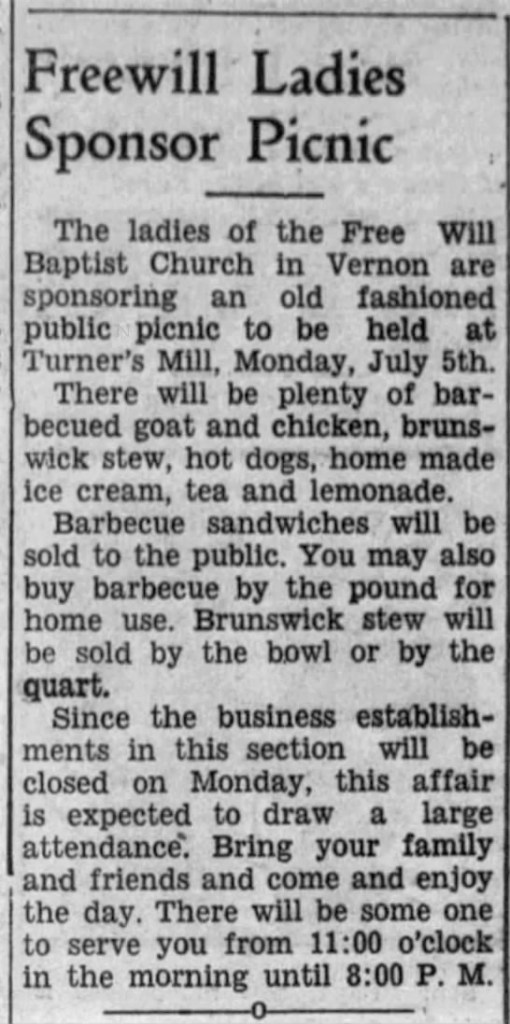
I recently came across an old newspaper article regarding the Free Will Baptist Church in Vernon. This is one that my parents attended including my grandparents and great-grandparents.
The church women were having a BBQ on Monday, a day after the Fourth of July. Back then, in most all Alabama towns, church services took precedence over any holiday should the festivity fall on a Sunday. Times seem to have changed.
Free Will Baptist public invite
Reading the aged The Lamar-Democrat newspaper invite, I was able to place myself at this event via a good imagination. In today’s world, we’d refer to such as a virtual visit.
********************************************
Pastor Warren: “Brother Hankins, I’m sorry we ran out of chicken and hot dogs. I see you haven’t partook of the goat?”
Me: “No sir preacher, I’m a vegetarian!”
Pastor Brown unleashed a piercing stare, knew that he’d caught me in a little white lie. Seeing the seriousness of my blunder, I quickly corrected things.
“Well…. at least I am today!”
**********************************************
I pray we don’t enter another great depression after this Covid-19 pandemic. That’d be a sour way to finish out these final years. That perhaps sounds a bit selfish on my part.
I do think this will be a good lesson for many young folks. Just as mom tried to teach my brother and me, some will now see fit to save money for rainy days, including put extra food aside for emergencies. Many will even learn to eat what’s on their plate without complaining, whether they like it or not.
Perhaps the appreciation of simple things like board games and mere conversation with family and friends will once again reenter people’s lives.
The smart ones will learn from this I’m quite sure!
“Smart students quickly learned to stay away from David , especially when we performed jumping jacks.”
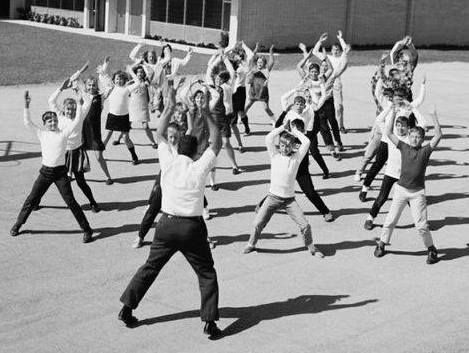
Elementary school jumping jack session
I was never a Jumpin’ Jack Flash fan. The popular Rolling Stones tune surely has different meaning than my interpretation of the words.
During recess in elementary school we’d do jumping jacks. The routine shook milk money out of my pant’s pocket.
In junior high, there was one kid named David Cash (not his real name), who’d pass gas during PE class. Smart students quickly learned to stay away from David, especially when we performed jumping jacks.
During high school, Jeff Thimsen taught me a new version of the exercise. We’d stand at the very back where Coach White couldn’t see our feet. When other students were spreading legs, we’d only raise our hands. I suppose from up front it looked kosher enough.
Things went well for several weeks until our physical education aide, Ricky Bowen, caught us. With Coach White dictating the punishment, Ricky made us do jumping jacks the next day for the whole 30-minutes. Bowen was a good friend and whenever “Coach” wasn’t around, he’d let us slide by allowing the Thimsen method.
The lyrics to Jumpin’ Jack Flash are somewhat archaic, yet one word in it does relate to my jumping jack days.
“I was born in a cross-fire hurricane.
And I howled at the morning driving rain.
But it’s all right now, in facts, it’s a gas.
But it’s all right, I’m Jumpin’ Jack Flash.
It’s a gas, gas, gas.”
Whenever Mick Jagger bellows out the words gas, gas, gas, he has to be referring to David Cash. I wonder if Mick also went to school with him?
* The meaning of this poem is quite simple. There comes a time in our lives when we have to try a wee bit harder in keeping the buzzards away. Following our doctor’s advice in getting flu and pneumonia immunizations each fall is one way. Proper exercise and diet is another. Foremost in my making it one more year, is trusting that my Lord & Savior, Jesus Christ, will lead me there.
“I looked over just in time to see a trucker watering a bush.”
Road Trip
Our plan this month was to drive to Branson, Missouri. I wasn’t interested in going, but my wife’s eagerness to visit the place forced my hand. Country singer Taylor Hicks was performing and she wanted to hear him.
Research showed there are several automotive salvage yards in the immediate Branson area worth investigating. Having that information at hand made the round trip of 2,784 miles somewhat palatable.
When Covid-19 came along this idea was dropped like a hot potato. At that point I was bummed even more than Joleen. I’d planned on writing about our experience for a travel magazine. That would place a few extra bucks into my always thin wallet.
Joleen suggested I go online and read about all the neat places we’d visit had we been able to go. She called it a virtual road trip. She mentioned further that I could still write about our imaginary exploits. With nothing better to do than eat, sleep, and breathe, it seemed like a great idea.
I calculated the imaginary journey would take us a total of 10 days. Six of them would be travel days, with the remaining four for entertainment purposes. My calculations are not always precise and this trip proved it. I decided to take virtual notes along the way, and then compile them into a story once we reached home.
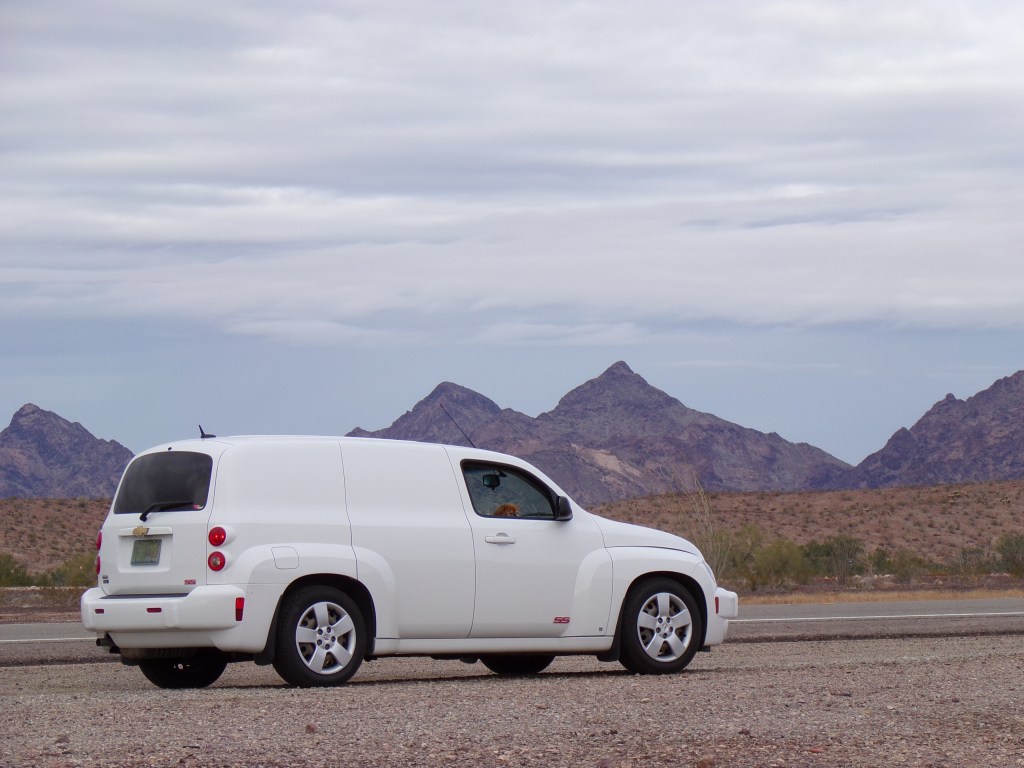
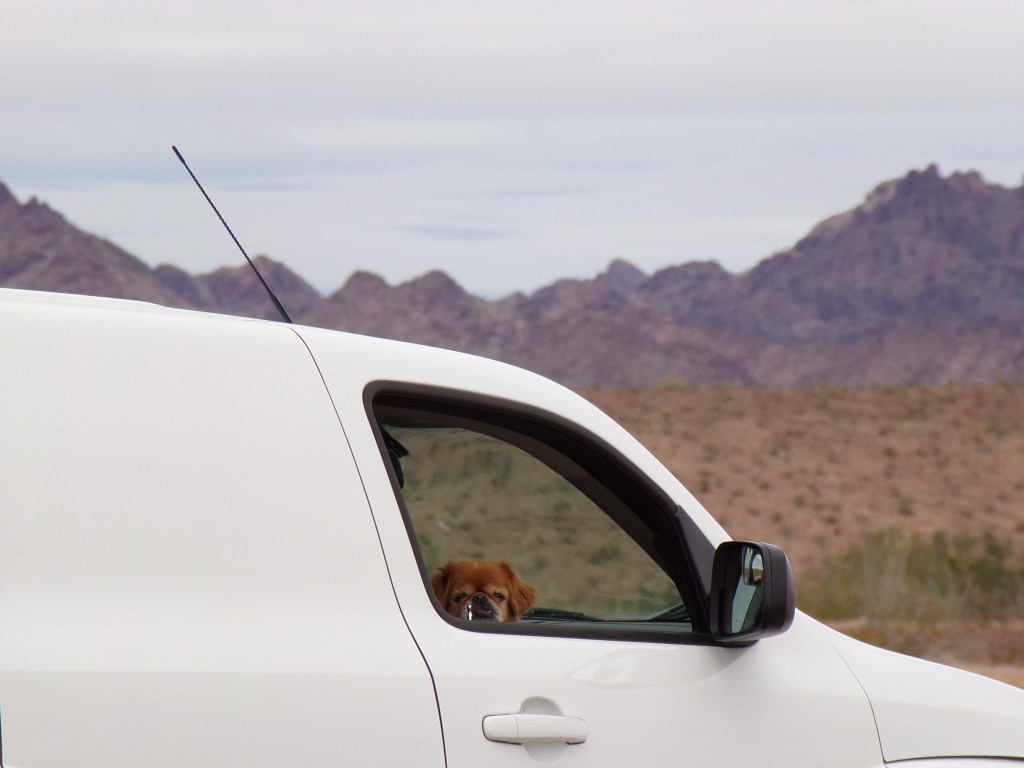
I thoughtfully prepped in advance for our Branson trip by loading the car with sufficient snacks and beverages. Diet Pepsi and Pop-Tarts were at at the top of the list. A new Yeti cooler took up most of the cargo area in our tiny 2009 Chevrolet HHR. There was still plenty of room for, “Simon.” As long as he had a soft place to rest his Pekingese body, our canine child was fine.
Wanting to purchase a new supercharged Dodge Charger to make things a bit more comfortable, including faster, the idea was quickly nixed by my two-legged partner.
Hoping to get an early start and make it all the way to Albuquerque, New Mexico by dark., we finally left the house at 11:35 a.m. Being a bit slow is not unusual for us when traveling.
Fifty-five minutes out of Lake Havasu City, on Interstate 40 close to Kingman, a neighbor called Joleen mentioning that our garage door was wide open. Folks were slowly driving by and gawking. The house alarm was going off as well. There was nothing to do but turn around.
Two hours later we were once again on our way. It shouldn’t have taken that long, but a judgmental mistake on my part by picking up the house phone delayed things. A long-winded pal wanted to know if we’d stop by his place. We weren’t even going to Alabama. It took an hour of chitchatting to finally shake him loose.
Seeing that Albuquerque was near impossible to reach at this point, we decided to bed down in Kingman. Our trip odometer showed 183 miles, yet we were only 55 miles from home. To me, it was like taking one step forward and three steps back. On a positive note, we dined at Five Guys Burgers that evening. They offered free salted peanuts and I grabbed my share, placing them in a brown paper bag.
Joleen and Simon turned in early that night. I stayed up late watching a rerun of The Blues Brothers before tucking in. That turned out to be a big no no.
Five Guys Burgers – Kingman, Arizona
DAY TWO:
I couldn’t get out of bed until 9:30. Joleen and Simon were ready to go. They’d already ate thanks to a free continental breakfast provided by La Quinta Inn. By the time I stuck my head in the dining area the kitchen was closed. With a couple of tasty Egg McMuffin sandwiches sitting in my lap from a nearby McDonald’s, we were once again ready to sail.
Somewhere near Williams, Arizona – Joleen gasped out loud,
“Disgusting!”
I looked over just in time to see a trucker watering a bush. With rest stops far and few between, this was a common sight for Arizona travelers. Had she yelled sooner I would’ve honked and waved.
Williams is a neat little town. Nestled in a valley with spruce trees and greenery all around, it’s the gateway to The Grand Canyon. We saw a couple of small deer grazing along the highway. For their protection, a fence had been erected to keep them from becoming road kill.
We always stop at Williams to get a double-scoop cone and an iced tea. Wheeling up to the drive-thru speaker, a McDonald’s attendant informed me that their ice cream machine was down. I’d predicted such before even stopping. It seems McDonald’s can never keep those things working. Bummed over not getting my treat, Joleen was quite happy with her drink.
Stopping for gas at Flagstaff, I was able to score a chocolate and vanilla ‘Eskimo Pie’ from a Terrible Herbst convenience store. Five bucks seemed a bit high, but when you’re on the road who cares about such. I was more than happy to share the vanilla part with Simon. Chocolate is bad for animals.
The rest of our cruise to Albuquerque was uneventful other than a front tire exploded. It happened on a curve at the bottom of a steep grade with a line of semi’s behind us. Because I still possessed youth-like-reflexes, I was able to safely guide us off the highway into a ditch. In my younger days, I would’ve had the old tire off and new one on in less than five minutes. I was Olympic quick back then, maybe faster. Because of a bad back, knees, and other ailments, it took an hour and a half this go-around.
I was never more elated to hit the sack that night. Thankfully, there was a Burger King located next door to the Comfort Inn. Joleen walked over and ordered our dinner. A fish sandwich and Diet Pepsi hit the spot before I dozed off. A green Dodge Charger appeared in my dreams. I was driving it.
Burger King
DAY THREE:
Sometime during the early morning hours, the cod or whatever it was came back to life. I spent several hours waiting for things to surface. Thinking that perhaps it was going to dive, the fish came out topside instead.
I elected not to eat breakfast for obvious reasons. Joleen and Simon scored another free meal. As I lay in bed wondering when or if I’d feel better, a thought suddenly crossed my mind. Why do motels and hotels call their breakfasts, continental?
After a hot shower and some Pepto-Bismol I felt good enough to resume travel. Joleen said she’d take over, but I’m hesitant on allowing anyone but me to slide behind the wheel. I cannot relax not being in almost full control of a vehicle.
Our destination was Oklahoma City; a distance of 543 miles. Averaging just over 80 mph, I calculated we’d be there in eight hours or less. This ill conceived calculation allowed for fuel and potty stops. Simon needs to whiz like clockwork every hour on the hour, but only when traveling. At home he can go for quite some time.
On the outskirts of Amarillo, Texas Joleen once again shrieked,
“Disgusting!”
This time I immediately honked before looking. Expecting to see another trucker, it was a suicidal skunk in the road instead. I swerved to avoid hitting the creature but nailed it smack-dead-center. There must’ve been plenty of juice in its tank because the liquid coated our Chevrolet like stink on a kitchen sink.
We transported this nose-wrinkling-smell all the way to Oklahoma. It was so bad that Simon refused to exit the car. I ran the Chevy through a car wash in Oklahoma City hoping to get rid of the odor. An employee pulled the skunk’s black and white tail out of our grill and handed it to me. Gingerly placing it in a Safeway grocery bag, I knotted the top for odor sake. Back in the day it would’ve been cool for some guys to hang the thing from a car antenna; not that I would’ve done such.
Holiday Inn Express was our place of residence that night. They always provide a clean room with plenty of free goodies to take with you. Their tiny bottles of shampoo and conditioner are top notch.
Skunk tail
DAY FOUR:
The next morning I was able to load two plates with food, gingerly bringing them back to our room while also balancing two cups of dripping coffee. Getting into the room door with electronic key took some doing.
The main entree was biscuits and gravy. There was something about the biscuits that didn’t seem right. Little did I know they’d plug up our plumbing for two days straight.
We were only 324 miles from Branson. In my mind there’d be no problem getting there early. I was looking forward to taking a dip in a warm swimming pool, along with a hot shower or bath. Joleen wanted to do some shopping. Simon was always eager to explore, sniff, then mark his turf.
Walking to the car I tried to start it, hearing only a click. Turns out the battery was dead. I’d intended on changing it before we left town but forgot. I wasn’t sure what to do? Calling a cab meant twenty bucks or more for a jump. There was a beat up Ford truck parked next to us. A disheveled looking man walked up and I assumed it was his.
“Excuse me sir, is this your pickup?“
Nodding, which I took as a definite yes, I asked the gentleman if he’d give me a jump? Pulling twenty dollars from my wallet persuaded him to quickly climb inside his vehicle and pop the hood.
I had jumper cables of my own and had them connected in seconds. Thankfully, the HHR roared to life without trouble. Closing the Ford’s hood, I thanked the stranger for his act of kindness.
As he rapidly disappeared from sight, a rough looking character sporting a Don’t Mess With Texastattoo on his right arm burst out of an adjoining room. He wanted to know, using harsh language, exactly what I was doing messing with his %#$@* truck? When I told him my story he didn’t buy it.
I gingerly removed the last twenty from my wallet and handed it to him. The fellow grabbed the bill, grunted, and then stormed back to his room. I’d just dodged a potential bullet. It was time to get out of Dodge, and I’m not talking Charger!
Stopping at a gas station before leaving town, Joleen paid a long-haired mechanic $200.00 to install a new Interstate battery in our ride. Her and Simon went for a walk while the work was performed. I hung around to watch. Automotive technicians love customers looking over their shoulder.
The name on the fellows coveralls was, “Sparky.” He told me he’d been a herbal doctor in Colorado before switching professions. When I asked why, the slow talker had a strange reply,
“The oil man, the oil!”
I wasn’t exactly sure what he meant and didn’t press things further. Gut feeling told me it might’ve had something to do with reefer oil. These days it’s proclaimed to cure anything.
The man told me that he’d been an Herb Doctor in Denver. He went on to claim that musicians were some of his biggest clients. This I could believe. I seriously thought he’d ingested way too much of his product, and that it severely fried his brain.
When Joleen returned to the car I whispered to her that the guy was a definite stoner. Unfortunately, because the shop air-compressor stopped running at that time, he heard me.
Leaving Oklahoma and entering scenic Missouri, multi-colored dairy cows could be seen standing in the fields. They slowly looked up whenever I tooted the horn. I wondered what they thought. Did they have a hankering to hit the open road like us, or were they satisfied staying home and chewing their cuds? Something told me it was the latter. Simon loved watching the cows. On occasion he’d bark just to let them know he was boss.
We didn’t make Branson that afternoon as planned. A broken fan belt in Springfield had us spending the night there. There was no belt in town to fit our car, so they ordered one from Kansas City. The mechanic said it appeared the rubber had been intentionally cut with a knife. I wasn’t sure how that happened?
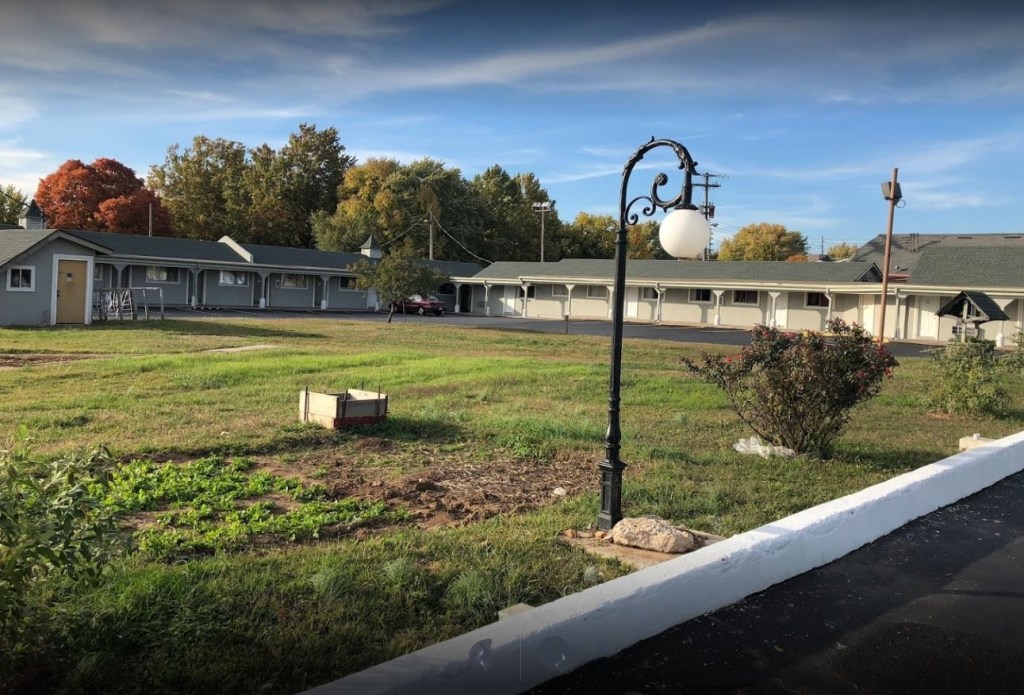
We stayed in a place called Dogwood Park Inn. The rates were cheap and it was close to the garage. They didn’t offer a free continental breakfast yet they did have several vending machines. Our room was next door to the ice machine. All evening long including into the morning hours people filled up buckets. What do folks do with ice so late at night?
Dogwood Park Inn
DAY FIVE:
By ten-o’clock, we were high-tailing it to Branson on Highway 65, trying to make up for lost time. We’d skipped breakfast, dining on Pop-Tarts and M&M’s instead. I hadn’t been driving very long when red and blue lights appeared in the rear view mirror. Under her breath I heard Joleen mutter,
“Disgusting.”
She wasn’t upset with the cop for pulling me over. She was disgusted that I hadn’t slowed down when she asked me to.
I attempted to talk my way out of a ticket by telling the officer we were out of state. When I explained that I didn’t realize the speed limit in rural areas is lower than those elsewhere, I evidently ticked him off. Perhaps he was already having a bad day? The patrolman hit me with a $300.00 fine for doing 80 in a 45. I know for sure I was only doing 78 but didn’t argue the point.
When we entered Branson I expected to see longs lines of traffic like friends warned me about. Instead, the streets were near void of any vehicles. Checking in at the ‘Hilton Promenade at Branson Landing’, a desk clerk informed me we’d come to Branson during the off season. All of the big name acts were now on the road or taking sabbaticals. When I inquired about Taylor Hicks, she told me he’d left town last week for Florida. I knew Joleen would be upset.
Asking the lady if any shows in town were worth attending, she recommended buying tickets to one called, “Don Luigi and the Lucky Herders.” The woman said they were a band out of Kimmswick, Missouri. She went on to say,
“Don and his group fill in whenever the big guns are away. These guys play mainly at county fairs throughout Missouri and Kansas. Don does a great rendition of Freddy Fender and Johnny Cash. When they’re not making music, the boys raise sheep and goats for a living.”
One bit of good news she tossed me was that automotive recycling yards in the vicinity were still open for business. She gave me names to a couple of places having old car parts.
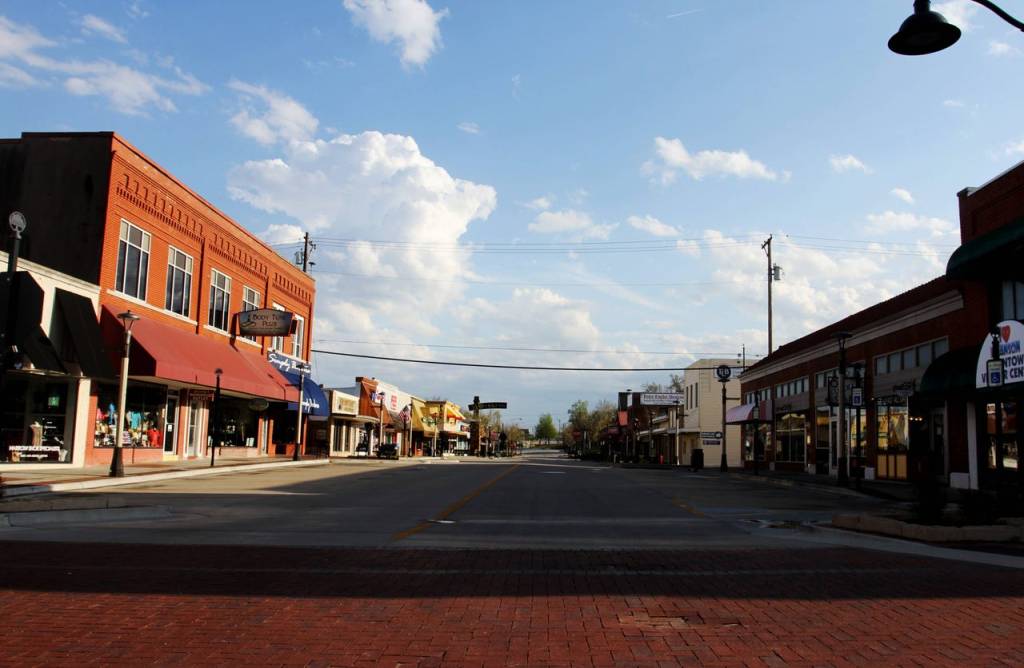
Branson, Missouri
DAY SIX:
I slept like a log in our fancy hotel room. Staying in a Hilton was something I’d always dreamed about. Now I was living the dream. Just as I figured, Joleen was not pleased about not getting to see Taylor Hicks. She had zero interest in listening to a rancher, as she called him, dolame impersonations. I thought it was a bit harsh but kept my mouth shut. Joleen threw one last dagger my direction in saying,
“This trip is turning into that Freddy Fender song, ‘Wasted Days and Wasted Nights’.”
We ate in complete silence. The Hilton Promenade did not offer a free continental breakfast. As a matter of fact, they didn’t offer breakfast at all. The desk clerk suggested a swank restaurant up the street where prices were not to my liking. Good thing being, there was a McDonald’s close by. Egg McMuffin’s always taste good no matter where you buy them.
We spent the day walking around town and sightseeing. Joleen purchased a few knickknacks from Kringle’s Christmas Shop, including some sewing supplies from Quilts & Quilts The Fabric Shoppe. Simon and I stayed outside both establishments. Unfortunately on his part dogs weren’t welcome. Joleen browsed for over an hour in Dickens Craft Shoppe. I couldn’t understand how someone could stay so long in one tiny store?
I was more than happy in not having to drive that day. Simon chased ducks by the water and we took pictures of different species of wildlife, including a strange bearded man wearing red, white, and blue pajamas.. Eventually a park employee walked up pointing to a sign saying no dogs allowed. Joleen apologized for not seeing it. I wanted to tell him that Simon was family and not a dog, but decided to not press my luck. We moseyed along.
Branson seemed like a laid back kind of town compared to other tourist traps. I liked it! Overall, it was nice being there even without Taylor Hicks.
Hilton Promenade at Branson Landing
DAY SEVEN:
I talked my wife into riding with me to Blue Springs, Missouri. A business called Davis Auto Wrecking was located there, and I wanted to see if they had parts for my old Plymouth.
She was hesitant at first, knowing that I can spend hours in such places. I assured her I’d be in and out within minutes.
Mr. Davis was an interesting fellow. We chatted for hours about how things used to be in the parts business. He’d been at this same location since 1957. I was only three years old then. The man was a walking computer of sorts where automotive knowledge is concerned. He was a genius in my mind!
I spent five hours walking the grounds jotting down the location of various parts that I needed. Mr. Davis agreed to ship them to me as we had limited space in our car. Joleen and Simon spent their time taking walks and snoozing. Pretty much the whole morning and afternoon had been ruined for them. I planned on making up for such, by camping out in our hotel the following day and letting my wife shop ’til her heart’s content.
We extended our stay in the Hilton one additional night to allow for her shopping extravaganza. Because the town was basically deserted, we had no problem doing so.
Davis Auto Wrecking & Sales
DAY EIGHT:
Joleen abandoned us as soon as the stores opened. She planned on eating a decent breakfast at that nice restaurant regardless of the cost. Pop-tarts were fine with me, and besides, I’d brought so many that I hated to haul them back.
Simon and I took numerous walks around the hotel grounds and practically nothing else. Lucky for guests and their shoes the hotel provided poop bags. I was able to take a dunk in the pool for a bit, but when unruly kids showed up I picked up my things and left. There’s something about small kids in public swimming pools. How many times have you seen them get out of the water to tinkle?
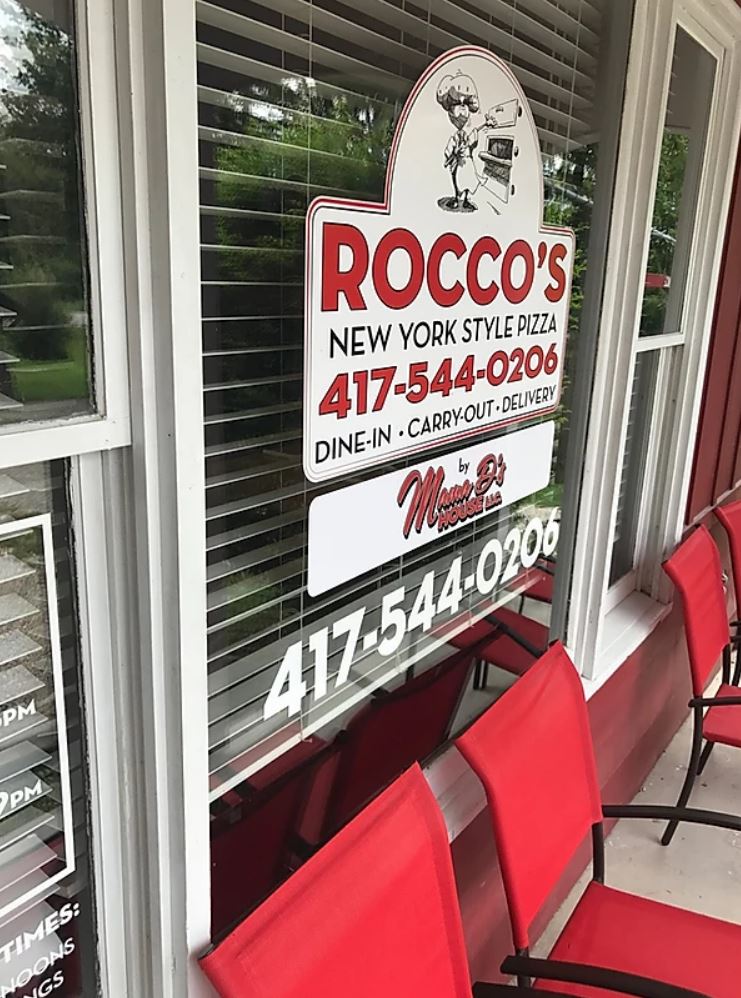
“Gun Smoke” reruns were on television and I eagerly tuned in. The front desk recommended Rocco’s Pizza as having the best pizza and pasta in Branson. I ordered an 18″ Canadian bacon and pineapple for lunch. Simon was allowed a few pieces of bacon and he totally enjoyed it. I saved a few slices for the marathon drive back home.
Rocco’s Pizza
DAY NINE:
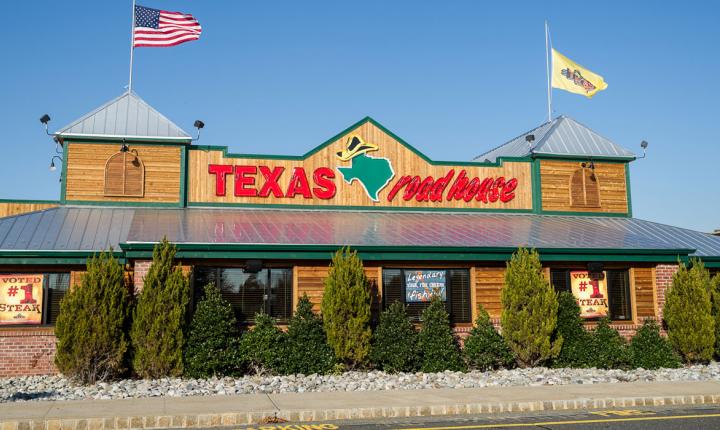
We regretfully left Branson and their upscale Hilton Hotel minutes before the noon checkout. Plans were to stay in Independence once again at the lowly Dogwood Park Inn before heading home. I suggested that we eat at Texas Roadhouse that evening. It’s one of Joleen’s favorites.
I made sure to order extra burgers to go for our road trip home. A couple of their freshly made buns with honey butter went into the cooler as well.
So far, the Yeti held up as advertised because we were still on the same two bags of ice. It did a wonderful job in keeping our food and drinks cold. We went to bed early that evening in anticipation of the long ride ahead.
Texas Roadhouse
DAY TEN:
I was able to jet back to Arizona in under 24-hours without getting a ticket. It seemed like the proper thing to do although Joleen objected. She was afraid I’d fall asleep at the wheel. During the return leg I hit another suicidal skunk, with those two sleeping through the collision. I doubt the poor critter ever knew what hit him!
I was tired of being on the road. Sleeping in strange beds was getting old and I was overly cranky. The way I saw it, we were extremely fortunate in not picking up fleas along the way, especially at the Dogwood Inn. There was just something about that place not to my liking. Perhaps it was the name?
Pulling into our driveway, sun-bleached newspapers greeted us at the front door like uninvited thugs. Kicking them out of the way, I then realized that Joleen had forgot to do something before we left. Walking inside, the phone began to ring as if it automatically knew we were home. I begrudgingly grabbed the thing realizing at the last second that I’d made a big mistake.
It was a telemarketer offering fantastic deals on life insurance. Gazing around the room as he rambled on, every appliance and clock in our kitchen was blinking. Evidently power had been off at one time; perhaps even more than once. I decided not to open the refrigerator door.
Turning on the TV, a news channel showed the same old Democrats arguing about Republicans, and the same old Republicans arguing about Democrats.
Some clown across the street set off a couple of illegal fireworks nearly scaring poor Simon to death. I yelled at him. A loud motorcycle raced up and down the street. Overhead, a thumping helicopter slowly flew by.
Yes, we were definitely back in the ‘hood.
As Joleen ambled over to see what I was up to, I said to her,
“Pack some more clothes honey, ’cause we’re taking another virtual road trip…. to Florida. You can catch Taylor Hicks and I’ll attend that big automotive swap meet in Tallahassee. Make sure this time to cancel the newspaper before we leave!”
I regret my jokingly telling a police officer, “I have a license to speed.”
The song, “My Way” by Frank Sinatra, was playing on our car radio the other morning. Everyone from the Geritol Generation knows this tune. It ends with these lyrics, “I did it my way!”
My favorite line in this song is,
“Regrets, I’ve had a few. But then again, too few to mention.”
I can relate to that, but with a different twist.
“Regrets, I’ve had numerous. But then again, too many to remember!”
I’ve read about Frank Sinatra’s personal life, and it seems he should have more regrets than he claims. Like me, perhaps he forgot some along the way.
My first memorable regret deals with winding my grandparents’ prized clock until the spring popped. I held that secret for many years. I’m sure they knew who did it. I was around five at the time, so the statute of limitations has long since passed.
I regret trying to steal several toys from a daycare, stuffing them down my shirt. Caught on the way out because of a bulge in my tummy, Mom was totally embarrassed.
I regret calling some kid in that same daycare,
“Egghead.”
Mother told me the child was totally devastated by my vivid description.
I regret daring my brother that he couldn’t shoot out a streetlight with his BB gun. It was obvious who did it because the light was in front of our Selma, Alabama home. Jim’s butt paid the ultimate price.
I regret touching the stove top just to see if it was hot.
I regret not remembering or writing down more of the stories my grandparents told me. Sadly, they took that family history with them.
I regret passing a note in my first year of high school, only to have it confiscated by the teacher. Having him read aloud that I wanted to start a treasure-hunting club was most embarrassing. I can still hear my classmates laughing.
I regret picking up the assistant manager of a grocery store I worked for and tossing him into a pile of cardboard boxes. Alan wasn’t hurt, yet I suffered dire consequences for my misguided action. I was relieved of my duties and rightly so.
I regret not becoming a firefighter after I’d passed all the tests. Who knows, there’s a slim chance I might’ve ended up on one of those fireman calendars.
I regret not telling my parents that I loved them more often.
I regret jokingly informing a police officer,
“I have a license to speed.”
It only took seconds to find out the officer didn’t share my sense of humor.
I regret selling my 1968 Dodge Charger R/T in 1974. That car would be worth big bucks today.
I regret listening to a financial adviser who warned me against buying Chrysler stock at $5.00 a share. Two years later, it was $30.00 and was eventually split.
I regret not being able to find Alaskan investors to partner with me in purchasing the 640-acre tract where Havasu Foothills Estates now stands. In 1980, Randy Randall with Harold Johnson Realty offered it to my wife and me for what seems like 550k. Can you imagine the value now?
I regret sliding the personal watercraft’s control lever into reverse at 40 mph, just to see what would happen. Thank goodness it was a rental.
I regret not spending more time with my children before they left home.
I regret not purchasing additional Bill O’Reilly tee-shirts with USA GREAT printed on the front. These quality garments are no longer offered.
Most of all, unlike Frank Sinatra, I regret during my early years, doing things my way when I should’ve done them God’s way.
Had I taken his advice instead of my own, I would’ve cut down considerably on my life blunders!
“No one complained until a Greta Thunberg type noticed a Piggly Wiggly bag littering her front yard.”
Great Wall of China
I’ve had plenty of time these past several weeks to look back on my life. Part of that reflection has to do with revisiting illogical dilemmas I’ve encountered along the way.
As I sit with a glass of iced tea in hand, watching ice cubes grow smaller, I think to myself: Frozen water has a tendency to do that. Ice has been melting long before I was born. No amount of scowl on environmental activist Greta Thunberg’s face will stop it from doing so. What is it with these people? Their intentions are good, yet folks with misguided ambitions to save the world sometimes do more harm than good.
I was doing quite well in grade school where simple arithmetic is concerned. Six plus six equals twelve. Unfortunately, when we moved to another state, “New Math” was the rave. It was strange stuff to me. I never did catch on and my grades suffered. I wasn’t the only student having problems. The person responsible for new math is most likely a Greta Thunberg type. Their goal in life is to reinvent the wheel. They’ll never understand the logic of,
“If it ain’t broke don’t fix it!”
Grocery bags. My pet peeve. Paper grocery sacks were used for many years. Billions of school books were covered with the brown paper to protect them from damage. Greta Thunberg environmentalists view them as a sin against Mother Earth. Tree huggers from around the globe eventually cried out,
“Too many trees are being murdered!”
So we changed to plastic bags. No one complained until a Greta Thunberg archetype noticed a Piggly Wiggly bag littering her front yard. It was smothering a pink petunia. Green activists took notice and soon a war cry was heard,
“Plastic grocery bags are killing the environment!”
Reusable cloth bags were introduced as the wave of the future. Trees would no longer be slain and no more flowers or grass would be cloaked in petroleum based plastic. Greta Grunberg types patted themselves on the back believing indeed, they’d reinvented the wheel where bagging groceries is concerned.
Research now proves that sponge-like cloth grocery bags spread germs and disease like wildfire. The return of paper and plastic is inevitable. San Francisco is already doing so. Hopefully other towns and cities follow suit. I’ve yet to hear an epitome of Greta Thunberg say,
“We made a mistake!”
Our country needs to be protected from illegal aliens crossing the border. Concrete and steel walls, in conjunction with electronic surveillance devices work well for such. The ‘Great Wall of China’ is solid proof. Greta Thunberg liberals believe in open borders.
“Come on in the water’s fine!”
This ideology seems to be rapidly changing as the Covid-19 virus gains momentum. You don’t hear immigration protesters moaning so much these days about keeping illegals out.
After the Covid-19 dilemma ends will Greta Thunberg wannabes see the ill of their ways? Is it possible they’ll have a different perspective on how things should be done in the United States, and other countries?
The answer is,
“No.”
Where the trough of logic is concerned, these people refuse to partake of it.
“Many young people associate old age with decreased mental capacity. Why disappoint them!”
“Crazy Old Man” – no that’s not me 🙂
I’m close to reaching a significant milestone in my life. In several days I turn 66. That means I’ll leave middle-age status behind. I don’t mind being labeled as middle aged. It has a good ring to it. Unfortunately, old-age status is next in line. There will be no celebration.
At 65, I was forced by higher powers to start receiving Medicare. I refer to it as Medi-No-Care. I’m still filling out forms. Seasoned Medicare recipients tell me the paperwork is endless. Why do they do this to retired people? It’s not like we don’t have better things to do.
The first person I recall being referred to as old man was, “Old Man Jones”. This gentleman owned a trailer park in Selma, Alabama. Many adults called him that including my parents. I suppose he had a first name but to my knowledge it was never used. Being taught to respect our elders, my brother and I were instructed to call him, Mr. Jones.
Being referred to as Old Man Hankins doesn’t bother me. I’ll get use to it. I’ve been called far worse. “Mr. Hankie” was one such name from my work days. It was not used out of hate, but out of humor. I laughed along with them. Some will recognize this name from the cartoon series, South Park.
According to an article in an Arizona newspaper, men are considered old at age 66. Women don’t reach that plateau until 72. My wife says that’s because women live longer.
I’ve often thought of what benefits lie in reaching old man status. Of course, ‘senior citizen discount’ ranks right up there. I’ve been getting that perk going back some 10 years; even longer. It seems odd that I received senior citizen discounts as a middle aged man?
The other day I was pulled over for speeding. The officer asked if I knew how fast I was going.
“Ninety?”, I politely answered.
“I clocked you at 89.” was his stern reply.
The policeman wanted to see registration and proof of insurance. I opened our packed-full-of-clutter glove box as he carefully watched through the door window. Joleen began pulling out expired registration after expired registration, one at a time, 2009, 2011, 2013, 2015, 2017, until she finally found the right one.
When she began repeating the same routine with insurance cards he informed her he’d be right back. Unbeknownst to the fellow, we had one for every year going back to 2009. I’d meant to toss the expired cards but never got around to it.
As she continued to search the state trooper walked to his vehicle. A few seconds later he returned with an official looking paper. It was a warning. He smiled before advising me to slow down. I believe we were given a break only because he saw us as bumbling seniors.
As we wheeled back on the road I said to Joleen,
“Why didn’t this happen when I was younger?”
It seems whenever I venture to the grocery store I’m always asked if I need help. This began a couple of years ago. I’ve never accepted the offer but perhaps I should. With plans on doing some painting around the house I could use an extra hand.
Reaching old age status means I can intentionally say stupid things and get away with such. Many young people associate old age with decreased mental capacity. Why disappoint them!
The other morning in a restaurant, with straight face, I mentioned to our server that it looked like rain. Gazing out the window she saw exactly what I did; perfectly blue skies. The gal nodded and agreed with me probably thinking I had lost it.
I’ll take this old age badge as far as I possibly can. Tax breaks, discounts, coupons, deals, free meals, desserts, pencils, pocket protectors, and all other precious gratuities will be gladly accepted. I’m sure Old Man Jones would’ve done the same.
After old age there’s one more status to be had. I rarely mention it for obvious reasons. Dearly-departed status does not excite me at all.
With God leading the way, I plan on riding the “Old Age Stage” ’til its wheels fall off!