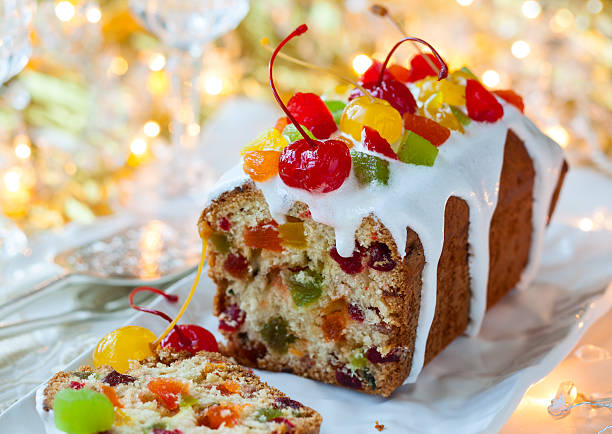
A recent article printed on 12/22/2024 in the “Today’s News-Herald,” written by Daniel Neman of the “St. Louis Post-Dispatch” struck a nerve with me. Neman’s article was on holiday fruitcakes. He was talking about the edible kind and not a two-legged variety that most of us have encountered in life.
Daniel Neman mentioned how fruitcakes came to get such a bad name, with it lying squarely on the shoulders of late-night television show host, Johnny Carson. Mr. Carson used this traditional holiday dessert in a 1989 joke monologue viewed by millions—criticizing these cakes as being something that people hate to receive as gifts or to eat. Johnny wasn’t speaking for everyone and he almost killed the industry with his baseless comments.
Our family always had fruitcake at Christmas or New Year’s, courtesy of my late Uncle and Aunt Noel McDaniel in Birmingham, Alabama. Mom generally received one as a gift from the various hospitals she worked for. My brother and I could devour a sizable loaf within a few days. I especially loved the green, yellow, and red candied fruit pressed inside.
The big joke nowadays thanks to Johnny Carson is that a fruitcake will last forever. That might be true if they’re frozen, but over time, even covered, they’ll dry out and become inedible. This rarely happened in our household. Dad and Mom liked fruitcake with their coffee while Jim and I had ours with milk or hot cocoa. I’ve been told more than once that fruitcake, like bacon, is unhealthy and plugs the arteries. It’s something about trans fats.
The folks condemning foods like fruitcakes as unhealthy without any scientific proof are the terroristic gadflies of this world. I’ve encountered multitudes of such people over the years—self-proclaimed experts on any particular subject after they’ve read a book, seen something on Facebook, or listened to Doctor Nutcase on an infomercial. For the most part, those offering “free advice” on television end their spiels with an offer to buy pills or books for $29.95.
Erroneous nutrition advice started with friends and acquaintances lecturing me that eggs were bad. This was in the 1970s. According to these armchair nutritionists, cholesterol in eggs was over the top and would turn my veins to stone. I listened to them for a while refusing to eat eggs or drink milk, until hearing later that they’d changed their tune. A three-egg omelet with a glass of 2% milk is now my breakfast of choice.
I’ve been told that red meat will kill me, including soda pop—both diet and regular, decaf coffee, high-fructose corn syrup, prepared frozen dinners, or anything microwaved in plastic. Eggnog is also on that bad list. I even had one person warn me about microwave popcorn with added butter. Supposedly, if the butter aroma is huffed, lung damage will occur. I’ve never been one to huff or sniff popcorn bags. Who does?
The warning I laugh most about regards McDonald’s or fast-food restaurants. More than once I’ve been told after hearing a gasp, “That stuff will lead to a heart attack!” The first McDonald’s came to Anchorage, Alaska, in 1970, and I’ve been eating at the Golden Arches ever since. That started over 55 years ago.
If the food we eat today is so bad, why are people living much longer than they did 200 years ago when vegetables, fruit, and meat were considered free of hormones and preservatives? I try to eat healthy according to what’s labeled healthy by my doctors, and for the most part, I’m successful.
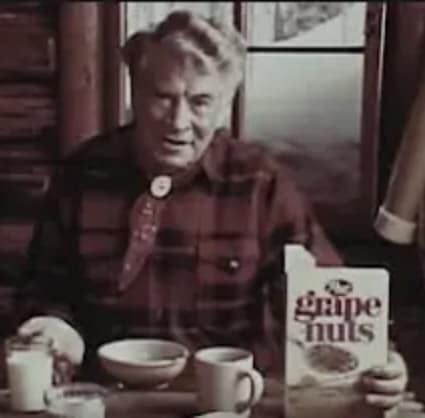
I understand that anything consumed in excess has potential health consequences. Euell Gibbons was a nutritional guru to the extreme. He was a guest on Johnny Carson more than once. Euell promoted Grape Nuts cereal as being healthy and was an advocate of a low-fat high-fiber diet. Gibbons was called a nut cruncher back then by my friends and others. During that time I was a Grape Nuts fan as long as a bowl of sugar was within easy reach.
Euell Gibbons became a practicing Quaker and I have much respect for him due to this alone. Regardless, he fits the fruitcake mold where handing out bogus advice regarding nutrition is concerned. Euell evidently felt that totally foregoing certain foods would keep him around a few more years. Had he stopped smoking cigarettes that might’ve been worth another decade or two.
Gibbons died in 1975 at age 64 of a ruptured artery. Perhaps had he consumed a bit more eggs, pork, and beef he would’ve stayed upright a while longer? We’ll never know. What I do realize is this—somewhere down the pike—we all leave this world. Just because a person is vegan or doesn’t dine at McDonald’s isn’t going to stop such things from eventually happening.
The most important thing to remember here is that it isn’t what we eat, but the plans we’ve made on where we’re going after our ticker stops. John 3:16 tells us how to do that in 25 easy-to-understand words. As a Quaker and a believer in Jesus Christ, Euell Gibbons made that wise decision and so have I.
Before turning out the lights, there’s one last slice of fruitcake left in the fridge. All I need is a tall glass of cold eggnog to wash it down. Partaking of these two delicacies once a year hasn’t killed me yet!

 I like to write junk...