BAKER’S DOZEN

“To add more drama to the scene I placed both hands behind my back as if I was being handcuffed.”

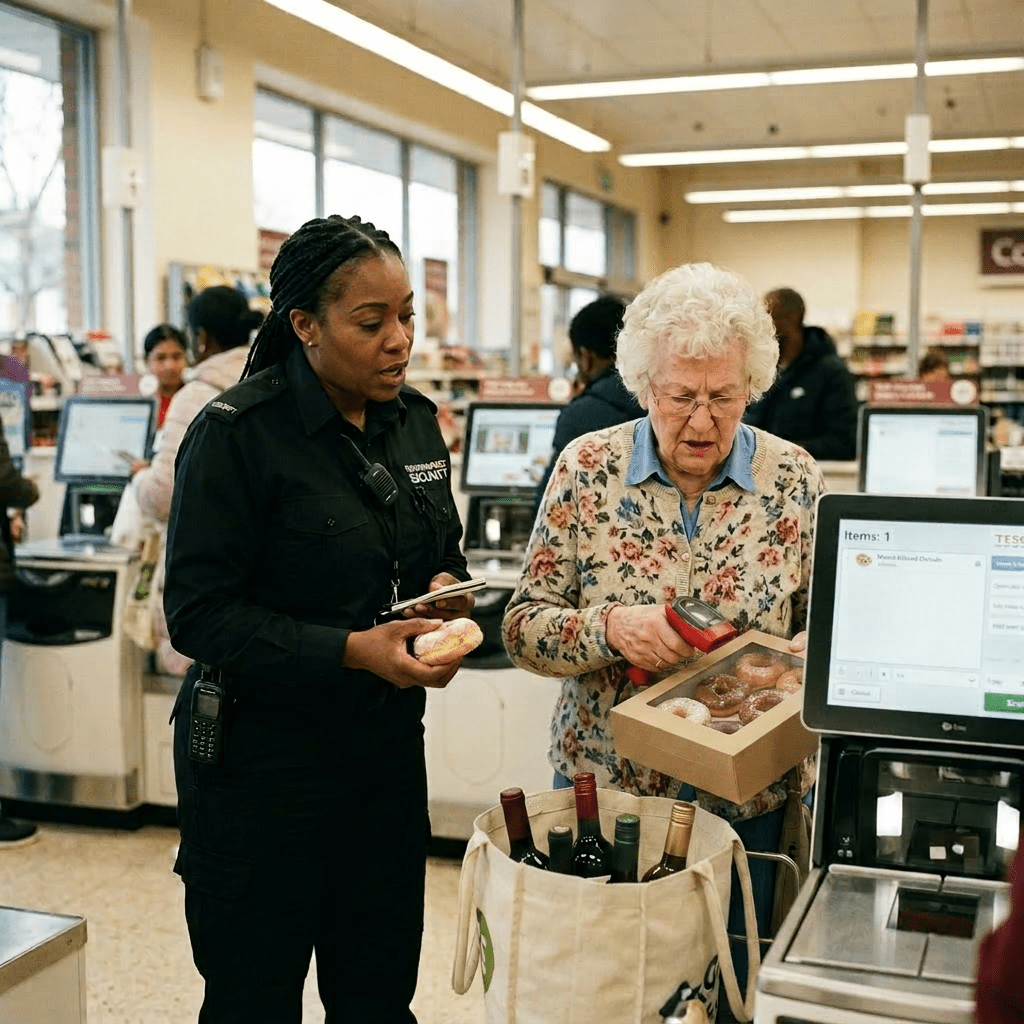
Security guard assisting elderly woman scanning box of donuts at grocery store self-checkout

I asked a local bakery employee in a grocery store the other day if they offered a baker’s dozen on donuts. The young lady said yes and gave me the price. When I asked if that was for 13, she looked at me as if I were crazy. “No, a dozen is 12!” It was easy to see the gal didn’t know what a baker’s dozen was.

A baker’s dozen means 13 instead of 12, and its history is usually traced to medieval English baking laws—not specifically donuts at first. In medieval England, bread was heavily regulated because it was a staple food. Bakers could be punished for selling underweight loaves.

Since bread weight could vary after baking due to moisture loss, bakers often added an extra loaf when selling a dozen to ensure the customer received at least the required number.

Over time, that “extra” became known as a baker’s dozen. Where donuts are concerned, the phrase carried over naturally because donuts—like bread rolls, pastries, and bagels—are commonly sold by the dozen.

A donut shop offering 13 donuts for the price of 12 is continuing that old “extra one to be safe or generous” tradition, though today it’s more of a customer-friendly bonus or marketing gesture than a legal precaution.

I decided to check around to see if this bakery was the only one not following the old English tradition, and they weren’t. It seems that with the increase in price, a baker’s dozen has been reduced back to 12. Never mind that when you pay, and change is due, you’ll also be shafted any Lincoln pennies.

I believe it’s hocus-pocus how stores now advertise “deals,” as they like to call them. Older folks like me have to carefully read the small print on signs to see just what we’ll be paying.

I don’t know how many times I scanned an item only to see the regular price instead of the sale price at the end of a transaction. Walking back to read the sign, I discovered I needed to purchase another 11 to get the lower price.

Special offers can also be confusing and are undoubtedly subject to change in the near future. BOGO (buy one – get one) will mean exactly that. Folks will be stupefied when they look at their receipt and see they’ve just paid for two.

Shouldn’t this have been BOGT (buy one – get two) to begin with? This reminds me of tactics used by car lots in the 60s and 70s to leave customers mystified. A car would be advertised for a certain price on television, and when a customer came in expecting to buy it, they’d be told it was sold.

Perhaps I am making a mountain out of a molehill. A friend says that when she’s buying a dozen donuts, a thirteenth is stuck in the box without fear. “Who’s gonna open the box and count them?”

It’d be my luck that a store clerk would nab me as I walked away, or worse yet, the AI security camera in the self-checkout would spot things. This actually happened to me with grapes.

I’d placed a sack of them on the scale and in a hurry to get going, picked them up, and put them in the bag without hitting ‘accept weight.’ Everything locked up immediately ─ with a black & white grainy video showing my mistake. The clerk corrected things and said it happens all the time.

By then, those standing in line behind me were watching. To add more drama to the scene I placed both hands behind my back as if I was being handcuffed. Most folks chuckled except one.

The donuts I buy generally go to the chemotherapy lab in Kingman. If they’re short a couple of donuts from here on out it won’t matter as I always take them two dozen.

One thing I’ve been planning on doing but haven’t thus far, is the next time that automated AI produce scale asks if I accept the weight, I’ll decline, just to see what happens. I’m sure I’m not the only person wanting to do that. Will lights and buzzers go off? My wife says that she doesn’t want to be around to see.
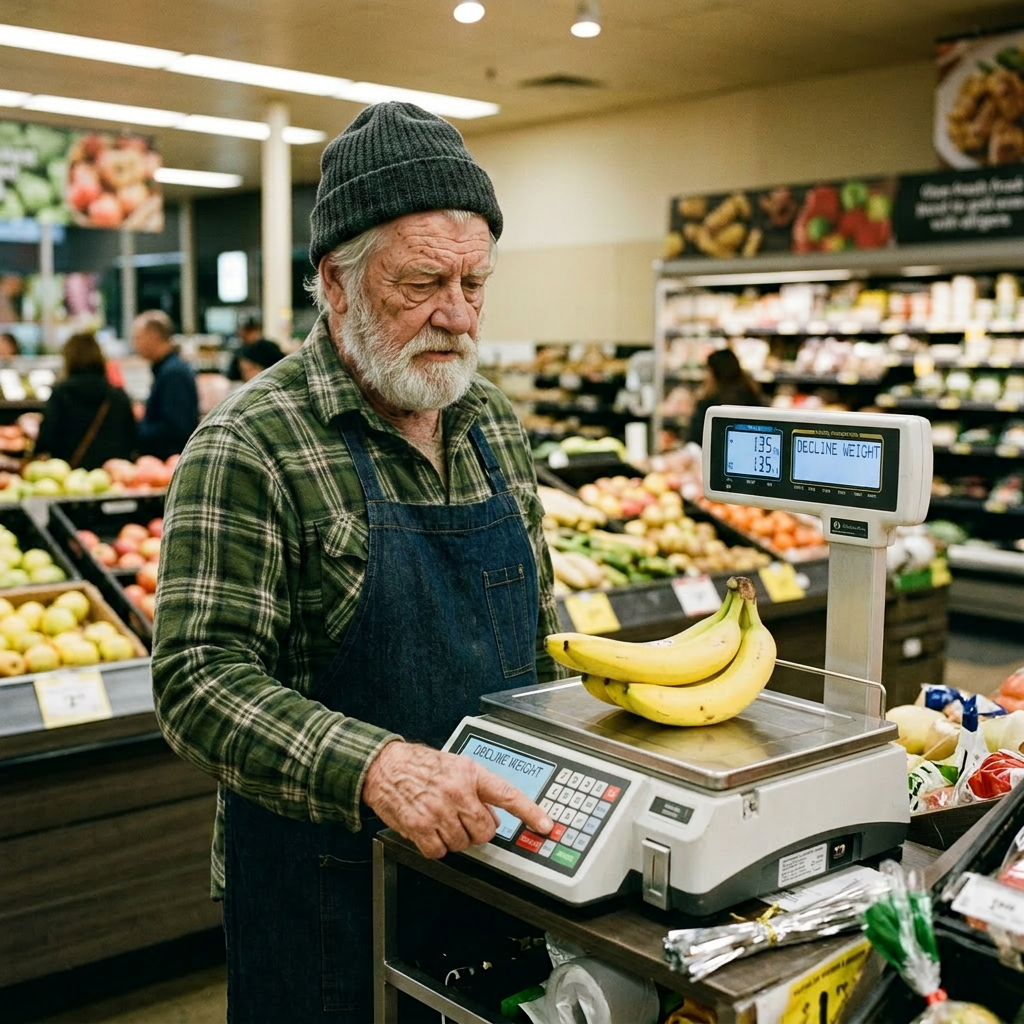
Grocery store worker using digital scale to weigh bananas

FRUITCAKE

“The big joke nowadays thanks to Johnny Carson is that a fruitcake will last forever.”

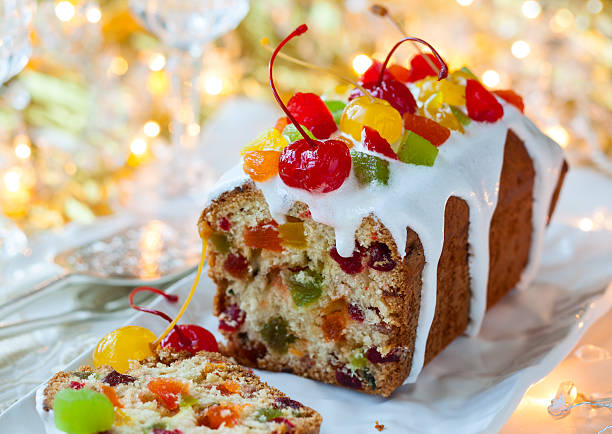
Christmas fruitcake

A recent article printed on 12/22/2024 in the “Today’s News-Herald,” written by Daniel Neman of the “St. Louis Post-Dispatch” struck a nerve with me. Neman’s article was on holiday fruitcakes. He was talking about the edible kind and not a two-legged variety that most of us have encountered in life.

Daniel Neman mentioned how fruitcakes came to get such a bad name, with it lying squarely on the shoulders of late-night television show host, Johnny Carson. Mr. Carson used this traditional holiday dessert in a 1989 joke monologue viewed by millions—criticizing these cakes as being something that people hate to receive as gifts or to eat. Johnny wasn’t speaking for everyone and he almost killed the industry with his baseless comments.

Our family always had fruitcake at Christmas or New Year’s, courtesy of my late Uncle and Aunt Noel McDaniel in Birmingham, Alabama. Mom generally received one as a gift from the various hospitals she worked for. My brother and I could devour a sizable loaf within a few days. I especially loved the green, yellow, and red candied fruit pressed inside.

The big joke nowadays thanks to Johnny Carson is that a fruitcake will last forever. That might be true if they’re frozen, but over time, even covered, they’ll dry out and become inedible. This rarely happened in our household. Dad and Mom liked fruitcake with their coffee while Jim and I had ours with milk or hot cocoa. I’ve been told more than once that fruitcake, like bacon, is unhealthy and plugs the arteries. It’s something about trans fats.

The folks condemning foods like fruitcakes as unhealthy without any scientific proof are the terroristic gadflies of this world. I’ve encountered multitudes of such people over the years—self-proclaimed experts on any particular subject after they’ve read a book, seen something on Facebook, or listened to Doctor Nutcase on an infomercial. For the most part, those offering “free advice” on television end their spiels with an offer to buy pills or books for $29.95.

Erroneous nutrition advice started with friends and acquaintances lecturing me that eggs were bad. This was in the 1970s. According to these armchair nutritionists, cholesterol in eggs was over the top and would turn my veins to stone. I listened to them for a while refusing to eat eggs or drink milk, until hearing later that they’d changed their tune. A three-egg omelet with a glass of 2% milk is now my breakfast of choice.

I’ve been told that red meat will kill me, including soda pop—both diet and regular, decaf coffee, high-fructose corn syrup, prepared frozen dinners, or anything microwaved in plastic. Eggnog is also on that bad list. I even had one person warn me about microwave popcorn with added butter. Supposedly, if the butter aroma is huffed, lung damage will occur. I’ve never been one to huff or sniff popcorn bags. Who does?

The warning I laugh most about regards McDonald’s or fast-food restaurants. More than once I’ve been told after hearing a gasp, “That stuff will lead to a heart attack!” The first McDonald’s came to Anchorage, Alaska, in 1970, and I’ve been eating at the Golden Arches ever since. That started over 55 years ago.

If the food we eat today is so bad, why are people living much longer than they did 200 years ago when vegetables, fruit, and meat were considered free of hormones and preservatives? I try to eat healthy according to what’s labeled healthy by my doctors, and for the most part, I’m successful.

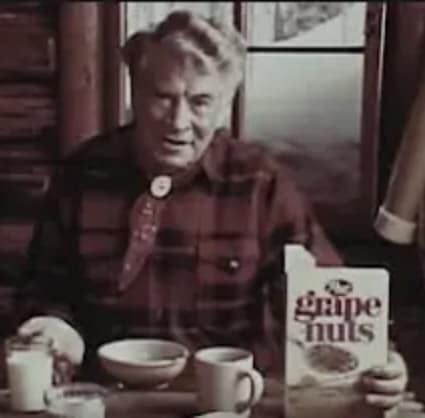
I understand that anything consumed in excess has potential health consequences. Euell Gibbons was a nutritional guru to the extreme. He was a guest on Johnny Carson more than once. Euell promoted Grape Nuts cereal as being healthy and was an advocate of a low-fat high-fiber diet. Gibbons was called a nut cruncher back then by my friends and others. During that time I was a Grape Nuts fan as long as a bowl of sugar was within easy reach.

Euell Gibbons became a practicing Quaker and I have much respect for him due to this alone. Regardless, he fits the fruitcake mold where handing out bogus advice regarding nutrition is concerned. Euell evidently felt that totally foregoing certain foods would keep him around a few more years. Had he stopped smoking cigarettes that might’ve been worth another decade or two.

Gibbons died in 1975 at age 64 of a ruptured artery. Perhaps had he consumed a bit more eggs, pork, and beef he would’ve stayed upright a while longer? We’ll never know. What I do realize is this—somewhere down the pike—we all leave this world. Just because a person is vegan or doesn’t dine at McDonald’s isn’t going to stop such things from eventually happening.

The most important thing to remember here is that it isn’t what we eat, but the plans we’ve made on where we’re going after our ticker stops. John 3:16 tells us how to do that in 25 easy-to-understand words. As a Quaker and a believer in Jesus Christ, Euell Gibbons made that wise decision and so have I.

Before turning out the lights, there’s one last slice of fruitcake left in the fridge. All I need is a tall glass of cold eggnog to wash it down. Partaking of these two delicacies once a year hasn’t killed me yet!

Euell Gibbons