Sometimes, I come across vintage postcards that make me chuckle, although the people who wrote them probably weren’t laughing at the time. The latest one involves a mother telling her son and daughter-in-law about a car trip she was on in Arizona.
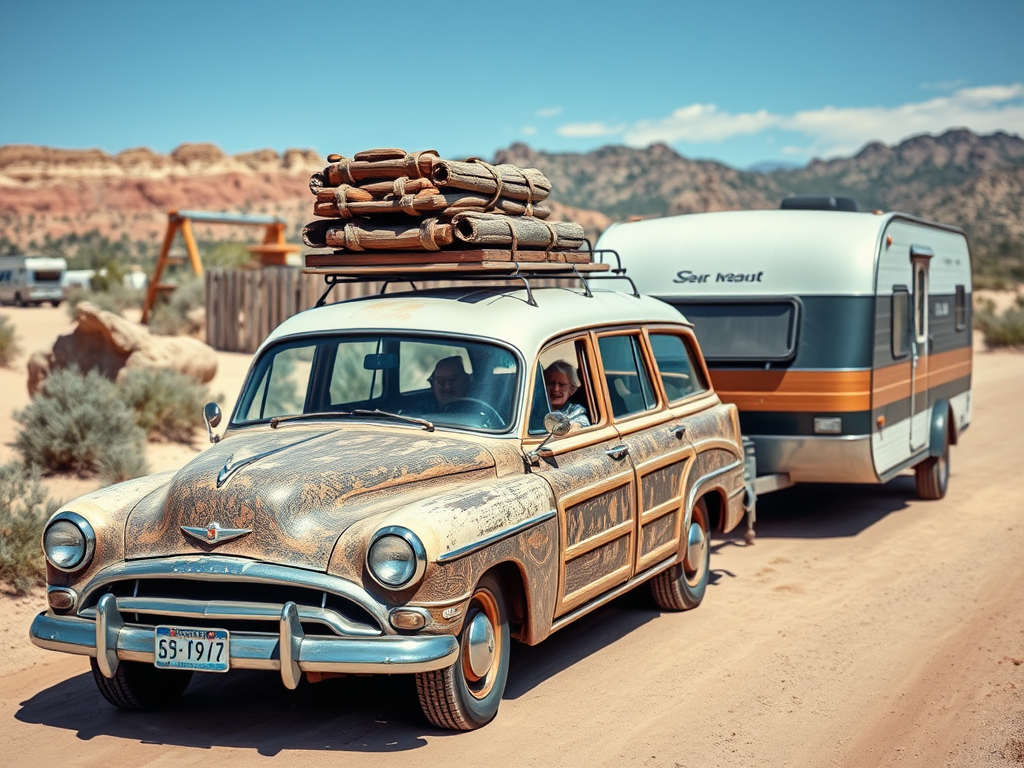
I visualize this older couple driving a station wagon, towing a recently purchased camp trailer. That was the norm in the late 1950s and early 1960s. My parents owned a 1963 Buick Invicta station wagon, and it was quite comfortable on trips. We took it to Carlsbad Caverns in New Mexico, and several camping trips while towing a small camper.
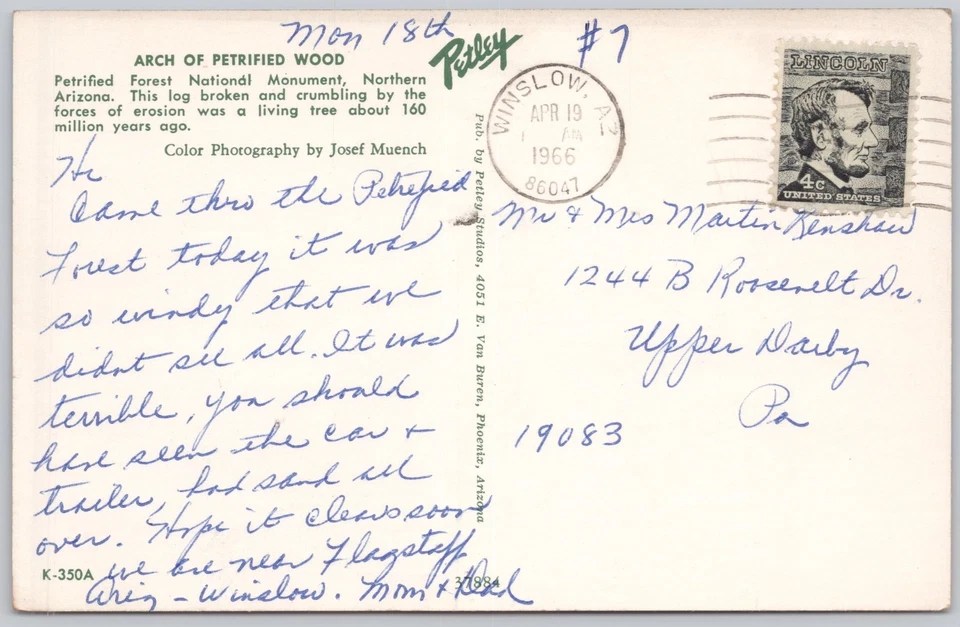
The postcard I refer to was sent to Mr. & Mrs. Martin Kenshaw in Upper Darby, Pennsylvania. I’m sure Martin got some giggles after reading it, although his wife may have chastised him for making light of the situation. Afterall, this was Martin’s mother and father going through that horrible ordeal.
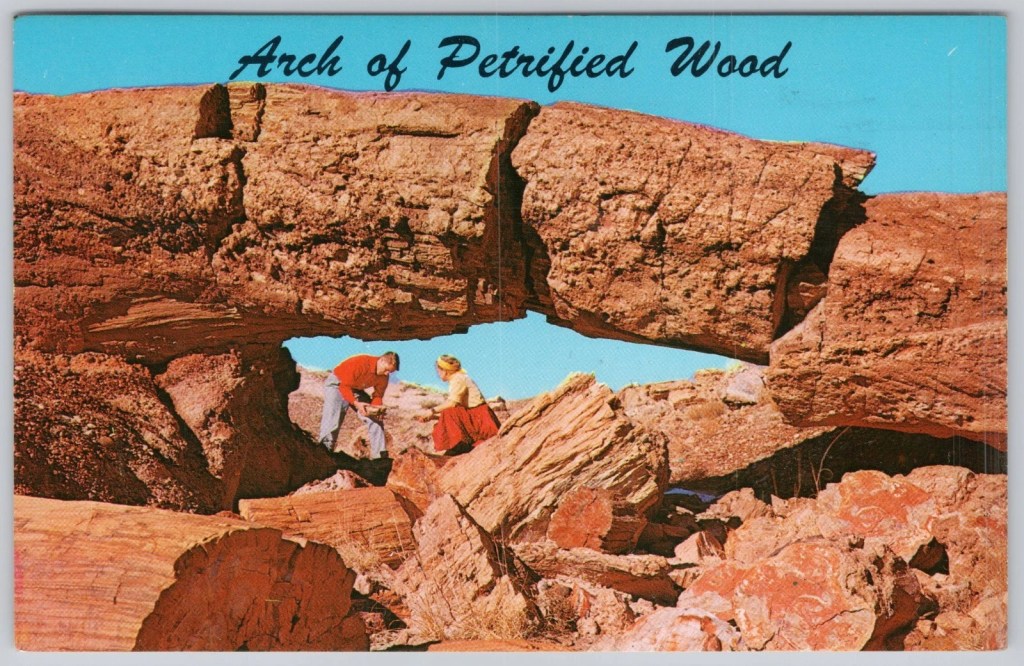
A photograph on the front of the picture postcard shows a young couple having lunch under the Petrified Arch. Hopefully, they were able to keep sand out of their sandwiches. I also wonder if that arch still stands.
Following is the message on this card:
“Hi – Came through the Petrified Forest today it was so windy that we didn’t see all. It was terrible. You should have seen the car & trailer, sand all over. Hope it clears soon. We are near Flagstaff Arizona – Winslow. Mom & Dad”
If Martin’s mom were like my wife, I’d bet money they stayed in motels the remainder of that trip. Sleeping in a trailer full of desert sand wouldn’t have been to her liking, nor mine. There’s nothing like grit between blankets and sheets, as I’ve experienced that a few times sleeping in a tent.
The Petrified Arch in Arizona is a fascinating natural formation located within the Petrified Forest National Park. This arch is composed primarily of petrified wood, which is ancient fallen trees that have turned to stone over millions of years through a process called permineralization.
Visitors are drawn to the arch for its unique geological history and striking appearance, making it a popular spot for photography and exploration. The surrounding landscape features vibrant colors from minerals within the petrified wood, creating a stunning contrast against the desert backdrop.
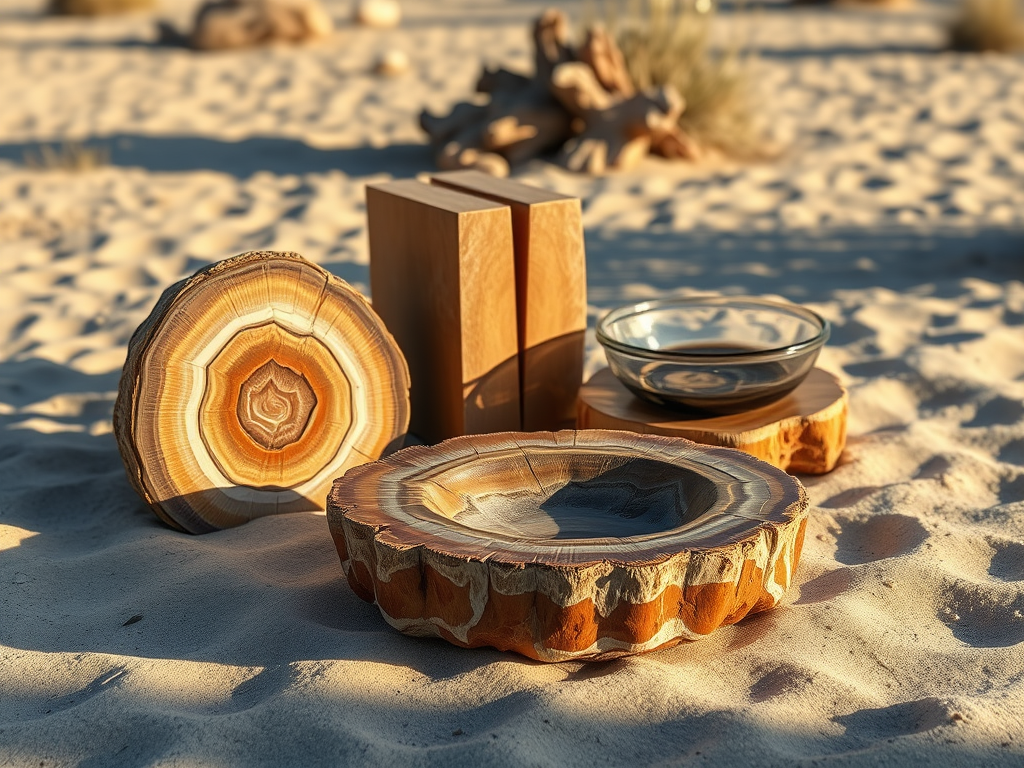
While the Petrified Arch is not as widely known as other arches in the Southwest, it stands out as a remarkable example of the region’s prehistoric past and natural beauty. Driving through there in a car is something I’ve experienced several times. I always think of the petrified wood bookends that Dad and Mom purchased.
The term “woody” in my story title refers to many things, and in this case, we’re talking about a style of automobile, most popular in the United States from the 1920s through the 1960s, that featured wood or wood-like panels on the sides and sometimes the rear of the vehicle.
These cars were originally constructed with actual wood as a structural element, but later models used wood as a decorative feature. Woody wagons became iconic for their association with beach culture, surfing, and American road trips, often evoking nostalgic images of coastal adventures and classic car shows. I’m not sure that Daniel and Sue Renshaw owned a woody, but anything’s possible.
Daniel worked as a chauffeur for Jersey Zinc Company for 48 1/2 years before retiring. He passed away in 1989 at the age of 82. His wife, Martin’s mother, Sue, died in 2002 at the age of 89. Sue wrote the postcard.
Martin Renshaw was a teacher for his whole life. Born on January 15, 1940, he died on April 21, 2019, at the age of 78. It appears that his wife, Wanda, is still living. If the Renshaws owned a woody station wagon, the wood siding would probably now be rotted away in some Pennsylvania junkyard, unlike those ancient trees lying in the Petrified Forest.
There’s been a call by Native Americans and Park Rangers for people owning Petrified Forest rock and objects made from it to return them to the desert. Not doing so could result in a curse being placed upon the owner.
I’m not sure how many have done so, but bookends, ashtrays, candy dishes, and other such objects would look quite funny sitting in sand, much like the Renshaw’s car and trailer did, covered with the stuff, 60 years ago.
Next time through this area, I’ll make sure to add my parents’ petrified-wood bookends to the growing pile, with a copy of one of my books placed in the middle for extra visual effect.













 I like to write junk...