As kids my brother
and I learned several thangs from my grandparents that we still retain. Papa Haynes taught us to take a small bag of Tom’s
salted peanuts and dump them into a Dr. Pepper.
We’d swish liquid and nuts around several seconds before sipping. Not only did you end up with a cold drink, you had a delicious snack to boot. It took quite the effort to get all remaining peanuts out of the bottle. People I’ve talked to from the east coast believe this to be gross.
We learned to make peanut butter and jelly sandwiches in Alabama. Grandma Hankins took the preparation a step further by putting sliced bananas and honey inside. There was a special way the banana was cut. She didn’t slice the fruit into small circles. Grandma fileted it or cut length ways like a fish. That kept the fruit from falling out.
My friends in Arizona or California make peanut butter & jelly sandwiches, yet you’ll never find them adding both banana and honey. They don’t know what they’re missing!
I love to
eat my scrambled eggs with mustard on top.
This was another one of Grandma Hankins’ culinary tricks.
My wife who’s originally from Kansas now adds mustard to her eggs. She loves it. I‘ve had a few waitresses tell me they never heard of such. One server in particular was going to take my plate away, thinking the mustard was uncooked egg. I still laugh over that one.
Catsup on eggs is something Grandpa Hankins did, yet it never appealed to me. The red just doesn’t make things appetizing.
There are several more Southern oddities:
Honey on fried chicken or French fries, black-eyed peas on New Year’s Day, melted marshmallow on top of sweet potatoes, and cornbread in a bowl with milk poured on top.
Papa Haynes loved the later dish. He ate cornbread and milk each night for supper. It’s actually not bad.
Some folks claim that marshmallows on top of sweet potatoes ain’t Southern. I beg to differ. Folks in Alabama have been doing such from the day marshmallows first rolled off the production line.
I cherish my
Southern traits as quirky as they are. I
suppose that’s what sets us apart from the rest of the country.
One thing
you’ll not find me saying is,
“Ya’ll come back now. Ya hear?”
I’m not sure Southerners even used that line; at least not the ones I hung with. Bo and Luke from Dukes of Hazzard ran this saying into the ground.
I did a bit
of investigative research on them two boys. Actor Tom Wopat (Luke Duke) was
born in Wisconsin. John Schneider (Bo Duke) was reared in New York. They’re not
even from the south. I had that figured from the start.
Those two
were phonier than pecan pie minus Golden Eagle Syrup. Alabamians know what I’m
talking about here.
You wouldn’t catch my Grandma Hankins making pecan pies without Golden Eagle Syrup. For her to do so would’ve been borderline sacrilegious.
It’d be like me substituting Georgia peanuts in a Dr. Pepper, with Hawaii plucked macadamia nuts.
Walking by our television the
other day, of all the un-educational shows for my wife to watch, Old and the Rested was on. Old and the Rested is an unrealistic
melodrama that’s been on the tube for ages.
On this particular episode, a gorgeous female accepted a dinner date with one very successful businessman. Forgetting the fellow’s real name, Mr. Cool seems appropriate enough to me.
For those out of the soap opera loop,
Genoa City from “Old and the Rested” is
a town known for attracting wealthy single entrepreneurs; male and female.
The woman was seated in a 5-star
restaurant with Mr. Cool, when all of a sudden his smartphone rang. I’m sure he
was staring at it beforehand but I missed that part. With a devilish grin, the
less than charming individual politely said to his date,
“Excuse me, I have to take this call.”
He stood and quickly disappeared. Finding myself interested in this lady’s awkward situation, I whispered,
“Leave!”
Of course the woman didn’t hear
me.
Several scenes later Mr. Cool returned only to repeat the
same scene,
“Excuse me, I have totake this call.”
I sensed by this time the gal was getting a bit perturbed by
the scowl on her face. Once again I whispered but a little louder,
“Leave!”
Why she didn’t get up and scoot is something only the Old and the Rested writers know for sure, and they aren’t saying.
At this point the poor woman weathered far more rudeness than
I could ever take.
Minutes later Mr. Cool performed his offensive phone call escape
for the third time,
“Excuse me, I have to
take this call!”
The incensed gal finally had enough. She grabbed her purse and stormed out of the restaurant. Like a hockey player having just scored three goals, I pumped my right arm in jubilation.
I’ve never walked out on anyone but I’ve wanted to. There
was an instance when I was talking to a friend at lunch. His cellphone rang
while we chatted. I sat there for several minutes listening to him quiz the
caller about a dishwasher. Finished with conversation my friend calmly asked,
“Where were we at?”
At that point I couldn’t remember. This wasn’t the first time he’d done such. Others complained as well. One person went so far as to tell him to shut the stinking thing off. If the fellow couldn’t be without his phone for thirty minutes, he had a serious problem.
The queen of etiquette, Emily Post, would’ve said his lunchtime manners were an act of extreme rudeness.
Years ago my mom’s cardinal rule during dinner was turn off the TV and no phone calls. She believed those distractions hindered family togetherness. I wholeheartedly agree. Unfortunately folks glued to IPhones, or talking on cellphones during meals is normal procedure these days.
People I know do it all the time, especially some family members. I suppose it’s no big deal to them. There’s nothing I can do to change things other than not join the fray.
Years ago I’d get upset if I was talking to someone, and
midstream through our conversation the person said to me,
“Can you hold a minute?”
They’d immediately grab another line that was beeping.
Sometimes that minute turned into five or even ten. It got to the point where
I’d tell them to call me back. Often times that return call never came. They
evidently forgot about me and moved on to more pressing issues.
There’s no better way of letting a friend or family member know they aren’t important, than by cutting them off mid-sentence and taking someone else’s call.
I don’t own a smartphone and never will. My flip phone serves
me quite well. Out of respect to others, I turn it off in church and during
hospital visits, plus at breakfast, lunch, and dinner.
If I’m standing in line at a bank or grocery store and it
chimes I don’t answer. It would be impossible to count the number of obnoxious conversations
I’ve had to listen to while standing in a line. No call is that important
unless of course it comes from God.
These days I make it a point of gazing around a room seeing exactly who’s on electronic devices and who’s not. This can be most entertaining. It’s not unusual in a darkened restaurant, to spot a table full of people, each of them glued to their glowing television sets. To me a smartphone is nothing more than a small TV.
I’ve been told several times I should stop living in the
past and get with the program.
“No thank you!”
Following the crowd and doing what they do isn’t my gig. Not
that there’s anything wrong with such. Most folks seem to levitate that
direction. There’s still a few of us odd ducks around; marching to the beat of
a different drummer.
The other day I noticed this slick 1980’s Seiko wristband television for sale on eBay. I thought about that electronic jewel for most of the day. An idea eventually came to me:
Suppose I purchased one and then went to lunch with my friend;
the same guy always taking phone calls.
I start using the television during our conversation before
quickly saying,
“Excuse me, I have to watch “Old and the Rested.”
What’s the difference between me doing that and his phone rudeness?
“You can bump into friends at the strangest of places!”
Approaching Grandview Roadhouse circa 1916. Nellie Lawing is standing on porch.
I’ve never been one needing or wanting to visit foreign countries. Canada is the only foreign turf I’ve set foot on. I love Canada because certain parts are very similar to Alaska.
At 65 years of age I’ve not seen enough of the 49th state to satisfy my appetite. Kiska is on my ‘to do’ list. For those not recognizing the name, Kiska is a volcanic island in the Aleutian Chain.
Kiska was occupied by Japan during WWII. The place is now a federal wildlife sanctuary, home to thousands of sea birds. Giant rats inhabit the island as well.
My initial goal was to take a mountain bike up the summit of Kiska Volcano; more like carry it to the top. The rugged lava rock makes pedaling near impossible.
Photos of my Cannondale sitting on top of Kiska volcano would’ve made front-cover of a cycling magazine for sure. At this point in life, my strenuous dream will have to be someone else’s. I’ll now settle for a simple boat ride to the remote island.
One place I wanted to put my hiking boots, and eventually crossed off my bucket list is Grandview, or Grandview Roadhouse near Portage. This scenic wonder sits along the Alaska Railroad, amongst spectacular glaciers and rugged mountains. Renowned Spencer Glacier is in the immediate area.
Until a few years ago, Grandview as far as being a summer stopping place for hikers, was basically off limits. Unless you had special permission, the only way to travel and stay was during winter months. Special railroad excursions dropped skiers off during winter for a day of skiing.
In 2002, I began historical research on Alaskan pioneer Nellie Trosper-Neal-Lawing for a future story. She’s best known as “Alaska Nellie”. Nellie Lawing came to Alaska from Missouri in 1915. She operated various roadhouses along the Alaska Railroad; Kern Creek, Grandview, and Roosevelt (Lawing).
Nellie Lawing on left with unidentified person.
Her roadhouse in Grandview was at milepost 44.9. My burning desire was find remnants of the old building, and experience some things talked about in her book, Alaska Nellie. I own and treasure a signed copy, finding it was one of those ‘read until finished’ publications. In her manuscript, Nellie talks at length about the beauty of Grandview. This information became useful in locating ruins.
It was September 2003. My good friend Tom Doupe had connections with higher ups in the Alaska Railroad. Telling him of my plan, Tom assured me he could arrange things for the expedition. Two days later he called saying all was a go.
If there was anyone I wanted with me on a three day expedition into Alaska’s backcountry, it was Tom Doupe. Big and strong, he was an asset in both carrying goods and added protection. Tom was also well-versed in knowing what snacks to bring along which was especially important.
We drove from Anchorage to Girdwood which is approximately 39 miles from Alaska’s largest city. From there we caught a southbound passenger train at the Girdwood terminal. The diesel locomotive’s final destination was Seward, yet Tom and I hopped off long before reaching town.
Loading our waterproof bags of gear, including Tom’s .375 Winchester Magnum into a baggage car, the rifle quickly raised eyebrows amongst visiting tourists. Tom being a good spokesperson told inquisitive passengers what we were up to. He informed them I was a writer and he was going along as my bodyguard.
This was a fact as large brown bears are known to habitat the Grandview vicinity. Alaska Nellie talked about them at length in several chapters of her book. Nellie had a ‘pet’ black bear in Grandview. Unfortunately a ferocious brownie attacked and killed it one night. I didn’t want the same thing happening to us.
Another shot of the Grandview area circa 1916.
Our journey from Girdwood to Grandview didn’t last long. I believe we were sitting in comfort for only 30 minutes before the train stopped. Outside it was raining cats and dogs. Frigid wind howled with gusts strong enough to blow things over. Particles of snow and ice could be seen amongst huge droplets of water. Winter was definitely coming!
Train conductor, Warren Redfearn, placed a small step outside the passenger car door, before quickly offloading our gear. We thanked Warren, saying we’d see him in a few days.
Stepping outside into the fierce wind, a few of our lighter bags decided to take flight. As the train sat still tourists snapped pictures and waved. I told Tom that the late, great, writer, and adventurer, Lowell Thomas Sr., could not have garnered as much attention.
Alaska Railroad conductor Warren Redfearn.
After our transportation disappeared from sight, we immediately looked for a place to pitch camp. Tom located a flat spot amongst thick alders. He quickly went to work with a machete clearing them. It took some doing, but eventually the skinny trees were reduced to kindling.
Strong winds made it next to impossible on getting our tent erected yet we prevailed. I knew with all the wet and cold, hypothermia wasn’t far behind if we didn’t get shelter.
Looking at copies of vintage photographs inside the tent while sipping hot coffee from a thermos, images of Grandview showed that we were camping at the exact spot where the old roadhouse once stood. Tom gave me a high five.
I’m ‘posing’ by the Grandview sign close to where we camped.
Surprise of all surprises happened on our second day.
The old saying, “You can bump into friends at the strangest of places!” rang true.
Tom and I were a considerable distance from camp when a railroad security vehicle rolled up. Through sleet and rain the officer onboard instantly recognized my pal.
“Tom Doupe.”
Looking at me for a couple of seconds he quizzingly asked,
“Mike Hankins?”
George Nolan was a schoolmate of mine at East High. I hadn’t seen him since another pal, Bob Malone, got married nearly 30 years before. Telling us to be safe, George could only shake his head in wonder before rolling down the tracks.
Tom and I spent nearly three full days in raingear plodding through wet bushes and trees recording our findings. Because of all the excessive moisture, vegetation was extremely dense. We were always on guard for bears. Fresh bear squat was everywhere.
We discovered a root cellar located amongst birch trees. The hole marked-ground where an old dwelling once stood. Root cellars are holes dug into the earth. They lay underneath cabin floors. Trap doors were used for access. Because of no refrigeration, early settlers relied heavily on such to keep foodstuff from spoiling.
The landscape of Alaska is dotted with root cellar scars, their once protective log structures totally rotted away. Around the Grandview Roadhouse site we discovered rusty cans and broken glass. Tom and I left things as they were.
I was able to locate piping evidently used by Nellie for transporting water. In her book she mentions pipes moving water from a stream to the roadhouse. Nellie Lawing was a very ingenious woman!
After spending 72 hours in the harshest weather I’ve ever camped in, Tom and I were ready to leave. With our train due around 1:00 that afternoon, we packed things up 30 minutes early. Hearing it coming from miles away, we waited patiently for our cushy ride home.
Both of us remained standing as it rolled right on by. Tom and I looked at each other with surprise. That’s when my friend quietly remarked,
“They musta’ forgot?”
With rain continuing to pour and wind howling we walked a short ways to an unoccupied railroad cabin. Thankfully the door was unlocked. We spent our time eating and snoozing.
Hours later hearing another train approach from Portage, my friend ran outside to flag it down. That was a sight I wish I had video of.
Big Tom held up a red shirt waving it like a crazy man. The train slowed before grinding to a halt. After several minutes of explaining our situation, the engineer nodded then called someone on the radio. He relayed to Tom that we’d be picked up late that afternoon. Evidently there’d been a minor communication glitch.
Tom and I didn’t care at this point. The cabin was high and dry and we had plenty of snacks. If the train never arrived it would’ve been okay. We were in our own cozy Grandview Station so to speak and all was dandy. Other than a little acclimate weather outside, city stress was nowhere to be found.
Things have changed for the better regarding excursions to Grandview. The Alaska Railroad now offers ‘day trips’ to the Grandview and Spencer Glacier areas during summer months. The junket is definitely worth taking.
Next time you take the train to Seward, look for a tall Grandview sign erected alongside tracks at milepost 44.9. That sign basically marks the spot where Nellie Lawing’s roadhouse once stood.
If you desire to know more about Grandview or Nellie Lawing, I suggest you locate the book, Alaska Nellie, and read it. You’ll thoroughly enjoy her amazing story!
So this WordPress site is new to me. Just now starting to get the hang of it. I’ve been tossing rough draft material on here and then hitting the publish key, believing I could correct things afterwards. Well you can, only the initial link sent to subscribers stays the same.
That means the first published draft with typos and misspellings stays intact. Duh!
The way I found out is a newspaper I write for emailed me back, saying I should get a new spellcheck system or glasses. We quickly figured out the problem.
So from this point on I’ll go back to correcting on Word before popping stuff on WordPress. Hopefully the junk I write begins to look as it should!
Scary thing is I have a piece being published tomorrow and the original copy sent to them (automatically) is flawed. I can only hope their editor caught such. I’ll know in a few hours.
James was standing in the wrong place at the wrong time.
Asbury Cemetery – Lamar County, Alabama
The 4th of July has always been a thought-provoking holiday for me. Of course, with it being Independence Day, the whole country celebrates. There’s probably not much I can say about the 4th’s activities that hasn’t already been said.
To put things into perspective, there’s the hoped-for rain-free weather, parades, speeches, hot dogs, hamburgers, sweet tea, cold soda, fireworks, swimming, games, car races, etc. You get the drift.
The 4th of July for my dad always seemed to be a sad time. He never talked about it, but through yellowed newspaper clippings and what my mom and my grandparents told me, I have a clear picture.
The year was 1941. WWII was a mere five months away. My father and his brother, James Columbus (J.C.), had just finished celebrating July 4th in Vernon, Alabama, where they lived.
J.C. had plans for his 10th birthday two days later. Because of the closeness of the events, I’m sure my grandparents combined J.C.’s birthday with the holiday when it came to special food. Grandma would’ve made J.C. some ice milk, as she called it.
She always did for me. Grandma Hankins took an aluminum ice cube maker and poured milk into it, then added sugar. She froze it afterwards. It was as close to ice cream as Grandma could get.
On July 31st, Dad and his brother were walking through downtown Vernon early in the morning. It would’ve been Thursday according to the newspaper story. Dad and J.C. strolled by two men trying to start a truck. Curious at what was going on, they stopped to watch.
One of the men was pouring gasoline into the vehicle’s carburetor while another fellow cranked the engine over. When the truck backfired, the can of gasoline caught fire.
The man quickly tossed it aside. James was standing in the wrong place at the wrong time. The flaming gas went all over his clothes, setting him on fire. J.C. took off running, and before anyone could stop the boy, he was severely burned. The uncle that I never got to meet, James Columbus Hankins, died later that day.
I know the event left horrible scars on my father. He never talked about it. My dad passed away two years ago.
Three years ago, I had a telephone conversation with the mechanic’s son, who accidentally threw the can. He told me he was a small boy when it happened. He remembered things well.
The man said that his father was never the same. He eventually moved his family out of Vernon to escape bad memories. That relocation didn’t erase such. Like my dad, he never openly talked about it. He had to live with such grief for the rest of his life.
July is not only our country’s independence month, but a reminder for me each and every year, that I have an uncle I never got to meet, because of a most horrific accident. There is only one photo of J.C. that I know of, and it appears to be lost.
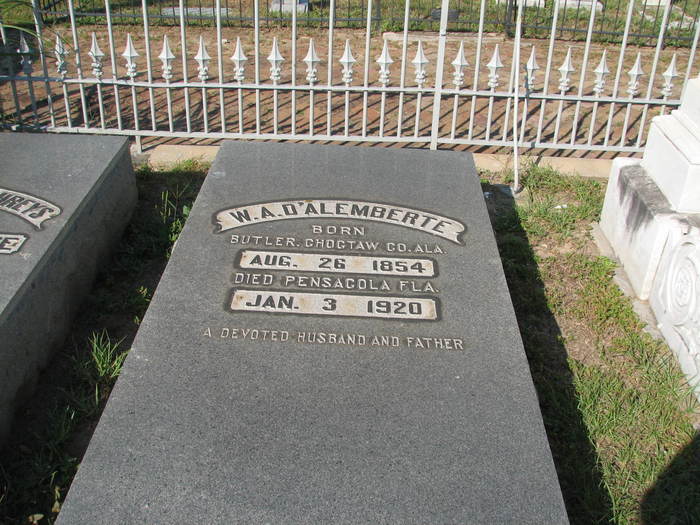
My late Uncle J.C. is buried at Asbury Cemetery in Lamar County, Alabama. His granite gravestone now shows its age. The tragic accident took place 78 years ago, so that’s to be expected.
My brother and I have plans for a new marker on J.C.’s grave. I know my Grandpa and Grandma Hankins would like that.
If Bass Reeves were alive today, I believe he’d shake his head at what’s going on in this country.
Bass Reeves
The first time I heard the name Bass Reeves was on Bill O’Reilly’s, “Legends & Lies” television documentary. In 2017, an excellent movie came out on the famous lawman.
Bass Reeves was born to slave parents the year 1838 in Crawford County, Arkansas. Bass took the surname of his slave owner William Reeves, a farmer and politician. He worked alongside his slave parents bringing them water until he was old enough to be a field hand himself.
When the Civil War broke out in 1861, Bass separated ties with the Reeve’s family. Some say he simply ran away after hearing too much talk about ‘freeing of slaves’. He fled to Indian Territory seeking refuge with Seminole and Creek Indians.
While living with them he honed his firearm skills to perfection, becoming highly accurate with a pistol and rifle. Later on in life he was banned from competitive turkey shoots for being too good. His marksmanship would come in handy numerous times throughout the years.
In 1863, a couple of years before the war ended, Bass procured land near Van Buren, Arkansas where he took to farming and ranching. Being a strapping six-foot two he was easily up to the task. A year later he married Nellie Jennie from Texas. The couple had 10 children; 5 girls and 5 boys. Seemingly content and happy with his farming career, Bass’s life took a drastic change in direction when he took on the dangerous job as a U.S. Deputy.
Because crime was rampant in Indian Territory with murderers and thieves hiding behind every tree, orders came from Washington D.C. for Federal Western District Court Judge Isaac C. Parker to do something.
Judge Parker authorized U.S. Marshal James F. Fagan to deputize 200 people to help disperse the mess. Because of Bass Reeve’s knowledge of the terrain, and his ability to speak several tribal languages, his application was gladly accepted.
Bass Reeves’ patrolled most of Oklahoma via horse. On several occasions his guns were the deciding factor in an arrest. Bass Reeves claimed he only drew a weapon if his life was in danger. During the 35 years that Bass served as Deputy Marshal he brought in over 3,000 criminals.
One of the high points in Reeve’s career was the arrest of
notorious outlaw Bob Dozier. This dangerous criminal had eluded lawmen for several
years. Bob Dozier was known as a jack-of-all-trades. Dozier was wanted for
murder, horse rustling, stage holdups, bank robberies, and land swindles. It
seems there was no crime Bob Dozier hadn’t committed.
Dozier escaped Bass Reeves’ arrest several times until he was tracked to the Cherokee Hills. Refusing to surrender, the cagey killer went down in a hail of bullets. Bob Dozier died on December 20, 1878. Bass Reeves was generously rewarded for his work. Often times the reward money became his.
In 1907 law enforcement in Oklahoma was taken over by the state. Bass Reeve’s career as deputy marshal came to an end. He immediately accepted a job as patrolman with the Muskogee, Oklahoma Police Department.
During his two years with the force there were reportedly no crimes on his beat. In 1909, Bass Reeves became ill from Bright’s disease. Bass died on January 12, 1910. He’s buried in Muskogee although the exact grave location is unknown.
For those wanting to know more about Mr. Reeves’ life I highly suggest watching the movie, “Bass Reeves – U.S. Marshal”. It’s an excellent film. There are also many detailed articles written about the man.
It’s believed by many western scholars that Bass Reeves was the real “Lone Ranger”. His exploits in life seem to indicate such.
It’s sad we don’t have many lawmen like Bass patrolling the streets anymore. The country would be safer if we did. Unfortunately liberal politicians, extremist activists, along with help from A.C.L.U. lawyers have eliminated this type of law enforcement.
If Bass Reeves were alive today, I believe he’d shake his head at what’s going on in this country. Criminals seemingly having more rights than law abiding citizens would have him furious.
Judges making courtroom decisions based on their political beliefs, instead of going by written law would incense the man. More than likely Bass Reeves would forego law enforcement entirely, choosing a career much less micromanaged by clueless leaders!
“Father’s Day is Sunday, June 16th. It’ll be a happy day for some, sad for others. The following story is fictional in composition. It easily could have taken place in any town or city in the U.S.”
Danny’s dad wasn’t a sports superstar in school. He wasn’t athletic at all. Tall and wiry as a child, Danny’s dad was mistaken by many as sickly. Some parents would not let their children play with him.
Contagious disease was not a problem. Danny’s dad ate as much as most kids, yet couldn’t put on weight. Doctors said his dilemma came from an inactive thyroid. One horrible year in grade school, a slightly plump teacher told the child that having such a problem was good. For Danny’s dad it was a social nightmare.
In his early teens, students nicknamed Danny’s dad “Bones”. That didn’t upset him. Danny’s dad was use to cruel words going way back. Girls would not give him a second look; all but one that is. Danny’s mom fell in love with his dad at church camp. She told closest friends back then that he reminded her of a homeless pup.
When Danny was born his dad was the happiest man in the world. The proud papa carried his boy everywhere. Danny’s dad took him fishing, or to a little ice cream store up the street. Danny’s dad made sure to attend every school play or little league game his son was in.
Sometimes that meant taking leave from work and suffering the consequences. Money didn’t mean as much to Danny’s dad as time spent with ‘the boy’.
When 18 year old Danny graduated from high school, his dad wiped salty tears from both eyes. You see Danny’s dad never made it past 11th grade. He dropped out of school, helping take care of his mother and two younger sisters after their father developed lung cancer. That meant accepting a lowly laborers’ job at the local brick plant.
Meager pay at the brick plant didn’t bother Danny’s dad. The young man made ends meet by not spending a cent of his small paycheck on personal desires. He knew his family needed every penny.
On the creative side, Danny’s Dad could make scrumptious apple pies that were second to none. Danny’s mom showed him how at the age of nine. Danny was taught by her and dad, that women and elders were to be treated with upmost respect.
When Danny needed wheels for college, his dad traded a family heirloom for an old pickup. Danny’s dad had the vehicle up and running within weeks. After Danny obtained his law degree, dad and mom cried again. No one from the family had ever attended college other than Aunt Sarah. She went to beauty school but never graduated.
After Danny married and had children of his own, Danny’s dad was the proudest grandpa around. The man loved his grandchildren. He’d have them laughing hysterically by making strange clownlike faces.
Danny was on assignment in Washington D.C. when word arrived that his dad was terribly ill. Hopping on the first flight, he barely made it home in time. Danny’s dad died the following day. It was hard for Danny to take, because he’d just buried his mom two years previous.
At the funeral there was but a handful of people in attendance. Danny’s dad had been so busy scraping out a living, he found little time for socializing. A few folks that knew him from work and church came to pay their final respects.
Instead of flowers, a table on each side of the coffin held apple pies. Danny’s dad would have laughed at the sight. He probably did from high above. When Pastor Blake offered attendees a chance to talk, no one stepped forward.
At the last second an older businessman rose. A rich man, Bill Williams, owned the brick plant where Danny’s dad worked. Everyone in town knew him. They also knew the busy entrepreneur had neglected his own son while building an empire.
Deprived of attention at birth, Bill Williams’ boy suffered terribly both emotionally and physically. For the past several he’d been in and out of trouble. Experimenting with drugs, the young man died of an overdose in the driver’s seat of a Porsche.
Finding it hard to walk, let alone talk, the stooped old man stared straight ahead as he limped to the podium. For several minutes he said nothing. Bill Williams finally looked at Danny with a solemn face before speaking,
“If I could’ve been like your dad, my Danny would still be with me!”
My brother and I have been pulling this lame joke forever. The saying goes back to the day when Avon used that famous line in television commercials. I never do such at a stranger’s door for obvious reason. It could get a fellow shot!
One thing I tease my wife about is all the money she spends on expensive perfume. When I say expensive perfume I’m not talking about the stuff made in Paris. Joleen uses Avon and probably goes through one bottle a year.
I haven’t a clue to price, but with her being frugal in spending I’m sure the stuff is reasonable. I remember the Avon lady stopping at our place as kids.
Mom would be in a tizzy when she dropped in because our living room was always a mess. Mothers having boys know what I mean.
This sales lady would carry in a huge book with the entire cosmetic line in it. Early on I began using Avon deodorant. It must do its job because no one’s ever complained.
For the past several years I’ve purchased Avon Ironman deodorant. I’m not sure why they call it that other than the name sounds cool. If anyone should ask if I compete in triathlons, I’d honestly have to tell them,
“No, but I use the deodorant!”
A few months ago I ran out of the stuff. Quickly, I hit a local Walgreen’s store and picked up Mennen Sport. I figured an odor protectant with sport on it was what I needed. The name said a lot.
Putting some on, something didn’t feel right. From the moment the deodorant hit my skin it wouldn’t let go. Showering the next morning I felt as if melted wax or tree sap had been sprayed under my armpits.
The sticky deodorant attempted to set up permanent residency on my body. It took two showers to finally remove the last clinging bit.
I still have that worthless deodorant in my medicine cabinet, thinking I’ll eventually need it for something. Recently I saw Mennen Sport had been discontinued. What does that tell you?
One thing that really puzzles me is how athletes like baseball pitchers or football quarterbacks were able to wear it. You’d think their arm motion would’ve been hindered?
I was never so glad when the Avon lady dropped off my Ironman. Thankfully she called beforehand. I had just wheeled a bicycle back into the garage.
Before she arrived I had my ancient Cannondale mountain bike tore apart on our living room floor. The chain needed cleaning and lubed.
For a brief second I thought about slapping Mennen Sport on the links as an experiment. The waxy chain oil I use doesn’t bind to metal for very long. I nixed the idea deciding it wouldn’t be wise.
If Mennen Sport was so good at hindering arm movement, I figured it would do the same to a bicycle chain!
With July 4th upon us every citizen should know what the holiday is about. On July 4, 1776 our United States Congress unveiled The Declaration of Independence.
This document was written and signed to show the world we were no longer under British rule. Since that time Americans celebrate each 4th of July as this country’s Independence Day.
I was curious as to what other important events took place
on July 4th after 1776. My research uncovered the following:
1802 – West Point military academy was opened.
1827 – Slavery was abolished in New York.
1862 – Charles Dodgson created Alice in Wonderland for friend
Alice Liddell on a family boat trip.
1881 – Booker T. Washington started Tuskegee Institute.
1866 – An errantly tossed firecracker was responsible for
torching half of Portland, Maine.
1939 – The Boston Red Sox Jim Tabor hit two grand slam
homeruns in one game.
1959 – A 49 star flag honoring Alaska statehood was
unfurled.
1960 – Mickey Mantle hit homerun number 300.
1982 – Jimmy Connors beat John McEnroe at the 96th
Wimbledon tennis championship.
1990 – Wrestler Brutus Beefcake was injured while
parasailing.
2015 – Matt ‘Megatoad’ Stonie defeated eight-time champ Joey
‘Jaws’ Chestnut in a hotdog eating contest.
2016 – Joey ‘Jaws’ Chestnut captured the hotdog eating title by defeating Matt ‘Megatoad’ Stonie.
2018 – Joey ‘Jaws’ Chestnut wins the hotdog eating contest once again.
I’m not sure what significant milestone will be added to the list this coming Thursday, but let’s pray it’s a good one and not tragic.
If you’re like me you’ll be watching to see if Matt ‘Megatoad’ Stonie can dethrone Joey ‘Jaws’ Chestnut, regaining the hotdog eating title for 2019.
Hopefully there’ll be trained medical personnel standing by with stomach pumps, just in case competitors overdo it!
There are many phobias in this world. Arachnophobia is the fear of spiders. I possess that one because I insist on my wife killing the things.
Basophobia is the fear of falling while walking. Many older folks should develop that fear, to help keep them from falling and breaking fragile bones.
A most unusual phobia is one I can hardly pronounce. Syngenesophobia is a fear of relatives. I know my wife has it because when she finds out they’re coming and the house isn’t clean, she freaks.
I have a phobia that’s not on the list. It wasn’t hard creating a name that fits. I’m sure you’ll easily understand after reading. Outhouseholeaphobia is the fear of falling through an outhouse hole.
For me it started at my Grandpa & Grandma Hankins’ place. To this day I have fear of an outhouse hole. It’s not the building that scares me. The deep, dark, hole causes me great distress. What’s down there and how far does the hole go?
My older brother Jim didn’t help matters by telling me monsters and snakes lived at the bottom. He said the holes were so deep that you could never climb out. No amount of reassurance by my parents or grandparents could dissuade me from believing such. The lies were permanently etched in my brain.
Unfortunately while traveling, I find some states still use the primitive outhouse design. I’ve gingerly stepped into a few such places where the hole looked to be miles deep. I often found myself closing my eyes while at the same time holding my breath.
My grandparents knew I hated outhouses and they made special provision. At their home they kept a white enameled pot with lid. I won’t go into further detail. They allowed me use of this device until approximately six years of age. After that I was on my own.
What they didn’t know was I discovered there were other places to go besides the outhouse. Thankfully there were plenty of trees and bushes around their yard.
These days many kids have never seen nor used an outhouse. Lucky for them! I’m sure there are rural homes still having these primitive outdoor facilities.
There is another phobia somewhat related to outhouseholeaphobia. It’s called portapotaphobia. As the name suggests it is the fear of portable toilets. I know several people with this affliction including my wife.
Seems to me the worse thing that could happen, is a strong wind come up while you’re inside and blow the hut over. I’ve seen this occur numerous times with no one inside.
I suppose it could be tipped quite easily by mere pushing. That’s why it’s best to only enter when friends aren’t around; at least my friends that is!